


ALLTHATSINTERESTING.COM
The Remarkable Life Of Peter Freuchen, From His Dangerous Greenland Expeditions To His Fight Against Nazis
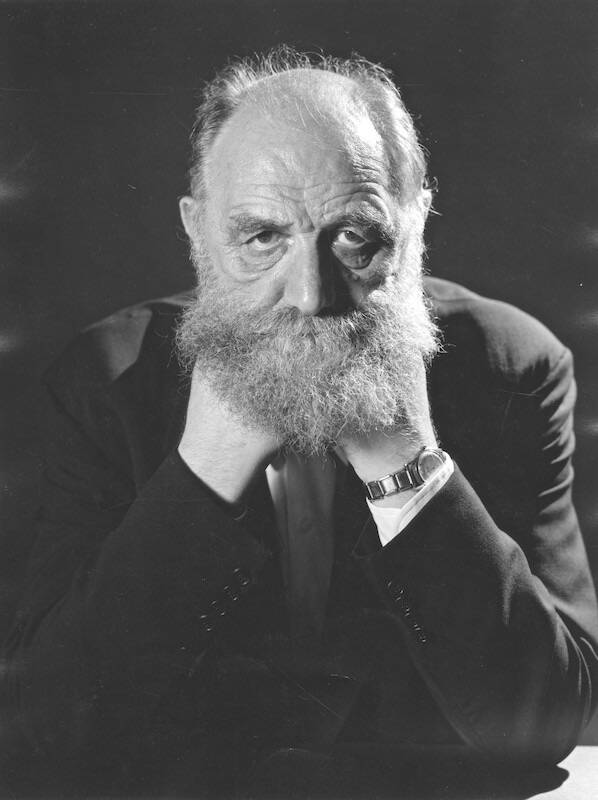
The shortlist of Peter Freuchens accomplishments includes escaping an ice cave armed with his bare hands and frozen feces, escaping a death warrant issued by Third Reich officers, and winning the top prize on the game show The $64,000 Question.However, the life of adventurer, explorer, author, and anthropologist Peter Freuchen can hardly be contained in a short list.Arktisk InstitutDanish explorer, author, and anthropologist Peter Freuchen.Freuchens life wasnt like a single Hollywood film it could have been an entire franchise. An early expedition to Greenland in his younger years ignited a passion for Arctic exploration and a fascination with Inuit culture, which eventually inspired his writing and filmmaking.By the late 1950s, Peter Freuchen had penned more than 30 books, starred in a movie he wrote, gone on several major Arctic expeditions, joined the Danish resistance against the Nazis, lost a foot to frostbite, and become a national celebrity. To say he lived life to the fullest would, frankly, be an understatement.From Medical Student To Renowned AdventurerPeter Freuchen was born on February 20, 1886, in Nykbing Falster, Denmark. His father was a businessman and wanted nothing more than a stable life for his son. So, at his behest, young Freuchen enrolled at the University of Copenhagen to study medicine. Arktisk InstitutPeter Freuchen around the time of the Fifth Thule Expedition in the early 1920s.However, before long, Freuchen realized that a life indoors was not for him. Where his father needed order and stability, Freuchen craved exploration and danger.So, at 20 years old, he dropped out of school and began a life of exploration.In 1906, he made his first expedition to Greenland. He and his friend Knud Rasmussen sailed from Denmark as far north as possible before leaving their ship and continuing by dogsled for over 600 miles. It was a treacherous journey, during which Freuchen and Rasmussen came across the Inuit people. Sueddeutsche Zeitung Photo / Alamy Stock PhotoPeter Freuchen (left) and fellow explorer Knud Rasmussen.The two explorers were deeply interested in Indigenous culture. They stayed with the Inuit for a time, learning their language and accompanying them on hunting expeditions. The Inuit people hunted walruses, whales, seals, and even polar bears, but Freuchen found himself right at home. After all, his impressive six-foot-seven-inch stature made him uniquely qualified to handle taking down a beast of any size, and before long, he had made himself a coat out of a polar bear hed killed himself.In 1910, Peter Freuchen and Rasmussen established Thule trading post in northwest Greenland. The name came from the term Ultima Thule, which, to a medieval cartographer, meant a place beyond the borders of the known world.Arktisk InstitutPeter Freuchen and his first wife, Mequpaluk, circa 1912.Shortly after, in 1911, Freuchen married an Inuit woman named Mequpaluk and had two children with her. Tragically, she died in the Spanish Flu epidemic in 1921.The post, meanwhile, served as the base for the seven subsequent Thule Expeditions that took place between 1912 and 1933. It was during the fifth of these trips that Freuchens days of adventure came to an end.The Expedition That Cost Peter Freuchen A LimbBetween 1910 and 1924, Freuchen lectured visitors to Thule on Inuit culture and traveled around Greenland, charting the previously unexplored Arctic. In 1912, he set out on the first Thule Expedition to determine whether or not Greenland and Peary Land, a peninsula on the north of the island, were truly connected. Arktisk InstitutPeter Freuchen (second from left) with other adventurers in Greenland.He also took part in the Fifth Thule Expedition, which began in 1921 and aimed to travel across the Northwest Passage from Canada to Siberia, all while documenting Inuit culture. In his autobiography Vagrant Viking, Freuchen wrote of a day in spring 1923 when he set out on his own to retrieve supplies his team had previously dumped to travel through an area of deep snow.He then got caught in a storm and dug himself a small hole in the snow to escape the elements. He fell asleep, and when he woke up, hed been covered by a snowdrift and was trapped. He had no tools with which to free himself, and the snow above him had frozen into ice, so he couldnt simply use his hands. Arktisk InstitutPeter Freuchen stayed in Greenland for the better part of 15 years.Then, he remembered how dog feces freezes solid in the snow and had an idea:I moved my bowels and from the excrement I managed to fashion a chisellike instrument which I left to freeze At last I decided to try my chisel and it worked! Very gently and very slowly I worked at the hole.But his harrowing journey was not yet over. When Freuchen finally returned to camp, after crawling for three hours, he found that his left foot was frostbitten, a feeling that he described as the most agonizing pains. When his toes became gangrenous, he decided to do something about it.He wrote in Vagrant Viking, I got hold of a pair of pincers, fitted the jaws around one of my toes, and hit the handle with a heavy hammer Perhaps one could get used to cutting off toes, but there were not enough of them to get sufficient practice.Arktisk InstitutPeter Freuchen with his daughter, Pipaluk.Although he removed his toes, his foot continued to cause him pain, and he ultimately had to have it amputated and a wooden leg put in its place. After this, he returned to Denmark, where he became involved in a different type of adventure altogether.Peter Freuchens Prolific Career Outside Of ExplorationBack in Denmark, Freuchen joined the Social Democrats movement. He also became a regular contributor to Politiken, a political newspaper. Arktisk InstitutPeter Freuchen with film director W. S. Van Dyke.He also got involved in the film industry as a writer and consultant for films related to the Arctic. One of these movies, Eskimo/Mala the Magnificent, was based on Freuchens writings, and he even appeared in it as a ship captain. Notably, Eskimo was the first feature film to be shot in an indigenous language, and it went on to win an Oscar for Best Film Editing. In 1938, Freuchen, wanting to share his passion for adventure, founded The Adventurers Club of Denmark, an organization that still exists today. Of course, the onset of World War II one year later meant that exploring the world would have to wait Freuchen was ready to fight back against the Nazis.Wikimedia CommonsPeter Freuchen with his third wife, Dagmar Cohn, in the 1950s.Freuchen soon found himself in the center of political drama. He never tolerated discrimination of any kind, so whenever he heard someone express antisemitic views, he approached them and claimed to be Jewish. He was also actively involved with the Danish resistance movement and fought against the Nazi occupation of Denmark during World War 2. In fact, he was so boldly anti-Nazi that he was arrested by the Gestapo. However, he ultimately escaped and fled to Sweden.Irving Penn/The Irving Penn FoundationA photograph of Peter and Dagmar Freuchen taken by the famous photographer Irving Penn.After the war, he moved to the United States with his third wife, designer Dagmar Cohn. There, Freuchen continued his writing and, in 1956, won the top prize on the American TV quiz show The $64,000 Question thanks to his extensive knowledge of the worlds oceans.One year later, Freuchen made a final voyage to the Arctic that he had always loved. He died from a heart attack in Anchorage, Alaska, on Sept. 2, 1957, at the age of 71. His ashes were scattered on Mount Dundas in Greenland, fulfilling his final wish to permanently rest in the place that had come to define his extraordinary life.After learning about the unbelievable life of Peter Freuchen, read about 12 other explorers who changed history. Then, read about some of the worlds greatest humanitarians.The post The Remarkable Life Of Peter Freuchen, From His Dangerous Greenland Expeditions To His Fight Against Nazis appeared first on All That's Interesting.
0 Comments
0 Shares
2 Views

 Arabic
 French
 Spanish
 Portuguese
 Deutsch
 Turkish
 Dutch
Dutch
 Italiano
 Russian
 Romaian
 Portuguese (Brazil)
 Greek
Greek