Paleontologists Just Discovered A Strange Salamander-Like Creature With A Sideways Jaw That Predated The Dinosaurs
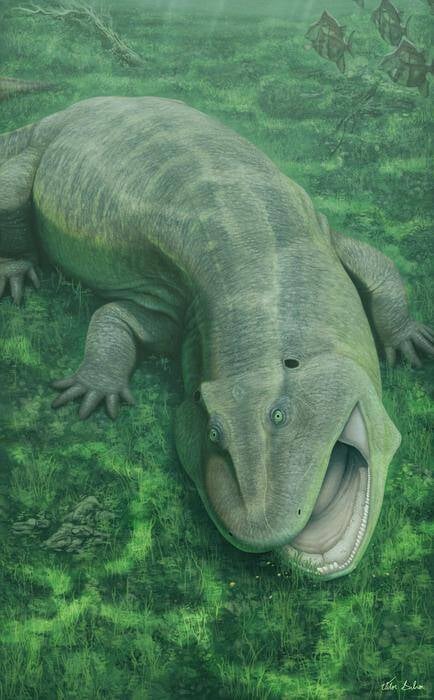
Vitor SilvaA depiction of Tanyka amnicola, the prehistoric, salamander-like creature discovered in Brazil.During an expedition to Brazil, a team of paleontologists unearthed a prehistoric fossilized jawbone from a riverbed. The bone was strange, oriented sideways to the point that paleontologists initially thought theyd found the remains of a deformed animal. But then they found eight similar bones, confirming that theyd actually discovered a bizarre new species.The species, dubbed Tanyka amnicola, was a highly unusual tetrapod that lived in whats now Brazil some 275 million years ago. Though many questions about this odd animal remain, its twisted jaw with teeth pointing out to the sides has already secured it a unique place in the annals of paleontology.A Really Strange Animal: The Discovery Of Tanyka Amnicola In BrazilAccording to a statement from the Field Museum in Chicago, paleontologists found the first jawbone during fieldwork in Brazil, near the Amazon. To their surprise, the bone was oddly twisted, with some teeth pointed out and to the sides, and numerous smaller teeth lining the inside of the jaws.Ken Angielczyk/Field MuseumA jawbone from the newly-discovered species Tanyka amnicola, the remains of which were first found in Brazil.At first, they thought that the fossilized jawbone was a deformity. However, they then found eight more jawbones with the exact same configuration.The jaw has this weird twist that drove us crazy trying to figure it out. We were scratching our heads over this for years, wondering if it was some kind of deformation, said Jason Pardo, the lead author of a new study about the species that was published in Proceedings of the Royal Society B. But at this point, weve got nine jaws from this animal, and they all have this twist, including the really, really well-preserved ones. So its not a deformation, its just the way the animal was made.The new species, known as Tanyka amnicola (Tanyka meaning jaw and amnicola meaning living by the river in the local Indigenous Guaran language), lived in the region some 275 million years ago. So far, paleontologists have only found its jawbone, which includes a set of large teeth pointing to the side, as well as smaller teeth called denticles on the surface of its jawbone that are similar to a cheese grater.Ken Angielczyk/Field MuseumTanyka amnicola had denticles on its jawbone, which would have helped the creature grind up its food.We expect the denticles on the lower jaw were rubbing up against similar teeth on the upper side of the mouth, Pardo explained in the museum statement. The teeth would have been rasping against each other, in a way thats going to create a relatively unique way of feeding.But while researchers have some idea of how it ate, many questions about this unusual new species still remain.Remaining Questions About Tanyka AmnicolaThere are only a few things that paleontologists know for sure about Tanyka amnicola as of now. They know it was a tetrapod (four-legged animals with backbones), and specifically a stem tetrapod, which is the oldest tetrapod lineage. They know that it was a living fossil, even in its day, meaning that it resembled even older species in the fossil record as opposed to resembling its contemporaries. And they believe that it probably looked something like a salamander, albeit with a much longer snout.But given that paleontologists have only found the species jawbones, they still have many questions about what its body looked like, among other things.Wikimedia CommonsResearchers believe that Tanyka amnicola resembled a salamander (pictured), albeit with a longer snout.We found these jaws in isolation, and theyre really weird, and theyre very distinctive, said Ken Angielczyk, a curator of paleomammalogy at the Field Museum in Chicago, and a co-author of the new paper on Tanyka amnicola. But until we find one of those jaws attached to a skull or other bones that are definitively associated with the jaw, we cant say for sure that the other bones we find near it belong to Tanyka.For now, paleontologists suspect that Tanyka amnicola was about three feet long, lived in lakes, and, based on the formation of its teeth, was likely an herbivore that used its unique jaws to grind up plants. And while questions remain, this discovery alone provides an insightful look at the regions prehistoric era, when it was part of a supercontinent called Gondwana.The Pedra de Fogo Formation in Brazil is one of the only windows we have into Gondwanas animals during the early Permian Period of Earth history, Angielczyk said. Tanyka is telling us about how this community actually worked, how it was structured, and who was eating what.After reading about the 275-million-year-old creature with the bizarre jaw that was discovered in Brazil, read about some of Earths most incredible prehistoric animals. Then, learn about some of the weirdest animals alive today.The post Paleontologists Just Discovered A Strange Salamander-Like Creature With A Sideways Jaw That Predated The Dinosaurs appeared first on All That's Interesting.




 English
 Arabic
 Spanish
 Portuguese
 Deutsch
 Turkish
 Dutch
Dutch
 Italiano
 Russian
 Romaian
 Portuguese (Brazil)
 Greek
Greek