


WWW.THECOLLECTOR.COM
Who Was Englands Infamous Witchfinder General?
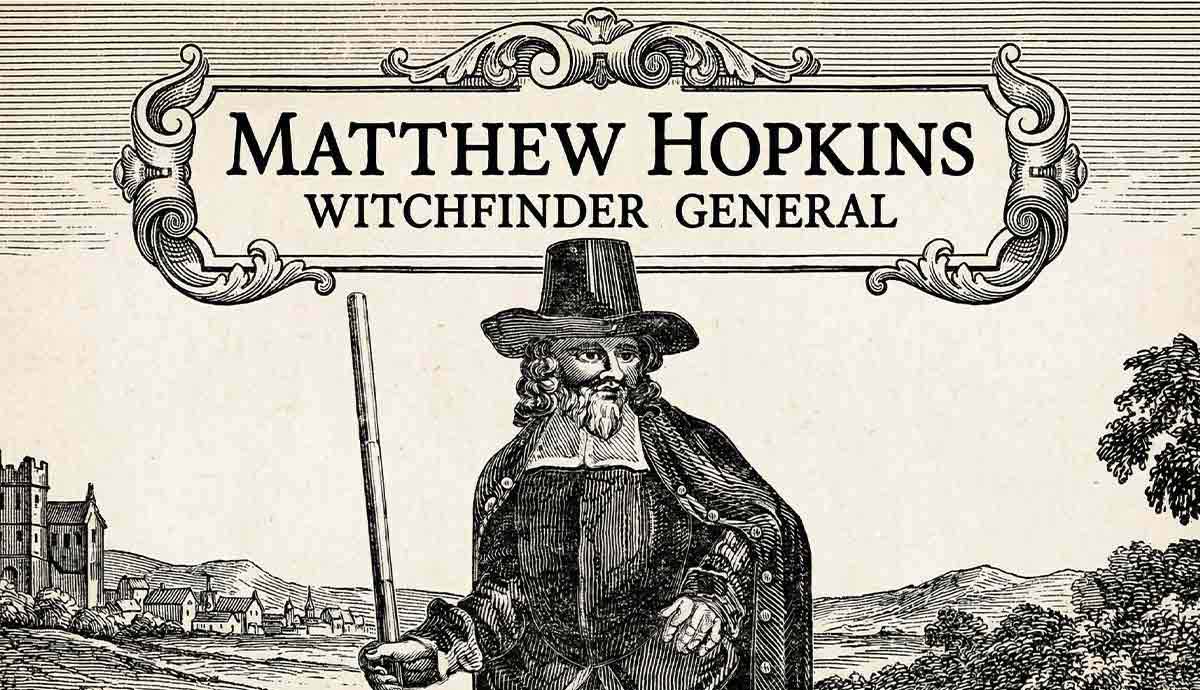
Portrait of Matthew Hopkins, Witchfinder General, Etching, by unknown artist, 1792. Source: Wellcome CollectionThe instability and violence of the English Civil War exacerbated religious paranoia and fervor throughout 17th century England. Capitalizing on this volatile period, Matthew Hopkins (c. 1620-1647), the son of a local Puritan preacher, created a lucrative business as a self-proclaimed witchfinder. Him and his associates travelled throughout East England, convincing local communities to pay hundreds of pounds to uncover, torture, and execute witches. Despite no legal authority or permission, Hopkins was responsible for the executions of hundreds of accused witches, mostly women, from 1644 to 1647.English Witch HuntingThe Battle of Martson Moor, by John Barker, c. 1811-1866. Source: Wikimedia CommonsAlmost two centuries of witch hunting began with Henry VIII. During his reign, the 1542 Witch Act moved witch trials from church authority to secular courts, classifying specific forms of witchcraft as capital felonies. While Elizabeth I continued her fathers persecution of witches, James I further intensified fear towards witchcraft. He detailed in his treatise, Daemonologie (1597), how witchcraft was one of the most pressing threats against England. To combat this, his 1604 Witch Act classified almost all forms of witchcraft as capital offenses.Matthew Hopkins was born in 1620 to a strict Puritan family when this fearmongering against witches festered alongside religious fundamentalism and sectarian violence. By 1642, these decades of political instability and persecution erupted into the English Civil War. This set the perfect scene of paranoia and lawlessness for Hopkins to lead one of the bloodiest episodes of witch hunting in English history.The Rise of The WitchfinderMatthew Hopkins, of Manningtree Essex, the Celebrated Witch-finder, cropped rare print, by unknown author, date unknown. Source: Wellcome CollectionWhile most of Hopkins early years remain lost to history, he appears in Manningtree, Essex, in 1644 to purchase the Thorne Inn. After claiming to have heard witches convening with the devil, Hopkins reported his findings to the local magistrate and offered to uncover them. Without any legal authority to do so, Hopkins joined forces with John Stearne, a local tailor, to begin a witch hunt.They first incarcerate an 80-year-old widow, Elizabeth Clarke, and subjected her to psychological torture and sleep deprivation until she confessed to sleeping with the devil, summoning familiars, and naming other witches. In the end, 36 people were arrested, 19 were executed, and several died while incarcerated. Realizing the potential fame and fortune, Hopkins appointed himself as the Witchfinder General, and began travelling throughout East Anglia for profit under the pretense of purging local areas of their witches.Witch Hunting in East AngliaMatthew Hopkins, Witchfinder General, with two supposed witches calling out the names of their demons, some of which are represented by animals, cropped, by J. Caulfield, 1792. Source: Wellcome CollectionHopkins claimed Parliament commissioned his witch finding campaigns across East Anglia. From 1644 to 1647, he became the deadliest witch hunter in English history, resulting in 100-300 executions. However, he lied. He was never given any permission to arrest, interrogate, torture, and call for the executions of accused witches. Instead, he feigned authority by dressing in dramatic attire including a sweeping black cape, black hat, and buckled boots, while making a fortune by exploiting local superstitions.Paid handsomely for each conviction, some towns even levied taxes to afford his services. Once summoned, he and his assistants visited, collected local gossip, arrested, and interrogated those accused to force evidence and confessions. This led to speedy trials and quick hangings. Once all witches were executed or the town budgets were fully spent, he moved onto the next village. His bloodiest day led to the execution of 18 people in Bury St. Edmunds in 1645.Tactics and Torture MethodsKeisnijder, by Nicolaes Weydtmans, c. 1580 -1642. Source: RijksmuseumIncentivized by profit, the Witchfinder General used mental and physical torture to force confessions and forge convictions. Hopkins targeted the most vulnerable members in society, especially women, despite lacking any legal or royal permission. Yet local communities were still most eager to fund and acquire his services.Hopkins primary tactic was to inflict sleep deprivation on accused witches. This induced hysteria, paranoia, and hallucinations making it easier to force confessions. His assistants used needles and blades to slice and prod defendants to test for witch marks. They often used retractable blades ensuring the accused failed the test as they were compensated for every witch uncovered. Hopkins also loved swimming tests, where potential witches were bound and drowned. If they floated, the accused were condemned as witches as local superstitions believed the water, a sacred element in baptism, was rejecting them for devilish associations.The End and Legacy of the Witchfinders Brief CrusadeTitle Page of The Discovery of Witches, written by Matthew Hopkins, printed by R. Royston, 1647. Source: Wikimedia CommonsThe magnitude of violence and profit generated by the Witchfinder General immediately raised concerns. In 1646, preacher John Gaule published, Select Cases of Conscience Touching Witches and Witchcraft, condemning Hopkins and questioning the legality of his witch trials. After being confronted by local clergy and noblemen in Norfolk about his methods, credentials, and authority, Hopkins subsequently retired back to Manningtree in 1647.To rebuttal Gaule, Hopkins wrote, The Discovery of Witches (1647), justifying his tactics and outlining how his methods are most effective to combat witchcraft. His book was well received in Puritan circles, later even influencing the witch tests used during the Salem Witch Trials. But by August 12, 1647, the Witchfinder joined the hundreds he had killed, dying at the age of 27. While folktales claim he died by the same methods he used to torture suspected witches, most historians agree he passed from tuberculosis.
0 Commentarii
0 Distribuiri
36 Views

 English
 Arabic
 French
 Spanish
 Portuguese
 Deutsch
 Turkish
 Dutch
Dutch
 Italiano
 Russian
 Portuguese (Brazil)
 Greek
Greek