


WWW.THECOLLECTOR.COM
How the Ancient Game of Chess Spread Across the World
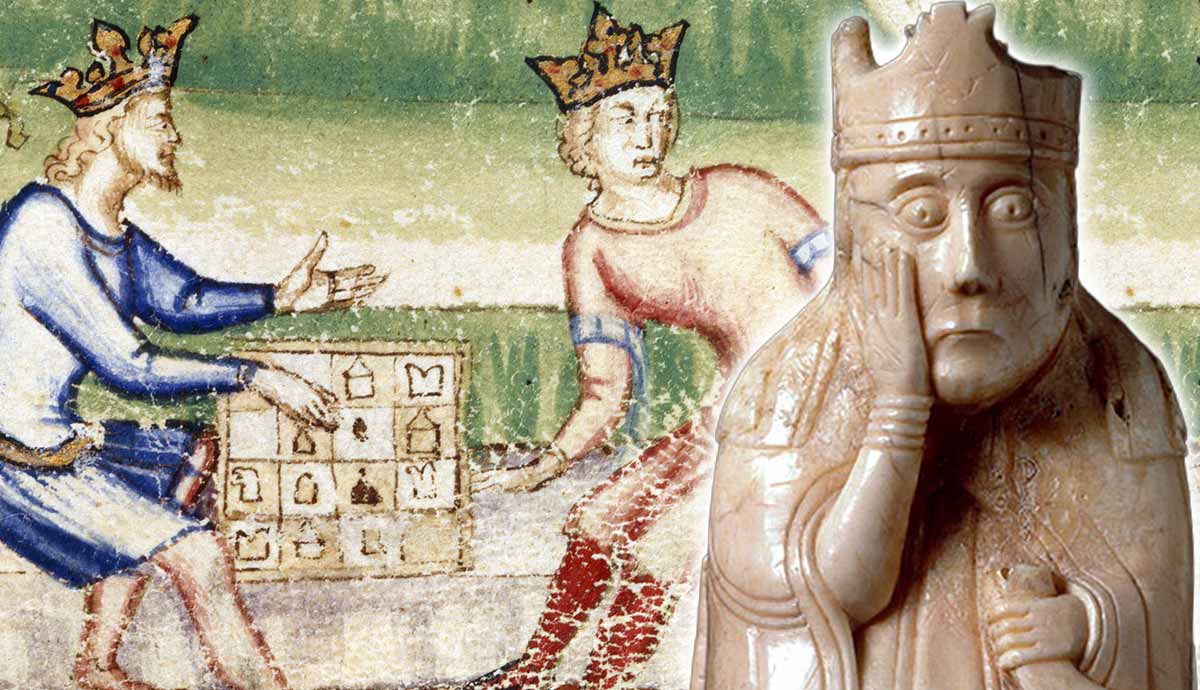
Virtually everyone is familiar with chess, even if they are not avid players themselves. The game is a recurring motif in many of our films, TV shows, stories, and other media. Every year, thousands of chess players compete for prestige at the international level to secure their spot as a Grandmaster of chess. The game has undergone several rule iterations over its centuries of existence and is played worldwide at various skill levels, both online and offline. Chess captures the imagination of millions of players because it contains no element of luck or chance; performance is skill and knowledge-based.At first glance, looking at a chessboard ready for play, the game looks deceptively simple. So how exactly did chess become so widespread? Where did it start? And how has it changed?Overview of Modern Chess RulesChessboard set up with pieces ready to play. Source: Wikimedia CommonsAs a refresher for readers unfamiliar with chess, heres how the game is played. Each player starts with 16 pieces on an eight-by-eight board, consisting of eight pawns in their second rank (the horizontal row of the chessboard) and eight other pieces in the first rank. Each player takes turns moving one piece per turn (except castling) in its designated fashion, occupying squares and capturing opposing pieces by moving to their squares to gain control over the chessboard.If the king is put in check (threatened by one or more other pieces), the checked player must either break the check by capturing the attacking piece, interposing another piece between it and the king, or moving the king out of the way. If none of these can be done, the king is checkmated and the game ends. The game can also end if a player resigns or neither player can win, such as if there end up being only two kings on the board. Each of the different pieces moves in a specific way, which well discuss next.How Chess Pieces MoveChess queen and king. Source: Wikimedia CommonsHeres a breakdown of how each piece moves. These rules, as well as the pieces themselves, have changed over the centuries, but this is the modern form, unchanged since the 1500s.Pawns may move two squares forward, but only on their first turn. After that, they only move one square directly forward or capture a piece diagonally forward. If the pawn can reach the opposite side of the board, it can be promoted to another piece; usually, this is the queen; however, some game states could require promotion to a knight.Rooks may move any number of squares orthogonally (forward/back and left/right). They may also be used in castling to get the king to safety. To castle legally in chess, there can be no pieces between the king and rook, the king must not be in check or move through check, and neither piece may have moved previously. The king moves two spaces toward the rook, and the rook moves to the kings opposite side.Knights face off, photo by Hassan Pasha. Source: UnsplashKnights move in the shape of a capital letter L, that is, two squares orthogonally and one perpendicular to that direction. They are the only pieces in the game that can jump over other pieces; i.e., they can be moved as an opening piece without having to move a pawn to clear a path.Bishops may move any number of squares diagonally. Because of how the board is set up, one bishop will only be able to move onto light-colored squares, and the other bishop will handle dark-colored squares. They work best when both are on the board, because they complement each other.The queen may move any number of squares orthogonally or diagonally, combining the roles of the rook and the bishop. It is the most powerful and valuable piece, aside from the king.The king may move one square in any direction. It may not move into check.The Beginnings of ChessBoard with a full set of chaturanga-style pieces. Source: Wikimedia CommonsAround 1,500 years ago in the Gupta Empire of India, there was a game called chaturanga. This Sanskrit word means four limbs, referring to the four parts of an army: soldiers, elephants (which were used as mobile archery platforms, siege weapons, etc), chariots, and horses. Its original use was likely to teach tactical thinking to military leaders, which is also reflected in its use by later cultures. We know that chaturanga spread to Sassanid-controlled Persia, where it was called shatranj or simply Persian chess sometime in the 8th century, due to archaeological finds of game pieces near Samarkand. The Persian epic poem Shahnameh also mentions a challenge between rulers from India and Persia.The game became extremely popular in Persia and was played mostly by the nobility. It eventually spread through the Arabian Peninsula and into North Africa in the 9th century. The game also travelled east along the Silk Road, finding some popularity in China and later Japan, both of which developed their own versions.Even today, many versions of chess are played. Historically, there were also variants on the standard ruleset, with some versions adding their own pieces and rules, such as Tamerlane chess.Chess Comes to Western EuropeQueen from the Lewis Chessmen set, 1150-1200. Source: The British MuseumAround the same time Persian chess made its way into North Africa, it was also spreading into Spain via the Moorish invasion of the Iberian Peninsula. Remember how we said the pieces from the original chaturanga represented foot soldiers, elephants, chariots, and horses? Once the game of chess reached Europe, there was little idea of the reason for the pieces appearance: e.g., why the elephant? Therefore, the pieces gradually changed and were renamed to suit the local culture. The foot soldiers became pawns, the elephant the bishop (as Catholicism was the dominant religion in Europe at the time), the chariot (which had been widely used since the introduction of the stirrup) was renamed the rook or castle, and the horse became the knight, which still maintains its characteristic horsehead shape. The visir, or the chief adviser, was reworked into the queen. Finally, the shah was renamed the king. The word checkmate comes from shah mat, or the King is helpless/dead.Chess spread to Western and Northwestern Europe through Viking trade and shipping routes. France, England, Germany, and Russia were introduced to chess during this time period. The Lewis Chessmen, excavated in 1831, illustrate the contact between Viking traders (who also had their own version of chess) and Scotland.Chess as Part of Nobles EducationTwo kings playing chess, from the Roman du Roy Meliadus de Leonnoys, 1352. Source: The British LibraryJust as in Persia, nobles in Europe played chess as a means of entertainment and a way to hone abstract thinking and military tactics. Knights, for example, were expected to learn how to play chess because chess was considered one of the standard pastimes for people of noble birth, but its teachings also expanded beyond war.Dominican friar Jacobus de Cessolis wrote The Book of Chess in the 13th century, explaining the rules and historical context of the game, as well as how it could be used as an allegory for the interplay between the pieces on the chessboard, much like the various strata of feudal society played complementary roles that supported one another. For example, the pawns can be likened to commoners. Beginner players often sacrifice pawns needlessly, just as some feudal lords were known to do to the peasants under their rule by mistreating or undervaluing them.Rules EvolutionLight-squard chess bishop. Source: Wikimedia CommonsWhen chess first came to Europe, the pace of the game was glacially slow compared to how it is played today. This is due to modifications in the way certain pieces move, most notably the queen and the bishop. Originally, the bishop could only move two squares, but it later received the ability to move any number of squares. The queen was originally much less powerful, only able to move one square diagonally; the queens ability to move any number of squares in any direction was introduced during the 15th century.In addition, the pawn received an upgrade to its movement. Initially, pawns could only move one square directly forward, but this made the game too slow for most people to enjoy. Therefore, the rule allowing pawns to move two squares on the first move was introduced. In turn, this rule led to the creation of the en passant rule. En passant means in passing. If, for example, Blacks pawn lands two squares forward of Whites pawn row and White tries to make a two-square move to bypass Blacks pawns ability to capture, Black may move diagonally forward to capture the pawn in passing.The final major movement rule introduced is the kings ability to castle to either kingside or queenside. This move both protects the king and develops the rook, which is otherwise trapped in its corner until midgame.Modern ChessChess clock. Source: Wikimedia CommonsAnother aspect of chess play we havent touched upon is chess notation, which is used to record games for later study and analysis. In the past, players would use descriptive notation, assigning an initial to each piece; for example, QNP referred to the queenside knights pawn. Files were referred to by the piece that normally occupies them: R for the rook, N for the knight, etc. This was relative to each player, and could be confusing. Starting in 1970, algebraic notation was introduced, where each square was given a rank/file name based on Whites side of the board; for example, e2 represents the starting square for Whites kings pawn. Pieces keep their initials.Chess, in its current form, is played at both the casual and competitive levels. Competitive chess was aided by the addition of stalemate rules (such as the threefold repetition rule and the 50-move rule) and chess clocks, which came into widespread use in 1883. Chess clocks give each player a certain amount of time to make all of their moves. For example, the first 40 moves of a game for each side might be allotted 90 minutes, and the rest of the game is allotted 30 minutes.These additions to the game and the ease of playing online have made chess one of the most enduring and popular board games of all time.
0 Kommentare
0 Geteilt
18 Ansichten

 English
 Arabic
 French
 Spanish
 Portuguese
 Turkish
 Dutch
Dutch
 Italiano
 Russian
 Romaian
 Portuguese (Brazil)
 Greek
Greek