


WWW.THECOLLECTOR.COM
How the Genpei War Gave Birth to the Japanese Shogunate
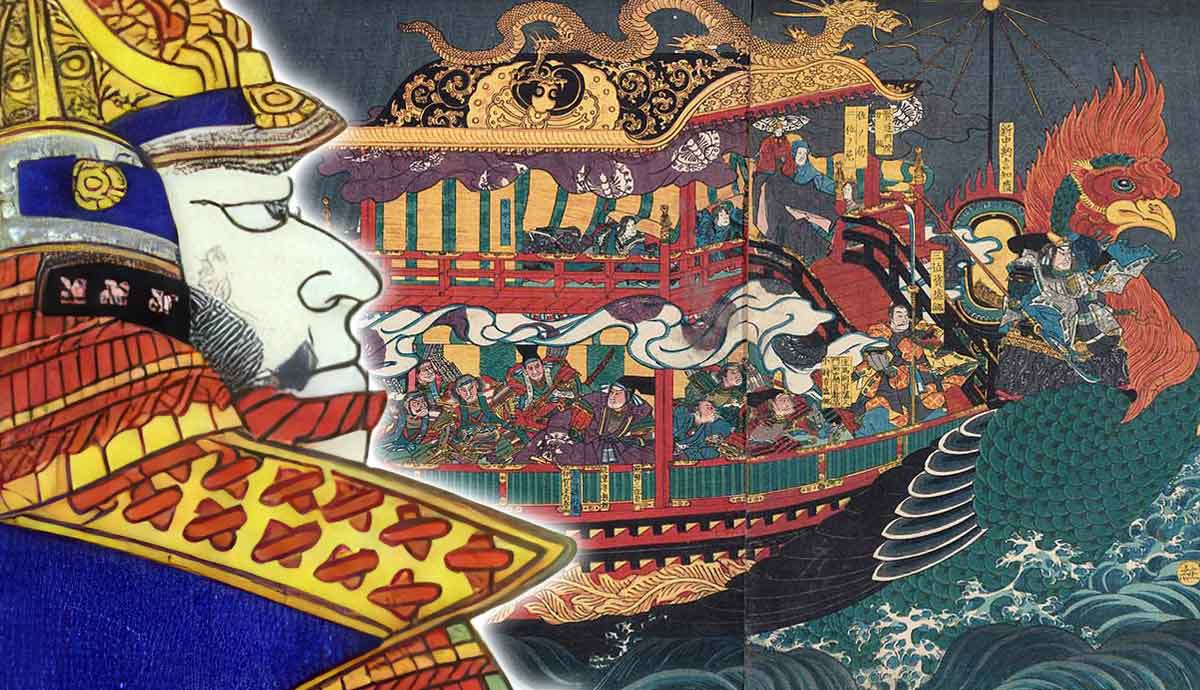
The Genpei War (11801185) was a conflict between the Taira (aka the Heike) and Minamoto (aka the Genji). Beyond a mere series of battles, it marked the end of the aristocracys monopoly on political power and the beginning of the first shogunate. The wars events were immortalized in The Tale of the Heike, a narrative blending history and legend. From political intrigue to battlefield heroics, the wars legacy endures as the moment when Japans government transitioned from the refined world of Kyoto to the military order of Kamakura.The Call to War, a Jilted Prince, and the First SeppukuTaira no Kiyomori Portrait, Fujiwara Tamenobu and Takenobu, 1300. Source: Wikimedia CommonsIn the 1170s, Taira no Kiyomori, head of the powerful Taira/Heike clan, emerged as the dominant power at the Kyoto Imperial Court. He secured influence by marrying his daughter Tokuko to Emperor Takakura and, after his abdication, placing his infant grandson on the Japanese throne as Emperor Antoku.In response, in 1180, Prince Mochihitothe son of retired Emperor Go-Shirakawa who felt that he should have been the next in lineissued a call to arms, urging the Tairas rivals, the Minamoto family, to help him seize power. According to other accounts (Turnbull, 1996, p. 40), it was the Minamoto who issued the challenge to the Taira, using Mochihito as a pretext to strike at their rivals and secure their own political position.The Genpei War officially began with the Battle of Uji of 1180, where Minamoto no Yorimasa led a contingent of Genji soldiers and Kyoto warrior monks in front of The Phoenix Hall of the Byodo-in temple.The Battle at Uji Bridge, Utagawa Sadahide, 1844. Source: Wikimedia Commons.The Minamoto ultimately lost, so the defeated Yorimasa asked his attendant to cut off his head to preserve his honor. Watanabe no Chojitsu Tono replied that he would only do it if his lord took his own life first. He faced the west and spoke his last, moving words: This forgotten tree, never through the fleeting years burst into flower, and now that the end has come, no thought but turns to sorrow. Having uttered these final words, he pressed his sword point into his belly, collapsed forward, and died transfixed (Tyler, p. 235).The death of Minamoto no Yorimasa echoed throughout history. Not only did it cost Prince Mochihito his life (he was captured and executed after the battle), it also cemented the samurai tradition of the jisei death poem, as well as the practice of seppuku ritual suicide (possibly the first one in recorded history) with a kaishaku attendant who cuts off the head at the end.The Two Rising Stars of the MinamotoMinamoto no Yoritomo, Fujiwara no Takanobu, 1179. Source: Wikimedia CommonsAfter Yorimasas defeat at Uji, his kinsman Minamoto no Yoritomo emerged as leader among the Genji. Returning from exile in Izu, he raised forces in eastern Japan (Kanto region), slowly building his power base away from Kyoto and gaining support of powerful clans. He did this by simply giving away lands around Kanto and beyondup until then a prerogative of the emperorfor pledges of loyalty. This came from the realization that the occupant of the Kyoto throne might hold symbolic authority, but real power belonged to the one with the most warriors and swords at his disposal.Through this, Yoritomo laid down the foundation for the samurai vassalage system, with many warrior lords with their own retainers coming together under one person at the very top. A person who, in time, would be called the shogun.Asahishogun Minamoto no Yoshinaka, Utagawa Yoshitora, 1866. Source: Wikimedia CommonsWhile all this was happening, Kiyomori overreached. In an unpopular move, he ordered the burning of Buddhist temples and the punishment of monks who had aided the Minamoto. When Taira no Kiyomori died in 1181, it was seen by some as heavenly retribution, hurting the legitimacy of his fight in the opinions of noble families. The leadership of the Heike then passed to Kiyomoris son Munemori but, due to drought and famine, fighting did not resume until 1183. And when it did, it was Yoritomos cousin Yoshinaka who took the initiative.After winning a string of battles, Yoshinaka advanced on Kyoto, entering the capital with the retired Emperor Go-Shirakawa as Munemori and Emperor Antoku fled. Yoshinakas rise, however, brought tensions. His crude warrior manners at Kyoto alienated allies, and his presumption of Minamoto leadership angered Yoritomo. A power struggle erupted within the Genji clan. In 1184, Yoshinaka was defeated during the Second Battle of Uji by Yoritomos brothers Noriyori and Yoshitsune. He fled and ultimately took his own life. He is widely remembered today for also being master to the female warrior Tomoe Gozen, the warrior worth a thousand.The Road to Dan-no-uraThe Great Battle at Dan-no-ura, Utagawa Yoshitsuya, 1859. Source: Wikimedia CommonsWith Yoshinaka gone, the Minamoto turned west against the Taira. Cooperating awkwardly with both kinsmen and allies of the moment, Yoritomo in a series of sharp battles drove the Taira back along the shores of the Inland Sea (Totman, p. 95). The final naval clash of the Genpei War would take place at Dan-no-ura in the Shimonoseki Strait off the southern tip of Japans main island of Honshu, where it meets Kyushu.The Taira, carrying the young Emperor Antoku and the imperial regalia, faced Yoshitsunes forces in a fierce naval battle that continues to ignite imaginations across Japan nearly a millennium later. Initially the currents favored the Taira but when some of the Heike allies shifted sides, the tide turned both literally and figuratively. The Taira fleet broke apart. When Antokus grandmother leapt into the sea with the child-emperor, the battle was officially over. On April 25, 1185, the Minamoto secured total victory. But the battle for military control of Japan was far from over.Brothers at WarPortrait of Minamoto no Yoshitsune, Unknown Author, Sengoku period (mid-15th to early 17th century). Source: Wikimedia CommonsThe victory at Dan-no-ura turned out to be a prelude to more Minamoto infighting. At its heart lay the fraught relationship between Yoritomo and his half-brother Yoshitsune, echoing the previous rivalry with Yoshinaka. Yoritomo was a political leader operating out of Kamakura in eastern Japan while Yoshitsune, separated from his brother for years, distinguished himself as a brilliant general on countless battlefields. The retired Emperor Go-Shirakawa honored Yoshitsune with titles, further elevating his status. Soon, Yoritomo started to perceive him as a threat.Determined to centralize power, the very foundation of the shogunate military government, Yoritomo made the decision to remove his brother from the picture using the first available excuse. Since the seat of power in Japan was shifting away from Kyoto to Kamakura, any kind of close relationship with the imperial court could have been construed as traitorous. So, when Yoshitsune accepted court ranks without Kamakuras official blessing, Yoritomo branded him an enemy.Genkuro Yoshitsune to Musashibo Benkei, Utagawa Toyokuni, 1804. Source: Wikimedia CommonsYoshitsune fled Kyoto and lived in exile for a while accompanied by allies and loyal retainers like the legendary warrior monk Benkei, known for his gigantic stature and proficiency with the naginata glaive. But pressure from Kamakura eventually left Yoshitsune with no friends and, in 1189, his residence in Hiraizumi in modern-day Iwate (northeastern Japan) was attacked.Benkei fought to his last breath, struck with arrow after arrow yet remaining upright in what came to be known as the standing death of Benkei. Inside his house, Yoshitsune committed seppuku. His head was sent to Kamakura as proof of his death. Yoritomo triumphed and had Emperor Go-Toba proclaim him shogun in 1192. Yoritomo might have realized that the emperors power was mostly symbolic, but symbols can be a powerful thing.The Japanese emperor lost basically all political power in the mid-14th century and did not regain it until the Meiji Restoration in the mid-19th century. But whenever a new shogun (i.e. the true ruler of Japan, outside of the Warring States period) was proclaimed, he had to be formally appointed by the emperor, whom the military leader ostensibly served. Norms and traditions, after all, had to be upheld and respected.The Impermanence of EverythingYoshinobu Tokugawa, the last shogun, in Osaka, Frederick Sutton, 1867. Source: Wikimedia CommonsThe Genpei War was undoubtedly a massive turning point in Japanese history. From Prince Mochihitos call to arms to the battle at Dan-no-ura and far beyond, it transformed Japans political and cultural landscape. Its battles passed into legends, its deaths inspired poetry, and its outcome established a samurai government. But as we have seen in Shogun, set during the 16th-century portion of the Warring States period, even the shogunate would not last forever.The position of the shogun was abolished at the end of the Edo Period (16031868), returning the emperor to power, which lasted until the end of World War II. Ultimately, nothing is forever. The opening lines of The Tale of the Heike remind us of that from the get-go: The Jetavana Temple bells ring the passing of all things (Tyler, 2014, p. 3).BibliographyTotman, C. (2016). A History of Japan, Second Edition. Blackwell Publishing.Turnbull, S. (1996). The Samurai: A Military History. Japan Library.Tyler, R., translated by, (2014). The Tale of the Heike. Penguin Books.
0 Comments
0 Shares
1 Views

 Arabic
 French
 Spanish
 Portuguese
 Deutsch
 Turkish
 Dutch
Dutch
 Italiano
 Russian
 Romaian
 Portuguese (Brazil)
 Greek
Greek