


WWW.THECOLLECTOR.COM
The Battle of Castillon That Ended the Hundred Years War
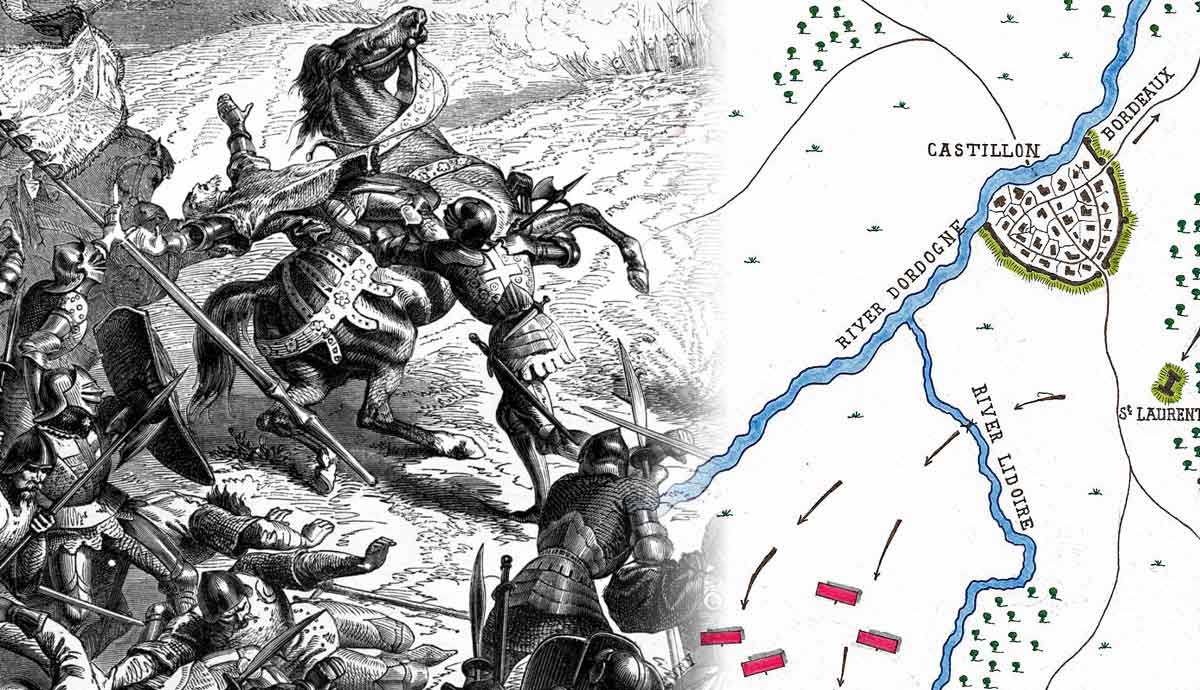
The Hundred Years War is usually known for great English victories over the French at the battles of Crcy, Poitiers, and Agincourt. However, the conflict ended in Frances favor in the summer of 1453, when French forces defeated an English army in detail near the town of Castillon in the first European battle to see the use of massed field artillery. The ensuing decades would see France consolidate its position as Europes leading power while England succumbed to civil war.The Late Stages of the Hundred Years WarThe Capture of Joan of Arc. Painting by Adolphe Alexandre Dillons, c. 1850. Source: Wikimedia CommonsDuring the early 1400s, the English went from being the dominant force in France to steadily losing control over their possessions on the European continent. In the 1420s, a French army besieging the city of Orlans was joined by a young French peasant woman named Joan of Arc. Their victory helped turn the tide against the English, and French royal forces continued to march against the armies of England and their French allies.By 1451, the new French king, Charles VII, marched an army into Gascony and seized control of most of the territory. This campaign came on the heels of the successful conquest of Normandy. The English armies were overstretched and faced major turmoil at home, enabling quick French gains. However, the French faced a conundrum. After decades of English rule, many Gascons remained loyal to the English. The Duchy of Bordeaux maintained allegiance to the English Crown and sent envoys to London begging for an expedition to reconquer the territory. Charles knew that the locals did not support him, requiring him to maintain large garrisons in the region.On October 17, 1452, English troops under the command of John Talbot, the Earl of Shrewsbury, landed near Bordeaux. Thanks to the support of the locals, who joined his army in droves, he was able to retake much of Gascony. This startled Charles and his court, who feared that the English would attempt to retake Normandy. They gradually mustered an army to oust Lord Talbot once and for all.Opposing ArmiesKing Henry VI invests John Talbot with the sword of office as constable of France in 1436. Source: Warfare History NetworkAs French forces converged on western Gascony from three directions, Talbot prepared his forces to fight. In addition to the 3,000 men who landed with him, he received another 3,000 reinforcements from England led by his favorite son, the Viscount Lisle. Talbots army was bolstered by local Gascons who supported his cause. By the time he arrived at Castillon, Talbot had anywhere between 5,000 and 10,000 men with him.Charles spared no effort to raise an army to reconquer Bordeaux. Along with the Duke Peter II of Brittany and Jean Bureau, he had assembled a force of between 7,000 and 10,000 men, including Gascons loyal to the French Crown. He laid siege to the Gascon town of Castillon, hoping to draw the English out to battle. The plan worked; the garrisons pleas for assistance forced Talbot to march the bulk of his forces towards the besieged town. This was despite his plan to build up his strength before meeting the French on open ground.By this stage in the war, the armies of England and France were evolving considerably. Infantry still relied heavily on armor, two-handed swords, and pikes. Archers still used longbows and crossbows, but they were being phased out for gunpowder weapons such as culverins, long firearms similar to the more famous arquebuses. France had a particular advantage in that they employed a lot of artillery at the battle, which they planned to use when besieging Bordeaux again. The coming fight would see the first massed use of field artillery in a European battle.The Day of BattleMap of the Battle of Castillon by John Fawkes. Source: British BattlesWhile King Charles was present at Castillon, the French forces were commanded by Jean Bureau, a renowned artillery officer. He established a fortified camp on the River Lidoire, just downstream from the besieged town. The French soldiers set up defensive works in preparation for an assault and were backed up by several hundred pieces of French artillery. They planned to lure the English into attacking the camp and overwhelm them with heavy firepower.The English vanguard of several hundred archers and cavalrymen was personally led by Talbot. He was aware of the extent of the French army and did not want to launch an immediate attack. Instead, he waited for the main body of his force to catch up. However, messengers from the garrison of Castillon arrived at his encampment and informed him that the French had broken up the siege and were withdrawing eastward. This excited Talbot, who hoped to fall upon the French rearguard and defeat them in detail. On July 17, he dismounted his cavalry and gathered as many men as he could for an assault.Initially, the attack went surprisingly well. Momentum carried the English force into the French defenses on the outskirts of the camp and fighting was grim. However, the French artillery inflicted gruesome losses on the attackers and Talbot had no weapons in his arsenal capable of matching the French firepower advantages. When Peter II brought 1,000 Breton cavalrymen to attack Talbots flank, the English army disintegrated. Some Englishmen fled back to Bordeaux while others deserted into the countryside, shedding their weapons and armor.The Fall of BordeauxThe death of Lord Talbot during the battle, 1880. Source: Warfare History NetworkWhile the English attack collapsed, Talbots horse was struck by an artillery round and he fell to the ground. His son also fell in the battle, contributing to the disorder in the English force. While English casualties were estimated to number in the thousands, French losses were much lighter, possibly a few hundred at most. Charless victory was complete and he could now march on the rest of Gascony with relative ease.Following the decisive French victory, the garrison of Castillon surrendered quickly to avoid bombardment from the formidable French guns. Charles followed up on this success by advancing to Bordeaux and laying siege to the port city on August 13th. The garrison, made up of some English stragglers from Castillon and loyal Gascons, held on for just over two months. However, the French had the strategic advantage and no English reinforcements were coming.By October 19, the city surrendered in exchange for Charles agreeing to respect the regions autonomy. Nonetheless, he had the governor executed for treason and insisted on appointing several loyalists to senior positions throughout the region. The seizure of the city meant that France was now in full control of Gascony for the first time in 300 years. The French showed unity and resolve that had been lacking at the start of the Hundred Years War, enabling their victory over the weak and divided English.France and England After the WarThe Battle of Tewkesbury, c. 1460-1560. Source: Wikimedia CommonsAt the time of the final conquest of Bordeaux, no one thought that the fighting between the English and the French would end. England still maintained control over Calais and the Channel Islands. Additionally, the English had not renounced their claim to the French Crown. Even as Charles defeated the final English garrisons in Gascony, he remained vigilant to the possibility that the English would land another expeditionary force in northern France and march on Paris.However, the English cause was undermined by the mental incapacity of King Henry VI. Additionally, English nobles demanded compensation from the Crown for lost territories in France. The collapse of royal authority led to the War of the Roses in England, which distracted English leaders and effectively ended the period of hostilities between England and France. While the English attempted to support a revolt against the French in Burgundy, it failed. The Treaty of Picquigny of 1475 formally ended the war and the English claim to the French Crown, although tensions between the two kingdoms remained high.France would seize Calais in 1558 from the English, finally unifying the mainland under French control. From then on, France became one of the dominant continental powers in Europe. Meanwhile, after being reduced to the British Isles, England began to focus on strengthening its navy and exploring colonial opportunities further afield rather than acquiring territory on the European continent. The Royal Navys mastery of the worlds oceans allowed the British to build the largest empire the world has ever seen.The Battles LegacyIllustrations of medieval artillery pieces from Eugne Viollet-Le-Ducs Dictionnaire raisonn de larchitecture franaise du XIe au XVIe sicle, 1856. Source: War History OnlineWhereas the battles of Agincourt and Crecy displayed the power of the English longbow, Castillon was a clear statement of the superiority of gunpowder artillery. When the French army set up defensive positions supported by artillery, they forced the English to attack them on their terms. The lopsided nature of the battle reflected the French superiority in firepower. Despite Talbots willingness to fight the battle on his terms, he was convinced to start the battle by false information and overconfidence in his own abilities.By the end of the Hundred Years War, land armies in Europe were beginning to transition to the use of firearms. These proved to be very potent and made armies much more lethal. The English army was also equipped with these weapons at Castillon, but not to the same extent as their French enemies did. They continued to rely on the archers that had won glorious victories decades earlier. However, Talbots archers failed to inflict serious losses as Castillon, whereas the majority of the English casualties were inflicted by French artillery. This was noted by military observers all over the continent.Castillon also proved to be an example of a country sending an expeditionary force too far away without sufficient support. Talbot did not have a large enough force to defend all of Gascony, let alone march on Paris. Yet he insisted on fighting Charless vastly superior force in the open. Once his force was defeated, the English could not reinforce the garrison of Bordeaux, ensuring their defeat. The inability to address these logistical issues plagued English armies throughout the whole conflict and ultimately condemned them to defeat.
0 Commenti
0 condivisioni
26 Views

 English
 Arabic
 French
 Spanish
 Portuguese
 Deutsch
 Turkish
 Dutch
Dutch
 Russian
 Romaian
 Portuguese (Brazil)
 Greek
Greek