


WWW.THECOLLECTOR.COM
What Tests were Used to Convict Someone of Witchcraft?
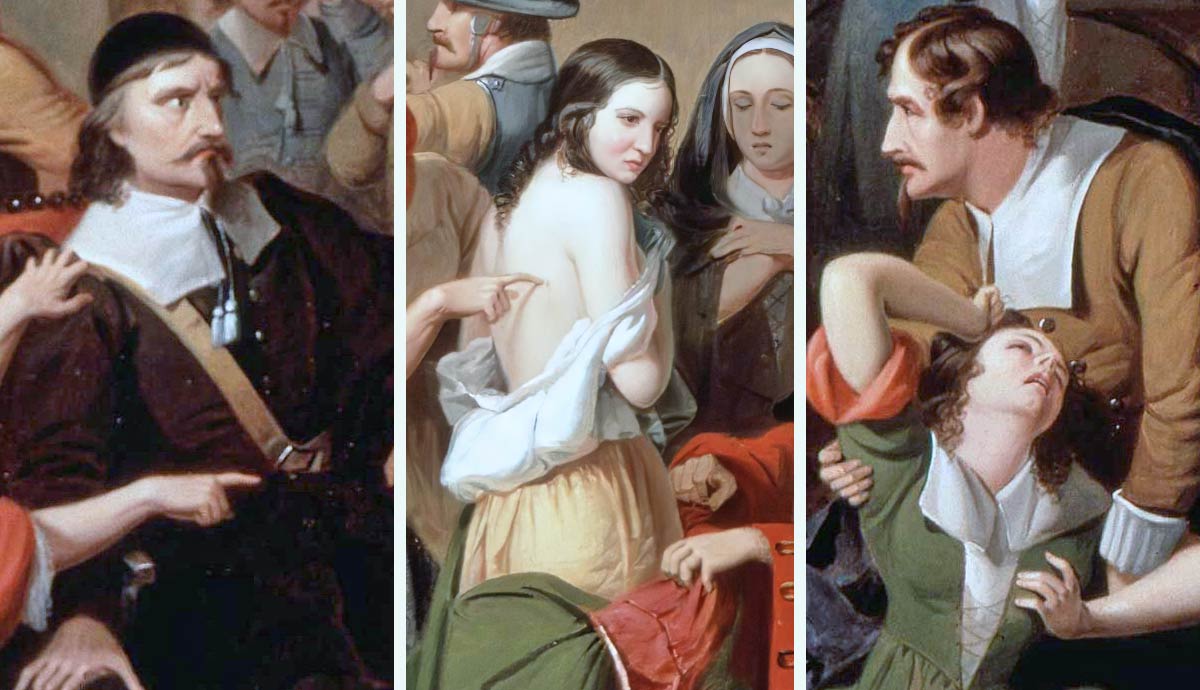
European Witch hunts throughout the early-modern period, especially 1450 to 1750, resulted in the executions of 30,000 60,000 people. 80% of those executed were women. From European colonies in the Americas to the Holy Roman Empire, treatises and laws outlined how to identify, prosecute, and punish witches. Most accusations stemmed from gossip, jealous neighbors, or anger against local women defying social norms. To provide tangible evidence for metaphysical crimes, specific tests were used to force confessions through public shaming and torture, and to prove the accused were consorting with the devil.Witch Marks and PrickingKeisnijder, by Nicolaes Weydtmans, c. 1580 -1642. Source: RijksmuseumThe most common evidence used against defendants were the discovery of a devils mark, witch mark or devils teat. Any mark, like a scar, birthmark, or mole, became evidence of a pact with a devil. Jurors and witch hunters believed that these marks were used to nurse the devil, demonic spirits, or familiars. The accused were stripped naked, shaved, and forcibly searched for any bump or blemish.The already intrusive test took on a more sadistic iteration where their bodies were pricked for hours to uncover hidden marks. Witch prickers became a coveted profession, usually for men, who received bonuses for finding hidden marks. If the defendant felt pain or bled, there was no mark and they were exonerated. Many intentionally poked the accused in places less sensitive as they received financial bonuses for the marks they found and witches they convicted. For instance, during the Hopkins Trials (1645 -1647) in England, 100 out of 250 defendants were executed with these marks serving as strong evidence in their convictions.Swimming TestWitches apprehended, examined, and executed: title page, cropped, printed by Edward Marchant, 1613. Source: Wellcome CollectionSwimming tests were a common way to investigate an accused witch during the 16th and 17th centuries. European traditions believed water to be a sacred element because of its purification role during the sacrament of baptism. To test someones sacredness, the defendant was stripped, bound by their wrists and ankles, then thrown into a deep lake or moving body of water with a rope attached to them. If they floated during the test, jurors believed that the water was rejecting them for unholy actions and demonic attachments.This was enough evidence to convict someone of witchcraft. For instance, in England in 1613, a mother and daughter named Sutton and Marry were found guilty and executed for witchcraft after floating during multiple swimming tests. Even if one was proven innocent during the test, many were not pulled out of the water in time and died drowning.Ducking StoolsIllustration of a woman punished by a ducking stool, by John Ashton, 1834. Source: Wikimedia CommonsDucking stools were first used in Saxon England to punish corrupt merchants. However, over the centuries it was used to publicly shame women for any behavior deemed unruly, naggy, or too independent by neighbors or husbands. If a woman was accused of flirting, gossiping, or talking back, she found herself forced onto the ducking stool.From the medieval period onwards, the ducking stool was also used in a similar fashion to the swimming test to convict someone of witchcraft. Those accused were stripped in public, bound, and tied to a wooden chair. The chair was lowered into the water to fully dunk and submerge the alleged offender while being jeered by the public. If they began to drown, then they were found not guilty. If the accused seemed to not drown or struggle, then they were convicted and further punished.Witch Cake TestCake and Wine Glass, by Rubens Peale, 1865. Witch cakes were made with the urine of victims of witchcraft that was baked into a rye-based dough and fed to a dog. If the dog fell ill, then a witchcraft crime was committed. Source: Wikimedia CommonsWitch cakes were a peculiar way to prove someone was a victim of witchcraft in 17th century England and the American colonies. If someone experienced bad luck, injury, or illness, their urine was baked into a cake and fed to a dog. If the dog became ill, this was proof that the person had been cursed or hexed. The dog was then used to sniff out the witch was since dogs were perceived to be their familiars.Witch cakes were famously used during the Salem Witch Trials as one of the first forms of evidence that spiraled into frenzied accusations and the eventual executions of 20 people. After the daughter and niece of the local Reverend Samuel Parris became erratic, a local resident, Mary Sibley, instructed their slave Tituba to bake a witch cake and feed it to their dog. However, Samuel was livid about the test and accused Tituba of performing witchcraft as the dog fell ill and the girls were still hysterical.Witch Weighing TestDie Hexenwage zu Oudewater in Holland, by Fritz Bergen, 1884. Source: Wikimedia CommonsPeople were also found guilty of witchcraft through weighing tests. In local weighing houses, normally used for livestock and crops, the accused were forced onto the scale and weighed against a large bible. Many believed that witches weighed less than the holy scripture because they had no souls and could take the form of spirits. Courts considered any weight less than the bible to be condemning enough for a guilty conviction and a death sentence.However, weighers were easily bribed to misread the scales, wrongfully convicting many accused. To combat this, a small town in the Netherlands, Oudewater, became famous for having the fairest witch scales in Europe. Allegedly approved by the Holy Roman Emperor Charles V, the Oudewater witch scales, called Heksenwaag, offered certificates that validated someone weighed more than the bible. Accused witches travelled from all over to obtain these certificates to maintain their innocence.
0 Commentaires
0 Parts
33 Vue

 English
 Arabic
 Spanish
 Portuguese
 Deutsch
 Turkish
 Dutch
Dutch
 Italiano
 Russian
 Romaian
 Portuguese (Brazil)
 Greek
Greek