


WWW.THECOLLECTOR.COM
The Goals & Legacy of the Gettysburg Address
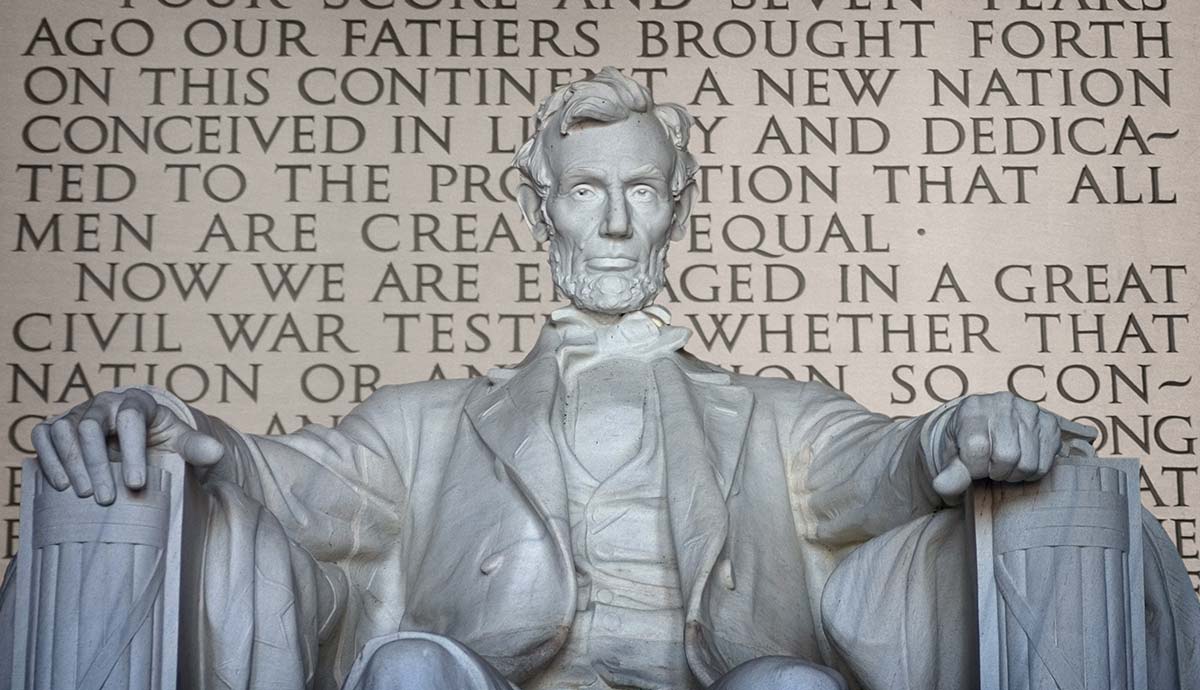
President Abraham Lincoln is remembered for many reasons within the United States and worldwide, but one of his most significant contributions to history was his legendary Gettysburg Address. While this speech was originally intended to dedicate a cemetery, it evolved into something much more diverse and powerful, a tool that Lincoln used to propel the Union cause forward. What goals did Lincoln hope to achieve when he spoke these powerful words, and how have those achievements evolved into modern history?What Was the Gettysburg Address?President Abraham Lincoln, highlighted in red, at Gettysburg a few hours before giving his famous address. Source: Library of Congress/Wikimedia CommonsAbraham Lincoln is considered by historians to be one of the most eloquent of the nations past presidents, known for his flowing speeches and written work that was articulate yet used simple language that appealed to the nations citizenry as a whole. He utilized the newspaper as a way to reach the populace in an era before mass media, and gave stunning speeches, including his annual congressional addresses and the Gettysburg Address.The Gettysburg Address was given on November 19, 1863, in Gettysburg. The location, in Adams County, Pennsylvania, was home to a devastating battle just months prior. Over July 1-3, the Battle of Gettysburg, a turning point in the American Civil War, raged. These three days made up the bloodiest single battle of the entire war. The battle saw the Confederate troops invade the north, for only the second timeand it would be the last. The battle concluded in a Union win, ending Confederate General Robert E. Lees bid to take the Union army within its own territory and change the trajectory of the war, though fighting would continue for two more years. Over 51,000 soldiers were estimated to be casualties of the battle, with almost 4,000 Confederates and just over 3,100 Union soldiers perishing. Another result of the fighting was the establishment of a cemetery for the Union dead at the battle site. Though he was not the keynote speaker, President Lincoln was invited to the dedication ceremony for the cemetery and asked to make a few appropriate remarks to the crowd of approximately 15,000.Union dead on the battlefield after the first day of fighting at Gettysburg in July 1863. Source: Library of Congress/Wikimedia CommonsLincoln did so in a speech that is rather short, considering its iconic reputation. Less than 275 words in length, the oration didnt even take three minutes to share. However, within those three minutes, Lincoln managed to stretch the purpose of his narration to meet several political and fundamental goals for the Union cause.Honoring Fallen SoldiersBattle of Gettysburg by Thure de Thulstrup, restored by Adam Cuerden. Source: Library of Congress & Adam Cuerden/Wikimedia CommonsThe first and original goal of the Gettysburg Address was a nod to the dedication ceremony and the reason Lincoln had been invited to Pennsylvania. He honored the sacrifice of the soldiers who lay dead at Gettysburg and of those who continued to fight to preserve the nation. He spoke of those who here gave their lives that the nation might live. He said that these brave men had already consecrated their resting place and that there was little that those in attendance for the dedication could do to outweigh the honor that the soldiers had already bestowed upon the grounds.Tying the War to the Cause of FreedomA presidential campaign ad from 1864 illustrates Abraham Lincoln as a champion of freedom for all, and his opponent, George McClellan, as siding with the Confederacy and upholding the institution of slavery. Source: Library of Congress/Wikimedia CommonsHowever, Lincoln did more in his address than simply honor the soldiers who had given their lives and were now buried at Gettysburg. Within his speech, Lincoln reminded his audience that the reason they were there was the cause of freedom for all. The first words of the speech harken back to the Declaration of Independence, meant to preserve freedom for all Americans.Coupled with the Emancipation Proclamation, which had been released in January of that year, Lincoln tied the Union cause with the abolition of slavery. While slavery was one of the key causes of the Civil War, for many in the American public, the focus of the war had been the preservation of the Union. Lincoln tied the two objectives together in his speech, promising that this nation, under God, shall have a new birth of freedom, and that the government of the people, by the people, for the people, shall not perish from the Earth.Inspiring Americans to ActionLincoln is depicted giving the Gettysburg Address in this lithograph. Source: Library of Congress/Wikimedia CommonsThe Gettysburg Address also served as a call to action for Americans, inspiring them to continue on in the fatiguing, bloody war that had already raged for over two years. In the speech, the audience was encouraged not to let these dead die in vain. His espousal of American values, including freedom, helped Americans make sense of the ongoing carnage, reminding them to be hopeful and to persevere. In Lincolns philosophy, the soldiers at Gettysburg and beyond gave their lives for the important tenets for which the war was being fought, and it was now up to the American people to continue supporting this fight. Lincolns words not only served to encourage Civil War-era citizens, but would continue to inspire Americans in future military conflicts and general challenges.Lincolns LegacyThe Gettysburg Address inscribed in the interior south wall of the Lincoln Memorial in Washington, DC. Source: Wikimedia CommonsIn the Gettysburg Address, Lincoln remarked, The world will little note, nor long remember what we say here However, this prediction would prove to be markedly false. The Gettysburg Address is one of the most famous speeches, not only in American history, but in world history. Within a month after the speech was given, it was being used in schools and is still utilized in education today, both as a study of this complex era of American history and as an example of effective oration.The Gettysburg Address was referenced in Senator Charles Sumners eulogy on Lincoln after his assassination less than two years later, and was invoked during anniversary celebrations relating to Lincoln and the Civil War. In the decades after, the address went on to be referenced in late 19th-century politics, particularly in regard to whether the government was truly still for the people or for big business during the Gilded Age.The speech was often quoted during the Civil Rights Era, where freedom was a central theme, and during the Cold War to promote pro-American sentiments on a global stage. In 1959, the State Department issued 50,000 reproductions of the Gettysburg Address, some with translations in different languages, with a preface explaining that Lincolns speech will endure forever as an expression of the spirit of the United States of America. The speech also played a starring role in a series of comic books in numerous languages that were distributed throughout Southeast Asia as an effort to cultivate pro-American feelings.An excerpt from Lincolns speech was printed on postage stamps in 1948. Source: Smithsonian National Postal Museum/Wikimedia CommonsLincolns oratory skills contributed to the success of the speech as well. Though what he said made the speech important, the way he said it was just as important. The keynote speaker of the day, Edward Everett, had spoken for two hours before Lincoln gave the address, and while Everetts speech is not considered a bad speech, it is remembered very little today due to its length. Lincolns to-the-point approach and simple, yet effective, language make the speech accessible to many. Everett himself later said, I should be glad, if I could flatter myself that I came as near to the central idea of the occasion in two hours, as you did in two minutes. The concise nature of the Gettysburg Address allowed for easy reprinting in newspapers and pamphlets, disseminating the message beyond the crowd at Gettysburg that day.Today, five surviving copies of the speech in Lincolns own handwriting exist, two of them produced before the speech was given, with one likely being the copy Lincoln used to refer to on the day of the dedication. The others were produced after the speech for benefit events. The copies are owned by the Library of Congress, the Abraham Lincoln Presidential Library and Museum, the White House, and Cornell University. These copies are on display periodically and are a stark physical reminder of the addresss enduring legacy.A political cartoon from 1943 recalls the legacy of the Gettysburg Address. Source: National Archives at College Park/Wikimedia CommonsThe Gettysburg Address, though it may have started out with a singular purpose, evolved to meet numerous goals of the American president and government during one of the countrys most trying times. The impact of Lincolns words cannot be underestimated and is still evident decades later in its eloquent legacy.
0 Reacties
0 aandelen
242 Views

 English
 Arabic
 French
 Spanish
 Portuguese
 Deutsch
 Turkish
 Italiano
 Russian
 Romaian
 Portuguese (Brazil)
 Greek
Greek