


WWW.THECOLLECTOR.COM
The History of Equatorial Guinea, Africas Only Spanish-Speaking Country
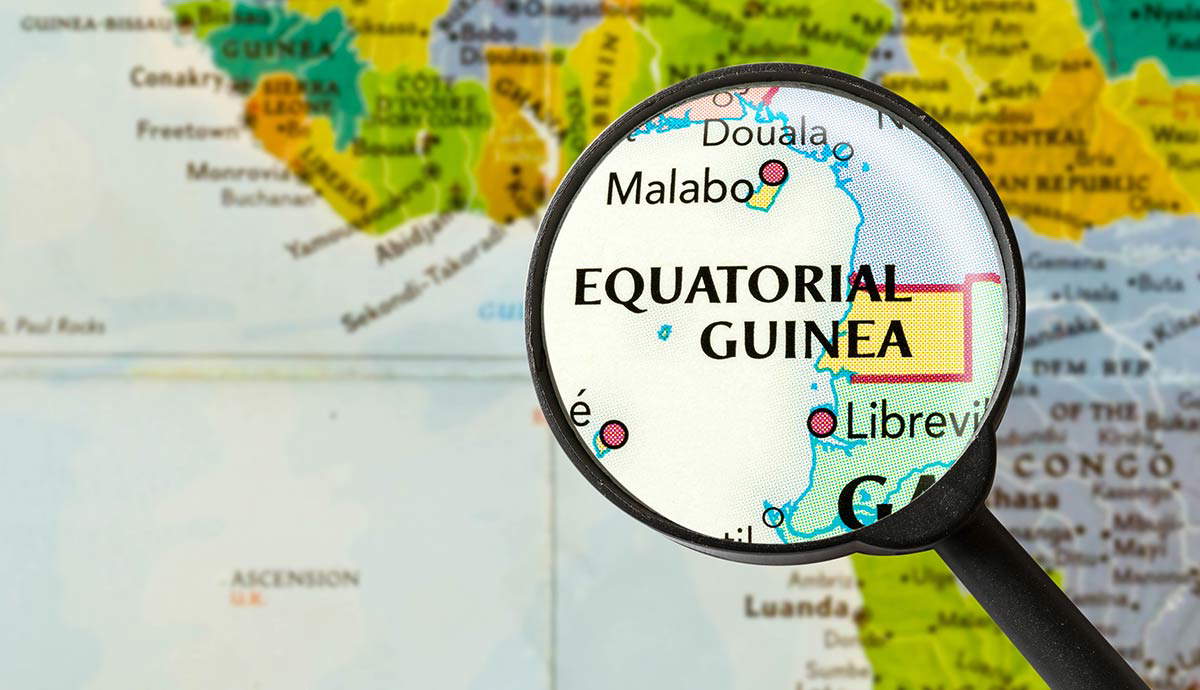
At 10,831 square miles (28,052 square kilometers), Equatorial Guinea, on the West coast of Africa, is one of the smallest countries in Africa and is comparable in size to the state of Massachusetts.Despite its size, the country has been a busy place. It has a history rich in migrations of many peoples, from Indigenous Africans to the competing operations of three colonial powers, all of which shaped the country that exists today. Read on to discover more on the history of Equatorial Guinea.Equatorial Guineas GeographyMap of Equatorial Guinea. Source: Library of Congress, Washington DCEquatorial Guinea is a small country that sits in the Bight of Biafra on the West African coast. Cameroon lies to its north, and Gabon lies to its east and south. To the west lies the vast expanse of the Atlantic Ocean.The countrys main geographical constituents are the mainland, known as Rio Mun, and an island called Bioko, which was previously known as Fernando Po. These two regions are distinct and have very different histories, adding to the complexity that is the history of Equatorial Guinea.The country also includes the small island of Annobn, which lies to the southwest, beyond So Tom and Prncipe.Bantu MigrationsA Fang figure from Equatorial Guinea, photograph by Sailko. Source: Wikimedia CommonsVirtually all countries in sub-Saharan Africa have been characterized at some point in their history by migrations of the Bantu ethnic groups, who originated in the western-central region of the continent. Equatorial Guinea, close to this epicenter, encountered migrations as far back as around 2000 BCE, with permanent settlements being erected by 500 BCE at the very latest.They were, however, not the original inhabitants. That honor went to the so-called Pygmy peoples who, over the ages, were pushed into progressively isolated pockets in the north of the country and now constitute a tiny fraction of the countrys 1.8 million people.Representing the vast majority of todays population of Equatorial Guinea are the Fang, a Bantu ethnic group that arrived in Equatorial Guinea fairly recently. They conquered and displaced other groups in the area around the mid-19th and early 20th centuries. Today, they represent almost 86 percent of the countrys population.European InterestMap showing the division agreed upon by the Treaty of Tordesillas in 1494, by Ane Urrutia. Source: Wikimedia CommonsBefore the Fang people arrived, however, European powers had already taken an interest in the area. Portuguese explorer Ferno do P and his crew were likely the first Europeans to spot the island of Bioko (Fernando Po) in 1472, a substantial landmass that makes up part of Equatorial Guinea.By the Treaty of Tordesillas in 1494, Portugal gained exclusive rights to trade in Africa. Spain was given virtually all the rights in the Americas, while the Portuguese got the easternmost section of South America, which is now part of Brazil. The Portuguese used the islands in the Bight of Africa, including Fernando Po, for slave trading.In 1777, several territories changed hands. The Spanish granted the Portuguese rights to land further west in South America, while in return, the Portuguese ceded Fernando Po and land on the African continent to Spain. The Spanish intended to use this foothold as a source for slaves to take back to the new world. The area had not been actively colonized by the Portuguese, and the Spanish began their invasion in 1778.Efforts at expansion were foiled by an outbreak of yellow fever, and the Spanish left the island in 1781, having made no effort to establish any presence on the mainland. Two decades later, the political winds shifted completely, and the island of Fernando Po would factor considerably in the fight against slavery.The Fight Against SlaveryThe Barque Orion captured by HMS Pluto Nov 1859, by Josiah Taylor, 1876. Source: Wikimedia Commons/Royal Museums GreenwichIn the early years of the 19th century, Britain proved its supremacy as the worlds foremost naval power. When Britain abolished the slave trade in 1807, the British made huge efforts to defeat the practice through naval action. They pressured Spain to abolish slavery, too, but despite Spain conceding to the demands, a thriving trade in contraband continued.Strapped for cash, the Spanish leased Fernando Po to Britain between 1827 and 1836 to serve as a base for anti-slavery operations. Complete control of the island passed back to Spain in 1836, which by this time had been eclipsed by other colonial powers and had lost most of its South American possessions. The British made offers to buy Fernando Po but were denied.Efforts to rekindle interest failed to gain financial traction in the decades that followed, and Spanish attempts to colonize Fernando Po and Rio Mun (the mainland part of Equatorial Guinea) were severely limited. Nevertheless, scientific expeditions were mounted to elevate the importance of the Spanish colony and assert Spanish presence. During this time, Fernando Po was also used as a penal settlement for Cubans.Spanish DominanceThe cacao trade renewed interest in Spains African colony, photograph by Rudolf Fanchini. Source: Wikimedia CommonsIn the first few decades of the 20th century, Spain was able to reassert some control over the territory of Spanish Guinea. This was in part due to the cacao trade. There was, however, a distinct lack of labor, and the Spanish looked to fill this void by using the Bubi population present on Fernando Po.Development was concentrated mainly on the island of Fernando Po, while the mainland remained comparatively ignored. By the end of 1898, at the end of the Spanish-American war, Spanish Guinea represented Spains last tropical colony.The colonial efforts resulted in the destruction of Bubi culture and populations, much of it by diseases such as yellow fever, dysentery, trypanosomiasis, and whooping cough. Many Bubi were relocated to work on plantations, but escape was easy, and many fled into the forests, leaving Spain with little in the way of an effective workforce. There were also rebellions and guerilla resistance, which made controlling the Bubi population nearly impossible.Although slavery was illegal, there was a perceived justification for forced labor. There was, however, little to differentiate forced labor from actual slavery. Additionally, there was still a notion among Europeans that Africans could not govern themselves and could not be incentivized to work for a salary.Persecution of the Bubi culture continues to this daya protest outside the embassy of Equatorial Guinea in Madrid, photograph by Calvin Smith. Source: Wikimedia Commons/FlickrThe Spanish turned their attention to migrant labor to suit their needs and drew from populations in the surrounding areas to work on the cacao and coffee plantations. Treatment of the worker population was brutal, and it drew international attention, especially from Britain, which applied diplomatic pressure to force Spain to improve working conditions.In 1914, the Spanish signed a deal with Liberia for the transport of 15,000 workers. The International Labour Organisation (ILO) later investigated this deal and declared that the workers had been recruited under conditions of criminal compulsion scarcely distinguishable from slave raiding and slave trading. As a result, the Spanish government forbade the recruitment of Liberian workers.A postage stamp from Spanish Guinea, photograph by Mark Morgan, 2016. Source: Wikimedia CommonsThe void, however, was filled by an illicit trafficking operation that procured a steady stream of workers from Nigeria. The smuggling moved to the realms of legality when the Spanish government signed a deal with the British Crown in 1942, allowing for Nigerians to work on the plantations.Over the decades, many tens of thousands of Nigerians ended up on the island of Fernando Po. Meanwhile, many Bubi people on Fernando Po had benefited from schooling and became landowners. Thus, a small elite of Bubi people helped maintain control and supported the Franco regime, even though other African territories around them clamored for independence.The driving force behind independence would mostly come from the mainland. Of concern to the Spanish administration was the reliance on migrant workers, so the colonial administration mounted military expeditions to Rio Mun in the 1920s to subdue and pacify the local Fang people. This is where much of the anti-colonial sentiment took hold. The fighting was brutal, and many Fang people were forced to work on plantations on Fernando Po.IndependenceFlag of Equatorial Guinea, by De la/from the Open Clip Art. Source: Wikimedia CommonsAfter the Second World War, Spain elevated the status of Spanish Guinea from colony to province. During this time, nationalist sentiment grew as the provinces inhabitants sought independence from colonial rule. In the 1960s, limited autonomy was granted, and then, in 1968, Equatorial Guinea gained full independence. The following years, however, would be anything but democratic. The countrys first president, Francisco Macias Nguema, created a one-party state and declared himself president for life.His rule was brutal and characterized by the repression of non-Fang ethnic groups. During his reign, it is estimated that up to 80,000 people were killed or fled the country, which only had a population of between 200,000 and 300,000 people.Medical reports suggested that Macias was mentally unstable, and contemporaries had severe doubts about his sanity. The countrys economy was utterly ruined, and in 1978, Macias was overthrown in a coup detat by Teodoro Obiang Nguema Mbasogo. He was then executed. Obiang became the new president, but subsequent elections were marred by irregularities and were completely one-sided. As of the time of writing, he is still president.Equatorial Guinea TodayMalabo, the capital of Equatorial Guinea, on the island of Bioko, photograph by Happiraphael. Source: Wikimedia CommonsEquatorial Guinea has relied heavily on cacao and coffee production but shifted to oil production after major deposits of the latter were discovered in the 1980s and 1990s. Despite having the third highest GDP per capita (it was previously ranked first) in Africa, much of the wealth is concentrated within a small proportion of the population. Poverty is thus a major issue in the country, and economic challenges lie ahead, with lower oil prices and tighter economic pressures on a global level.Nevertheless, the country is working towards diversifying its economy and becoming more stable, indicating a tentative positive outlook.Today, the country is home to around 1.8 million people, most of whom speak Spanish as a national lingua franca. Indeed, Equatorial Guinea is the only country in Africa that recognizes Spanish as its national language.
0 Kommentare
0 Geteilt
268 Ansichten

 English
 Arabic
 French
 Spanish
 Portuguese
 Turkish
 Dutch
Dutch
 Italiano
 Russian
 Romaian
 Portuguese (Brazil)
 Greek
Greek