


WWW.THECOLLECTOR.COM
5 Black Women Writers Who Changed the World With Their Prose
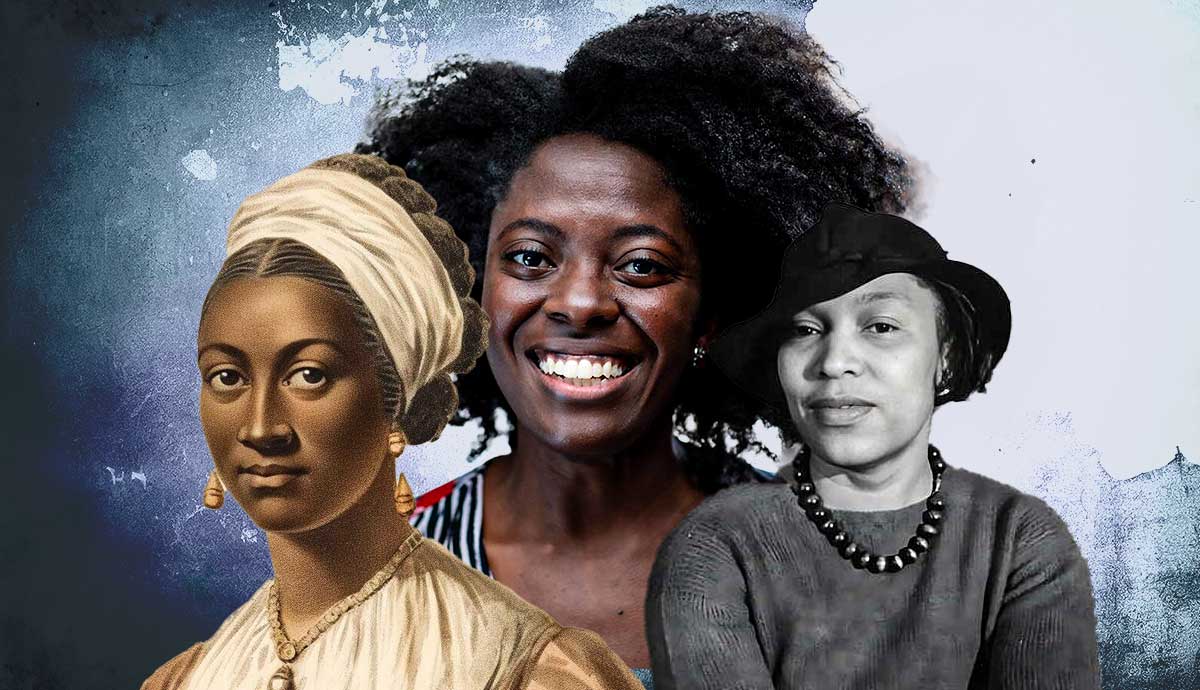
Through poetry, fiction, essays, and journalism, Black women writers have challenged racism, sexism, and social injustice while reclaiming narratives historically ignored or distorted. Their voices have preserved cultural traditions, documented resistance, and inspired movements for civil rights, gender equality, and liberation. Writers like Phillis Wheatley, Mary Ann Shadd Cary, Zora Neale Hurston, Audre Lorde, and Yaa Gyasi have expanded the literary canon and deepened our understanding of identity, power, and resilience.1. Phillis Wheatley (c. 1753-1784)Phillis Wheatley. Source: Poem AnalysisWisdom is higher than a fool can reach, Phillis Wheatley, On Virtue in Poems on Various Subjects, Religious and Moral, 1773.Phillis Wheatley was a West African-born writer and activist, known as the first Black American to publish a book of poetry. Kidnapped at a young age, she was brought to North America and enslaved by the Wheatley family in Boston. The Wheatleys taught her to read and write, recognizing her talent early and encouraging her to write poetry. Phillis studied the Bible, geography, British literature, Greek and Latin classics, and astronomysubjects that profoundly shaped her writing.In 1770, Wheatley gained international attention with her An Elegiac Poem, on the Death of that Celebrated Divine, and Eminent Servant of Jesus Christ, the Reverend and Learned George Whitefield. The poem was published in several cities, including London. Though she had written 28 poems by the age of 18, American colonists were reluctant to publish her work, so Wheatley sought support in London. In 1771, she traveled there, meeting abolitionists, poets, and political figures and connecting with bookseller Archibald Bell, who agreed to publish her work.Statue of Phillis Wheatley in Boston celebrating her life and literary contributions. Source: New England Historical SocietyWheatleys book, Poems on Various Subjects, Religious and Moral, appeared in 1773. Her writing reflected on biblical themes, anti-slavery sentiment, religious devotion, classical references, and thoughts on American independence. She often used the couplet form in her poetry, combining classical and neoclassical styles.In 1778, Wheatley married John Peters, a freed Black man, and continued to write throughout her life. Scholars estimate she wrote at least 145 poems and many letters to political and religious leaders in America and abroad. Wheatley used poetry to criticize slavery and comment on events like the Great Awakening, demonstrating not only her intellect but also the capabilities of enslaved Black women. Her legacy paved the way for abolitionists and womens rights activists to use writing to advance the causes of freedom and equality.2. Mary Ann Shadd Cary (1823-1893)Portrait of Mary Ann Shadd Cary. Source: News Media CanadaIn anything relating to our people, I am insensible of boundaries, Mary Ann Shadd Cary in a letter to abolitionist Frederick Douglass, 1849.Mary Ann Shadd Cary, born to a free, middle-class Black family in Delaware, was a writer, anti-slavery activist, educator, and the first Black woman to edit and publish a newspaper in North America.Her family helped enslaved people escape through the Underground Railroad, and her father wrote for The Liberator, an abolitionist paper. Inspired by her parents actions, Cary spoke out against slavery and educated others on the Black American experience. She attended a Quaker school as a child and, after the Fugitive Slave Act passed, moved to Canada, where she opened an integrated school.In 1852, Cary began publishing essays promoting emigration to Canada as resistance to oppression. Her pamphlet, A Plea for Emigration; or, Notes of Canada West, informed Black Americans about settling in Canada and included testimonials from those who had successfully relocated.An article from The Provincial Freeman detailing the capture of a fugitive enslaved person, 1854. Source: Heritage TorontoIn 1853, she founded The Provincial Freeman, Canadas first anti-slavery newspaper. Through it, Cary advocated for education, racial equality, and self-reliance, while condemning prejudice. In an effort to reach more Black readers, she even smuggled the paper into the US. Once The Provincial Freeman gained a steady audience, she put her name on the masthead, but backlash forced her to resign in 1855.Undeterred, Cary toured the US, giving speeches in support of abolition and civil rights. That same year, she became the first woman to speak at a national Black civil rights convention. After her husband passed away, Cary returned to the US with her children, believing she would make more of a difference supporting Black Americans across the border.During the American Civil War, she accepted a commission from the US government and ran a recruiting office for Black soldiers to join the Union Army. After the war, she supported emancipated Black Americans and resumed teaching.In 1880, Cary founded the Colored Womens Progressive Franchise and, in 1883, became one of the first Black women to earn a law degree, graduating from Howard University. Carys voice uplifted other Black voices and exemplified Black womens influence in the 19th century.3. Zora Neale Hurston (1891-1960)Writer, anthropologist, and filmmaker Zora Neale Hurston during the Harlem RenaissanceI have the nerve to walk my own way, however hard, in my search for reality, rather than climb upon the rattling wagon of wishful illusions, Zora Neale Hurston in a letter to fellow writer Countee Cullen.Zora Neale Hurston was an American writer, professor, folklorist, and anthropologist whose work illustrated the lives of Black Americans in the South. Born in Alabama to formerly enslaved parents, she became one of the most influential female writers of the 20th century, producing over 50 short stories, plays, essays, ethnographies, and an autobiography.After high school, she earned an associates degree and a BA in anthropology from Barnard College in 1928. As a student, she conducted fieldwork on Black folklore in the American South. In the 1920s, she became involved in the Harlem Renaissance, writing alongside such talents as Langston Hughes.In 1930, Hurston and Hughes collaborated on Mule Bone: A Comedy of Negro Life in Three Acts, a play rooted in Southern folklore and oral traditions, though it was never fully completed. In 1934, she published her first novel, Jonahs Gourd Vine, which offers a raw, authentic portrayal of the Black Southern experienceexamining dysfunctional relationships, religion, and post-Reconstruction Era migration among other themes.Zora Neale Hurston Drumming, 1937 by a New York World-Telegram & Sun photographer. Source: The Library of CongressIn 1935, Mules and Men was published, documenting folk traditions of Black Americans in Florida specifically. Her acclaimed 1937 novel, Their Eyes Were Watching God, explores racial identity, gender dynamics, and self-reliance in a South still shaped by the aftermath of the American Civil War. In 1938, she published Tell My Horse, a blend of travel writing and anthropology focused on Voodoo practices, followed by Moses, Man of the Mountain in 1939. Her autobiography, Dust Tracks on a Road, appeared in 1942, and her final novel, Seraph on the Suwanee, was published in 1948.Hurstons work highlights the often overlooked experience of Black rural life in the South. Interest in her writing surged in the late 20th century, with posthumous collections released. In 2025, The Life of Herod the Greata continuation of Moses, Man of the Mountain with research based on Hurstons letterswas completed by scholar Deborah G. Plant.4. Audre Lorde (1934-1992)Audre Lorde (far left) with fellow writers at a writing workshop in Austin, Texas, 1980, by K. Kendall on Flickr. Source: Mental FlossMy sexuality is part and parcel of who I am, and my poetry comes from the intersection of me and my worlds Audre Lorde in an interview with Dr. Charles H. Rowell, 1990.Born to West Indian parents, Audre Lorde was a Black American writer, poet, intersectional feminist, and civil rights activist who supported gender equality and spoke out against racism, sexism, and homophobia. She identified as a lesbian and spoke in favor of sexual freedom. Lorde achieved a BA from Hunter College and an MLS from Columbia University, going on to work as a librarian before teaching as the poet-in-residence at Tougaloo College in Mississippi, a historically Black college. Later, Lorde served as poet laureate in New York City.Lorde published several poems in the 1960s and 1970s, with her most famous collections being Cables to Rage (1970), which explores her anger at the personal and societal injustices she faced as a lesbian and feminist, and The Black Unicorn (1978), which represents the marginalization and oppression Black women face in society. Written after a trip with her children to Benin, the text calls on the strength of goddesses in African mythology.Lordes works discuss identity, societal expectations, oppressive forces, liberation, and self-acceptance. Lorde also often alludes to the American Civil Rights Movement in her writings, commenting on murders of innocent Black victims at the hands of authority figures and illustrating the dark realities of being Black in a racist country.Audre Lorde photographed in Berlin, photo by Dagmar Schulz. Source: The BerlinerLorde also wrote essays, including Burst of Light (1988), a collection of essays that explores racism, Black identity, and lesbian sexuality, calling for resistance against oppression and attitudinal changes in society. Within the collection, Lorde challenges societal norms and reflects on the human experience, including her own struggles with her cancer diagnosis. The theme of vulnerability is present throughout the collection.Lordes work is significant as Lorde speaks for the marginalized in society. She raised awareness of the injustices women, especially Black women, face, and she shed light on the experience of the LGBTQ+ community, providing a raw portrayal of the struggles of those on the fringes of society.5. Yaa Gyasi (1989-Present)Photograph of Yaa Gyasi, 2020. Source: Vilcek FoundationI started imagining the idea of the Gold Coast women walking above these dungeons and I was wondering what they knew of what was going on below, Yaa Gyasi said in an interview with the Vilcek Foundation about her debut novel, Homegoing, 2020.Born in Mampong, Ghana, Yaa Gyasi is a Ghanaian-American novelist whose work reflects on the immigrant experience and Black life in the United States and abroad. In 1991, Gyasi moved with her family to the United States as her father pursued a PhD, and the Gyasi family eventually settled in Huntsville, Alabama. Gyasi achieved a BA in English from Stanford University as well as an MFA from the Iowa Writers Workshop, a prestigious creative program at the University of Iowa.In 2012, Gyasi resigned from her job at a tech startup to focus on her first novel, Homegoing, published in 2016. The book was inspired by a trip to Ghana, where Gyasi explored her mothers ancestral home and visited with family. She also toured the Cape Coast Castle, a colonial fort that once housed enslaved people who were held captive there before being forced onto ships headed for the Americas.The novel follows sisters as they navigate life in 18th-century Ghana, with one sister marrying a British commander and the other being enslaved. The book explores colonialism, generational trauma, and the effects of history through the eyes of the sisters descendants, commenting on such historical events as plantation life in the American South and the American Civil Rights Movement.Gyasis second novel, Transcendent Kingdom, 2020. Source: NPR/KnopfGyasis second novel, Transcendent Kingdom, was published in 2020. It explores the protagonists immigration story by illustrating the struggles the family faces moving to Alabama from Ghana, including addiction struggles, mental health issues, and racism.Gyasi has contributed to a number of publications and, in 2021, wrote a short story, Bad Blood, which appeared in The 1619 Project: A New Origin Story. The story follows a woman who suffers from hypochondria as a result of the discrimination Black people have faced in the healthcare system in the US, referencing the 1932 Tuskegee Syphilis Study.Gyasis work sheds light on the Black experience in America, specifically the difficulties Black immigrants face and generational traumas that Black people endure due to racism, slavery, and conflict.
0 Yorumlar
0 hisse senetleri
257 Views

 English
 Arabic
 French
 Spanish
 Portuguese
 Deutsch
 Dutch
Dutch
 Italiano
 Russian
 Romaian
 Portuguese (Brazil)
 Greek
Greek