


WWW.THECOLLECTOR.COM
5 Major Historical Inaccuracies In The Tudors TV Show
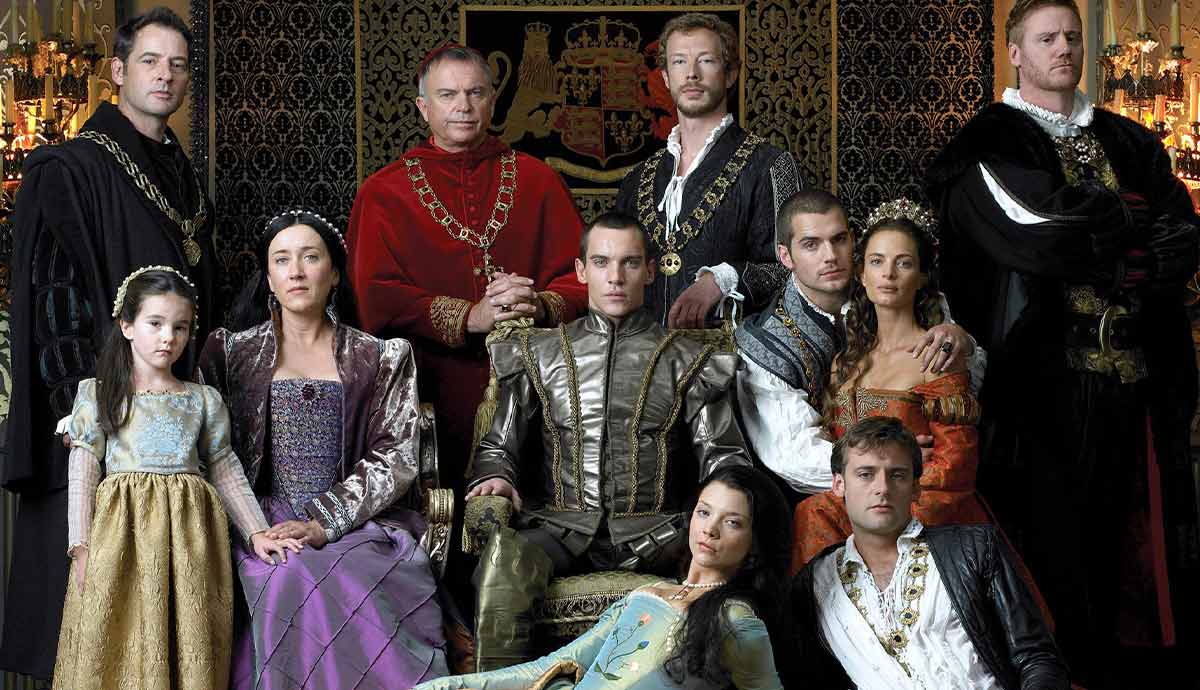
The Tudors is an English historical drama that ran between 2007 and 2010. Since its release, it has become known for its popularity amongst history enthusiasts, but it is also notorious for its many historical inaccuracies. Were these inaccuracies accidental as a result of poor research? Or were they intentional changes made by the writers and producers to enhance the viewing experience of their audience?In this article, we will count down the five most obvious historical inaccuracies in The Tudors, review the most shockingly contrived scenes, and question why they were included in the series at all.The Tudors: Artistic License or Accidental Blunder?The Family of Henry VIII: An Allegory of the Tudor Succession, by Lucas de Heere, 1572. Source: RKD ImagesThere is nothing that divides history enthusiasts like the discussion of period dramas.Some people credit period dramas as being the origin of their interest in history. Some people enjoy them for what they are, not a factual documentary, but a little light-hearted entertainment based on events of the past. On the other hand, some people simply cannot stand to watch anything that is not 100 percent accurate.There are many period dramas to choose from. The White Queen, The White Princess, The Spanish Princess, Reign, Becoming Elizabeth, Gunpowder, and The Power and the Passion are just a few of the television series based on 15th to 17th-century figures and events. The Tudors, another such series, was created and written by Michael Hirst for the American television channel, Showtime.The series ran for 38 episodes and followed the reign of King Henry VIII. Although the timings are jumbled pretty much all the way through, we can derive that the series begins around 1520 and ends with King Henrys death in 1547. The star of the show is Johnathan Rhys Meyers, who gives an outstanding and often sympathetic portrayal of King Henry and artfully brings to life the most iconic moments of his reign.Henry VIII, by Hans Holbein the Younger, 1540-47. Source: Wikimedia CommonsMichael Hirst himself acknowledged the fact that his work was not one of unquestionable accuracy. However, he has also claimed that he hoped and expected people to draw inspiration from the series and carry out their own research as a result of their enjoyment. Of The Tudors, he said the following. One of the effects of The Tudors has been to drive people back to the history books with renewed interest, and were drawing in those who had initially no interest in the subject. From the feedback Ive been getting, the show has galvanised interest even in academic history.Let us now delve into The Tudors and review five of its craziest inaccuracies. These are not just slight errors with costumes, multiple uses of words and phrases that did not exist during the era, or notable moments where modern-day items are left in shots on screen. These are incomprehensible errors that must surely have been made consciously, occasionally for reasons that are not completely clear to the viewer.Inaccuracy Number 1: The Absent Tudor SisterLouis XII of France and his third wife, English princess Mary Tudor, 1514. Source: British LibraryOf all the mistakes, inaccuracies, and anomalies included in the television series The Tudors, the absence of King Henry VIIIs sister is the most obvious. Furthermore, it may actually be the most historically problematic.King Henry had two sisters. They were named Margaret and Mary Tudor, and both were equally important. Margaret was the elder; she first married King James IV of Scotland, and later married twice more. Mary was the younger; her first husband was King Louis XII of France, and her second was Charles Brandon, the Duke of Suffolk.In The Tudors, however, King Henry is provided with only one sister. Interestingly, it is almost impossible to determine which has been kept and which has been omitted. The character is given the name Margaret. In contrast, although her story is almost entirely fictional, it seems to align a little more with the life of Mary Tudor.Portrait of Margaret Tudor, by Daniel Mytens, 17th century. Source: Wikimedia CommonsSo, for what reason was the second sister excluded from the drama altogether? The answer given was that there were already too many characters named Mary. Mary Boleyn and Princess Mary already featured as somewhat minor characters. Obviously, the production team concluded that Mary Tudor was just one Mary too many for their audiences to cope with. This is somewhat patronizing to viewers, who are more than likely to be able to distinguish between three entirely different characters and storylines, even if they do have the same name.Apparently, the same problem does not apply when it comes to the name Thomas, for we have Thomas Wolsey, Thomas Cromwell, Thomas Cranmer, Thomas More, Thomas Howard, Thomas Wyatt, Thomas Boleyn, Thomas Tallis, and Thomas Seymour, none of whom were selected for removal.It is a particular shame that neither sister married the king of Scotland, for it is only through King James IV and Margaret Tudor that we can get to the bottom of the royal family tree. King Charles III of England is descended not from King Henry VIII or any of his children, but through King Henrys elder sister Margaret and her offspring. Without Margaret and James, Britains current royal family, as we know it in 2025, would simply not exist.Inaccuracy Number 2: Portugal, Marriage, and MurderPortrait of Manuel I, King of Portugal. Source: Wikimedia CommonsInaccuracy number two follows directly from inaccuracy number one. Margaret Tudor, the only sister King Henry VIII has been left with, is appointed for marriage not to the king of Scotland or the king of France, but instead to the king of another European nation. For an unknown reason, it was the king of Portugal that Margaret was to wed. This would have come as something of a surprise to Maria of Aragon and Eleanor of Austria, the real wives of the actual King of Portugal, Manuel I.Perhaps the writers assumed that their audiences would know very little about the history of Portugal, and therefore be less likely to complain about the obvious error?Marriage to either the king of Scotland or the king of France would have been more appropriate, since those were the monarchs whom Margaret and Mary actually married. However, by the time of Margarets marriage, the new king of France (Francis I) had already inherited the throne and was already married to Queen Claude. Scotland was not an option, for it was mentioned so little in the series that it hardly seems as if it exists at all.So, in episode four of series one, Margaret is accompanied all the way to Portugal by the Duke of Suffolk. The two are clearly attracted to each other (as Mary and the duke were in real life). During a violent storm at sea, and after a game of cards, they dismiss their servants and sleep together before even arriving in Portugal.Margaret Tudor, as portrayed by Gabrielle Anwar in The Tudors. Source: WeLovePeriodDramasOne thing the series does get right is the reluctance with which Margaret sets sail in the first place. She was horrified by the idea of marriage to the king of Portugal, just as the real Princess Mary was by the idea of marriage to the king of France. Upon meeting her future husband, the fictional Margaret is disgusted, and makes an excellent first impression by publicly fainting at the mention of bearing his children.By the end of the episode, the fictional Princess Margaret has boarded a ship, had sex with the Duke of Suffolk, married the mysteriously unnamed king of Portugal, and then, as a final flourish, murdered her weakening husband by smothering him with a pillow the morning after the wedding.In reality, it was Mary who married the Duke of Suffolk in this hectic manner. Her husband, King Louis XII of France, died on the first day of January in 1515. Following this death, Mary was kept in isolation at the Hotel De Cluny for a period of six weeks, the intention being to confirm that she was not carrying an heir to the throne. Of course, this was not the case.Mary Tuor and Charles Brandon, Jan Gossaert, 1515. Source: Wikimedia CommonsWhen King Henry VIII heard this news back in England, he sent none other than his best friend, the Duke of Suffolk, to France to collect his sister. The duke was given strict instructions to negotiate with the French Council, to put Marys affairs in order, and to transport her safely back to England.Predictably, the Duke of Suffolk and Princess Mary were married within a few weeks of his arrival. Although the exact date of their secret wedding is unknown, it has been suggested that they married sometime between the 15th and 20th of February that same year.By the time the newlyweds returned to the English court, King Henry had learned of what had taken place. He was so angry over the betrayal of trust that he decided to have Mary sent into exile and the duke executed. It was Cardinal Wolsey who stepped in and suggested an alternative, financial punishment. Predictably, both Mary and Charles were restored to favor within a month or two.Inaccuracy Number 3: A Fling With Mary BoleynPortrait of Mary Boleyn, attributed to Remigius van Leemput, 17th century. Source: Wikimedia CommonsIn The Tudors, the role of Mary Boleyn was played by an actress named Perdita Weeks. She is not a major character, but appears several times for short periods throughout seasons one and two. Mary Boleyn is portrayed as a likeable, fun-loving, unambitious, and promiscuous character. She is mistress not only to King Henry VIII of England, but also to King Francis I of France. It is for this reason that she is known as the great prostitute.It is suggested in The Tudors that King Henry becomes bored with Mary very quickly. After just two or three encounters, he rejects her advances and demands that she leave his presence. The affair begins in the episode entitled Simply Henry, and is over in less than 60 minutes of screen time.In reality, the length of the relationship between King Henry and Mary is unknown. However, historians are fairly sure that it exceeded three years. This is quite a different affair from the three days of passion represented in the series. In fact, two of her children were rumored to have been fathered by King Henry rather than her first husband, William Carey. Both Catherine Carey and Henry Carey later became favorites of Queen Elizabeth I, who at the least was their cousin, but at the most could have been their half-sister.So, why was Mary Boleyn done away with so quickly, even though she played such a central role in the lives of both King Henry VIII and the rest of the Boleyns? Viewers can only assume that writers wanted to get her out of the way in order to move swiftly onto the love story starring Anne, the other Boleyn girl.Inaccuracy Number 4: The Death of Cardinal WolseyPortrait of Cardinal Wolsey, 1585-96. Source: Art UKIt is in episode ten of series one that Cardinal Thomas Wolsey, one of the principal characters in the series, is finally killed off. This is not a problem in itself, for Cardinal Wolsey died around halfway through King Henry VIIIs reign. On the whole, the circumstances seem to make sense, and the timings appear to add up correctly. The only thing that is wrongsomething that is glaringly obviously wrongis the manner of the Cardinals death.In reality, Cardinal Wolsey died of natural causes, possibly brought on by the anxiety, distress, and upheaval caused by his downfall and disgrace. Evidently, this death was not exciting enough for The Tudors. Instead, they had poor Cardinal Wolsey commit suicide in his prison cell.Out of all of the episodes of The Tudors, this is perhaps the biggest injustice done to a historic figure. The series suggests that Cardinal Wolsey prematurely ends his life out of fear, whilst in reality, he bravely soldiered on to whatever end awaited him. He died not by his own hand in an empty jail room, but of weakening health, surrounded and comforted by the brothers of the Abbey of Saint Mary in the Meadow.Cardinal Wolsey breathed his last on November 29 in 1530, having arrived at his final resting place just three days earlier. At the command of King Henry, he had been travelling back to London, but had been forced to break his journey due to the worsening of his sickness. His last words were apparently, If I had served God as diligently as I have served the King, he would not have given me over in my grey hairs.Sam Neill, who played Cardinal Wolsey in The Tudors. Source: Wikimedia CommonsMost historians insist that, as far as he himself would have been concerned, Cardinal Wolseys death was conveniently well-timed. It is thought that by dying a natural death, he escaped the fate that awaited him at the Tower of London. However, there are a few academics who argue that Cardinal Wolsey might have been forgiven by King Henry VIII, and may even have been pardoned and granted permission to live away from court as archbishop of York.On the whole, Cardinal Wolseys character was given an excellent portrayal by Sam Neill. He was also granted a fair amount of screen time. In 1988, the historian John Guy stated the following regarding the relationship between King Henry VIII and Cardinal Wolsey: Only in the broadest respects was the King taking independent decisions; it was Wolsey who almost invariably calculated the available options and ranked them for Royal consideration; who established the parameters of each successive debate; who controlled the flow of official information; who selected the Kings secretaries, middle-ranked officials, and who promulgated decisions himself. It is fair to say thatif nothing elsethe series adequately brings to life this manner of relationship.Inaccuracy Number 5: The Death of Henry FitzroyThe Coat of Arms of Henry Fitzroy. Source: Wikimedia CommonsWith the correct casting and some major amendments to both timeline and script, Henry Fitzroy may have had the potential to become an engaging and memorable character. Unfortunately for King Henrys much-loved but illegitimate boy, he played such an insignificant part in The Tudors that viewers may wonder why the writers bothered including him at all. He appears in only two episodes, numbers two and five of season one, and is killed off around twelve years too early. It seems likely that the production had no place for another Henry, or simply did not know what to do with him during the years leading up to his death.But what are the few facts regarding this real, historic figure? Firstly, Henry Fitzroy was born out of wedlock in the year of 1519. His mother was King Henry VIIIs mistress, Elizabeth Blount. Of all his illegitimate children (of whom there were surprisingly few), Henry Fitzroy was the only one that King Henry chose to acknowledge as his own. The chosen name tells the historian everything they need to know. Firstly, the child was Henry, just like his father. Secondly, the following name of Fitzroy literally translates as son of the King from Norman French.King Henry was thrilled to have been given a male child. Over the previous decade, he had seen no success in producing an heir with Catherine of Aragon. Now, Henry Fitzroy was living, breathing proof that the fault lay not with the King. The baby was described as a goodly man child of beauty.Henry Fitzroy, by Lucas Horenbout, 1533-4. Source: Wikimedia CommonsIn the series, Henry Fitzroy is killed off fairly swiftly, at an unspecified age, after suffering from an unnamed childhood disease. To be fair, since infant mortality was shockingly high during this era, the idea hardly seems unreasonable or outlandish. However, in reality, this is not how events panned out. Whilst residing at Saint James Palace in London, Henry Fitzroy died on July 23, 1536. At the time of his death, he was aged 18. He had lived even to see the downfall and death of his godfather, Cardinal Wolsey, and also to see the disgrace and execution of his stepmother, Anne Boleyn.The famous chronicler Thomas Fuller stated the following regarding the death of Henry Fitzroy. Well was it for them that Henry Fitzroy his natural son was dead, otherwise had he survived King Edward the Sixth, we might have heard of a King Henry the ninth, so great was his fathers affection and so unlimited his power to prefer him.Henry Fitzroy left behind his young wife, Mary Howard of the Norfolk family. The union had produced no children. Strangely, despite his love for his deceased son, King Henry VIII did not grant Henry Fitzroy a state funeral. Instead, he left all arrangements to the Duke of Norfolk. Consequently, Henry Fitzroy received only a simple and modest funeral service and was buried without much ceremony. He was laid to rest in the Howard family vault in Thetford Priory, with only the Duke of Norfolk and the Earl of Surrey in attendance.King Henry did not forget about Henry Fitzroy. In April of 1537, the year after Fitzroys death, King Henry ordered 80 masses to be said for his soul.Is The Tudors Worth It?Promotional poster photo for The Tudors. Source: IMDbIn this article, we have reviewed five of the biggest mistakes in the television series The Tudors. The main question to answer is: Is it worth viewing, in spite of its shortcomings?The long and short of it is that no production can please everyone. No matter how qualified the writers, no matter how experienced the cast, no matter how knowledgeable the designers, no matter how immaculately researched the script, there would always be a problem for a small percentage of viewers. Even if the production were written and directed by King Henry VIII himself, there would be somebody, somewhere, who would take great delight in declaring well, thats not right.The viewing of period dramas such as The Tudors is an entirely personal choice. Whether you grow to love it or hate it is down to many factors and preferences.One may argue that, what it lacks in historical accuracy, it more than makes up for in style, excellent performances, ample excitement, and overall entertainment value.
0 Commenti
0 condivisioni
257 Views

 English
 Arabic
 French
 Spanish
 Portuguese
 Deutsch
 Turkish
 Dutch
Dutch
 Russian
 Romaian
 Portuguese (Brazil)
 Greek
Greek