A Stop On The Underground Railroad Has Been Discovered Hidden Inside New Yorks Merchants House Museum
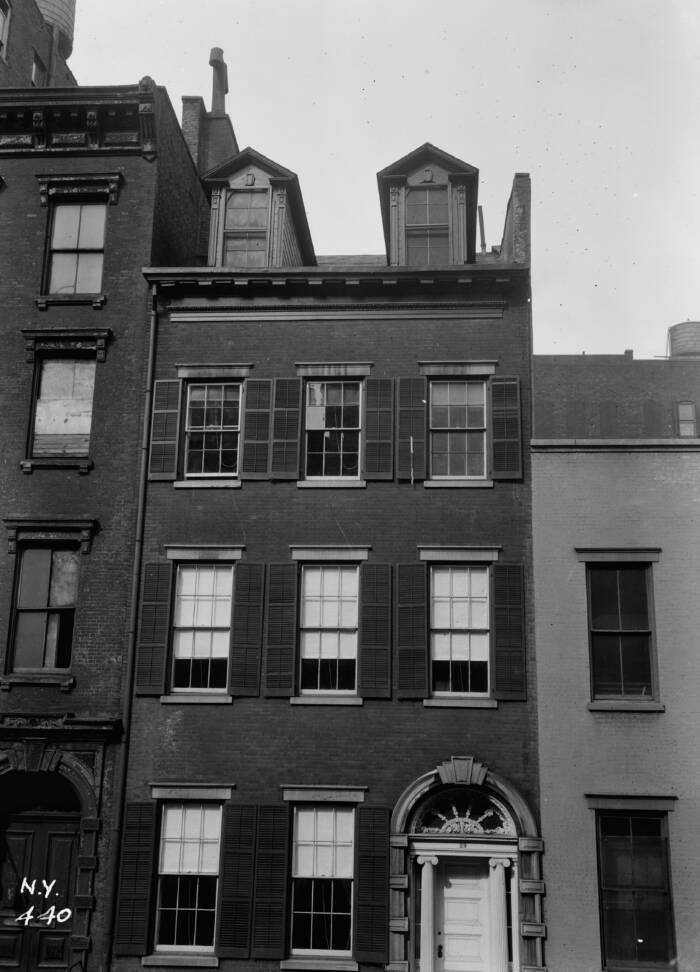
Public DomainThe Merchants House Museum in 1936, the year it opened to the public.In 1832, Manhattan merchant Joseph Brewster built a rowhouse in the area now known as the East Village. This historic home was transformed into a museum a century later, whereupon curators learned of a secret passage connecting a second-story hallway to the basement, but they werent sure of its purpose.Now, however, that hidden passageway has been linked to the Underground Railroad. Extensive research has revealed that Brewster was a fervent abolitionist, and historians believe that he built his home to serve as a safe haven for enslaved people trying to escape to the north during a time when even New York City wasnt safe for fugitives seeking freedom.The History Of The Merchants House MuseumJoseph Brewster was a wealthy hat merchant who built a towering residence on 4th Street in 1832. Three years later, he sold the house to the Tredwell family, who lived there for the next century. Then, in 1936, it opened to the public as a museum showcasing a perfectly preserved 19th-century rowhouse.Because Brewster lived in the home for just three years, the Merchants House Museum mostly focused on the history and belongings of the Tredwells. However, some odd choices that Brewster made during the buildings construction have long piqued the curiosity of historians.Pulling out the bottom drawer of a built-in dresser located in a hallway between two bedrooms on the homes second story reveals a small opening cut into the floorboards. Inside is a ladder that descends 15 feet to what would have been a basement pantry at the time the rowhouse was built.Merchants House Museum/YouTubeA built-in dresser conceals the hidden passageway thats been linked to the Underground Railroad.Emily Hill-Wright, the museums director of operations, told ABC 7, The story goes in our institutional archives that painters came and they removed the drawers to paint. And thats when the passage was discovered. But for years, nobody knew why it was there.At first, museum officials assumed that it may have been a laundry chute or a secret space for children to play in. But no similar houses from the time period had such passages.Then, two years ago, museum historian Ann Haddad started looking into Joseph Brewsters past and made a discovery that explained everything.The Discovery Of A Secret Underground Railroad Stop In New York CityHaddads research revealed that Brewster wasnt just a successful merchant: He was an ardent abolitionist. He signed at least two anti-slavery petitions during his lifetime, and he used his wealth to found three anti-slavery churches. One of them, located just a few blocks away from the Merchants House Museum, was constructed with a false floor, per Brewsters instructions. This suggests that the church may have been used to shelter freedom-seekers trying to flee northward via the Underground Railroad.And Brewsters own home was seemingly another stop along the way. The rowhouses original kitchen and pantry were renovated long ago, but they may have once opened into an alleyway behind the residence. The passage beneath the upstairs dresser could have provided both a short-term hiding place and secret escape path for any enslaved men, women, or children who were concealed in Brewsters house.Merchants House Museum/YouTubeA makeshift ladder descends 15 feet from a bedroom area into what was once a basement pantry.Although slavery was abolished in New York in 1827, New York City remained pro-slavery throughout the early 19th century, and fugitive slave catchers essentially had free rein in Manhattan.In New York, at the time, it was extremely dangerous for Black New Yorkers, but it was also dangerous for the people who assisted, said Hill-Wright. Freedom seekers really were risking their livelihoods and their lives. There are no other spaces that really still exist intact like this. And so thats part of what makes this passage such an important find.In a statement from the Merchants House Museum, architectural historian Patrick Ciccone agreed with Hill-Wrights emphasis on the significance of this discovery. Given how very, very few physical traces of the Underground Railroad survive anywhere in the U.S., the existence and physical integrity of this space give the 1832 landmark Merchants House additional magnitudes of incalculable historical significance.After reading about the Underground Railroad stop that was discovered in an historic New York City home, go inside the incredible story of Underground Railroad conductor Harriet Tubman. Then, learn about the Pearl Incident, the largest attempted slave escape in American history.The post A Stop On The Underground Railroad Has Been Discovered Hidden Inside New Yorks Merchants House Museum appeared first on All That's Interesting.




 Arabic
 French
 Spanish
 Portuguese
 Deutsch
 Turkish
 Dutch
Dutch
 Italiano
 Russian
 Romaian
 Portuguese (Brazil)
 Greek
Greek