


WWW.THECOLLECTOR.COM
How the Kingdom of Aragon Built a Mediterranean Empire
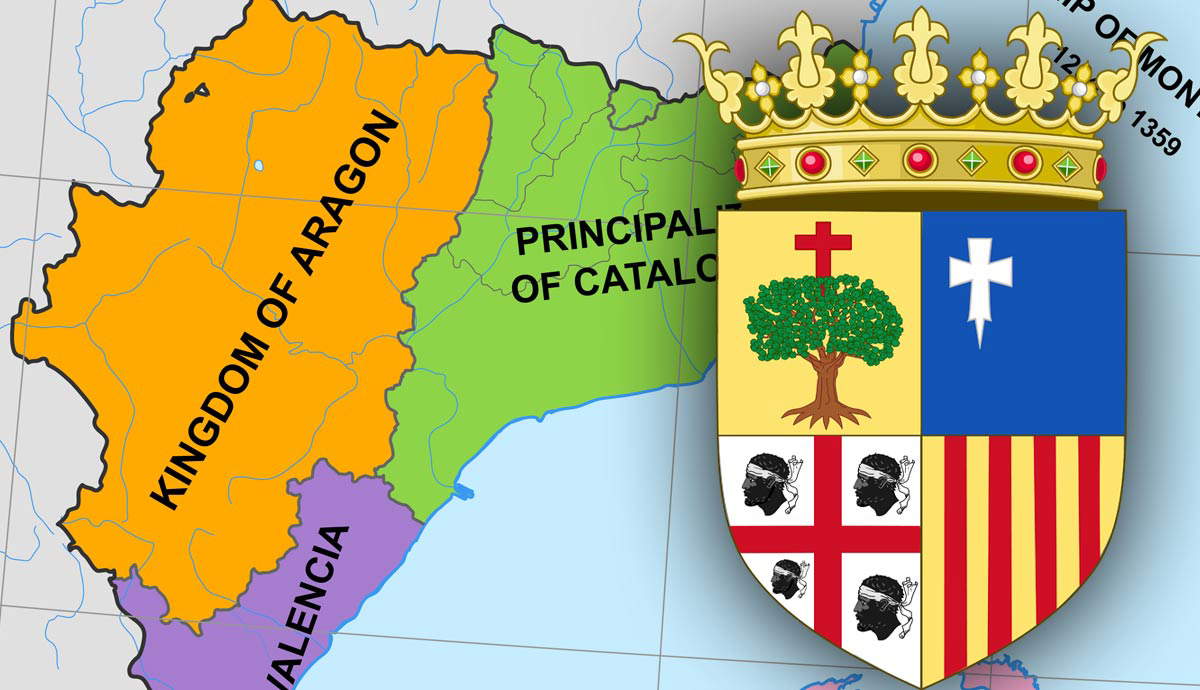
The modern-day nation of Spain was formed by the union of the kingdoms of Aragon and Castile. Aragon rose from being a small vassal state of Pamplona in northeastern Spain to becoming a major Mediterranean power with an empire spanning the Iberian peninsula and parts of modern-day France and Italy.The Kingdom Gains IndependenceA painting of Ramiro I of Aragon, the first king of the independent Aragonese kingdom. Source: Provincial Council of ZaragozaIn the 9th century, the County of Aragon was part of the Frankish dominion, ruled over by the Carolingians. Its people had weathered the storm that accompanied the fall of the Roman Empire and the ensuing chaos afterwards. In the 900s, Aragon came under the rule of the Kingdom of Pamplona (also known as Navarre). The countys capital was located in the small city of Jaca in the northeast of the Iberian Peninsula.After the death of King Sancho III of Navarre in 1035, his kingdom was partitioned into multiple territories. One of the territories contained Sobrarbe, Ribagorza, and Aragon, all of which went to different nobles. However, the rulers of Sobrarbe and Ribagorza both died, enabling Sanchos illegitimate son Ramiro to annex both territories into his realm. Despite being nominally linked to Navarre, Ramiros expanded Aragon now became one of the larger states in the region.Ramiro never personally called himself the King of Aragon, although his subjects referred to him as king, and he is known to history Ramiro I of Aragon. His rule was brief and focused on expanding the kingdoms borders. In 1063, he died while unsuccessfully besieging the city of Graus from the Castilians. He was succeeded by Sancho Ramirez, his eldest son.Aragons Southward ExpansionMap of Aragons territorial expansion, 2008. Source: Wikimedia CommonsAt this point in history, most of the Iberian Peninsula was ruled by Al-Andalus. This was the name for a series of Islamic empires that ruled over the territory, such as the Umayyad, Almoravid, and Almohad Caliphates. These Muslim states were often in conflict with Christian kingdoms in the northeast of the peninsula.As the Christian kingdoms became more powerful, they sought to restore Christian rule to the peninsula in a series of military campaigns known as the Reconquista. Aragon aimed to expand along the coastline in what is today eastern Spain. Combining military action with diplomatic ventures, Aragon doubled in size and seized much of the territory south of the Pyrenees Mountains. By 1118, its capital was transferred to Zaragoza.In 1150, the Princess Petronilla of Aragon married Count Ramon Berenguer IV of Barcelona, Ramon Berenguer IV. This unified the kingdom of Aragon and the county of Barcelona to form the Crown of Aragon. Alfonso II, their son, succeeded Ramon in 1163. He pushed southwards and continued to battle the Muslims for control of Valencia as the Aragonese nobility demanded. During his three-decade reign, Alfonso constantly struggled to balance the interests of his Aragonese and Catalan subjects.The War of the Sicilian VespersThe Sicilian Vespers by Erulo Eroli, 1890. Source: Gallery of Modern Art, PalermoIn 1282, Sicilian commoners living in the city of Palermo rebelled against the monarchy ruling the island. King Charles of Anjou, the youngest son of King Louis VIII of France, had enraged the Sicilian people by taxing them heavily and mismanaging the administration of the island. As a result, Palermo residents launched an uprising known to history as the Sicilian Vespers.The rebels requested outside assistance from King Peter III of Aragon, whose wife was the daughter of the former king of Sicily. Peter agreed, hoping to take the island for himself and to expand his realm. Later in 1282, he invaded the island and was crowned king of Sicily to popular acclaim. Peter was opposed by the French, who sought to use force to expel the Aragonese and restore Charles to the Sicilian throne.In 1284, the French tried to oust Peter through the Aragonese Crusade. Over the next year, they fought intensely to wrest back control of Sicily. However, their attempts failed and Peter retained control of the island. By 1302, the Peace of Caltabellotta was signed. Aragon kept control over Sicily while the Angevins kept control of Naples. This cemented Aragons future as a Mediterranean kingdom.Aragons Continued ExpansionMedal featuring King Alfonso V of Aragon. Photograph by Sailk, 2013. Source: Wikimedia CommonsControl over Sicily gave the Aragonese a launchpad for additional conquests in the Mediterranean. After receiving papal blessing, King James II of Aragon seized Sardinia in 1324 from the Italian families that controlled the island. Sardinia became another crucial maritime outpost for Aragon, though the Aragonese authorities faced considerable local resistance and took over a century to consolidate control over the whole island.In 1311, Catalan mercenaries sailed into Greece and captured the duchy of Athens, which had been established a century earlier by Latin Crusaders during the Fourth Crusade. In 1319, the Catalans expanded into southern Thessaly and founded the duchy of Neopatras, making the furthest extent of Aragonese expansion. The Greek duchies remained part of the Aragonese Crown until the late 1380s but were administered by local allies.Aragon would later march through Naples between 1435 and 1442, gaining control of the southern tip of the Italian boot. Alfonso V put together a formidable invasion force that conquered the territory from several Italian kingdoms including the Neapolitan kingdom. The protracted war ended when Alfonso V agreed to recognize Pope Eugene IVs title in exchange for papal recognition of Aragons conquest.The Union of Aragon and CastilePaintings of Ferdinand II of Aragon and Isabella of Castile during their marriage, c. 1470-1520What turned Aragon into a global power was the marriage between Ferdinand II of Aragon with Isabella of Castile. The union led to the unification of Spain and set in motion the final expulsion of the Moors from the Iberian Peninsula. It also witnessed the creation of Spains overseas empire when explorers and mercenaries such as Christopher Columbus began establishing colonies in the Americas and North Africa on behalf of the Spanish monarchs.Ferdinand was the son of King John II of Aragon and succeeded to his fathers kingdom in 1479. Isabella was the daughter of King John II of Castile and succeeded her childless brother King Henry IV as king in 1474. They married in 1469 and served as joint rulers over the two kingdoms until Isabellas death in 1504.At this point, Aragon controlled much of the Mediterranean and was one of the most formidable sea powers in medieval Europe. Castile had been slowly pushing the Moors out of the Iberian Peninsula, making it the strongest Spanish kingdom on land. The combination of both crowns sounded the death knell for Muslim rule in Iberia.When Ferdinand and Isabellas grandson Holy Roman Emperor Charles V took over the joint monarchy in 1516, he ruled over one of the largest empires then in existence. Both kingdoms kept their traditions, legislatures, and regional identities intact. However, by this point, Castile became the dominant region in Spain while Aragon became a relative backwater. After the War of Spanish Succession in the early 1700s, the Crown of Aragon was abolished and all of its holdings and possessions were taken over by Philip V, the new Bourbon king of Spain.
0 Commenti
0 condivisioni
203 Views

 English
 Arabic
 French
 Spanish
 Portuguese
 Deutsch
 Turkish
 Dutch
Dutch
 Russian
 Romaian
 Portuguese (Brazil)
 Greek
Greek