


ALLTHATSINTERESTING.COM
The Story Of Ganymede, The Handsome Prince Of Ancient Greek Myth Who Was Kidnapped By Zeus
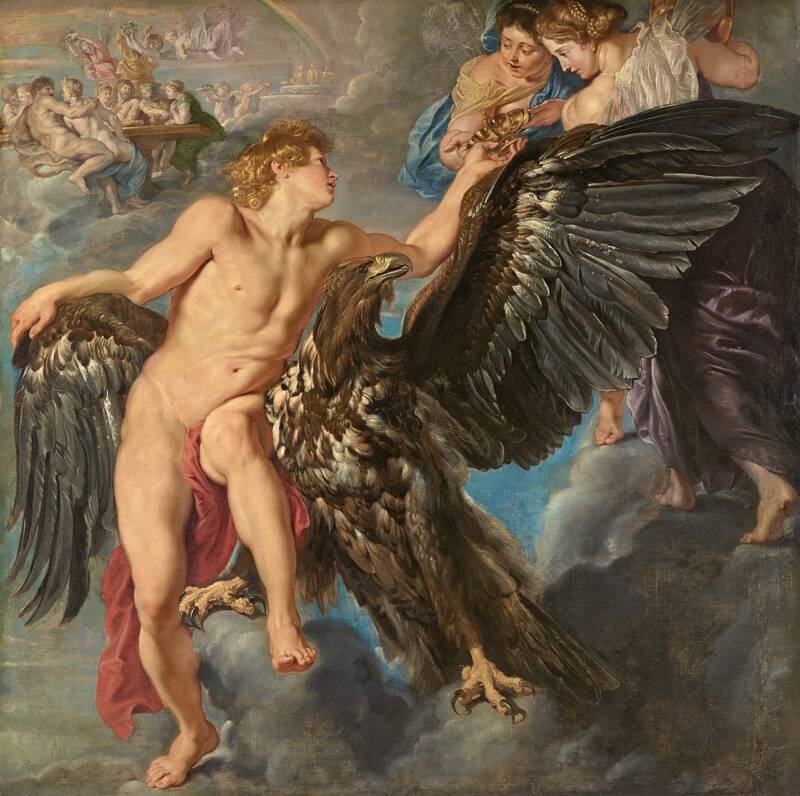
A beautiful mortal, the land of Troy, and an infamous kidnapping. Youd be forgiven for thinking first of Helen of Troy. But there was another mortal whose abduction shook the ancient world: Ganymede. Public DomainA depiction of Ganymedes abduction by Zeus, seen here as an eagle, by Peter Paul Rubens. Circa 1611.Like Helen, Ganymede was said to be the most beautiful mortal in the world. Unlike Helen, he was male, a young prince in the land of Troy. His legend has changed over time, but the basic story has remained the same. One day, while out in a field, Ganymede was kidnapped by Zeus to be the cupbearer to the gods. Starting in antiquity, however, the ancient Greeks began to believe that Zeus kidnapped Ganymede out of lust, and the Trojan prince has thus become a symbol of male same-sex desire. This is the story of Ganymede, from its original telling in the 8th century B.C.E., to how interpretations of the myth changed over the centuries. The Story Of The Loveliest Born Of The Race Of MortalsThe story of Ganymede first appeared in Homers Iliad in the 8th century B.C.E. Then, Ganymede is described as the youngest son of Tros, the founder of the city of Troy. Homer doesnt spend much time on the story. He merely writes that the prince was the loveliest born of the race of mortals, and therefore the gods caught him away to themselves, to be Zeus cup-bearer, for the sake of his beauty, so he might be among the immortals.Homer also explains that Zeus gave Tros horses that were finest that live[d] and move[d] under the sun as payment for his son Ganymede.Public DomainA sculpture of Ganymede in the Louvre. But this is the only mention of Ganymede in the Iliad. It thus fit with a number of kidnapping stories in Greek myth, such as the abduction of Persephone by Hades, the kidnapping of Helen of Troy by Paris, which triggered the Trojan War, and the kidnapping Europa by the Greek god Zeus. However, the myth stands apart because of the gender dynamics at play. And, indeed, the interpretation of the story changed by the 6th century B.C.E. The Homosexual Interpretation Of Ganymedes Myth In Ancient GreeceHomers story about Ganymede is sparse. He does not mention who kidnapped the prince, or how, and nothing in his text suggests that the kidnapping was sexually motivated. However, it didnt take long for ancient Greek writers to interpret the myth of Ganymede as one of same-sex desire. In the 6th century B.C.E., the writer Theognis made it clear that the myth of Ganymede was one of homossexual desire, writing: there is some pleasure in loving a youth, since once in fact even Zeus, the son of Cronos, king of the immortals, fell in love with Ganymede, seized him, carried him off to Olympus, and made him divine, keeping the lovely bloom of boyhood. Zde/Wikimedia CommonsA statue of the abduction of Ganymede by Zeus from the 5th century B.C.E.Plato, in the 4th century B.C.E., also cited Ganymede and Zeus when writing about homosexual desire. The feeling of love between men, Plato wrote, is like Zeus when he was in love with Ganymede.That said, Plato changed his mind about the myth. He later blamed writers from Crete for inventing the story of Ganymede and Zeus to justify homosexuality, writing: And we all accuse the Cretans of concocting the story about Ganymede because it was the belief that they derived their laws from Zeus so they added on this story about Zeus in order that they might be thought to be following his example in enjoying this pleasure as well.Indeed, Zeus passion for Ganymede was a reflection of the Greco-Roman concept of pederasty, in which an older man formed a sexual and romantic relationship with an adolescent youth, in order to mentor him. But Plato was far from alone in his disregard for the practice. The word catamite, which comes from the Latin form of Ganymede, Catamitus, describes a boy in a pederastic relationship. Today, it has a pejorative contect. Public DomainAn 18th century painting of Zeus and Ganymede. But whether or not they were concocted by the Cretans, the homosexual themes of myth of Ganymede were cemented by the 1st century C.E.In Metamorphoses, Ovid lay down an official version of the myth of Ganymede when he wrote: The king of the gods once burned with love for Phrygian Ganymede, and to win him Zeus chose to be something other than he was. Yet he did not deign to transform himself into any other bird, than that eagle, that could carry his lightning bolts. Straightaway, he beat the air with deceitful wings, and stole the Trojan boy, who still handles the mixing cups, and against Heras will pours out Zeus nectar.Ovid included several details which have now become part of Ganymedes legend: that the youth was kidnapped by Zeus disguised as an eagle, and that Hera, Zeuss wife, was jealous of his new role on Mount Olympus. The Modern-Day Interpretation Of The Ancient Greek MythIn the ancient world, Ganymede like Antinous, the lover of the Roman emperor Hadrian was a symbol of queer love. Ganymede, as a cup-bearer, also became associated with water, and some versions of the legend suggest he gifted humanity with the water of the gods, possibly through the creation of Egypts Nile River. As such, he is often identified with the constellation of Aquarius, meaning water-carrier or cup-carrier, in Latin. However, interpretations of his myth changed yet again as time marched on. In the Middle Ages, the homosexual themes of the myth of Ganymede were largely scrubbed out. Ganymede was often depicted as a baby, and his story sometimes interpreted as the tragedy of when a child dies too soon. That said, the beauty of Ganymede remained a popular theme in Renaissance art. Indeed, Ganymede is far from forgotten. In the seventeenth century, the largest moon of Jupiter (using the Roman name for Zeus), was named for Ganymede, the most beautiful of mortals, the cupbearer to the gods.NASA/JPL/University of Arizona/Wikimedia CommonsThe moon of Ganymede orbiting next to Jupiter.Ganymede and Zeus are thus eternally linked, as this moon is forever orbiting the largest planet in the solar system, the king of the stars.After reading about the myth of Ganymede and his abduction by Zeus, and how it became interpreted as one of homosexual desire, learn about the terrible punishment of Sisyphus, the mythical king. Or, discover the horrifying story of the Gorgons, the terrifying monsters from Ancient Greek legend.The post The Story Of Ganymede, The Handsome Prince Of Ancient Greek Myth Who Was Kidnapped By Zeus appeared first on All That's Interesting.
0 Σχόλια
0 Μοιράστηκε
230 Views

 English
 Arabic
 French
 Spanish
 Portuguese
 Deutsch
 Turkish
 Dutch
Dutch
 Italiano
 Russian
 Romaian
 Portuguese (Brazil)