Volunteer Archaeologists Unearthed The Head Of An Ancient Figurine At The Ruins Of A Roman Fort Along Hadrians Wall In England
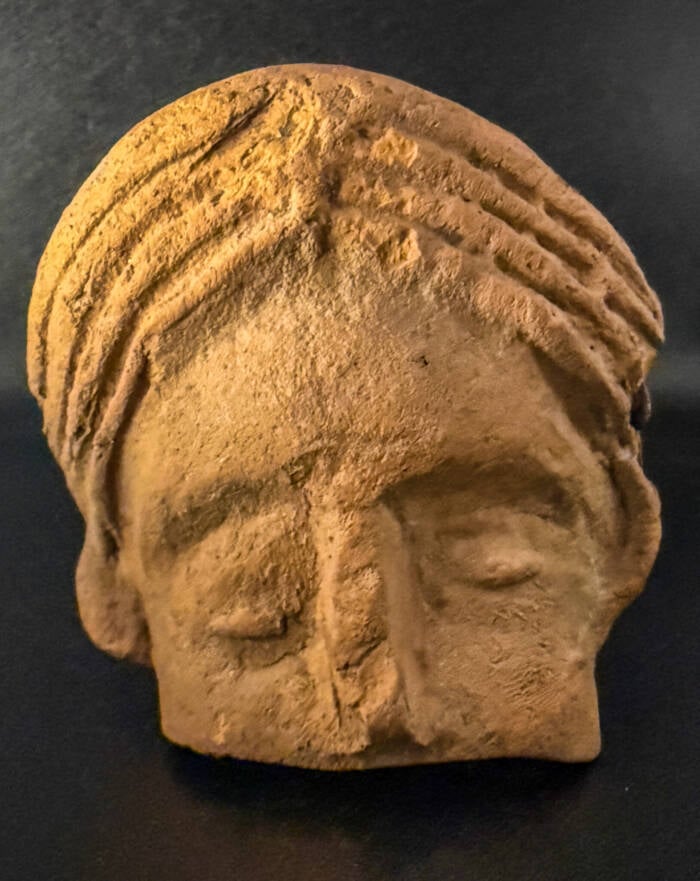
The Vindolanda TrustThough it is a rare find indeed, the terracotta head does share some similarities with another figurine that was found nearby in the 19th century.Located in the north of England, Hadrians Wall was a pivotal military outpost during the Roman era that marked the Empires northern border. The new discovery of a head belonging to an ancient terracotta figurine that was excavated at the nearby Magna Roman Fort represents yet another enlightening find recently made at this historic site.The terracotta head, with its mismatched features, was seemingly made by an amateur and was likely used as a religious votive. Researchers suspect that it was meant to be a copy of another, more well-known piece that was found nearby more than a century ago. This new find thus offers fresh insights into the religious and cultural history of Hadrians Wall and Magna Roman Fort.The Terracotta Head Of An Ancient Roman Figurine Found Near Hadrians WallAccording to a statement from the Roman Army Museum & Magna Fort, the terracotta head was found in June 2025 during excavations of the forts northern defenses by a pair of volunteers, Rinske de Kok and Hilda Gribbin.Measuring 3 inches tall by 2.5 inches wide and made of orange terracotta, the head was found in a ditch from the third century C.E. and presumably dates back to that same era. It seems to depict a womans face, but its features are somewhat unusual.Broken below the nose, the statue head has a centrally parted, four-strand plaited hairstyle, and strangely asymmetrical facial features. Archaeologists stated that it appeared crudely made, and thus it was probably not an item that was traded or bought. Rather, its likely that it was made locally.The Vindolanda TrustThe volunteers who found the terracotta head during excavations near Hadrians Wall in 2025.It appears to me that this has been a practice piece by an inexpert hand, said Lindsay Allason-Jones, a Roman artifact specialist. [T]he eyes do not match at all, and the ears are very weird. That leads me to presume it was made on site as no-one would have bothered to transport this very far or paid good money for it!Indeed, archaeologists suspect that the terracotta head may have been someones attempt at copying another local piece. And, in fact, a very similar terracotta head had been found nearby in the 19th century.The Possible Story Behind The Terracotta Head Found At Magna Roman FortSome insight into the terracotta head found in 2025 comes from another terracotta head that was found nearby in the 19th century. This head, which is in better condition, has the same distinctive hairstyle and facial features as the broken head, suggesting that they were meant to depict the same person.The Vindolanda TrustThe two terracotta heads, one found in the 19th century (left) and the one found in 2025 (right) bear a strong resemblance to each other.There are clear similarities between the two heads from Magna, they are clearly meant to depict the same figure, said Senior Archaeologist Rachel Frame. My current hypothesis is that the 2025 find is a locally made copy of the earlier example, which may itself have been imported. The woman depicted was clearly important to the people living at Magna.So who was the woman depicted on the terracotta heads? And what was the purpose of these objects?Though terracotta heads like this are rarely found in Britain, theyre commonly seen elsewhere, and archaeologists suspect that they were votives used for religious purposes. That said, the identity of the woman is still a mystery. Researchers suspect that she may have been an imperial figure or a goddess, but theyre still searching to find similar objects from the larger Roman world to compare with these heads from Hadrians Wall. Until then, the head will be put on display at the Roman Army Museum, alongside other recent finds from this site. These include leather shoes, a silver ring, bone hairpins, glass beads, and a Venus figurine all small objects that nevertheless widen our understanding of what life was like in Roman Britain nearly 2,000 years ago.After reading about the ancient terracotta head that was found near Hadrians Wall, discover the fascinating history of the Pax Romana era, a time of unprecedented peace and prosperity in the Roman Empire. Then, fast forward to the stunning end of the Roman age, and learn about the reasons why the Roman Empire fell.The post Volunteer Archaeologists Unearthed The Head Of An Ancient Figurine At The Ruins Of A Roman Fort Along Hadrians Wall In England appeared first on All That's Interesting.




 English
 French
 Spanish
 Portuguese
 Deutsch
 Turkish
 Dutch
Dutch
 Italiano
 Russian
 Romaian
 Portuguese (Brazil)
 Greek
Greek