


WWW.THECOLLECTOR.COM
6 Witch Trials in Britain and Ireland That Show How Panic Put Women on the Gallows
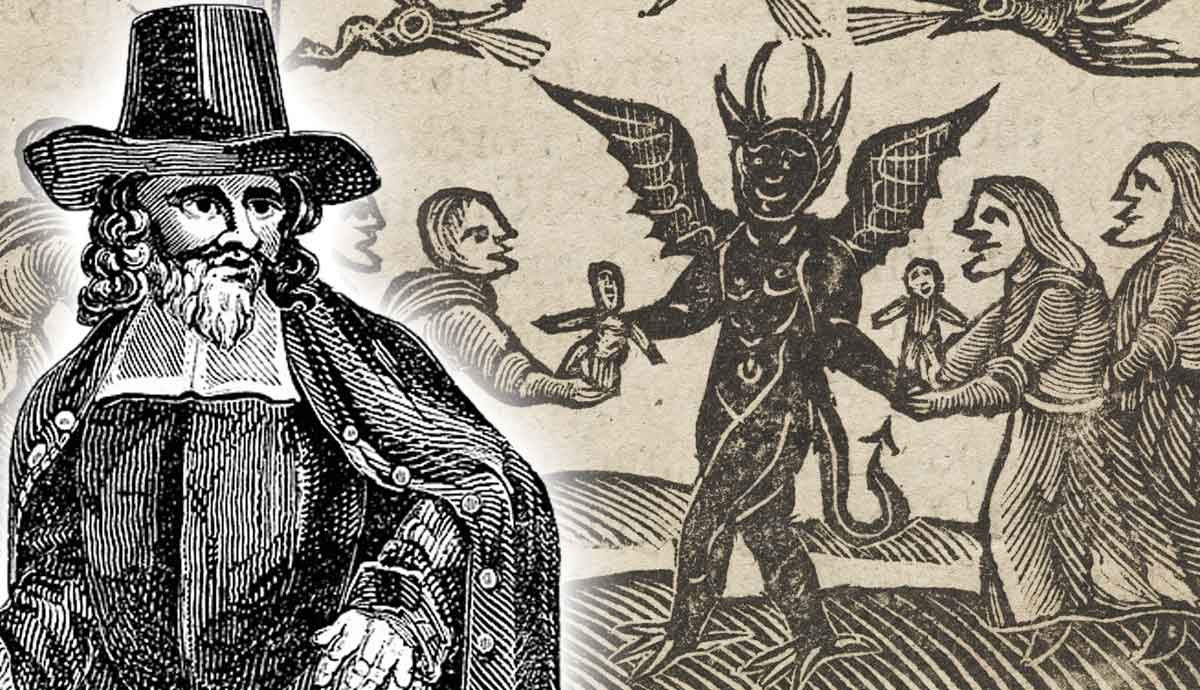
Between the 16th and 18th centuries, Britain witnessed a series of witch trials that reflected deep social, religious, and political tensions. From isolated accusations to mass prosecutions, these trials exposed fears of the supernatural in a world in religious flux, while targeting societys most vulnerable women. Cases such as the Pendle, East Anglia, and North Berwick trials were compelling tragedies that cast a spotlight on the eras anxieties.1. North Berwick Trials (1590-1592)North Berwick witches kneeling before two magistrates, from a contemporary pamphlet Newes From Scotland, London, c. 1591. Source: Wikimedia CommonsThe small fishing town of North Berwick, near Edinburgh in Scotland, was the site of one of the most infamous witch trials in Britain. Despite having a significantly smaller population than England, Scotland had the witch-obsessed King James VI and the fervor of the Scottish Reformation to thank for hosting roughly three times as many witch trials as England.King James VI was directly responsible for initiating the North Berwick witch trials. In 1589, he had attempted to sail to Denmark to collect his bride, Princess Anne, but was forced to return to Scotland due to storms at sea. He suspected that witches in North Berwick had sought his demise and conjured up these storms. He consequently supported investigations that escalated into mass allegations.The accused were said to have met at North Berwick Kirk, where they conspired with the Devil to harm the King. Agnes Sampson, a respected midwife and healer, was accused of leading rituals and summoning storms. Under brutal torture, which included shaving her hair, sleep deprivation, and a scolds bridle (an iron device that forced needles into the mouth and tongue), she confessed to witchcraft and to making a pact with the Devil.Sampson was eventually burned at the stake for her mystical crimes. Another alleged conspirator, schoolmaster Dr. John Fian, was also burned after enduring horrific torture. His fingernails were pulled out, iron pins driven into his body, and his legs were crushed in the boot, a device that splintered bones.The North Berwick witches, from a contemporary pamphlet Newes From Scotland, London, c. 1591. Source: Wikimedia CommonsAnother accused, Barbara Napier, was alleged to have attended witch gatherings and to have conspired in casting harmful spells, including plotting the death of the Earl of Angus, her deceased husband. Napier was kept awake for days at a time, forced to wear iron restraints, and repeatedly pricked with needles in search of a witchs mark. Despite the torture, her confessions were inconsistent, which led to doubts about her guilt. Nevertheless she was condemned, but escaped immediate execution because she was pregnant. Once condemned, most were strangled at the stake before their bodies were burned, a common method in Scotland intended to erase the taint of witchcraft.While the North Berwick witch trials did not reach the staggering death tolls of later persecutions in Scotland, they were unprecedented in scale for their time and set a chilling precedent for what was to come. Around 70 people were implicated during the proceedings between 1590 and 1592.2. Northamptonshire Trials (1612)James VI and I, by John de Critz, 1604. Source: National Galleries of ScotlandIn 1603, King James VI of Scotland was crowned James I of England and made his stance on witchcraft known to his new domain. He made Elizabeth Is existing statute on witchcraft harsher. Under Elizabeth I, a person practicing witchcraft would only be punished if they inflicted harm on others, while James extended the statute to those practicing benign magic.Supernatural incursions were soon identified in the county of Northamptonshire in the East Midlands. It began when a local woman named Joan Vaughan was slapped by another woman called Elizabeth Belcher. Vaughan and her mother, Agnes Brown, were very poor and had reputations for being bad-tempered and disrespectful. Elizabeth Belcher was a woman of noble birth. During the fateful interaction, Belcher struck Vaughan for her rudeness, and the gentlewoman soon fell gravely ill. When her brother WIlliam Avery arrived at his sisters home to visit her, he reported that an invisible entity had prevented him from entering. When he returned home, he fell under the same blight as Belcher and alerted authorities.Cover of the pamphlet The Witches of Northampton showing three witches riding on a sow, by Arthur Johnson, c. 1612. Source: Wikimedia CommonsFollowing the reports, Vaughan and Brown were arrested. Belcher and Avery were promptly involved in a mysterious accident in which the horses pulling their coach dropped dead out of nowhere. The mother and daughter were found guilty.Around the same time, Arthur Bill, a resident of a neighboring town, was also accused of witchcraft and of living in accordance with evil. His mother was also accused, but killed herself before she could be prosecuted. Originally also accused, Bills father claimed his son had bewitched him and became the most important witness at the trial. Meanwhile, Helen Jenkson was also accused in Thrapston of afflicting a local child, ultimately murdering him. The final witch executed as part of the Northamptonshire trials was Mary Barber, who had supposedly bewitched a man to death. All five were hanged at Abingdon Gallows in Northampton in July 1612.3. Pendle Witch Trials (1612)Woodcut image of two witches and a beast, from The History of Witches and Wizards, 1720. Source: Welcome CollectionThe Pendle Witch Trials in Lancashire, in north west England, have become known for the scale of hysteria that rivaled the Salem Witch Trials around 80 years later. The surviving records are some of the most extensive from the 17th century trials.Pendle Hill was already considered a region of chaos and lawlessness. It had faced religious turmoil due to the closure of the local abbey under Henry VIII, and the locals continued Catholicism under the new Protestant regime. There was also a general acceptance of natural healers and folk magic practitioners in the rural north, adding further fuel to the fire. When James became king, every Justice of the Peace in Lancashire was told to create a list of those who refused to convert. Roger Nowell was the Justice of the Peace for Pendle Hill. In March 1612, a local peddler by the name of John Law came to Nowell, claiming that he had been afflicted by witchcraft.The trials began because Law refused to give a woman named Alison Device some metal pins, which were relatively expensive at the time. After he refused, he stumbled to the ground. Although Law initially made no accusations of witchcraft, his son brought Device to visit him, and she allegedly confessed and asked for forgiveness. Eventually, Device, her mother, and her brother were summoned by Nowell, and she supposedly claimed she had sold her soul to the Devil.Elizabeth Device, Alisons mother, did not implicate her daughter but instead her mother, who was known locally as Demdike and generally regarded as a witch. Seemingly determined not to see her own family ostracized, Alison accused Anne Chattox of practicing much more malevolent magic.Illustration of Anne Redferne and Anne Chattox, from William Ainsworths novel The Lancashire Witches, 1849. Source: Wikimedia CommonsThe Device and Chattox families had a long-standing dispute, which Alison heightened by telling Nowell that Anne Chattox had murdered four men by witchcraft, including her father, John Device. On the 2nd of April that year, Demdike, Anne Chattox, and Chattoxs daughter Anne Redferne, were summoned by Nowell. Demdike and Chattox were in their 80s and both confessed to witchcraft, supposedly with little encouragement. While Redferne did not confess herself, Demdike implicated her. Alison Device, Demdike, Anne Chattox, and Anne Redferne were sent to Lancaster Gaol. Then Elizabeth Device held a dinner on Good Friday at the Device family home, arousing Nowells suspicions, which saw eight more people arrested.The Pendle women were tried along with three women accused in the nearby village of Samlesbury, a woman named Isobel Robey from Windle, and Margaret Pearson from Padiham, who was on trial for witchcraft for the third time.Statue of Alice Nutter in Roughlee, Lancashire, England, by Graham Demaline, 2012. Source: Wikimedia CommonsNowell served as the prosecutor and had an ace up his sleeve, nine-year-old Jennet Device. Elizabeth Device was accused of several murders and her daughter, Jennet, gave key evidence against her and her brother James Device, who had also confessed earlier during interrogation. Jane and John Bulcock, a mother and son, and Katherine Hewitt were similarly condemned based on Jennets statements from the meeting at the Devices home on Good Friday.Anne Chattox confessed under pressure to the murder of Robert Nutter, while her daughter Anne Redferne was tried twice, acquitted once, but later found guilty of murdering Christopher Nutter. Alice Nutter, a wealthy widow from a Catholic family, stood in silence during her trial beyond a plea of not guilty, possibly wary of exposing her Catholic connections. She was also accused based on her presence at the Good Friday party, at which witchcraft was supposedly plotted.Finally, Alison Device, whose quarrel with a peddler, John Law, had triggered the investigation, confessed to harming him and was also condemned. In the end, the Pendle Witch Trials claimed nine lives. Alison Device, Elizabeth Device, James Device, Anne Chattox, Anne Redferne, Alice Nutter, Katherine Hewitt, Jane Bulcock, and John Bulcock were all condemned to death.Like other convicted witches in England, they were executed by hanging, the standard punishment for witchcraft under the 1563 Witchcraft Act. Elizabeth Southerns (Demdike) had already died in prison, while Alice Gray alone walked free. The hangings at Gallows Hill on August 20, 1612 not only ended the lives of the accused but also cemented the Pendle trials as a defining episode in the history of English witch persecutions.4. East Anglia Trials and Matthew Hopkins (1645-1647)Matthew Hopkins as Witch Finder General, from a broadside published by Hopkins before c. 1650. Source: Wikimedia CommonsThe early modern period in England was marked by profound political upheaval, culminating in the English Civil Wars from 1642 to 1651. The conflict between Royalist supporters of Charles I and Parliamentarian forces was not simply a military struggle but a fundamental contest over the distribution of political authority. Parliaments eventual victory led to the unprecedented execution of Charles I in 1649, an act that unsettled the traditional political order and generated widespread insecurity.These broader anxieties were mirrored at the local level, where communities experienced heightened distrust and tension. One manifestation of this instability was a surge in witchcraft accusations. The legal framework for prosecuting witchcraft had been established earlier, most notably with the Witchcraft Act of 1542, which criminalized magical practices. However, the mid-17th century witnessed a dramatic escalation.Between 1645 and 1647, East Anglia became the epicenter of what has been described as a concentrated witch hunt, during which approximately 250 individuals were accused. At least 100 executions were carried out in this region alone during those years, while in England more broadly, an estimated 1,000 people were executed for witchcraft between 1542 and 1736.At the center of the East Anglian persecutions was Matthew Hopkins, a lawyer who styled himself the Witchfinder General. Beginning his activities in 1645, alongside his associate John Stearne, Hopkins identified and accused as many as 300 women.Hopkins methods relied heavily on extracting confessions through coercive practices such as enforced sleeplessness, food deprivation, and the identification of bodily scars or blemishes as Devils marks. These signs, often the result of poverty and manual labor, were nevertheless interpreted as evidence of diabolical pacts. Trials frequently involved ordeals, such as the infamous swimming test, in which accused women were bound and lowered into water. Their survival was perversely regarded as proof of guilt.Matthew Hopkins, of Manningtree, Essex, The Celebrated Witch-finder, from a very rare print in the Pepysian Library, at Magdalene College, Cambridge. Source: Welcome CollectionElizabeth Clarke was the first woman to be targeted by Matthew Hopkins in 1645. Approximately 80 years old and disabled, Clarke was a socially vulnerable figure who became the focus of suspicion after being accused of cursing the wife of a local tailor, John Rivet. Following her seizure by a mob, she was brought before her landlord, Sir Harbottle Grimston, who referred the matter for formal investigation.Hopkins and his associates subjected her to prolonged sleep deprivation, during which he claimed she communed with familiars. Under this coercion, Clarke confessed and implicated a number of other women from Manningtree and neighboring villages, including Anne West and her daughter Rebecca, Anne Leech, Helen Clarke, and Elizabeth Gooding.Her confession not only secured her own conviction but also expanded the scope of the prosecutions, resulting in the imprisonment of 35 women. Clarke was tried at the Chelmsford Assizes in July 1645 and executed by hanging. Rebecca West initially faced execution, but by testifying against her mother and others, she was spared.At Manningtree, Elizabeth Gooding, Anne West, and Ellen Billing were all convicted and executed. The intensity of the panic is illustrated by events in Sudbury, where 117 individuals were accused in a short period. Those convicted were typically older women who were poor or socially isolated. Punishments included hanging, the most common method of execution, though drowning was also practiced. By the time Hopkins disappeared from historical records in 1647, his campaigns had resulted in the execution of at least 112 people.5. Pittenweem Trials (1704)Depiction of the Devil giving wax dolls to witches from The History of Witches and Wizards, 1720. Source: Wikimedia CommonsPittenweem is a small, coastal village in Fife, Scotland, which was subject to a particularly gruesome witch trial in 1704. The 16-year-old son of a local smith named Patrick Morton was left shaken after he refused a neighbor, Beatrix Layng, when she asked him to make her nails. When he said he was busy, she allegedly cursed him as she left. Layng was known throughout the town as a suspected witch, and soon after the interaction, Mortons body began to convulse. As his condition worsened, the local minister told Morton stories of the witch trials that happened around a decade earlier in the west of Scotland. Seemingly under pressure from Minister Cowper, Morton officially accused Layng and four others of witchcraft in May 1704.Beatrix Layng, Isobel Adam, Janet Cornfoot, Lillie Wallace, and Nicholas Lawson were all accused and arrested. Cowper and local authorities mercilessly tortured them until they confessed. Layng stated that she met with the Devil in the form of a black dog on Ceres Moor and then cursed Morton through various charms and spells, and named the others as co-conspirators.Pittenween parish Church and Tolbooth, where those accused of witchcraft were held and tortured. Source: Wikimedia CommonsIsobel Adam also confessed and implicated another man, Thomas Brown. He too was arrested and beaten heavily. Despite the torment, Brown refused to confess and later died of starvation while in prison. By November, all of the accused had either been acquitted or paid a fine and resumed their lives, aside from Janet Cornfoot, who was left in prison. She made a break for freedom out of a prison window and fled eight miles to a neighboring village, where she asked the parish minister for help. Sadly, this would be her undoing. The minister contacted the authorities in Pittenweem and an armed guard appeared to re-arrest her.Cornfoots journey back to prison was intercepted by a frenzied mob. She was bound and dragged down to the shoreline. At the harbor, Cornfoot was lynched at the top of a ship mast. Her body swung while the crowd threw stones at her. Eventually, she was lowered and placed on the ground, where the crowd crushed her to death with boulders. To confirm her death, a horse cart was driven over her body.6. Islandmagee Trials (1711)Knowehead House, Islandmagee, where Mary Dunbar first became demonically possessed, 1920. Source: Witches of Islandmagee ProjectThere were far fewer witch trials held in Ireland than in Britain, but one incident in 1711 led to two trials in Carrickfergus, County Antrim, in what is now Northern Ireland. The parish of Islandmagee witnessed what they deduced as a demonic possession of local 18-year-old, Mary Dunbar.Dunbar was reported to have vomited up multiple household items, such as pins and wool, as well as having adverse reactions to the clergymen who were trying to help her. The authorities agreed that this appeared to be a case of possession and assisted her in identifying the witches responsible. Dunbar picked out eight women she said she had seen in their spectral forms: Catherine McCalmond, Elizabeth Sellor, Janet Carson, Janet Latimer, Janet Liston, Janet Main, Janet Millar, and Margaret Mitchell.The eight women were arrested and put on trial, but not before they were violently attacked by a mob, with one of the women allegedly losing an eye. All eight were convicted. Although the records of the punishments are lost, it is assumed that each woman was sent to prison for a year, as was the policy for causing injury by witchcraft at the time.Despite the convictions, Mary Dunbar was still undergoing intense fits and other symptoms prompting further investigation into her continued possession. Dunbar suspected the culprit was William Sellor, Janet Listons husband and Elizabeth Sellors father. Before Sellor could be brought to trial, Dunbar succumbed to her condition and died in April 1711. The passing of his supposed victim led the courts to convict Sellor of Dunbars death by witchcraft, for which the punishment was also death. While all eight women lived, they were outcasts for the rest of their lives.
0 Comentários
0 Compartilhamentos
262 Visualizações

 English
 Arabic
 French
 Spanish
 Deutsch
 Turkish
 Dutch
Dutch
 Italiano
 Russian
 Romaian
 Portuguese (Brazil)
 Greek
Greek