


WWW.THECOLLECTOR.COM
Elizabeth Cady Stanton: The Woman Who Demanded Equality
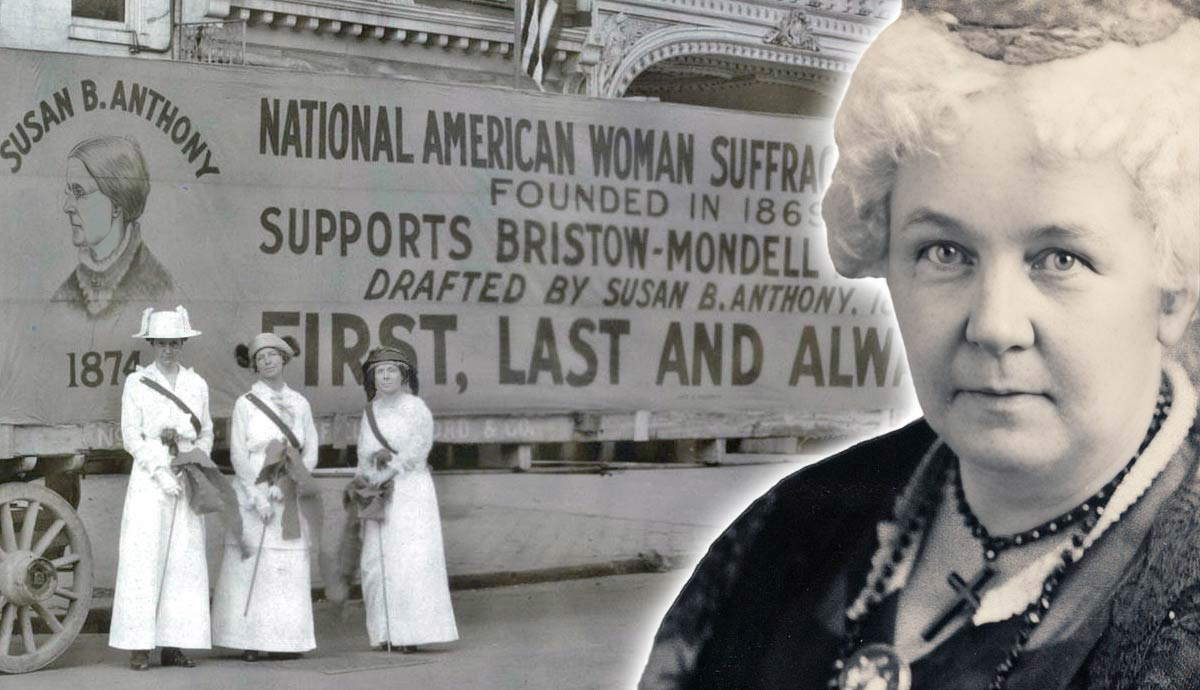
Elizabeth Cady Stanton was a revolutionary figure in her day, speaking out about womens rights, especially voting rights for women. Alongside fellow suffragist Susan B. Anthony, she worked tirelessly to change the way society treated women. A writer, philosopher, womens rights activist, and mother of seven children, Stanton used her talents and skills to uplift womens voices in a patriarchal society. Though her rhetoric has been criticized as being elitist and racist in nature, Stanton ignited a feminist rebellion that would continue into the 20th century. So, what did Elizabeth Cady Stanton do?Elizabeth Cady Stantons Early LifeMap of Johnstown, New York, in 1888. Source: Library of Congress, Washington DCIn 1815, Elizabeth Cady Stanton was born to a large, wealthy family in Johnstown, New York. Her mother was a progressive thinker and the daughter of an esteemed hero of the American Revolution. Her father was a landowner, attorney, and later a state Supreme Court judge. The Stanton family was very influential in the community.Stanton was one of ten children, though many of her siblings died in infancy. The Stantons were bereaved by the loss of four of their five sons in childhood, with the fifth son passing away soon after he graduated from Union College. This left Stantons parents devastated since, at this time, male heirs were crucial for the survival of a familys future. Elizabeth Cady Stanton felt that she was a disappointment to her parents, especially her father, who, upon the death of his eldest son, expressed to her that he wished she was a boy.As a child, Stanton was caught sifting through her fathers law books and attempting to cut out passages that prevented women from having rights equal to men. Though her father stopped her before she managed to cut them out, he explained to her that in order for a law to be changed, a person must appeal to the lawmakers who pass the laws.This incident inspired Stanton and remained with her when, in 1854, she appeared before the New York State Legislature to demand property rights for women. Stantons childhood experiences changed how she saw womens role in society. She was emboldened to speak out about the unfair treatment of women in their communities and across the country.In other words, Elizabeth Cady Stanton demanded change.A Radical WomanIllustration of the World Anti-Slavery Convention in London in 1840. Source: Bristol Radical History GroupThough Stanton was highly intelligent, outspoken, and interested in learning, women in the 19th century were unable to access higher education. She attended an all-female academy but felt it was unfair that she was prevented from attending college like her brother and attaining the same education as males.Once she graduated from the academy, she surrounded herself with intellectuals and radical thinkers, including her cousin Gerrit Smith, a staunch abolitionist and supporter of social reforms. Within this circle of intellectuals, Stanton met abolitionist Henry Stanton, and the two were married in secret in May 1840. Stantons parents disapproved of the marriage.During the wedding ceremony, Stanton refused to utter the word obey, She also kept her maiden name, which was highly unusual during this time. She wished to start the marriage on equal footing and sustain her individuality within the marriage.For their honeymoon, the couple left for London to attend the first-ever World Anti-Slavery Convention. Though Stanton was excited to be part of this momentous occasion, British delegates refused to accept the female delegates from America. They were allowed to sit in on the meetings, but that was it. The women, including Stanton, were disallowed from speaking out about oppression and freedom. Stanton socialized with the other excluded female abolitionists and womens rights activists, including feminist Lucretia Mott, and the two continued to correspond with one another after the convention.Upon returning from their honeymoon, Elizabeth Cady Staton and her husband settled in Johnstown but eventually moved to Boston, where they continued growing their family. Though Stanton was busy raising her young children, she found time to attend intellectual meetings and lectures where writers like Ralph Waldo Emerson and Nathaniel Hawthorne enlightened audiences with their radical, progressive ideas.Seneca FallsIllustration of the Seneca Falls Convention in 1848. Source: Library of Congress, Washington DCIn 1847, the Stantons left Boston for Seneca Falls, New York. Though conversations about womens rights had been occurring for years, Seneca Falls is considered the birthplace of the womens rights movement in the United States, as it represents the first time a wider meeting was called specifically to address womens rights.In early July 1848, Stanton joined a meeting of Quaker women at Lucretia Motts request. Though Mott couldnt attend, she wanted the other women to become acquainted with Stanton. The group discussed the plight of women in society, especially their lack of rights.Stanton was discontented with the roles of women in society as merely wives, mothers, and housekeepers, shut off from the wider world, and forced to toil at home. After the assembly, the women placed a public meeting notice in a local paper. Stanton began drafting the Declaration of Sentiments and Resolutions, formed in unison with the worlds first womens rights convention on July 19, 1848, in Seneca Falls.The document, modeled after the Declaration of Independence, demanded rights for individual women in society. The meeting lasted two days, and hundreds of people attended. Attendees discussed how the law and religion limit women and do not allow them to utilize their talents and intellect. They indicated that the participation of women in society and law was crucial for a well-rounded, functioning democracy. Stanton even discussed womens suffrage, an issue that her husband, friends, and fellow activists believed was an unrealistic resolution.However, Frederick Douglass, a fellow convention attendee and speaker, supported Stantons resolution, and Stanton acknowledged that his support ultimately saved the resolution. Those in attendance addressed the need to change laws and societal customs for womens liberation, with 68 women and 32 men signing the Declaration of Sentiments and Resolutions.A Pivotal MeetingPhotograph of Susan B. Anthony and Elizabeth Cady Stanton. Source: Library of Congress, Washington DCIn the spring of 1851, Stanton and Susan B. Anthony met for the first time. Their friendship would span decades, changing the course of the womens rights movement.Because Anthony chose not to marry, she was able to travel freely and speak at meetings about womens rights, especially womens suffrage. She often highlighted Stantons work in the movement while Stanton remained home to care for her young children. Eventually, Anthony came to stay with the Stantons and care for the children, giving her friend the space to write and strategize for the movement.Susan Anthony and Elizabeth Cady Stanton were powerful figures, representing the strength of the womens rights movement. Stanton wrote eloquent, insightful pieces, and Anthony delivered them to audiences. The two women worked on changing the laws in New York and the countrys northern regions before turning their focus to the federal government and amending the United States Constitution. They garnered national support by inspiring womens rights activists and social reformers to stand up for women.A RevolutionPhotograph of members of the National American Woman Suffrage Association standing in front of a wagon with a sign attached supporting the NAWSA. Source: National Womens History Museum / Library of Congress, Washington DCFor half a century, Stanton and Anthony led the US womens rights movement, though they were met with resistance and animosity from both men and women.They advocated for voting rights for women along with other fundamental rights, including a womans right to attend college, own property in her name, share custody of her children, end a marriage on the grounds of cruelty or drunkenness, be treated as a full citizen, run for office in public elections, serve on a jury, and run for the position of senator, representative, or president, among other rights.Once her children were older, Stanton worked for over a decade, traveling and giving speeches. In the 1860s, she spoke in front of legislatures, conventions, and judicial committees about such topics as voting rights for all women regardless of race, access to property, and divorce.She believed that marriage should be defined as a legal agreement, explaining that it was a fallible institution unfair to women since a man who marries does not give up his rights, but a woman who marries forfeits every right.In 1869, Stanton and Anthony formed the National Woman Suffrage Association (NWSA) to promote voting rights for women, with Stanton serving as president of the NWSA for two decades. The NWSA later merged with the American Woman Suffrage Association (AWSA) to form the National American Woman Suffrage Association (NAWSA) in the late 19th century.Elizabeth Cady Stantons Feminist WritingsPortrait of Elizabeth Cady Stanton, c. 1870. Source: National Portrait Gallery, Smithsonian InstitutionDuring her later years, Elizabeth Cady Stanton was a paid lecturer and wrote powerful works on womens rights, including co-authoring History of Woman Suffrage (1881-1886) alongside Anthony and other womens rights activists, The Womans Bible (1895 & 1898), in which Stanton challenges the traditional idea that women should be subservient to men (an idea she believed was often supported by religion), and a memoir called Eighty Years and More (1898). Her writings explore the injustices women face in the domestic sphere, law, politics, and places of worship.In 1892, Stanton produced the speech Solitude of Self, written for the House Committee on the Judiciary of the United States Congress. In it, Stanton argued for womens rights as citizens, individuals, and human beings, emphasizing the need for womens education and for women to be independent and self-reliant in society. She explained that individuals, men and women alike, are ultimately responsible for themselves and know their own needs. Therefore, women cannot be adequately served in politics by male family members representing them; only women as individuals can understand what they want and what they need.Stanton gave the speech in an address to the NAWSA and at a Senate Committee on Woman Suffrage hearing. The text was later published, and thousands of copies were sent across the country by Congress.Elizabeth Cady Stantons LegacyNew York Central Park monument of womens rights leaders, including Elizabeth Cady Stanton, erected to commemorate the centennial anniversary of the ratification and certification of the 19th Amendment, which extended voting rights to women. Source: Central Park ConservancyThough Stanton was successful in spearheading a revolution focused on womens liberation in society, her activism has been criticized, particularly the elitist attitudes and racist rhetoric used in her writings and speeches.In one instance, Stanton likened the status of women in society to that of an enslaved person, despite the fact that there were enslaved people, including enslaved women, in the United States at that time, and white women had more rights than Black women.While some abolitionists and womens rights activists during the American Civil War believed that the enfranchisement of Black men was vital to ensure the safety of the Black community, Stanton disagreed, believing that women were a priority and should receive voting rights first. She felt that white, educated, moneyed women were worthier of the vote than Black men.Stanton even began arguing against universal male suffrage, explaining that white women were morally and intellectually superior to Black men or foreign-born men. Her exclusive stance on voting rights was met with vitriol as many abolitionists and other womens rights advocates disagreed with her elitist beliefs.Still, Stanton was a revolutionary figure in the womens rights movement, highlighting the unfair treatment and injustices women faced in society. She used her talent for communication and access to resources to petition for womens rights, especially womens suffrage.Though she died in 1902 before womens suffrage was granted in the United States, her work inspired feminists in the 20th century and beyond to continue their fight for womens rights.
0 Comments
0 Shares
234 Views

 Arabic
 French
 Spanish
 Portuguese
 Deutsch
 Turkish
 Dutch
Dutch
 Italiano
 Russian
 Romaian
 Portuguese (Brazil)
 Greek
Greek