


WWW.THECOLLECTOR.COM
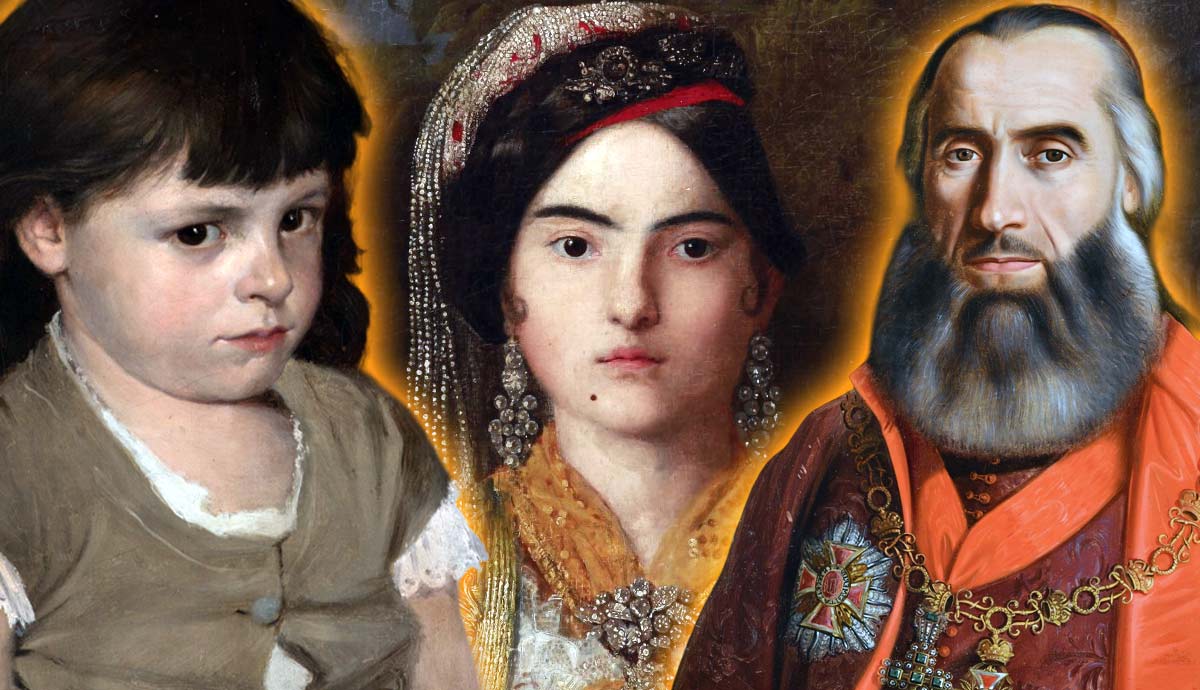
8 Most Exciting Artworks From the Gallery of Matica Srpska
Although Serbia is not a big country, it boasts two national academies. Apart from the Academy of Sciences and Art in the capital, Belgrade, the Balkan nation has another bastion of Serbian art: Matica Srpska in Novi Sad. Expatriate Serbs founded it in 1826 in Pest (present-day Budapest), to preserve their identity within the Austrian Empire. Several decades later, a gallery was added to it, eventually becoming a separate institution in 1958. However, the Gallery kept its original name as a reminder of its mission to showcase Serbian art.1. The May AssemblySrpska Narodna skuptina 1. maja 1848. godine, Pavle Simi, 1848-1849. Source: The Gallery of Matica Srpska, Novi SadThe painting May Assembly is an oil on canvas that is the only visual testimony of the eponymous event. In the words of the Gallery itself, it is a Mona Lisa-like masterpiece that documents the most important event in the history of Serbian people on the territory of Vojvodina in the 19th century.After the French Revolution of 1848 and the subsequent Hungarian revolution, the Serbian minority declared its autonomy and proclaimed the Serbian Vojvodina. The latter exists to this day, albeit in a different format, and its administrative center is Novi Sad, Gallery of Matica Srpskas hometown. Not far from there lies Sremski Karlovci, a picturesque village on the right bank of the Danube. This was the setting of the May Assembly, which had participants from all walks of life.The artist, Pavle Simi, wanted to pronounce the newly elected patriarch, Josif Rajai, who is the only figure in the upper row. In an act of symbolism, resembling the famous Statue of Liberty, he is holding in his left hand the royal privileges that guarantee Serbian national rights within the Habsburg Empire. To his left (close to his heart) is the Serbian tricolor, while on the right, less pronounced Hungarian and Austrian flags are flying. The patriarch is surrounded by distinguished Orthodox bishops, while the image of the crowd contains an Easter egg. If you look at the bottom-right corner, youll see a person facing away from the happening. This is none other than the painter himself.2. A Sulky GirlNadurena devojica, Uro Predi, 1879. Source: The Gallery of Matica Srpska, Novi SadThe following image is also one of the symbols of the Gallery of Matica Srpska. Today, they cherish the Sulky Girl just as much as its author, who held onto the painting until a couple of years before his death.Uro Predi painted the portrait of the mysterious girl during his college days at the Academy of Fine Arts in Vienna in 1879. That year, it won the prize for the best students oil painting. The secret behind the paintings longevity is similar to that of Leonardo da Vincis Mona Lisa: the mysterious facial expression that confounds the spectator.However, the Mona Lisa of childrens portraits is not a portrait painted from life. The petulant girl is most probably a literary character from a period childrens poem, Srda, authored by Jovan Jovanovi Zmaj. He founded the popular childrens magazine, Neven, for which Predi worked as an illustrator.In fact, he also did a portrait of his editor and friend, which was just one of several hundred of Predis sitters of famous people. The list includes kings and queens, poets, army generals, statesmen, composers, and industrialists. Predi was a prolific author, producing over 1,700 pieces of art until his death in 1953. He is the author of arguably the most famous Serbian painting, Kosovo Maiden. The famous realist painter held a deep connection with Matica Srpska: he was their first fine arts stipendiary in 1876. Today, he has a street named after him in Novi Sad and other Serbian cities.3. The Wounded MontenegrinRanjeni Crnogorac, Paja Jovanovi, 1882. Source: The Gallery of Matica Srpska, Novi SadPaja Jovanovi was another Serbian realist painter who gained fame for his historical and folk life images. The Wounded Montenegrin is an epitome of this motif: a wounded young man is surrounded by locals during the Montenegrin-Ottoman War (18761878).The group, consisting of a crying woman on her knees and a worried elderly man, among others, is inside a single room in a village house. This is one of four versions of the same painting. The variations include the removal of the two shadowy figures on the right side of the painting, as well as adding the authors signature. Jovanovi did not have the habit of naming his artwork, believing the audience would come up with their own names. Therefore, the oil on canvas in question is also known as The Wounded Herzegovinian, The Wounded Bosnian, and A Sad Encounter.When the painting first appeared at the Academy of Fine Arts annual art exhibition in Vienna in 1882, it won the first prize. Based on this success, Jovanovi got a scholarship from the Austro-Hungarian government. This allowed him to produce a series of paintings documenting life in the Balkans, such as Fencing Class (1884). The artist would continue to produce masterpieces of Serbian art, such as Migration of the Serbs, The Coronation of Emperor Duan, and The Cock Fight. The latter is also displayed at the Gallery of Matica Srpska.4. The Stoning of Saint StephenKamenovanje Svetog Stefana, Novak Radoni, 1857. Source: The Gallery of Matica Srpska, Novi SadBorn and raised in the village of Mol in the region of Vojvodina, Novak Radoni was a representative of Serbian Romanticism. Having attended art colleges in several Central European cities, including Vienna, he embarked on a two-year study trip across Italy. Having seen the classics firsthand, Radoni started doubting his talent, and for the remainder of his career, he mostly painted iconostases in Orthodox churches across the Banat region.The elementary school in his home village was named after the painter whose artwork is prominently featured in the Gallery of Matica Srpska. Radonis notable paintings include The Death of Emperor Uro, The Girl with the Canary, and his self-portrait, painted around the time he completed The Stoning of Saint Stephen.The oil on canvas depicts a motif that was topical among European painters. Saint Stephen was the first Christian martyr after Jesus. According to the Acts of the Apostles, Stephen was a Hellenistic Jew who had converted to Christianity. His preaching of Christianity got him into trouble with the authorities in Jerusalem. They stoned Stephen to death for the crime of blasphemy, with one of his executioners being Saul of Tarsus, who would later become Paul the Apostle.When he was just 19, Rembrandt, the famous Dutch artist, painted the same scene as Radoni (1625), making this oil on oak panel his first signed painting. Other notable artists who utilized this motif include the Greek painter Philotheos Skoufos (1685) and the German Baroque painter Adam Elsheimer (c. 1603).5. The First Portrait of a Woman Painted by a WomanAnka Topalovi ro. Nenadovi, Katarina Ivanovi, 1837. Source: The Gallery of Matica Srpska, Novi SadThe image above is the first in several ways. It is the first Serbian portrait of a woman painted by a woman, and it is the first portrait in Serbian art where the female subject is depicted outdoors. Finally, this is Katarina Ivanovis first commissioned portrait, which she did for a fee.Katarina Ivanovi was born in present-day Hungary and was just one of three known Serbian female painters in the 19th century, alongside Mina Karadi and Poleksija Todorovi. Apart from portraits and still lifes, she is also famous for her historical scenes, such as The Conquest of Belgrade (1844-1845), which was the first historical composition authored by a Serbian woman.When her 1837 oil on canvas arrived in the Gallery of Matica Srpska after World War II, it had a mysterious inscription: A Young Woman in Serbian. The curators assumed that the subject was Princess Persida araorevi, since the National Museum in Belgrade already owned two of Ivanovis portraits of her.However, when they removed the frame at the beginning of the 20th century, the curators realized that dating was somewhat off. Further studies revealed that the womans brooch bore the initials A.H., which directed the researchers attention to Anka, Persidas younger sister. They renamed the painting accordingly, as it depicted Anka Nenadovi, a 17-year-old girl whom Katarina Ivanovi had portrayed before her marriage (hence the nee Nenadovi in the title). The outdoor place where the painter met her model remained unknown to this day.6. The Legend of Saint LadislausSveti Ladislav, Franz Eisenhut, 1898. Source: The Gallery of Matica Srpska, Novi SadAlthough it belongs to 19th-century artwork, Saint Ladislaus is part of the Large Formats collection. This is due to the paintings size: roughly, two by three meters. This doesnt come as a surprise, once we know that the author also painted one of the largest paintings in the former Yugoslavia region. In 1898, Franz Eisenhut created the Battle of Zenta, an oil on canvas painting, measuring a whopping seven meters long and four meters high. The image is displayed in the County Palace in Sombor, Baka.Eisenhut was born in the south of the same region in a German family, but he considered himself Hungarian, changing his name from Franz to Ferencz. He had strong ties to Munich, where he attended the Royal Academy of Fine Arts and ultimately passed away in 1903. Eisenhut was a famous Orientalist, having travelled as far as Samarkand, earning the epithet the man who painted the Orient.His oil on canvas displayed in the Gallery of Matica Srpska bears the full title Saint Ladislaus Chasing a Cuman Warrior, Girl Kidnapper. Ladislaus I was an 11th-century King of Hungary who fought the Pechenegs and the Cumans, tribes that invaded his kingdoms eastern borders. These are the historical origins of the legend of his pursuit on horseback of a Cuman who had taken away a Hungarian girl. Unable to catch up with him, he shouted to the girl to throw her kidnapper off the horse. Eisenhuts painting captures this moment, as the girl is grabbing the Cuman by the lapel.7. The Hilandar MonasteryHilandar sa konacima, Vladislav Titelbah, 1890. Source: The Gallery of Matica Srpska, Novi SadThe colored ink wash on paper is an interesting example of the work of the ethnologist and illustrator Vladislav Titelbah. He was a Serb born in the present-day Czech Republic, who worked as a professor of mathematics in the Novi Sad gymnasium in the mid-19th century.Titelbah traveled across Serbia, documenting the nations rich ethnographic heritage using his camera. He later used these photographs to draw his own illustrations of famous landmarks. Titelbah predominantly painted historical portraits, while his most famous work is Marko Kraljevi and Musa Kesadija. The oil on canvas from the year 1900 is on display at the National Museum in Kikinda.The painting above depicts the Hilandar monastery with its monastic quarters. Founded in the late 12th century by the Serbian royal family, the Eastern Orthodox monastery is one of the most significant spiritual sites in Mount Athos in Greece. Titelbachs rendering of Hilandar is a fine blend of the military fortification in the background and the residential quarters in the foreground. The church in the center, a fine example of medieval Orthodox art, is the centerpiece of the painting, lighter than the surrounding structures.8. The Metropolitanate of Karlovci in Serbian ArtMitropolit Stefan Stratimirovi, Pavel urkovi, 1812. Source: The Gallery of Matica Srpska, Novi SadStefan Stratimirovi served as the Metropolitan Bishop of Karlovci from 1790 until his death in 1836. His portrait from the Gallery of Matica Srpska dates back to this period (1812).The author of the oil on canvas is Pavel urkovi, a Serbian painter born in Baja, Hungary. He mostly painted iconostases, such as those in Vrac and Bela Crkva in northeastern Serbia, but he was also renowned for his portraits. After the liberation of Serbia in the 19th century, the countrys ruler, Milo Obrenovi I, invited him to his court in Kragujevac to paint the portraits of himself and the royal family. His portrait of Vuk Karadi, the famous Serbian language reformist, appeared on the modern 10-dinar bill in the Republic of Serbia, showing the man of letters at the relatively young age of 29.The Metropolitanate of Karlovci was established around the time of the Great Migrations of the Serbs. As the lands to the south of the Sava and the Danube rivers fell under Ottoman rule, Serbs migrated north. This brought them into the lands of the Habsburg Empire, which is present-day Hungary.The establishment of their metropolitanate, that is, ecclesiastical province, was part of the religious autonomy granted by the Holy Roman Emperor Leopold I. The institution became a patriarchate in 1848, so Stefan I, pictured above, was actually one of the last Eastern Orthodox metropolitans seated in the aforementioned Sremski Karlovci.
0 التعليقات
0 المشاركات
242 مشاهدة

 English
 French
 Spanish
 Portuguese
 Deutsch
 Turkish
 Dutch
Dutch
 Italiano
 Russian
 Romaian
 Portuguese (Brazil)
 Greek
Greek