


ALLTHATSINTERESTING.COM
The Story Of Neil McCauley And The Real Heist That Inspired Michael Manns Heat
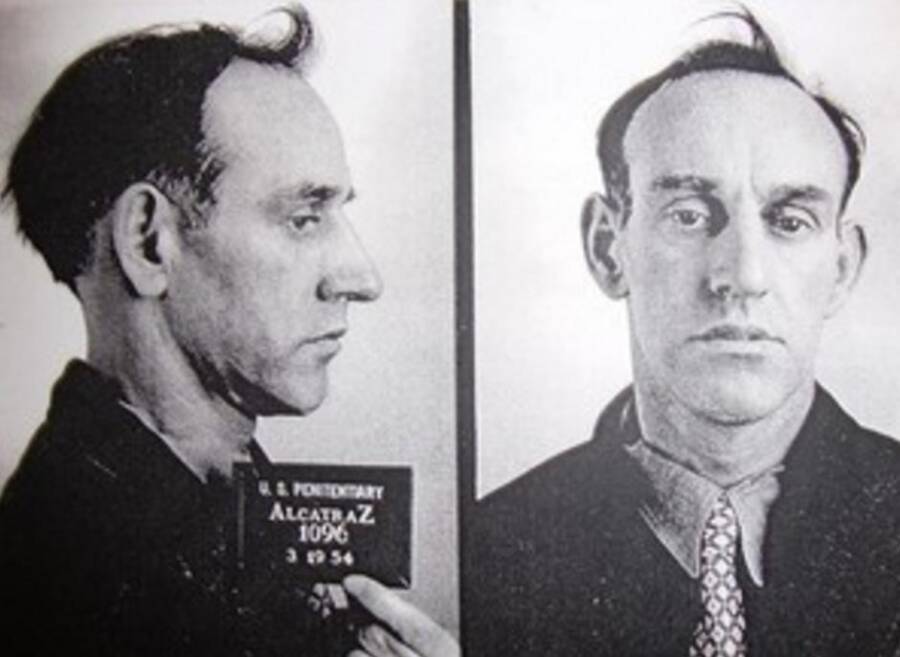
Alcatraz Federal Penitentiary Prisoner IndexNeil McCauley spent 25 years in state and federal penitentiaries, including eight years at Alcatraz.On March 25, 1964, the Chicago police were in position outside a corner store on the citys Southwest Side, ready to take down Neil McCauley, a career criminal who had been released from federal prison just two years earlier.The police were led by a detective named Chuck Adamson, whod recently met with McCauley over coffee and had infiltrated his gang. He knew that McCauley and his crew planned to rob the store because it was the day the clerks were scheduled to receive a large cash delivery to exchange for checks.But even though McCauley had already walked away from one job when he learned that Adamson was on to him, he had no idea how thoroughly surrounded he was. Nor that his life story would later be turned into Michael Manns 1995 crime classic Heat.Featuring criminal Neil McCauley (Robert De Niro) and the cop pursuing him, Vincent Hanna (Al Pacino), Heat was inspired almost beat-by-beat by a series of actual events that unfolded between the real-life Neil McCauley and detective Chuck Adamson right down to their epic meeting and a final, fatal shootout.Neil McCauley Was A Consummate Professional CriminalNeil McCauley was born in Polk, Iowa, on February 2, 1914. By the time he was released from prison in 1962, he had already spent 25 years behind bars more than half his life. He had spent eight years in Alcatraz, with four years in solitary confinement.Prior to McCauley being released from prison in 1962, Detective Chuck Adamson from the citys Major Crime Unit had a hunch about him, according to Film School Rejects. Adamson knew Neil McCauley wouldnt give up a life of crime when he exited the prison gates and landed in Chicago. He would continue doing what he does best: getting a crew together to take down scores. Adamson would be keeping an eye on him.Then, after McCauley robbed a manufacturing plant of its diamond drill bits (a robbery also included in Heat), Adamson infiltrated his crew and placed McCauley under round-the-clock surveillance. Soon, that surveillance paid off when Adamson got wind that McCauley had gathered a team of criminal associates to burglarize a Chicago department store.Warner Bros.Chicago police officer Chuck Adamson later became a television producer and screenwriter who consulted on Heat.In the days leading up to the burglary, Adamson and his officers had watched Neil McCauleys crew perform a dry run staking out the department store. McCauley, being the consummate professional he was and leaving nothing to chance, had noticed everything: the layout of the parking lot, the number of cars present at the time, and even the store window displays.So Adamson assigned officers to cover the exterior, hidden from sight. Two detectives had taken up positions within the store. Everything had been covered.For hours, the night of the burglary passed without sighting Neil McCauley. Then Adamsons police radio crackled. McCauley and his crew had arrived. Officers watched as the men entered the rear of the building and descended into a basement, where they waited and listened. How Chuck Adamson Grew To Admire A ThiefNeil McCauleys mugshot, taken March 2, 1964, just three weeks before the heist that killed him.Chuck Adamson had given the two detectives hiding inside the store specific instructions: do not move under any circumstances, no matter how many hours passed, according to an interview he gave in 2005.Having been in position for five or six hours, one of the detectives could no longer wait. He got up and walked across the floor toward the toilet. McCauley heard the movement above and aborted the entire operation, a job hed spent weeks planning and a considerable amount of money organizing. McCauley had too many years of criminal experience to know that unknown sounds in a seemingly empty department store spelled trouble. The sliding scale of risk versus reward had now tipped in someone elses favor. For Neil McCauley, all was not lost. Now he knew the police were on to him.For Chuck Adamson, it instilled admiration for McCauleys professionalism. He knew it took tremendous self-discipline to walk away.Those events translated into a pivotal scene from Heat: the police sting operation where Robert De Niros McCauley stands guard outside the warehouse, where inside, a member of his crew drills into a vault. Unbeknownst to De Niros McCauley, Al Pacinos Detective Vincent Hanna and officers wait inside a shipping container watching the events from a live infrared surveillance feed. A police officer decides to sit down in the corner, his equipment making a thump as it meets the containers edge. McCauley stares at the container, knowing something isnt right, and aborts the job.Neil McCauleys Meeting With Chuck Adamson Over CoffeeWarner Bros.The iconic coffee house scene from Michael Manns Heat was based on an actual meeting between the Neil McCauley and Chicago police officer Chuck Adamson.Yet the department store robbery abortion wasnt the only real-life Neil McCauley story to make it into Heat. In fact, his entire relationship with Chuck Adamson formed the basis of the film, including their sole meeting over coffee. The duality of a hardened professional criminal sitting down with the police detective who was obsessively pursuing him caught Michael Manns interest when Chuck Adamson first told him about it when the two met in the 1970s, according to Steven Rybins 2013 book Michael Mann: Crime Auteur. Adamson, long retired from the Chicago police department, was now working as a technical consultant on movies. Mann and Adamson had first collaborated for Manns 1981 film Thief, utilizing Adamsons insider knowledge on the modus operandi and tools of the trade in Chicagos underworld of professional thieves.The actual cop/criminal sit-down that inspired the famous Heat scene happened in 1964. Chicago replaced Los Angeles. A diner replaced a restaurant.Chuck Adamson replaced the Vincent Hanna character played by Al Pacino, but he still invited the real Neil McCauley to grab a cup of coffee. The crux of their conversation that day was matter-of-fact and to the point in Adamsons telling:Adamson: Why dont you go somewhere else and cause trouble? Adamson asked.McCauley: I like Chicago.Adamson: You realize that one day youre going to be taking down a score, and Im going to be there.McCauley: Well, look at the other side of the coin. I might have to eliminate you.Adamson left McCauley with these parting words: Im sure well meet again.McCauley and Adamson had recognized each other. They both saw the mirrored traits they shared and the motivations that drove them. Relentless, detached, and self-disciplined. Although they knew neither was under any illusion about the other.Adamson admired McCauleys criminal awareness and aversion to taking unnecessary risks. He wasnt about to cut him any slack. In the restaurant scene from Heat, McCauley lays out his disciplined criminal philosophy. He was willing to abandon everything once he felt the heat around the corner.Neil McCauleys Final Supermarket Robbery And ShootoutThe Chicago TribuneNeill McCauleys daring grocery store robbery inspired the final police shootout in Heat.Chuck Adamson met Neil McCauley again on Wednesday, March 25, 1964.Adamson and eight other detectives had a tip that McCauleys crew was about to rob a supermarket. Then, around 2 p.m. in the pouring rain, Adamson watched as McCauley and three others drove into the parking lot of a National Tea company store at 4720 South Cicero Avenue.It was the day the store cashed their checks, and an armored truck had just delivered a substantial amount of cash. McCauley and his regular crew had tailed the armored truck, according to Slash Film.Once the cash had been deposited, Neil McCauley and two others entered the store, leaving their wheelman in the car. From his vantage point across the street, Chuck Adamson could see into the supermarket beyond the window advertisements. Customers and staff had their hands in the air. He told his officers to hold their fire, fearing a bloodbath.McCauley exited with $13,137, and then he spotted the heat. Adamson and his partner approached with their guns drawn.McCauley opened fire on Adamson and his colleagues, who returned the favor. McCauley and his men made it to their getaway car. Taking fire and shooting back at the police, they sped down a rear alley. But the police had blocked off all potential exits, and the car skidded to a halt on the alleys gravel surface.McCauley and the three others fled on foot, firing at officers before taking off toward a row of adjacent houses. Two of them were immediately shot and killed. Another escaped injured, only to be arrested later on that day. Adamson pursued McCauley, tracking him between the gangways of the nearby residential homes those narrow gaps granting access between individual houses. In the events foreshadowed by their previous meeting in a Chicago diner, the hand holding the coffee cup from across the table ended the life and criminal career of Neil McCauley. Chuck Adamson shot him six times.The narrow space of the gangway McCauley died in was a few feet wide. The width was not so different from the prison cells he had occupied for most of his life.After reading about Neil McCauley, learn the astonishing real story of the Lufthansa heist only hinted at in Goodfellas. Then, read about the outrageous Loomis Fargo heist by David Ghantt.The post The Story Of Neil McCauley And The Real Heist That Inspired Michael Manns Heat appeared first on All That's Interesting.
0 Commentaires
0 Parts
265 Vue

 English
 Arabic
 Spanish
 Portuguese
 Deutsch
 Turkish
 Dutch
Dutch
 Italiano
 Russian
 Romaian
 Portuguese (Brazil)
 Greek
Greek