500,000-Year-Old Hammer Unearthed In England Proves To Be The Oldest Elephant Bone Tool Ever Found In Europe
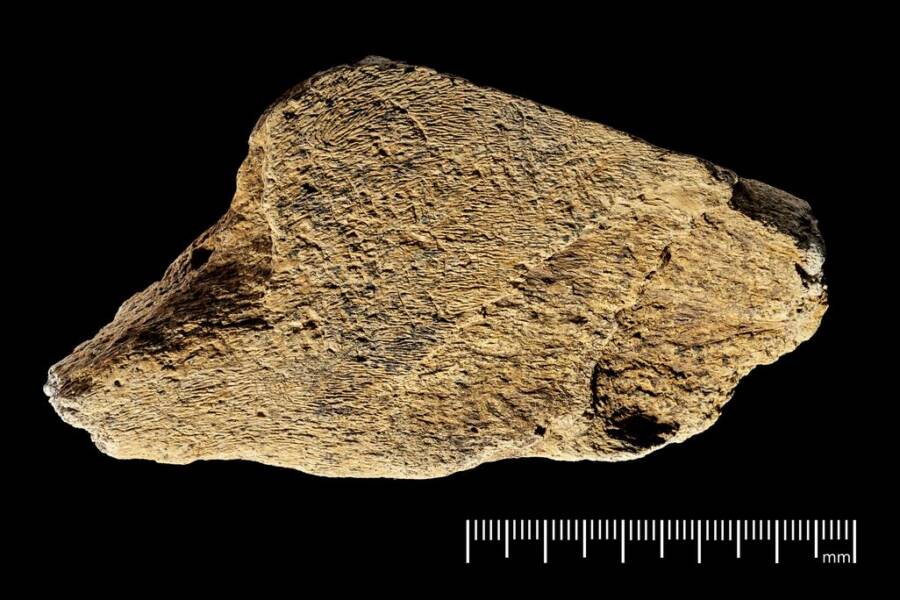
Trustees of the Natural History MuseumThis elephant bone tool dates back almost half a million years, making it far older than any other similar artifact ever found in Europe.More than 30 years ago, archaeologists found a chunk of elephant bone while excavating a prehistoric site in southern England. This was somewhat unusual, aselephants and mammoths were rare in prehistoric England.But it wasnt until recently that researchers examined the bone more closely. Then, they realized that not only was it actually a tool, but it was almost a whopping half-million years old.Indeed, researchers believe that this bone hammer dates back about 480,000 years, and that it was likely once used to sharpen other tools. Its an incredibly rare artifact, and a fascinating window into the resourcefulness of prehistoric peoples in this region.Studying The 500,000-Year-Old Elephant Bone Tool Found In EnglandAccording to a statement from the Natural History Museum in London, the bone (likely elephant, though it could also be mammoth) was found in the early 1990s at an archaeological site in West Sussex, England. The discovery of such a bone was unusual though elephants and mammoths were plentiful in prehistoric Europe, they were rarely found in England but it was put aside. Now, however, researchers have taken a second look.NHM Photo UnitUpon closer inspection, marks can be seen on the bone that suggest it was used to sharpen other tools.Upon closer examination of the bone, which is about four inches long and one inch thick, researchers realized that it had once served an important purpose. After using 3D scanning and electron microscopes, they realized that the bone was covered with notches and impact marks, suggesting that it had been used as a hammer.This remarkable discovery showcases the ingenuity and resourcefulness [of prehistoric people], said Simon Parfitt of University College Londons Institute of Archaeology and a Scientific Associate at the Natural History Museum, as well as the lead author of a new study about the elephant bone thats been published in Science Advances.They possessed, not only a deep knowledge of the local materials around them, but also a sophisticated understanding of how to craft highly refined stone tools. Elephant bone would have been a rare but highly useful resource, and its likely this was a tool of considerable value.So how exactly did prehistoric people use the elephant bone tool?The Historical Context Behind The Elephant Bone Hammer Found In BoxgroveBoxgrove Project, UCLThe Boxgrove archaeological site in West Sussex, where the elephant bone tool was originally found in 1990.While examining the bone, researchers documented small pieces of flint embedded in its notches. Prehistoric people were known to use bone to sharpen stone tools like handaxes, and researchers suspect that the elephant bone hammer was used for the same purpose. It was probably a retoucher that prehistoric people used for knapping stone tools that is, striking them in order to sharpen them.Given that elephant bone is especially strong, this would have been a valuable tool to have. But its somewhat of a mystery where and how prehistoric people in England whether Neanderthals, Homo heidelbergensis, or other would have acquired it.Elephants and mammoths were common sights in continental Europe in prehistoric times, but they were rarely seen in England. Whats more, the elephant bone tool from West Sussex is almost 500,000 years old and only a small number of the elephant bone tools found in Europe are older than 43,000 years old. Researchers have never found elephant bone tools in Europe older than 450,000 years, and these were found farther south.As such, the elephant bone tool found in Boxgrove offers several different insights about the prehistoric people who once wielded it. Not only were they sophisticated enough to use it as a tool, but they were also resourceful enough to get their hands on it in the first place.Our ancient ancestors were sophisticated in their use of tools, said Silvia Bello, a Merit Researcher at the Natural History Museum and a co-author of the elephant bone study. Collecting and shaping an elephant bone fragment and then using it on multiple occasions to shape and sharpen stone tools shows an advanced level of complex thinking and abstract thought. They were resourceful gatherers of available materials, and savvy about how best to use them.After reading about the 500,000-year-old elephant bone tool found in England, discover the stories of some of the most incredible prehistoric animals to ever walk the Earth, from the terror croc to the saber-toothed tiger. Then, learn about the elephant bird, the extinct 1,700-pound creature that was the largest bird to ever live.The post 500,000-Year-Old Hammer Unearthed In England Proves To Be The Oldest Elephant Bone Tool Ever Found In Europe appeared first on All That's Interesting.




 English
 Arabic
 French
 Portuguese
 Deutsch
 Turkish
 Dutch
Dutch
 Italiano
 Russian
 Romaian
 Portuguese (Brazil)
 Greek
Greek