


WWW.THECOLLECTOR.COM
8 Unmissable Historical Sites You Must Visit in Morocco
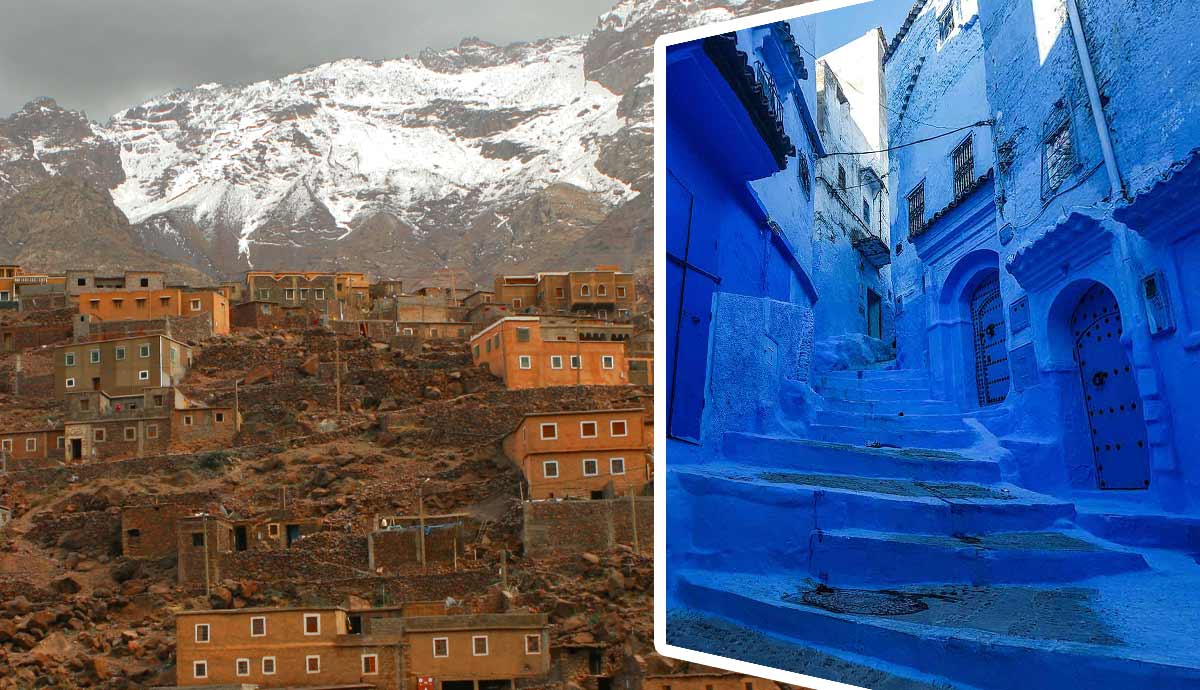
Morocco is one of the most ethnically diverse countries in Africa. Its location, right at the confluence of its home continent with Europe, has meant it has been a veritable crucible of cultures for more than 2,000 years. While Morocco is relatively homogeneous in terms of religion, with most identifying as Sunni Muslims, it boasts a unique Berber heritage and a captivating fusion of Arab, sub-Saharan, and Western European influences.If you love history and cultural anthropology, youll find your Utopia here.A Snapshot of Moroccos HistoryModern-day gadgets VS ancient Berber attire, Morocco in a nutshell, photo by Yotut. Source: Wikimedia CommonsMorocco has been both a meeting point and a springboard for many cultures over the years. The Berbers or Amazigh, Moroccos indigenous people, have been the most consistent influence in shaping the countrys identity, although, nowadays, they are concentrated primarily in the Atlas Mountains and southern deserts.Once the Arabs arrived from the east, between the 7th and 8th centuries CE, the indigenous population held tight to their subsistent, agricultural lives, while the new migrants gravitated more toward city life and commercial enterprises (as they had done all over northern Africa). Some Berbers were enticed into the newer commercial settlements and eventually integrated well. Nowadays, the line between the two once opposing urban and rural cultures has blurred somewhat, yet the narrative of division persists quite a bit within Morocco.Moroccos Atlas Mountains are home to many traditional Berber villages, photo by David Denmnis. Source: Wikimedia CommonsThe Arabs developed existing trading settlements once they reached Morocco, and created much larger ones as well. All those fantastic souks youll undoubtedly want to visit in Fez, Marrakesh, Rabat, and Meknes were the consequences of their entrepreneurial talents.Long before the Islamic expansion, though, came the Roman one. The ancient empire first set foot in Morocco in the 1st century BCE, defeating the local Berber ruler Juba II and incorporating the land into the Roman Empire. They would eventually rule here for 500 years, building cities, aqueducts, and roads, and leaving impressive ruins like Volubilis and Lixus. By the time the Arabs arrived, the Romans had already retreated due to ongoing attacks by the Vandals.Yet Arab Islamic rule lasted the longest. They were the ones who came and never left, eventually shaping Morocco into the stunning melting pot of cultures we see today. Arab is the predominant and official language, but youll still meet Tamazight-speaking folks in more remote southern regions.Moroccos Influence on (and From) Western EuropeGranadas spectacular Alhambra Palace, photo by Kalboz. Source: FlickrThe intrepid Moors, a mix of Berbers and Arabs from North Africaprimarily Moroccowould go on to also play a huge role in shaping the history of Spain and Portugal. First, because cultural influence is never one-sided, and, second, because Europe and Africa are only separated by the Strait of Gibraltar, less than eight nautical miles (14km-9 mi) at its narrowest point.In 711 CE, led by the Berber general Tariq ibn Ziyad, the Moors paddled across the strait and set foot on Spanish soil. They began nearly 800 years of Muslim rule in the Iberian Peninsula, a period known as Al-Andalus (from where modern-day Andaluca gets its name). Bringing Islamic culture, science, art, architecture, and advanced agricultural practices, the Moors left an indelible mark on the region that is still so wonderfully visible today. The jaw-dropping Alhambra in Granada and the Great Mosque of Crdoba are just two examples.Reconquista de Toledo, tiled mural outside Plaza de Espaa in Seville, Andaluca, Spain, photo by CarlosVdeHabsburgo. Source: Wikimedia CommonsFrench colonialists would go on to rule over Morocco for a few decades (1912-1956) until the country eventually regained its independence. French was enforced as the national language and the French sought to Europeanize Morocco by gentle coercion rather than brute force. All this has resulted in the country feeling more like an Arabized European one than a bona fide African one. French is still widely spoken, and the local paella (especially on the northern coast) is as good as any youd find in Spain.The Most Fascinating Historical Attractions in MoroccoThe Grand Souq of Marrakesh, photo by Dan Lundberg. Source: FlickrA word to the wise: after two weeks in Morocco, one runs the risk of being mosqued out and souqed out. However, alternating between the countrys different types of historical attractions is a great antidote.To this end, note that this guide is not exhaustivefor every UNESCO-listed Medina featured, youll find at least two more. But this list should do the trick if youre planning a whirlwind trip and wish to soak up the magic of the best historical highlights.Lets start the way Morocco did: with the Romans.1. VolubilisThe ruins of Volubilis are what remains of a 2,000-year-old city considered one of the best-preserved Roman archaeological sites in North Africa. Source: Wikimedia CommonsOnce a thriving city at the edge of the Roman Empire, UNESCO-listed Volubilis featured grand basilicas, oversized arches, towering columns, and villas with stunning mosaics. The city was an olive oil production hub, which fueled the empires prosperity, and olive groves still dot the landscape. Be sure to locate the House of Orpheus, home to a beautiful mosaic of dolphins and mythical figures.Local guides, often enthusiastic university students, usually offer tours of the site and tend to hang out around the entrance. If you want a deeper experience, a guide can help you catch details you might otherwise miss.2. The Medina of FezThe Medina of Fez, likewise a UNESCO World Heritage site, is a gob-smacking maze of narrow, winding streets that transports you back centuries, photo by Sim Br. Source: Wikimedia CommonsFounded in the 9th century, the Medina of Fez is the most overwhelming old town you will likely ever visit anywhere. It is a sprawling, confusing, maze-like puzzle designed to confuse and repel invaders. It worked a treat. The ancient center boasts sensational architecture, defined by intricate blue and gold gates and beautifully tiled courtyards. It was and still is a hub for traditional crafts like pottery, leather-work, and weaving, with workshops lining the alleyways.The Medina also boasts historical landmarks like the Al-Qarawiyyin University, one of the oldest in the world. Exploring Fez is a sensory overload like no otherif you take a local guide nowhere else, take one here. Google Maps is no help!3. Chouarra Tannery, FezDeep in the Medina is one historical gem you cannot miss: the Chouarra Tannery, photo by Yeowatzup. Source: Wikimedia CommonsThe famous tanneries of Fez showcase a centuries-old craft thats still practiced today, including the use of pigeon droppings to soften leather and natural dyes derived from henna, saffron, and poppies. Found right in the heart of the Medina, these vibrant dye pits are filled with brightly colored vats, where leather is still softened, hand-tanned, and dyed by hand.The sight of workers wading through the vats, surrounded by the pungent aroma of tannins, is mesmerizing and utterly unforgettable. Not many are open to the public, so pop into the Chouara Tannery, the worlds oldest, to take a look-see and bag a nice souvenir.4. The Kasbah of Ait Ben HaddouA breathtaking earth and stone fortress nestled in the Atlas Mountains, Ait Benhaddou might look familiar to avid movie fans, photo by Cliff Williams. Source: Wikimedia CommonsThe iconic Ait Ben Haddou is a UNESCO-listed fortified village dating back to the 1600s. It was built as a prominent stop for traders, loaded with slaves, spices, and other goods, along a popular caravan route connecting the Sahara to Marrakesh. With its towering walls, narrow alleys, and crumbling towers, Ait Ben Haddou feels like youre stepping into a real-life desert movie setunsurprisingly, its been used as a cinematic canvas for many epic films and TV shows, from Lawrence of Arabia and Jesus of Nazareth to Gladiator and Game of Thrones.The desert area in this region is spectacular, and sitting in one of the handful of Berber cafes across from the citadel, sipping traditional mint tea, and watching life (and camels) go by is one of the most enjoyable experiences in Morocco.5. The Hassan II Mosque, CasablancaThe largest mosque in Morocco and the seventh-largest in the world, the Hassan II Mosque is the newest historical attraction in the country, photo by Andrew E. Lars. Source: FlickrWork on the Hassan II Mosque started in 1987 and was completed in 1993, thanks to the blood, sweat, and tears of over 10,000 craftsmen. It was built partially over the sea on a spectacular spot on the capitals Atlantic seafront. Its minaret reaches a towering 210 meters (689 feet) and is the tallest in the world. More than 25,000 worshipers are accommodated inside; 80,000 can fit in the outdoor courtyard. The prayer hall alone covers an area of 20,000 square meters (215,000 square feet).The jaw-dropping architecture reflects a unique blend of traditional Moroccan design with modern touches. There are glistening Italian Carrara marble floors, intricate zellij tilework, stucco, mahogany woodwork, and even a retractable roof. The floors are heated for winter comfort, and a laser system ensures precise alignment with Mecca.6. ChefchaouenInstagram may have flamed the prominence of Chefchaouen and its picturesque blue houses and streets, but the city has a slightly more illustrious past, photo by Mohammedlak. Source: UnsplashMoroccos Blue City is located in the northeast at the base of the countrys Rif Mountains. It is most famous for its dreamy, blue-painted buildings and narrow, winding streets that seem tailor-made for exploring (and photography).Chefchaouen was built in 1471 as a defensive military outpost to keep Portuguese invaders at bay. The city later became a refuge for Muslim and Jewish exiles fleeing Spain during the Reconquista. The towns distinct blue color, which graces its buildings and alleyways, is believed to have been introduced by Jewish refugees, meant to symbolize peace and spirituality. Over the centuries, the city became a prominent cultural and artistic hub, blending Berber, Arab, and Jewish influences.7. The Medina of MarrakeshThe Medina of Marrakesh, another of Moroccos UNESCO World Heritage sites, dates back to 1070 when the Almoravid dynasty established the city as its capital, photo by Yotut. Source: Wikimedia CommonsSurrounded by red sandstone walls, the Marrakesh Medina is a maze of narrow alleys, bustling souks (Semmarine and Teinturiers are the most enticing), and centuries-old buildings turned into traditional guesthouses (ryads) and museums. Youll find historical landmarks like the Koutoubia Mosque, the Jemaa el-Fnaa Square, and the Bahia Palace here.Marrakesh has been a cultural and commercial hub in Morocco for centuries and remains the most visited city in the country today. The square is jaw-dropping, especially at night. While this Medina is sensational, it is also relatively gentrified and heavily touristed. Dont misunderstandit is wonderfulbut if youd love to explore the oldest and most historic of the citys corners, ask your guide to show you around Bab Aylan.8. Jardin MajorelleYves Saint Laurents getaway haven in Morocco is a must for sartorial and botanical history lovers, photo by Viault. Source: Wikimedia CommonsFrench painter Jacques Majorelle designed this stunning, privately owned botanical garden and Art Deco villa in the 1920s. He was sent to Morocco by his doctor due to health reasons and was immediately smitten with the countrys cultures and colors. Majorelle created an ethereal oasis filled with exotic plants, fountains, and winding paths. The gardens signature Majorelle Blue, a striking shade, has become synonymous with the space.After the painters death, the garden fell into disrepair until it was restored in the 1980s by couture designer Yves Saint Laurent and his lifelong friend and business partner, Pierre Berg. They had visited Majorelle in the 1960s and snapped up the property as soon as it was up for sale.The two artists meticulously restored Majorelle, revitalizing its original design and preserving its unique collection of plants. For Yves, who had claimed to have drawn fashion inspiration from the garden, Jardin Majorelle became a place of soul-nurturing for the remainder of his life. Today, the gardens preservation is in the hands of the Yves Saint Laurent Foundation. The garden is a breath of fresh air in bustling and dusty Marrakesh, and the in-house museum is a fascinating and surprising historical legacy of the French icon.
0 Kommentare
0 Geteilt
245 Ansichten

 English
 Arabic
 French
 Spanish
 Portuguese
 Turkish
 Dutch
Dutch
 Italiano
 Russian
 Romaian
 Portuguese (Brazil)
 Greek
Greek