


WWW.THECOLLECTOR.COM
The Inca Historian Spain Tried to Silence
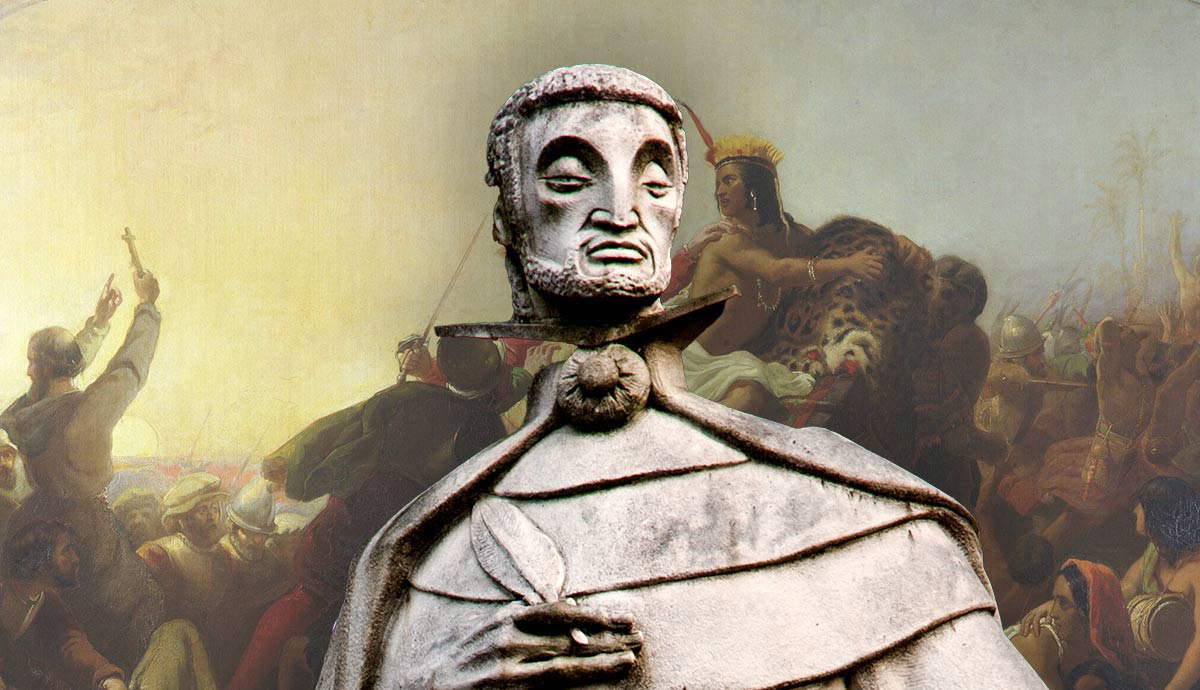
With no written language, much of the history of the Inca Empire was set to be lost to the Spanish conquest. Chroniclers among the Conquistadors often produced biased or simply inaccurate accounts of their vassals history. But an early son of the new era, born to an Inca mother and Spanish father, would capitalize on his unique mestizo heritage to produce an exhaustive history of both the Inca Empire and its conquest that remains a valuable resource in the modern day.Who Was El Inca Garcilaso de la Vega?Inca Garcilaso de la Vegas house in Cuzco, now a museum. Source: Inca Trail MachuThe Spanish first made their way to the Inca Empire in 1532 and wasted no time in taking local concubines. The birth of the first mestizos in South America, people of mixed European and Indigenous heritage, soon followed. Garcilaso de la Vega was one of these early mestizos, born Gmez Surez de Figueroa in 1539 to conquistador Sebastian Garcilaso de la Vega y Vargas and Isabel Surez Chimpu Ocllo, niece of the last true Sapa Inca, Huayna Capac.His father never married his mother, instead pushing her off on a commoner in order to marry a high-born Spanish lady and retain his encomienda, leaving Gomez without standing as the first son and, therefore, heir. Nevertheless, he was not abandoned by his father and was raised with knowledge of both cultures: Spanish and Inca. He spent the first 20 years of his life in Cusco, first living with both parents and then with his father when his parents married their respective spouses. As the son of an Inca princess, he was surrounded by not only the remnants of Inca culture, but what remained of the Inca nobility, who eagerly shared their history, traditions and mythology with him. He was also taught Quechua, the lingua franca of the Inca Empire, in addition to Spanish.Front page of de la Vegas first book, La Florida del Inca. Source: Brown University LibraryAfter his fathers death, de la Vega moved to Spain in 1560 to pursue his education with a modest inheritance, also adopting his fathers name. He would never return to Peru, where life for the remaining Inca nobility had become increasingly unsafe. By 1563, he had added Inca to his signature, a title reserved for the nobility in the Empire but one he was entitled to use. De la Vega spent time in Madrid and other Spanish cities, seeking both royal patronage and military status in his new homeland with little success, largely due to rumors of his fathers treason. He ultimately settled in Crdoba and embarked on literary pursuits while also devoting himself to the Church, becoming a minor cleric. He passed away in April 1616.El Inca began his literary career by translating Leon Hebreos philosophical Dialoghi de amore into Spanish and then moved on to his own works, beginning with an account of Hernando de Sotos conquest of Florida, La Florida del Inca. He also ultimately left behind some poetry and unpublished manuscripts. What he is best known for, however, is his lengthy and detailed two-volume history of Peru, Comentarios reales de los Incas (Royal Commentaries of the Incas), published in 1609, and Historia general del Peru (General History of Peru), published posthumously in 1617.Comentarios reales de los IncasFront page of the Comentarios reales de los Incas. Source: Government of PeruComentarios reales de los Incas in particular provided Europeans with a vivid picture of pre-conquest life in the Inca Empire based on the accounts of the remaining Inca themselves, including de la Vegas maternal uncle, Francisco Huallpa Tupac, great uncle, Inca Cusi Huallpa, and Juan Pechuta and Chauca Rimachi, Inca generals. De la Vega wrote, they gave me long accounts of their laws and government, comparing the new Spanish government with that of the Inca They told me how their Kings acted in peace and in war, how they treated their vassals and were served by them all of their mythology, their rites, ceremonies and sacrifices, their holidays and how they were celebrated They told me everything about their republic. While his history was second hand, subject to exaggerations or omissions like any personal account, it had the weight of coming directly from those who had experienced it themselves.Over nine books divided into 262 chapters, based on his own memories as well as additional contributions received through letters from friends and family in Cuzco, de la Vega detailed the origins, history, and inner workings of Tawantinsuyu: how it was managed, how its laws were enforced, who played the most important roles, and how its people interacted with their gods and goddesses. His narrative presented a largely peaceful, well-managed Empire that he considered on par with ancient Rome, contrasting sharply with Spanish accounts often determined to paint Indigenous natives as barbarians. In fact, in the prologue to the volume, de la Vega makes clear that while he is not the first to write about the Empire, other writers, those with no direct connection to the Inca themselves and no knowledge of Quechua, often misunderstood and misrepresented their histories. De la Vega was not merely authoring Inca history; as literature professor Remedios Mataix writes, The main idea seems to be acting as an interpreter, on various levels: linguistic, intellectual, cultural, spiritual and historical.Historia general del PeruFront page of Historia general del Peru. Source: Biblioteca Nacional de EspaaThe second volume of his epic, filling eight books divided into 268 chapters, detailed the conquest of the Inca Empire by the Spanish over a period of 40 years, concluding with the execution of the last leader of the Inca resistance, Tpac Amaru I, in 1572. In his words it recounts how the Spanish won, the civil wars between the Pizarros and Almagros over the division of the territory, the rise and fall of tyrants and other events, and describes how our reign was transformed into vassalage. He also, notably, sought to defend his father against charges of treason related to the inter-warring between the Conquistadors, refuting other chroniclers who claimed the senior de la Vega had joined forces with a rebel faction.While de la Vega sought to celebrate the glories of the Spanish Empire and justify the conquest, being loyal to his father and European lineage, the second part of his history still paints a sympathetic picture of the fall of the once-great Inca Empire. El Inca refers to the story as a tragedy and contrasts the virtues of the Inca, who he claimed pursued diplomacy in their own conquests, with the destruction and cruelty of their Spanish conquerors.Reception and LegacyPortrait of Inca Garcilaso de la Vega. Source: RTVEComentarios reales de los Incas would eventually go on to become one of the primary sources of information about the Inca Empire based on lived experience, filled with the histories related directly to de la Vega by his royal Inca ancestors. It was considered so influential that after the doomed uprising of Tpac Amaru II in the late 18th century, the Spanish Crown outlawed de la Vegas books in its colonies. Historia general del Peru, in contrast, was more popular contemporarily, as Europeans sought information about what was transpiring in the New World, and was eagerly shared by proponents of the Black Legend. Both volumes were ultimately translated into multiple languages: Italian, French, Dutch and English, among others. Numerous editions have been republished in the centuries since he first wrote.With his royal Inca heritage and upbringing in both cultures, de la Vega was uniquely positioned to both interpret Inca history and relate it to a European audience, a fact that no doubt contributed to the popularity of his work. This is not to say, however, that de la Vega did not bring his own biases to his writing. Critics have painted de la Vega as overly credulous of his familys stories and accused him of constructing a rosy narrative of life in the Empire that purposefully excluded or downplayed negative aspectsincluding human sacrifice and the Incas own propensity for conquering new territory. It is also worth noting that his writing, intended to garner respect for the Empire and its people, did little to change the way the Spanish approached their new subjects and territory when it was published.Monument to Inca Garcilaso de la Vega in Peru. Source: Wikimedia CommonsAs a mestizo, de la Vega grappled with his mixed identity throughout his life, and this tension is reflected in his work as well. In the introduction to a 1993 edition of Comentarios reales, Mara Dolores Bravo Arriaga writes, As a mestizo, el Inca felt it imperative to integrate his two heritages. He sought not only the cultural harmony he depicted in Comentarios reales and Historia general del Peru Garcilaso sought an internal harmony that would reconcile the divided parts of himself, his complicated identity conflict. His work also reflects his attempts to reconcile his two conflicting beliefs: that the Spanish had a God-given right to conquer the New World and spread Christianity, and that the Inca were a noble people, deserving of respect, who had been mistreated during that conquest. Many readers of mestizo heritage have seen themselves and their struggles represented in de la Vegas work.Largely acknowledged as the first literary work of the Americas, today historians also consider de la Vegas history of Peru to be one of the most important, despite ongoing debates over its accuracy. De la Vega himself has been described as the Americas first mestizo of universal renown and influence and the prince of New World writers.
0 Comments
0 Shares
365 Views

 Arabic
 French
 Spanish
 Portuguese
 Deutsch
 Turkish
 Dutch
Dutch
 Italiano
 Russian
 Romaian
 Portuguese (Brazil)
 Greek
Greek