


WWW.THECOLLECTOR.COM
The History of American Military Rations & How They Changed Over Time
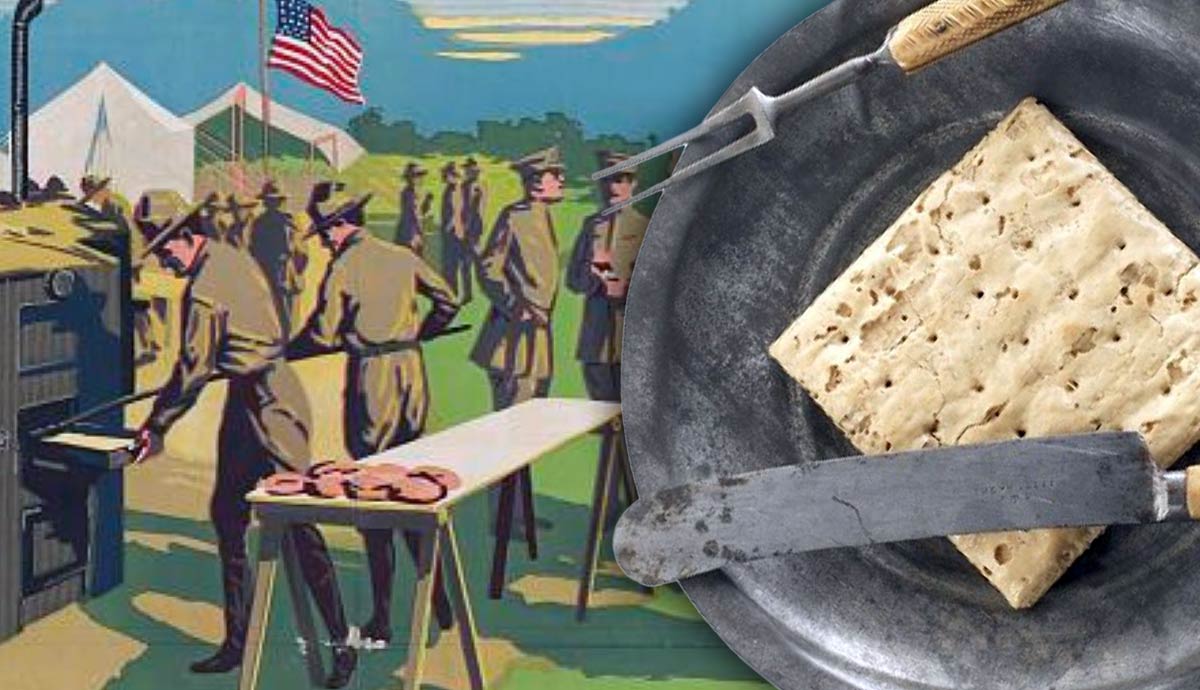
Ever since its initial struggle for independence, American soldiers away from home were not only subject to the horrors of war, but had to give up the comforts of home as well, often including palatable food. While familiar comforts could temporarily relieve wartime suffering, a lack of appropriate sustenance in desperate situations made warfare even worse. As American military rations improved significantly over the centuries to properly feed American troops, each conflict presented different options for famished servicemembers.American RevolutionGeorge Washingtons camp chest with dining equipment, 1775-1776. Source: National Museum of American History, Smithsonian InstitutionDespite being a young organization with little formal experience at the onset of the American Revolutionary War, the Continental Army codified its rations shortly after the Battles of Lexington and Concord. On June 10, 1775, the Massachusetts Provincial Council proclaimed the daily rations for its soldiers in the Boston region as follows: one pound of bread, one pint of milk, half of a pound of beef, half of a pound of pork, one quart of malt beer, and one gill of beans or peas. Weekly, colonial troops were allocated six ounces of butter and half a pint of vinegar. When goods such as milk could not be obtained, however, the Continental Army substituted with rice or more meat. By November 1775, this list was officially approved by the Continental Congress for general use.While rations during the American Revolution were hardy, colonial soldiers often found themselves without required levels of sustenance. During the winter encampment at Valley Forge, Congress faced immense challenges with the timely distribution of finite resources, with 100,000 barrels of flour and millions of pounds of meat required to feed 15,000 soldiers. Troops often went multiple days without food. Acknowledging this shortcoming, General George Washington mandated that soldiers requested food from local farmers before submitting a receipt for civilian workers to collect compensation. While the army was busy training and building defenses, camp followers, primarily soldiers wives and children, often cooked for hungry troops.American Civil WarCivil War soldiers mess with hardtack, 1861-1865. Source: National Museum of American History, Smithsonian InstitutionUnion and Confederate soldiers had similar diets during the American Civil War. Because food required transport over long distances as armies marched across the eastern United States, the meals for tired soldiers largely consisted of salted meat and canned goods. Often, meat-based rations were well past their period of freshness, and salted provisions contained undesirable elements of animal products including organs and hair. Even when exhausted, soldiers ended their days by preparing their dinners over open fires in mess groups.When resources were scarce, troops relied on hardtack, a cracker-like biscuit, to supplement their diet. Hardtack, while a necessary staple of Civil War soldiers diets, was not a pleasant meal replacement. The compact ingredients were so dense that they were frequently soaked in water or coffee prior to consumption. Fortunate soldiers who hunted wild game or collected nearby berries enjoyed a freshness that salted meats, canned goods, and hardtack could not provide. Due to a lack of nutrients, Civil War soldiers suffered from disease, in particular scurvy, which was treated in hospitals by distributing oranges.While animal herds occasionally followed organized marches, food shortages were common. This encouraged both Union and Confederate troops to steal farm animals, fruit, and vegetables from local farmers when in enemy territory. Conditions for prisoners were certainly the worst, as captured soldiers received only what was left after their captors had their share. In desperation, prisoners ate rats and starved to death.World War IEmergency wheat bread ration during World War I, 1917-1918. Source: Smithsonian InstitutionWorld War I was the first American conflict in which supply routes were threatened by aerial bombardment and indirect fire via artillery, causing significant challenges when attempting to deliver rations to the front lines. To circumvent this risk, American supply units and Red Cross volunteers often staffed field bakeries. This innovation, in addition to delivering the luxury of hot food on the battlefield, also replaced hardtack as a main staple in soldiers diets.Fresh bread and doughnuts were not the only advancements in sustaining American servicemembers from the Civil War to World War I. Developments at home ensured that soldiers were properly fed. Fueled by calls by Congress to conserve resources, the American doughboys of the Great War were relatively well fed compared to their international peers. Domestically, American families were encouraged to replace their meals at home with corn instead of wheat, fish instead of meat, and syrup instead of sugar to sustain resources for troops overseas before government-mandated rationing proved necessary. With milk, butter, potatoes, candy, and cigarettes when available, rations were one of the few positives for the American troops who languished in WWI trenches.While the military sought creative solutions to feed the troops, non-negotiable challenges complicated threats of enemy fire. Chemical warfare, rat- and bug-infested trenches, and inclement weather ruined food storage in the field. As such, emergency rations were introduced at the turn of the 20th century to sustain isolated soldiers for up to a week at a time before resupply.World War IIType K supper ration, 1940-1945. Source: National Museum of American History, Smithsonian InstitutionDuring World War II, United States military rations were split into two types: K-rations and C-rations. K-rations, designed for compact use, were often provided to troops requiring lightweight supplies including airborne soldiers and tank crews. Totaling just under 2,900 daily calories, a single K-ration included a soldiers breakfast, lunch, and dinner with options like dried meats, hard candy, dense biscuits, and chocolate.C-rations, on the other hand, complemented K-rations by supplying soldiers and marines with more nutritious and substantial items for extended time in the field including spaghetti, stew, and pork-based dishes in addition to cigarettes, gum, and chocolate. While heavier, C-rations fueled tired formations by offering approximately 3,700 daily calories across three meals. American military members often preferred C-rations over K-rations due to increased variety and nourishment, as those provided with K-rations typically sought out other food when possible.In extreme cases, soldiers had no choice but to turn to D-rations. Invented by the Hershey Company in 1937 per a United States Army request, D-rations were designed for emergency use when K-rations and C-rations were unavailable. The unappealing option was a pocket-sized, chocolate bar-like combination of cocoa fat, sugar, chocolate, artificial flavoring, and skim milk powder. D-rations were purposefully created to be bitter and difficult to eat to prevent soldiers from eating them as a treat. While largely disliked due to its effects on digestion, over 3 billion D-rations were produced during the war, and the innovation was vital in providing energy for malnourished troops in dire situations.World War II Improvements and Domestic RationingVolunteers in Washington DC sign up for sugar rationing to save resources for military use in World War II, 1942 or 1943. Source: Library of CongressAdvancements in military food technology prior to and during World War II improved rations for troops overseas. In the late 1930s, canned and processed foods such as SPAM became a favorite choice of uniformed personnel due to its quick preparation and lengthy shelf life. Similarly, dehydrated, freeze-dried, and convenient foods offered more diverse rations than ever before in American history. With dehydrated cheeses, instant coffee, and M&Ms, troops fighting in the Second World War enjoyed limited luxuries amid the chaos and hardship of war.While these innovations were welcome, the Battle of the Bulge and Pacific island-hopping campaigns often left American troops with little to no food. Consequently, initiatives on the American home front inspired a nationwide conservation effort to preserve resources for troops overseas. Items like sugar, butter, meat, and coffee were rationed via stamp booklets with predetermined amounts for families to purchase during the war. Similarly, raw materials such as rubber, wood, nylon, and gasoline and products including clothes and shoes were restricted in the American homeland. Despite resulting challenges, the public responded by adapting to a more conservative lifestyle through community resilience and shared sacrifice, proving that victory during World War II required conscious efforts by millions of Americans in addition to those fighting abroad.The Advent of Modern RationsUnited States Army recruitment poster for bakers and cooks, 1917. Source: Library of CongressModern American military rations, known as Meals, Ready-to-Eat, are durable, lightweight, and easily prepared. Development of these rations began in 1963 when the Department of Defense initiated research to replace canned Meal, Combat, Individual rations of decades prior. By 1975, the United States finally developed the prevailing rations, offering significant advancements compared to its predecessors. Meals, Ready-to-Eat include a diverse range of foodstuffs including a meat- or pasta-based entre, side dish, bread item, dessert, snack, and beverage mix. Modern rations include a chemical heater that permits troops to prepare warm food without the need for fire.Aside from individual meals, current improvements allow the United States to feed its troops via large-scale service. A remarkable development from the camp followers of the American Revolution or field bakeries of World War I, mobile field kitchens now allow cooks to serve food in austere environments from containerized, vehicle-mounted, and trailer kitchens, allowing numerous options for commanders to employ. Mobile refrigeration enables cooks to deliver hot meals to soldiers on the go, a significant improvement to morale on the battlefield. This service also allows servicemembers with unique religious or dietary needs to receive the food they require to remain healthy in combat. While modern individual meals and mobile kitchens are not always available, the evolution of military rations illustrates the considerable progress the American military has made to feed and care for its personnel over time.
0 Commenti
0 condivisioni
526 Views

 English
 Arabic
 French
 Spanish
 Portuguese
 Deutsch
 Turkish
 Dutch
Dutch
 Russian
 Romaian
 Portuguese (Brazil)
 Greek
Greek