How Did the Tang Dynasty Promote Trade Along the Silk Road?
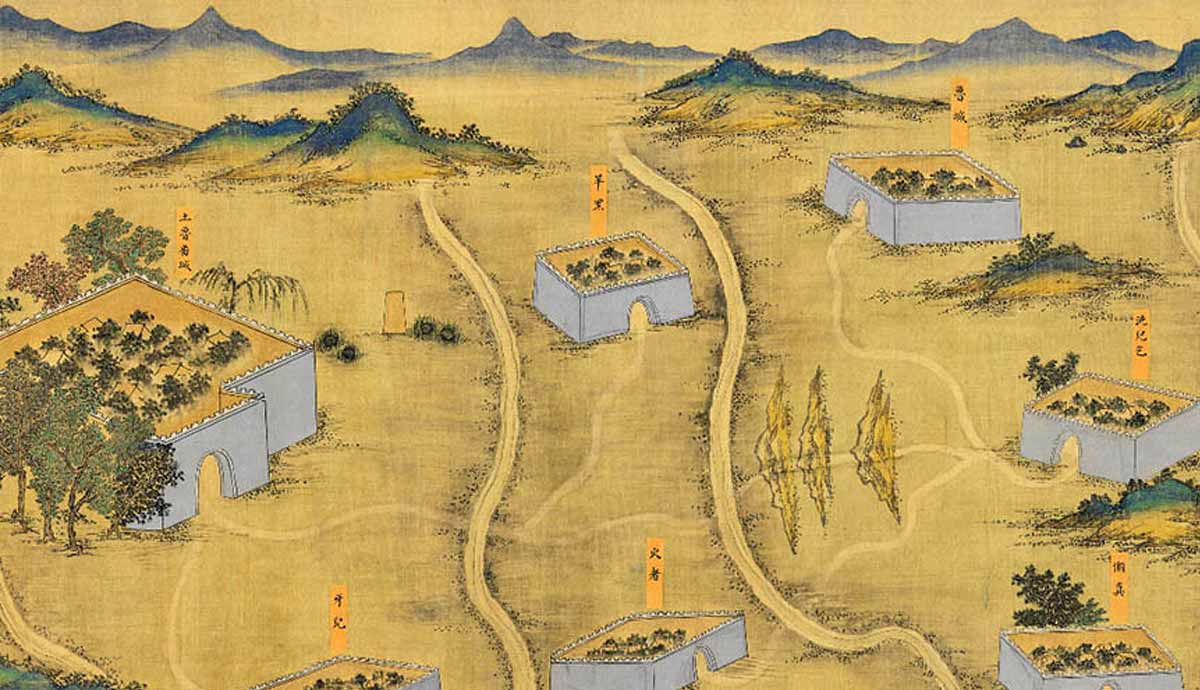
The Tang Dynasty of China lasted from 618 CE to 907 CE and was established by the Li family. This was after it seized power following the collapse of the Sui Dynasty. Considered to be a golden age of arts and culture, the era also saw the empire expand trade routes deep into Central Asia. Early Tang emperors extended their administrative control as far west as modern-day Afghanistan but balanced their aggression with alliances. Under the administration, the Silk Road became a safe and thriving corridor for international trade.Through Military Expansion to Provide SecurityPortrait of Emperor Taizong of Tang on a Ming dynasty hanging scroll.In the 7th century, the main obstacle to trade in East Asia was the lack of security. Bandits in the region had made journeys between continents perilous for caravans. In order to solve the problem, the Tang dynasty exerted control over the trade routes. Under Emperor Taizong who ruled from 626 AD to 649 CE, the military pushed west into the Tarim Basin in modern Xinjiang. It was during this time that the army was able to capture key oasis states along the route such as Turfan, Kucha, Khotan, and Kashgar.The Tang army subsequently set up the Four Garrisons of Anxi in the captured areas in order to keep law and order. To the east, soldiers in watchtowers along the Hexi Corridor helped deter bandits and escorted travelers. The military bases soon turned into trading-hubs featuring barracks, stables, supply depots, and lookout posts. The system allowed small-scale merchants to benefit from safer travel.By Requiring DocumentationThe empire in 661, when it reached its greatest extent.While the military provided safety, the Chinese civil service created a somewhat reliable regulatory framework that enabled the dynasty to manage the routes like a state-run enterprise. At the Astana Tombs near Turfan, for instance, archaeologists have unearthed many official paper documents, including the guosuo. The guosuo was a travel pass that worked much like a passport. To pass through checkpoints like the Yumen Pass, a merchant had to show the document. The guosuo provided details such as the name, age, and caravan size of the merchant. Some passes even described the appearance of a person such as the complexion and physical features such as a slight limp in order to prevent fraud. Without a guosuo, a merchant could be detained by officials. The system allowed the government to monitor the movement of goods and collect taxes.Trading With NeighborsMain routes of the Silk Road on a relief map, with city and country names labeled.The Tang Dynasty relied on a tribute system to enhance trade with neighbors who were often rivals, such as the Uighurs and Turks. While the exchanges were officially framed as foreign gifts to the emperor, they were in fact a form of official barter trade. Among the most common exchanges was trading Chinese silk for Central Asian horses. At the time, the Chinese military needed many horses for the cavalry while the nomadic tribes wanted silk. And so in the mid-8th century, agreements were made with groups like the Uighurs. Records show that the Tang Dynasty often paid about 40 bolts of silk for one high-quality horse. It is estimated that in the 8th century, the Uighurs sent thousands of horses to China each year. By using silk to secure peace and buy horses, the Tang administration helped keep the Silk Road safe.The Creation of Currency and a Money Transfer SystemThe Kaiyuan Tongbao set the standard for the next thousand years of cast Chinese coinages until the early Republic of China.In order to promote trade, the Tang administration created a standardized currency and introduced a government-run money transfer system. In 621, it created the Kaiyuan Tongbao, a round copper coin with a square hole. The coin was widely used across East Asia. Having a standard coin made trade easier because merchants did not always have to weigh silver or gold. However, copper coins were heavy, and a large transaction required cartloads of coins which were cumbersome to move and an easy target for thieves.Later in the Tang era, the administration developed a system called feiqian or flying cash, that worked much like a modern-day money transfer system. A merchant would deposit cash at a government office in the capital and receive a paper certificate. He could then present the certificate in another province to get the money. The system allowed merchants to travel long distances without carrying heavy, risky loads of coins. Such paper-based financial systems enabled trade to grow despite the convenience limits of coins.




 English
 Arabic
 French
 Spanish
 Portuguese
 Turkish
 Dutch
Dutch
 Italiano
 Russian
 Romaian
 Portuguese (Brazil)
 Greek
Greek