Ask Dr. Paola Bee Stings, Dry Heaving & Feline Acne (January 12, 2026)
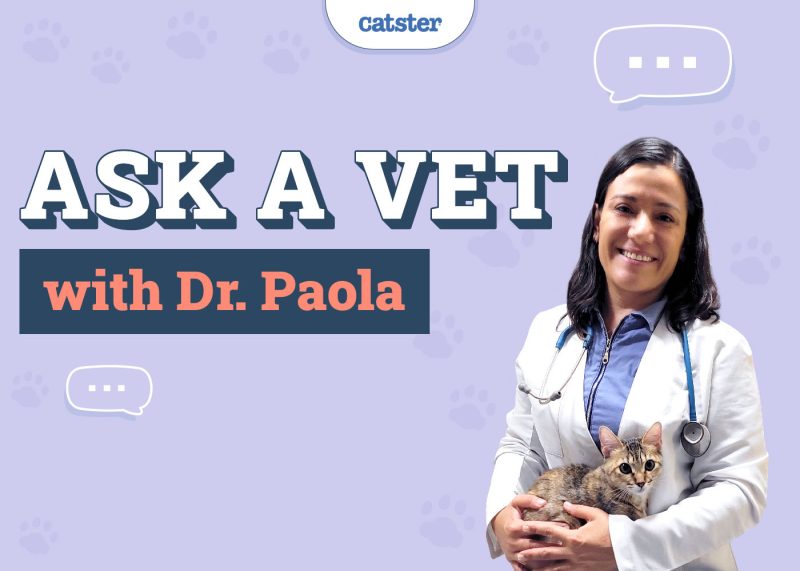
Welcome to our Ask Dr. Paola series, where every Monday we bring expert advice straight from Dr. Paola Cuevas (MVZ) to help our readers better understand their cats health and well-being. Whether youre a new pet parent or a seasoned cat lover, Dr. Paola is here to provide answers to your most pressing questions. From nutrition tips and preventive care to troubleshooting common behavioral issues, Dr. Paola is ready to offer insights that will keep your kitty happy, healthy, and feline fine. Stay tuned for expert guidance on a range of topics that matter most to you and your cat, so you can make informed decisions and provide the best possible care for your furry companion. Have a question? Send it in here!Help! My Cat Got Stung By a Bee!My cat Bella loves to swat at and try to eat flies, and today she got surprised, it was a bee, and bit it, and got stung on her tongue. Its swollen, but she can still breathe normally, and eat and drink. Should I take her to the vet, or can I watch her at home?- KourtneyHey Kourtney,A sting on the tongue can be concerning because even a modest amount of swelling can build quickly in such a small space. Many cats show only local inflammation after a sting, yet the tongue is a sensitive location and can place them at higher risk for delayed airway compromise. Even if Bella is breathing comfortably right now, the inflammatory process can continue to develop over several hours, which is why prompt veterinary evaluation is the safest approach.Fast-acting anti-inflammatory medication is often needed for oral stings and works best when given early. Close monitoring is essential while you arrange care. Any change in her voice, increased breathing effort, drooling, or agitation should be treated as urgent since these signs can indicate that swelling is progressing.Please dont wait. Dr. PaolaIf you'd like to talk with a vet, like Dr. Paola or one of our other expert veterinarians, you can head over to PangoVet. It's our online service where you can talk with a vet online and get the advice you need for your cat all at an affordable price! Catster reader exclusive deal: Save 65% on your first call, use code ASKDRPCATSTER65 at checkout.Help! My Cat Dry Heaves!Luca, my beloved cat, sometimes has dry heaves, and nothing comes out. He eats normally, and then the issue goes away for 3-4 days, then hell have a spout of it again. Been going on for about 3 weeks. What should we do? GiaHi Gia.I understand that watching Luca dry heave can be unsettling, especially when he seems perfectly normal between episodes. Since you describe that this pattern repeats over several weeks, it suggests that something is intermittently irritating his throat or stomach. Cats often retch when they are mildly nauseated, when hair accumulates in the upper gastrointestinal tract, or when there is inflammation in the airway or esophagus. Hair can certainly play a role, though true hairball events typically involve coughing or gagging followed by at least a small amount of fluid or hair. Repeated dry heaving without production points to the need for a closer look.Since this has been happening for three weeks, a physical exam is the safest next step. Your veterinarian can evaluate for gastrointestinal irritation, early airway disease, partial hair retention, or other conditions that may not be obvious at home. Any increasing frequency of episodes, changes in breathing, or repeated retching in clusters should be treated as more urgent. I hope this helps! Dr. PaolaHelp! Can Cats Get Zits?Can cats get zits? FranziHello Franzi,Thank you for your question. Cats can certainly develop something very similar to zits. We usually call it feline chin acne, and it happens when the hair follicles on the chin or lower lip become clogged with oil, debris, or bacteria. It often starts as small black specks that look like dirt, then can progress to swollen, tender bumps. Many cats are not bothered at first, but irritation can build over time, much like when our own skin becomes congested.A veterinary exam is helpful when the area becomes red, painful, or begins to form pustules because secondary infection is common. Management usually focuses on gentle cleansing, reducing friction from bowls, and addressing any underlying inflammation. Some cases might also require oral antibiotic prescriptions.Regards, Dr. PaolaThis article is a part of our weekly Ask Dr. Paola series Read last weeks questions here: January 5, 2025 Find the full list of past articles here Click here to submit a question Sign up for our weekly newsletter below to get Dr. Paolas advice sent straight to your inbox.




 English
 Arabic
 French
 Spanish
 Portuguese
 Deutsch
 Dutch
Dutch
 Italiano
 Russian
 Romaian
 Portuguese (Brazil)
 Greek
Greek