


WWW.THECOLLECTOR.COM
8 Game-Changing Japanese Inventions That Shaped the World
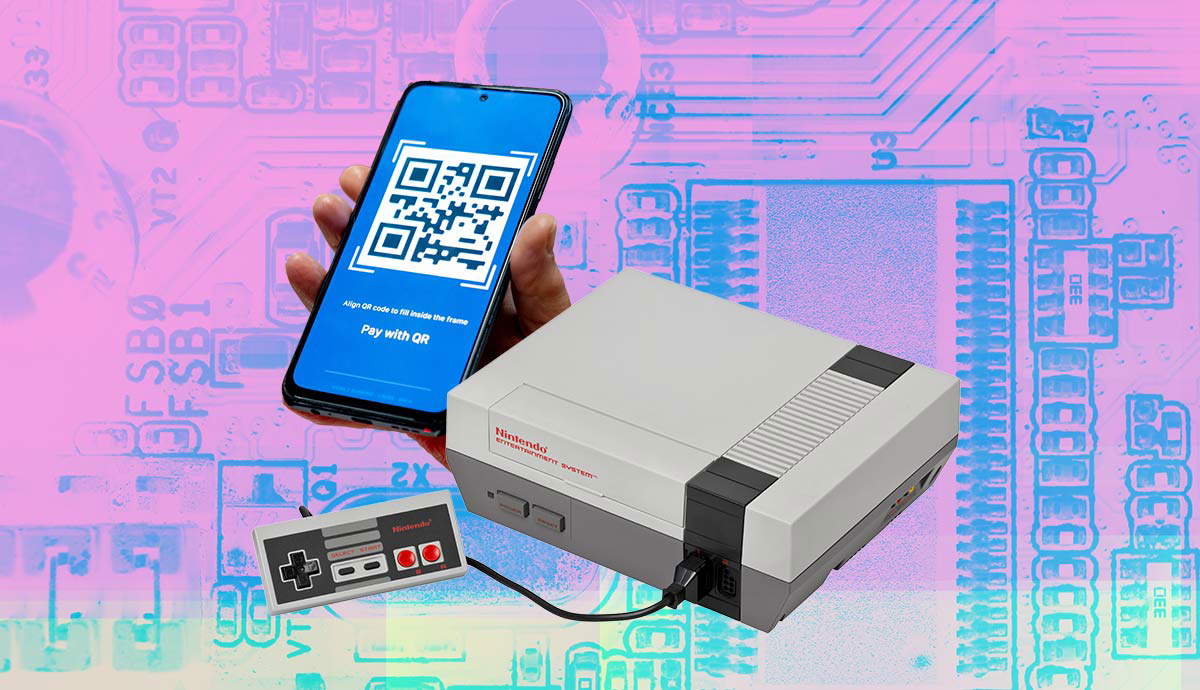
From revolutionary high-speed rail networks to everyday devices, Japan has long been at the forefront of global technological innovation. The ability of Japanese companies to merge cutting-edge technologies with cultural insights has led to a number of completely unique inventions that have reshaped modern life. From the portable Walkman to the world-famous Shinkansen and groundbreaking LED technology, Japanese innovation has changed how we live.1. The WalkmanThe original Sony Walkman. Source: Binaryseqeunce/Wikimedia CommonsWhen Sony released the Walkman in 1979, it was a groundbreaking moment in personal entertainment technology. The lightweight cassette player did not simply become a new gadget; it became a cultural phenomenon that changed how people interacted with music. Before the Walkman, listening to music was largely confined to home stereo systems, car radios, or live events. The Walkman allowed people to carry their favorite music anywhere, creating a new entertainment medium.The Walkman began as the brainchild of Sony co-founder Masaru Ibuka. It was developed to meet his personal desire to listen to his own music while traveling on long-haul flights. Sony engineers Akio Morita and Nobutoshi Kihara were tasked with turning this dream into reality. The marketing team at Sony also played a role in making the Walkman a cultural phenomenon. They sold the device as a lifestyle accessory, and within just a few weeks, the Walkman became something that could be seen everywhere in public. The compact nature of the Walkman opened up a new wave of technological advances in home entertainment systems that eventually led to CD players, MP3 players, and eventually the smartphone.2. The Bullet TrainThe bullet train passing Mount Fuji, 1999. Source: Shellparakeet/Wikimedia CommonsThe bullet train, or Shinkansen, was a revolutionary development in the field of rail transportation. It was first introduced during the 1964 Tokyo Olympics as a deliberate symbol of Japans technological prowess and post-war recovery. The first Shinkansen rail line connected Tokyo and Osaka, drastically reducing travel time between the two major Japanese cities.The design of the bullet train was just as incredible as its incredible speed. Developed to take advantage of the latest innovations in aerodynamics, the Shinkansen was shaped in such a way as to reduce speed resistance and limit the impact of noise pollution on the surrounding area. Safety was another key component of the Shinkansen project. The development of a number of innovations has ensured that Japans entire bullet train network has remained virtually accident-free in the decades since 1964. Thanks to a complex network of sophisticated earthquake detection and braking systems, the bullet train remains one of the safest ways to travel in Japan.Beyond the technological achievement of the bullet train, the Shinkansen network has had a significant socio-economic impact on Japan. It has facilitated rapid regional development by connecting major economic hubs such as Tokyo and Osaka with the rest of the country. This has enabled Japanese workers to travel great distances without resorting to driving a car or flying.3. The QR CodeA Japanese billboard with a QR code, 2009. Source: Nicolas1981/Wikimedia CommonsThe QR code, a small black-and-white matrix of squares that can be scanned with a camera, is a perfect example of how Japanese innovation has revolutionized certain aspects of global communication. It was originally developed by Masahiro Hara at Denso Wave, a subsidiary of the automotive manufacturer Toyota. Hara developed the Quick Response code to efficiently keep track of car parts during the manufacturing process. Unlike the traditional barcode, the QR code can be scanned from multiple angles and can store a substantial amount of information.The adaptability of the QR quickly saw it become used in a multitude of real-world applications. It has transformed the logistics, retail, and marketing sectors by enabling the rapid dissemination of URLs that can link to product information and promotional content. The advent of smartphones in the early 2000s led to the QR code becoming a ubiquitous part of everyday life. Today, mobile payments, ticketing, and even public health campaigns are all reliant on the QR code. Surprisingly, Denso Wave chose not to patent the QR code and instead allowed anyone to take advantage of the invention. This allowed it to become universally accessible, spurring its widespread adoption across a number of industries.4. The Digital CameraThe Sony Mavica. Source: Morio/Wikimedia CommonsIn 1981, Sony released the Mavica magnetic video camera, sparking a paradigm shift in the field of photography that has continued to this day. While digital imaging existed before the Mavica, Sonys release of the first commercially available digital camera was a game-changer for personal electronics. In place of film, the Mavica used floppy disks to store digital images, which could then be viewed on a television screen. While the early models of Sony digital cameras did little to dent the huge market share of traditional film cameras, they laid the groundwork for a full-scale digital revolution in photography.The Mavica allowed consumers a glimpse into the future. The floppy disk system addressed some long-standing limitations with film photography and allowed users to easily overcome storage and processing constraints. Moreover, the early digital photography system allowed images to be viewed instantly, transforming professional and amateur photography. Over the ensuing decades, digital cameras continued to rise in capability and popularity until, eventually, major manufacturers stopped producing traditional film cameras.5. Light Emitting DiodesVarious LEDs. Source: Afrank99/Wikimedia CommonsJapanese engineers Isamu Akasaki, Hiroshi Amano, and Shuji Nakamura invented blue light-emitting diodes, which completely changed modern electronics and earned them the Nobel Prize in physics. The invention of blue LEDs allowed researchers to complete the color spectrum, enabling the creation of white light. This breakthrough allowed for the mass production of energy-efficient, durable, and environmentally friendly light bulbs.Before the invention of the blue LED, consumer lighting solutions were almost impossible due to the inability to create white light. The three inventors used a gallium nitride semiconducting material to emit the blue light component with minimal energy input. Their groundbreaking discovery paved the way for a host of energy-efficient lighting solutions to be used around the world. Since their discovery, LED lighting technology has also been used in consumer televisions, medical devices, and even agriculture.6. Instant NoodlesThe Laboratory of Momofuku. Source: Mr./Wikimedia CommonsA great deal of Japanese innovation was born out of a desire to combat the challenges of a post-war society. Inspired by the need to create an affordable and long-lasting meal, Momofuku Ando spent years perfecting a flash-frying method that could be used to preserve noodles for quick rehydration. His first successful product came to market in 1958 and was followed in 1971 by the iconic Cup Noodle.Andos instant ramen recipe quickly gained popularity for its convenience, adaptability, and relatively low cost. The product became a staple for low-income households and students, while its portability made it a key component of Japans disaster relief efforts. Today, instant noodles are a billion-dollar industry that has had a huge global impact. Andos humble product is eaten by people in almost every country of the world. It is an important part of humanitarian aid packages and a cultural symbol of Japans ingenuity and innovation.7. The Hybrid CarThe first model Prius. Source: IFCAR/Wikimedia CommonsIntroduced in 1997, the Toyota Prius was the worlds first mass-produced hybrid car. It was a revolutionary step towards green transportation and combined a highly efficient internal combustion engine with an electric motor. When it was released, the Prius signified a pivotal moment in automotive history as it showcased how eco-friendly transportation could be made available to a wide audience.The engine inside the Prius was not the only innovation Toyota brought to the market in 1997. The car utilized sophisticated regenerative braking technology, which meant that kinetic energy lost during deceleration could be converted into electricity that would recharge the battery. Early Prius models achieved remarkable fuel economy, attracting environmentally conscious consumers and making the Prius a byword for eco-friendly transportation.In the years following its release, the Prius sparked a wave of investment into hybrid and fully electric vehicle technologies, which pushed traditional automakers around the world to rethink their usual design paradigms. Moreover, the Prius laid the groundwork for newer automakers such as Tesla, to capitalize on the growing electric car market and create an entirely new market share for eco-friendly vehicles.8. The Home Entertainment SystemThe Nintendo Entertainment System. Source: Evan-Amos/Wikimedia CommonsReleased in 1983, and following the great video game crash, the Nintendo Entertainment System revolutionized the gaming industry and cemented Japanese game maker Nintendo as a household name. Initially released in Japan under the name Famicom, the NES debuted internationally with legendary titles like Super Mario Bros., the Legend of Zelda, and Metroid. The home console introduced an entire generation of gamers to immersive storytelling and complex gameplay mechanics.The NES was a new standard for game console design. The controller introduced to the world the now ubiquitous directional pad, allowing players to precisely control their characters position on the screen. Moreover, Nintendos commitment to quality ensured that almost every game released on the system became a smash hit. This helped to restore consumer confidence in an industry that had been rocked by a global crash just years before. The NES also paved the way for further advancements in graphical capability, sound design, and gaming mechanics that inspired rival tech companies such as Sega and Sony to push the boundaries of home entertainment.
0 Commenti
0 condivisioni
11 Views

 English
 Arabic
 French
 Spanish
 Portuguese
 Deutsch
 Turkish
 Dutch
Dutch
 Russian
 Romaian
 Portuguese (Brazil)
 Greek
Greek