


WWW.THECOLLECTOR.COM
10 Facts About Red Cloud, the Lakota Leader
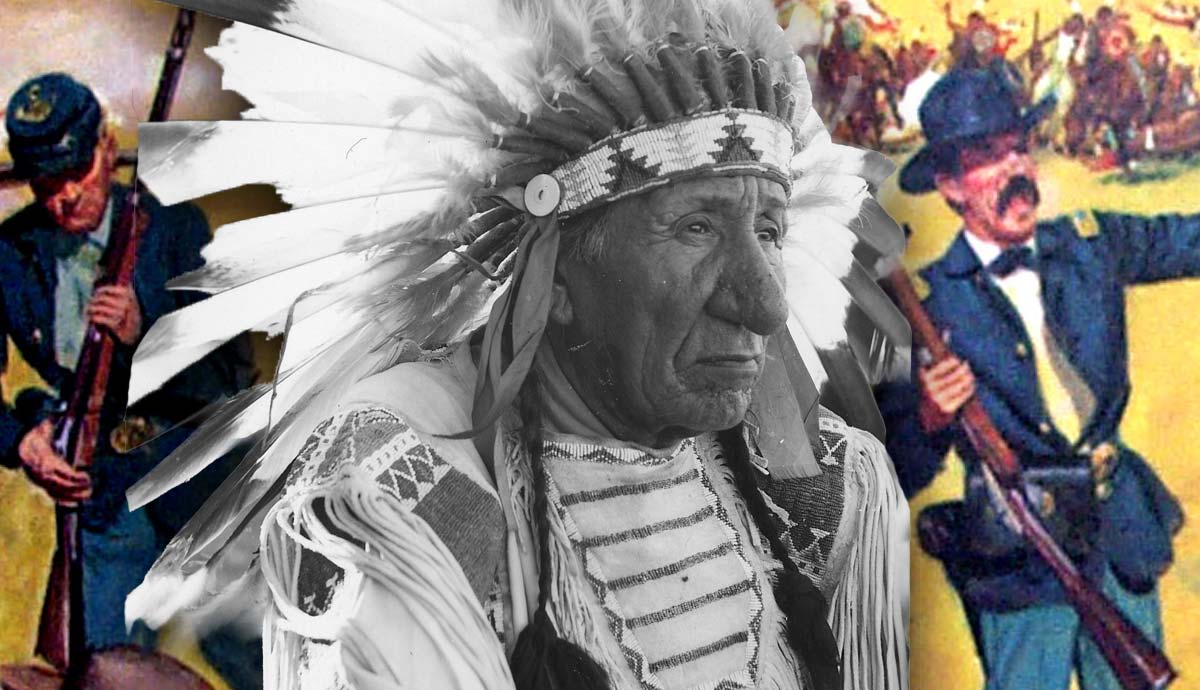
As the Indigenous people of North America stood up for their culture in the late 19th century, heroes rose, becoming symbols of the fight for freedom across the land. As various tribes faced off against the US government and military, treaties were made and broken, battles ensued, and lifeways were forever altered. When it came to war on the Plains, Red Cloud is one of the enduring figures of the era. In his lifetime, he saw his culture go from its pinnacle to its suffocation.1. Red Cloud Was Named for an Unusual Weather EventRed Cloud may have been named for a meteor like this one. Source: David Warrington / Wikimedia CommonsAn infrequent event was noted in the night sky not long before Red Clouds birth in 1822. A red streak slashed across the night sky, possibly a meteor, viewed by many in his future community. His father named his son Mahpiya Luta, Red Cloud, in deference to this natural phenomenon. Red Cloud was born into the Lakota tribe, though his parents were of two different divisions within the group. His mother, Walks as She Thinks, was Oglala, and his father, Lone Man, was Brule. Red Cloud was raised within the Oglala faction upon the death of his father when he was only a toddler. He spent his early life on the Plains, living the nomadic lifestyle of the buffalo-hunting Lakota.2. Red Cloud Had a TwinRed Cloud with fellow chief American Horse in 1891. Source: Grabill Portrait & View Co. / Wikimedia CommonsRed Cloud had a twin brother, Roaring Cloud, who was nicknamed Sky. Virtually nothing is known about Sky, and he does not appear in common written or oral histories about Red Clouds later life. He may have died as a child or simply taken a smaller role in history than his famous brother.3. He Is Credited With 80 CoupsHollow Wood, a Lakota chief, is photographed with a coup stick around 1890. Coup could be counted with the hands or with a ceremonial coup stick. Source: National Park Service / Wikimedia CommonsLike many young Lakota men, Red Cloud began his warrior training in childhood and participated in battles in his adolescence. He killed his first man in combat, from an enemy tribe, at age sixteen. However, among many Plains tribes, counting coup is considered even more honorable than fatally defeating the enemy.Counting coup, or striking an enemy, was the highest accomplishment in many warrior societies, as it required courage in getting close enough to an enemy to touch them. It was considered humiliating to have coup counted on oneself, as it demonstrated to the enemy that they were not worth wasting arrows or bullets on. Counting coup was a tradition that dated back decades in Plains societies, and has continued into modern warfare. Joseph Medicine Crow, who served in World War II, was credited with a number of coups in Germany. Red Cloud allegedly counted over eighty coups, a record that was unmatched.4. He Was a Non-Hereditary ChiefRed Cloud, second from left, seated, photographed with a number of other Lakota leaders. Source: Library of Congress / Wikimedia CommonsRed Cloud did not earn his title as chief through family means. Instead, he acquired his title through his deeds. He was a natural leader who was noted for his bravery and impressive deeds in battle. While he was accomplished militarily and looked upon with reverence, Red Cloud could also be a controversial leader at times. He caused division in 1841 when he was involved in a dispute that resulted in the death of Bull Bear, a man who had been a prominent Oglala leader for decades. In his autobiography, Red Cloud claimed to have fired the shot that killed Bull Bear, a rival of his uncle for many years. Nonetheless, he would retain his reputation within his tribe as a capable leader, an opinion that also spread to the white military men and settlers who soon infiltrated his homeland.5. A War Is Named After HimThe original Fort Phil Kearny was one of the three burned in compliance with the 1868 Fort Laramie Treaty. Source: Wikimedia CommonsAs white settlers colonized the American West, conflict with Indigenous tribes such as the Lakota increased. The US military soon became involved, building a number of forts in the area of Red Clouds homelands in what would become the Dakotas and Wyoming. The Lakota and their allies organized a firm resistance to the incursion, and a series of battles began in 1866.A contingency of US soldiers was wiped out in Fettermans Fight, or the Battle of the Hundred-in-the-Hands, led by Red Clouds contemporary Crazy Horse. This was followed by other battles that, as a whole, were referred to as Red Clouds War. Although Red Cloud was not the sole leader of the armed resistance, he was perhaps the most recognizable due to his history of outspokenness and reputation among white America, thus, the conflict was named for him by the United States.The Wagon Box fight in 1867 was considered part of Red Clouds War. Source: US Army Center of Military History / Wikimedia CommonsThe fighting resulted in the 1868 Treaty of Fort Laramie, which was signed by Red Cloud, among many other Lakota leaders. The stipulations of the treaty included the complete destruction of three forts in the Lakota lands. They were burned by the allied Indigenous forces, and the conflict went down as one of the few times in American history when Indigenous tribes forced the US government to comply with their treaty terms. It would also be considered the only war in which Indigenous forces defeated the US.6. Red Cloud Visited the White HouseRed Cloud and his Washington Delegation. Source: National Archives via PBSRed Cloud visited Washington DC and the White House numerous times during his life. In 1870, he visited DC, meeting sitting President Ulysses S. Grant. In 1875, Red Cloud met with Grant again, accompanied by other leaders. During this visit, Grant offered the Lakota money to give up hunting rights along the Platte River. Red Cloud and his delegation refused on behalf of their people. Even in his twilight years, he continued to make a stand for his people, visiting Washington DC one final time in 1897 to campaign for better living conditions on the reservations, including the one on which he lived.7. He Opposed the Ghost DanceArapaho people gather for a Ghost Dance in artwork based on photographs. Source: National Archives at College Park / Wikimedia CommonsIn 1890, the Ghost Dance, a new spiritual movement that moved through numerous Indigenous tribes, was becoming popular. Believers were confident that participating in the movement would eventually rid the earth of the white man, based on visions from a Paiute elder. While it was a social-religious movement among Indigenous people, the US government saw the Ghost Dance as a threat and began cracking down on participants. Red Cloud was against the Ghost Dance, and his opposition contributed to his influence among the tribe becoming diminished as time went on.8. Red Cloud Holds a Photography RecordRed Cloud in a War Bonnet, 1878. Source: National Archives & Records Administration / Wikimedia CommonsUnlike his counterpart Crazy Horse, who was never photographed in his lifetime, Red Cloud didnt seem to mind being in front of the camera. He is considered the most photographed Indigenous person of the 19th century. The number of photos he posed for, over one hundred, rivals that of another contemporary, Abraham Lincoln.9. He Focused on Peace in His Later YearsRed Cloud circa 1880. Source: Beinecke Rare Book & Manuscript Library / Wikimedia CommonsAfter the conclusion of Red Clouds War, Red Cloud began erring more on the side of peace. Though he had been a great warrior for his entire life, he had concerns about what the future held for his people when faced with the might of the US Army. As his people geared up for more fighting in 1876, including the Battle of Greasy Grass (Little Bighorn), Red Cloud suggested peacemaking measures. However, the Lakota legions pushed forward. They would soundly defeat General Custers command at Greasy Grass, but more intense measures of genocide on behalf of the United States would follow as a result. Partly as a result of his support of peace, Red Cloud was deposed as chief in the early 1880s and gained a reputation as a friendly Indian among many whites.10. He Died on a ReservationRed Cloud, center, in his eighties, was featured in the Pan-American Exposition in 1901. Source: C. D. Arnold / Wikimedia CommonsDespite spending the majority of his life fighting for the rights and freedom of his people, Red Cloud spent the last of his days confined to a reservation. He died on the Pine Ridge Agency in South Dakota in 1909, aged eighty-eight. He was buried on the reservation in a cemetery that now bears his name. In the years since his death, a number of other place names have honored Red Cloud, including a town in Nebraska, his birthplace.
0 Comentários
0 Compartilhamentos
17 Visualizações

 English
 Arabic
 French
 Spanish
 Deutsch
 Turkish
 Dutch
Dutch
 Italiano
 Russian
 Romaian
 Portuguese (Brazil)
 Greek
Greek