Scientists Uncover Evidence Of The Oldest Known Arrow Poison On 60,000-Year-Old Arrowheads
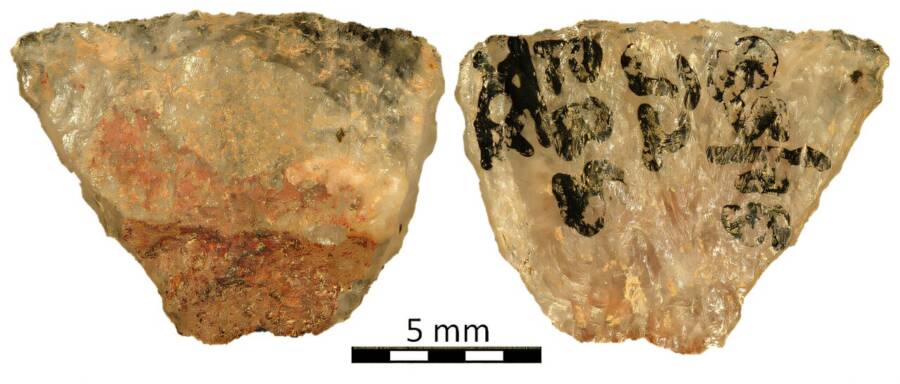
Marlize LombardBoth sides of one of the prehistoric arrowheads analyzed in the new study.Archaeologists have found the worlds oldest direct evidence of poisoned arrowheads, revealing that hunter-gatherers in modern-day South Africa were using sophisticated weapons to hunt prey as far back as 60,000 years ago. A new study, published in the journal Science Advances, details how researchers detected traces of toxic compounds on tiny quartz arrow tips excavated from the Umhlatuzana Rock Shelter in South Africas KwaZulu-Natal Province. The findings pushed back the earliest confirmed use of poisoned arrows by tens of thousands of years.The Oldest Evidence Of Humans Using Poisoned ArrowsThis is the oldest direct evidence that humans used arrow poison, study co-author Marlize Lombard said in a press release. It shows that our ancestors in southern Africa not only invented the bow and arrow much earlier than previously thought, but also understood how to use natures chemistry to increase hunting efficiency. The research team analyzed 10 microliths small, quartz-backed stone points used as arrow tips that came from a layer of sediments dated to 60,000 years ago. Using gas chromatographymass spectrometry, they identified plant-derived, toxic alkaloids on five of the microliths. The two toxic compounds discovered were buphanidrine and epibuphanisine.Researchers believe the toxic compounds were probably collected from a plant called Boophone disticha, or the Bushmans poison bulb. This plant is known locally as a gifbol or a poisonous onion, and its long been used by the regions Indigenous hunters. Some traditional hunters in the area, like the San and Khoe peoples, still use this poison to slow down their prey as opposed to delivering a knockout blow.Wikimedia CommonsA lone bulb of Boophone disticha.To authenticate their find, the scientists compared the traces on the ancient tools with those from 250-year-old poisoned bone arrows collected by European explorers and extracts from modern Boophone disticha bulbs. The results were a match.Finding traces of the same poison on both prehistoric and historical arrowheads was crucial, said co-author Sven Isaksson of Stockholm Universitys Archaeological Research Laboratory, who helped carry out the analyses. By carefully studying the chemical structure of the substances and thus drawing conclusions about their properties, we were able to determine that these particular substances are stable enough to survive this long in the ground.Its also fascinating that people had such a deep and long-standing understanding of the use of plants, he added. More Evidence That Prehistoric Humans Were Advanced ThinkersThis discovery is about more than just ancient hunting methods it serves as a window into the minds of our early human ancestors. Crafting and using a poisoned arrow requires a certain level of cognitive abilities, and the hunter-gatherers must have used advanced planning and causal reasoning when preparing and using their arrows.They would also need to have a deep understanding of local plants and animal behavior. Early hunters had to identify the correct toxic plant, extract its poison, and apply it to an arrow tip so it could be delivered into the preys wound. They then needed patience and foresight to track the wounded animal afterward, knowing the poison would eventually take effect.Using arrow poison requires planning, patience, and an understanding of cause and effect, explained Linnaeus Universitys Anders Hgberg. It is a clear sign of advanced thinking in early humans.Previous research has identified the use of plant-based poisons in other ancient weapons, such as 7,000-year-old poison arrowheads, but even following those discoveries, researchers suggested that the practice probably stretched much further back into prehistory. These new findings confirm that suspicion.This is the result of a long and close collaboration between researchers in South Africa and Sweden, Sven Isaksson said. Being able to identify the worlds oldest arrow poison together has been a complex undertaking and is incredibly encouraging for continued research. Next, read about the infamous Aqua Tofana poison used by 17th-century Italian women to kill their husbands. Or, learn why the manchineel tree is often called the tree of death.The post Scientists Uncover Evidence Of The Oldest Known Arrow Poison On 60,000-Year-Old Arrowheads appeared first on All That's Interesting.




 Arabic
 French
 Spanish
 Portuguese
 Deutsch
 Turkish
 Dutch
Dutch
 Italiano
 Russian
 Romaian
 Portuguese (Brazil)
 Greek
Greek