New Analysis Has Revealed The Water Of Pompeii Was Dense In Heavy Metals And May Have Foretold Mount Vesuvius Eruption
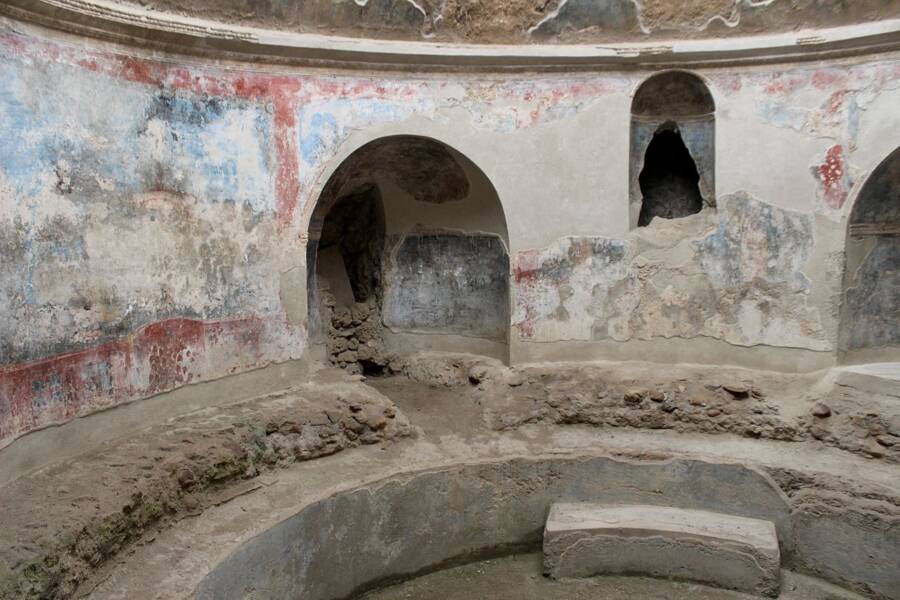
Miguel Hermoso Cuesta/Wikimedia CommonsAncient baths in Pompeii did not meet the high hygienic standards usually attributed to the Romans. Before the Roman city of Pompeii was destroyed by the eruption of Mount Vesuvius in 79 C.E., it was a thriving colony with roads, restaurants, and, of course, bathhouses. But a new study of the water supply in Pompeii has revealed that these baths were filled with heavy metals and that the quality of drinking water in the town was poor. Ultimately, the city built an aqueduct. But before that point, its water for both bathing and drinking was supplied by deep wells that contained mineralized groundwater connected to volcanic deposits. Far From Ideal: A Study Of Pompeiis Water QualityAccording to a new study published in the journal PNAS, researchers from Johannes Gutenberg University studied the water quality in Pompeii by taking a look at the citys ancient carbonate deposits. They sought to understand how water quality in the city changed when Pompeii transitioned from wells to an aqueduct during the reign of Emperor Augustus (27 B.C.E. to 14 C.E.).Cees Passchier/Johannes Gutenberg UniversityCarbonate samples from Pompeiis pre-Roman Republican Baths, which date back to 130 B.C.E.To learn more, researchers used isotope analysis to study the carbonate deposits that had formed over time in the citys aqueduct, water towers, well shafts, and the pools of the public baths. They found that the citys water quality was particularly poor during the period when Pompeiis water came from wells.The baths were originally supplied by deep wells with water-lifting devices, and the hygienic conditions in them were far from ideal, Dr. Gl Srmelihindi of the Institute of Geosciences at Johannes Gutenberg University, the lead author of the study, said in a university statement. We found completely different patterns of stable isotopes and trace elements in the carbonates from the aqueduct and in those from the wells.The researchers also found evidence of heavy metals in Pompeiis bath water, including lead, zinc, and copper. The bathhouses seemingly underwent renovations in the first century C.E. that replaced boilers and pipes, causing heavy metal levels to increase (and making the bath water warmer).So, what made the water quality in Pompeii so terrible? The Cause Of Pompeiis Poor Water QualityIn the so-called Republican Baths the oldest public bathing facilities in the city, dating back to pre-Roman times around 130 B.C.E. we were able to prove through isotope analysis that the bath water was provided from wells, and not renewed regularly, Srmelihindi explained. She added, Therefore, the hygienic condition did not meet the high hygienic standards usually attributed to the Romans.Cees Passchier/Johannes Gutenberg UniversityRuins of the oldest public baths in Pompeii, which date back to 130 B.C.E.Specifically, Srmelihindi believes that the bath water was probably changed just once a day, which makes sense, because changing the water was an arduous task undertaken by enslaved workers. After all, she noted, the baths were supplied by a water-lifting machine, powered by slaves via a kind of treadwheel. Whats more, when Pompeii used water from wells, it was using highly mineralized groundwater from volcanic deposits under the city. This water was not suitable for drinking. But during Roman times under Emperor Augustus, the city built an aqueduct, which increased the amount of water available for bathing and provided better drinking water. However, Pompeii wasnt able to enjoy the improvement of its water quality for long. In 79 C.E., Mount Vesuvius catastrophically erupted, burying Pompeii and the nearby town of Herculaneum in deadly volcanic ash and killing some 2,000 people in Pompeii (as well as an estimated 16,000 in the region). The eruption horrified the ancient world at the time, Romans didnt even have a word for volcano and the destruction was unthinkable. In fact, researchers found cyclical patterns in the level of carbon isotopes that may reveal fluctuating levels of volcanic carbon dioxide in the citys water supply leading up to the natural disaster. While tragic, the eruption of Mount Vesuvius also preserved much of Pompeii as if in amber. Today, researchers can walk its streets, examine its mosaics and even test its water supply.After reading about the horrendous quality of Pompeiis water supply, go inside the story of the Roman Empires Pax Romana period, an era of unprecedented peace and prosperity. Or, look through these photos of Pompeiis vivid frescoes.The post New Analysis Has Revealed The Water Of Pompeii Was Dense In Heavy Metals And May Have Foretold Mount Vesuvius Eruption appeared first on All That's Interesting.




 English
 Arabic
 French
 Spanish
 Deutsch
 Turkish
 Dutch
Dutch
 Italiano
 Russian
 Romaian
 Portuguese (Brazil)
 Greek
Greek