


WWW.THECOLLECTOR.COM
What Caused the Great Schism?
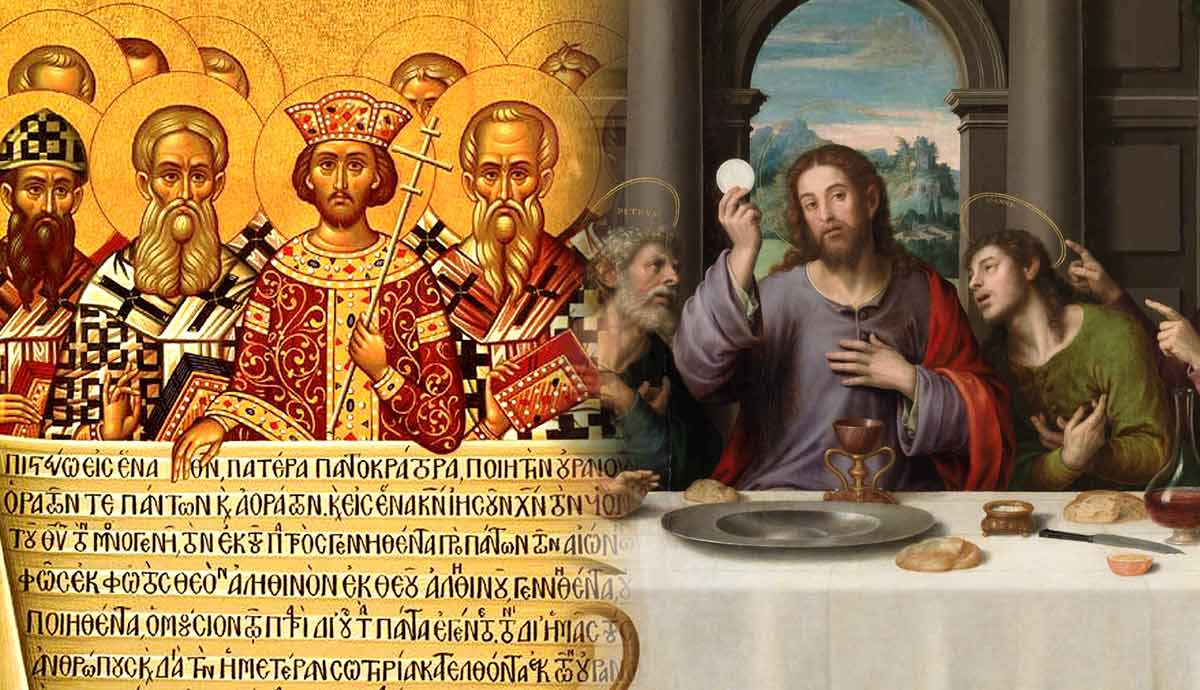
Few events in religious history had such a profound impact as the Great Schism. The split between the Western Roman Catholic Church and the Eastern Orthodox Church was not only the culmination of the religious dispute but also the consequence of a centuries-long political and theological dispute between the two factions. This article will delve into the historical background of the Great Schism, the theological and political differences between the West and the East, and the legacy and consequences of the Great Schism.Historical Background of the Great SchismDove of the Holy Spirit, by Gian Lorenzo Bernini, Saint Peters Basilica, c. 1660, photograph by Dnalor_01, May 15, 2003. Source: Wikimedia CommonsThe historical background of the Great Schism goes way back before the formal and official split in 1054. The Western Roman Catholic Church and the Eastern Orthodox Church parted ways due to theological, political, and cultural differences that, over time, became too big to overcomehowever, all these disputes developed for a long time and date back to the 4th century.The division began when the Roman Empire was split into the Western (Roman) and Eastern (Byzantine) empires. Rome became the symbol and center of the western portion, while Constantinople (present-day Istanbul) became the center of the eastern part.Initially, the division was mainly administrative, aiming to control better the vast territories and provinces that comprised the Roman Empire. However, the split soon became official, and the West and the East became two political entities.At the end of the 4th century, Emperor Theodosius I formally divided the Roman Empire between his two children, Honorius and Arcadius. With that, the eastern parts of the once-united empire started their completely different trajectories that ultimately led to the Great Schism.From a historical and sociological perspective, the Great Schism was far from surprising and sudden. Many factors impacted the split, and both sides defended their political, cultural, and theological goals and ideals.While the Western Church has embraced more Westernized practices with the pope at its center, the Eastern Church did not have one supreme authoritative religious figure. The Eastern Orthodox Church defended the Greek language and cultural heritage, with multiple patriarchs wielding equal power and the Byzantine Emperor having considerable control over religious matters.Theological DisputesSaint Ambrose Barring Theodosius from Milan Cathedral, by Anthony van Dyck, between 1619 and 1620. Source: Wikimedia Commons/National Gallery, LondonOne of the biggest reasons that led to the division between the Western Roman Church and the Eastern Orthodox Church was theological differences. These started to develop relatively early, and the most significant problems arose regarding the Filioque clause (a Latin phrase meaning and the son and referring to the Holy Trinity) and papal supremacy. Liturgical differences also widened the divide between the two churches.The Filioque controversy concerns one of the oldest and most sacred parts of the Christian faith and doctrine. The Nicene Creed (promulgated at the Council of Nicaea in 325) stated that the Holy Spirit proceeds from the Father (meaning God).However, in the 6th century, the Western Church began adding the Filioque clause to the phrase the Holy Spirit who proceeds from the Father, implying that the Holy Spirit also proceeds from (or through) the Son (Christ). In the 11th century, the papacy formally accepted the addition to the creed.This change was not welcomed in the East, where the religious leadership saw it as an unacceptable change of something holy and fundamental to the Christian doctrine.Icon depicting the First Council of Nicaea with a text of the Nicene Creed in Greek, unknown author. Source: Wikimedia CommonsAnother significant theological dispute between the two churches was the so-called papal supremacy. For the Western Church, the pope represented the ultimate Christian authority on earth since he was seen as St. Peters successor. The Eastern Church, however, could never accept one person as the supreme religious power and saw the Roman pope as the first among equals. They continued to believe that no single person, bishop, patriarch, or pope, for that matter, could have supreme religious authority over the entire Christian Church and religion.Besides the Filioque clause and papal supremacy, there were some other insurmountable liturgical and theological differences. One of them was the matter of clerical celibacy.While in the Eastern Church priests were allowed to wed and have families, they had to be celibate in the Western Church. There was also a difference regarding bread in the practice of the communion. In the West, priests used unleavened bread, while the bread in the East was leavened.The two churches also have some different understandings of purgatory. The Western Church saw it as the purification place between earth and heaven. On the other hand, the Eastern Church refused to adopt this idea, having a more mystical and spiritual way of understanding the afterlife.Political and Cultural FactorsPentecost icon depicting the descent of the Holy Spirit upon the Apostles and Mary, photograph by , between 1850 and 1900. Source: Wikimedia CommonsDue to the official separation of the Roman Empire into two different political entities with two distinct centers of power, the two states started to develop different political and cultural traditions.The Byzantine emperor had considerable authority over the church. He appointed patriarchs, played a key role in religious and doctrine matters, and influenced councils. In particular, the Byzantine emperor saw the pope as a patriarch who had no authority over political and civil matters.In the West, the situation was completely different. Popes sought to influence secular rulers and impose their authority based on their claim of papal supremacy. As head of the Papal States, the pope regularly interfered in politics and wars, often following personal agendas. Indeed, popes were key players in the international and national politics of the European continent.Another political factor that contributed to the division between the two churches was the fall of the Western Empire and the rise of the Byzantine Empire.After the fall of Rome in 476, the once-feared and celebrated Roman Empire was no more, and German tribes and peoples started to form their own political entities.The Last Supper, Juan de Juanes, circa 1562. Source: Wikimedia Commons/Museo del Prado, MadridDue to successful missionary work and the spreading of Christianity among Germanic peoples, the pope became one of the most influential political and religious figures in Europe since he represented the Church and God, and his approval increased the authority of the Germanic rulers to whom he granted it.When the Holy Roman Empire was formed, Pope Leo III was the one who crowned the first Holy Roman Emperor, Charlemagne, in 800. The Byzantine emperor thought this title was not legitimate since there could be only one emperor, especially in the Christian world. He also claimed the pope had no right to proclaim Charlemagne emperor.The language used during mass was also one of the biggest differences that influenced the Great Schism. While churches in the West used Latin, the Eastern churches used Greek. There were miscommunications and misunderstandings between the two churches and mutual dissatisfaction on how and why their languages were used in religious rituals. Also, tensions arose between the people who spoke different languages on territories where churches were fighting for influence, like the Balkan peninsula or southern Italy.Mutual ExcommunicationHagia Sophia, photograph by Arild Vgen, March 1, 2013. Source: Wikimedia CommonsThe official split between the Western and Eastern churches and the Great Schism occurred in 1054.The existing conflict between the two churches intensified due to the clash between Michael Cerularius, the patriarch of Constantinople, and Pope Leo IX.The dispute reached a breaking point when the patriarch condemned the liturgical practices of the Western Church. In response, the pope sent a delegation to Constantinople to improve the relationship with the Eastern Church through diplomacy. Also, the pope felt like the Byzantine Empire and the patriarch were questioning his authority.However, the meeting between the papal delegates and Michael Cerularius was unsuccessful. The delegation refused to recognize the authority of the patriarch, and Michael Cerularius refused to recognize the popes authority regarding the Eastern Church.Following the unsuccessful negotiation, Cardinal Humbert, one of the members of the papal delegation, delivered a papal bull of excommunication directly to Michael Cerularius during a celebration in the Cathedral of Hagia Sophia in July 1054. The excommunication meant that the patriarch and everyone who followed him were cut off from the Western Church.The papal bull stated that the patriarch was excommunicated due to his rejection of papal authority, spreading heresy, and the corruption of the faith. Michael Cerularius responded by excommunicating the papal delegates.The Consequences and Legacy of the Great SchismThe Taking of Constantinople, by Palma Le Jeune, 1544-1620. Source: Wikimedia CommonsThe Great Schism had everlasting consequences. The most obvious and direct result was the de facto creation of two churches.The Great Schism and the mutual ex-communication formally split the Christian religion into two churches: the Roman Catholic Church, with its center in Rome, and the Eastern Orthodox Church, with its center in Constantinople. It should be mentioned that there were some attempts to bring them together at the councils in Lyon in 1274 and Florence in 1439; however, these attempts failed.Another consequence of the division of the Great Schism was the worsening political relationship between the West and the East. The hostility became so great that the Crusaders even sacked Constantinople in 1204. At that moment, the power of the Byzantine Empire was already in decline. The once-powerful entity that influenced medieval geopolitics and culture was unable to defend itself from the Crusaders led by Western states.The Byzantine Empire progressively got smaller and weaker, ultimately leading to the defeat and fall of Constantinople in 1453, and the most significant chunk of the former Eastern Empire came under Ottoman rule.Hagia Sofia in Constantinople, print by Louis Haghe after Gaspard Fossati, 1852. Source: Wikimedia Commons/British Museum, LondonThe legacy and consequence of the Great Schism was the development of two separate religious identities. We can still see differences between the Catholic West and the Orthodox East. The Orthodox Church remained more prominent in Eastern Europe, Russia, and certain parts of the Middle East. The Catholic Church turned into a leading force throughout Western Europe, reaching global success through colonization and missionary work.
0 Reacties
0 aandelen
26 Views

 English
 Arabic
 French
 Spanish
 Portuguese
 Deutsch
 Turkish
 Italiano
 Russian
 Romaian
 Portuguese (Brazil)
 Greek
Greek