


WWW.THECOLLECTOR.COM
9 Facts About Lawrence of Arabia
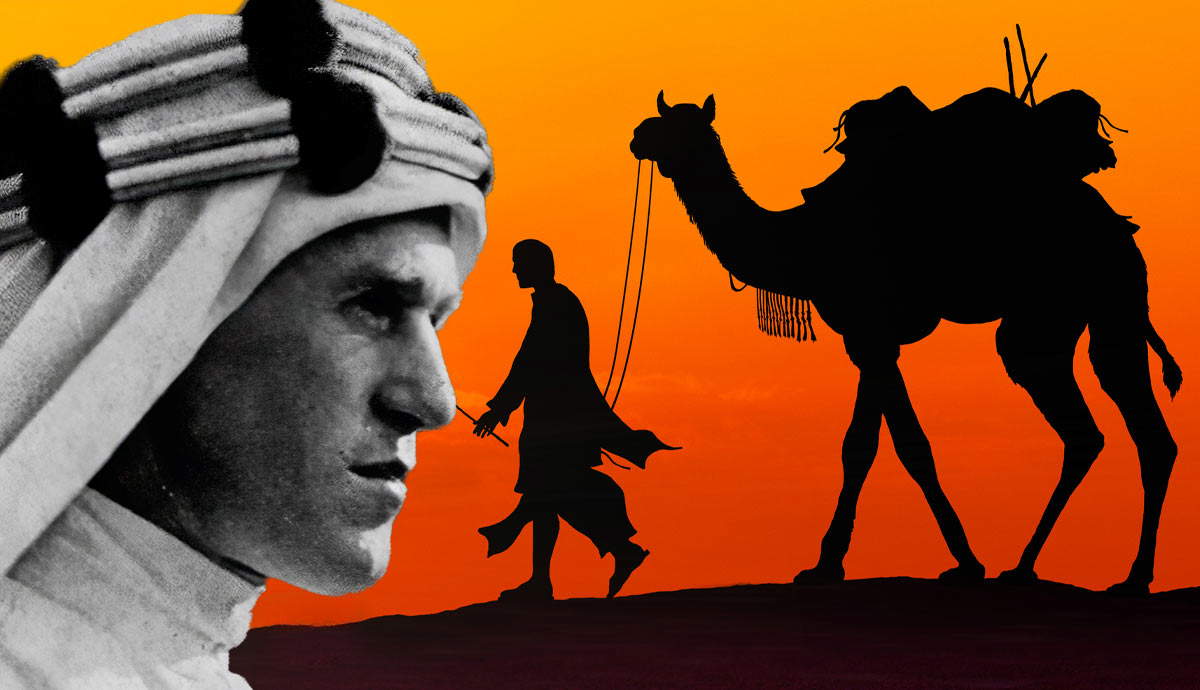
Thomas Edward Lawrence was immortalized on screen in 1962, played by legendary actor Peter OToole. However, the man portrayed in the film doesnt tell the complete story of T.E. Lawrence, better known to the world as Lawrence of Arabia. With keen diplomatic skills and a strong interest in cultural history, Lawrence was a valuable asset to the British Empire during World War I and beyond. An archaeologist, ambassador, and political advisor within the body of a soldier, Lawrence immortalized himself with his exploits.1. He Had Many RolesLawrence, left, consulting with fellow officers at the Arab Bureau of the British Foreign Office in Cairo, 1918. Source: National Portrait Gallery/Wikimedia CommonsT.E. Lawrence is largely remembered for his military contributions during the First World War. A member of the British military working in intelligence, he was assigned to be a political liaison officer. He worked with the Arabs in their resistance to the Ottoman Empire, serving as an advisor to plan and direct Arab forces supported by Great Britain. After the conclusion of the war, Lawrence wrote a book, served as an advisor to Winston Churchill, and later joined the Royal Air Force.2. T.E. Lawrence Loved Antiquities, Even as a ChildLawrence in an image dated 1924. Source: Lowell Thomas and H.A. Chase/Wikimedia CommonsT.E. Lawrence was born in Wales on August 16, 1888. Even as a child, he showed interest in antiques, history, and architectural design. As a teenager, along with friends, he spent time conducting surveys of old churches. He observed construction sites to ensure that any recovered antiquities were properly cataloged and submitted to the appropriate authorities.As a student at Oxford studying history, he toured France to photograph, draw, and measure medieval castles, collecting information that he would use for his dissertation. In 1909, he made a thousand-mile trip through Syria to visit Crusader-era castles. This solo trip sparked a lifelong interest in Middle Eastern culture and people. In a letter home, Lawrence said, I will have such difficulty in becoming English again.At meetings of British, Arab, and Bedouin officials in Jordan in 1921. Lawrence is second from left in the gray hat. Source: Library of Congress/Wikimedia CommonsUpon graduation, Lawrence went directly into the field of archaeology, as he was hired as a junior assistant at a dig in Carchemish. He learned Arabic and communicated frequently with the locals working on the project, inquiring about local history and culture. He worked as an archaeologist until the outbreak of the First World War.3. He Started WWI Behind a DeskPrince, later King, Emir Feisal was instrumental in Lawrences legendary assignment. Source: Lowell Thomas/Wikimedia CommonsLawrences initial job at the onset of World War I was a position at the newly formed Arab Bureau, a British intelligence unit in Cairo. He was skilled in this area, and his understanding of Arab culture and language proved beneficial. However, his work was largely office-bound, and some considered him a pencil pusher. Lawrence hated this and desired to see some action despite a lack of military experience. This feeling was exacerbated when his two brothers died fighting on the Western Front in 1915. By October of 1916, his wish was granted when Prince Feisal, the son of King Hussein, leader of the Arab forces, requested Lawrence for a permanent advisory position in his retinue. Thus, Lawrence of Arabia was brought forth into history.4. He Adapted to Cultural NormsLawrence adopted the dress of his Arab contemporaries. Source: Ashmolean Museum/Wikimedia CommonsLawrence gained a reputation as a successful diplomat and military adviser to the Arab cause. A large part of his success was his willingness to adapt to the culture of Britains allies. He spoke their language and adopted traditional Arabic dress.Lawrence became a champion of the Arab people. Though he was still a member of the British military, he found his allegiances were split, feeling a responsibility to those who were fighting alongside him. He admired his associates, their spirit, and their culture, which had become devoted to the cause of the overthrow of their Turkish controllers. His conflicted loyalties grew more troubled when he learned that while Britain had promised Arab freedom after the defeat of the Ottomans, secretly, they were planning to divide the valuable regions of the Middle East with France, relegating the free Arabs to a virtual wasteland. Lawrences guilt about this plan, known as the Sykes-Picot Agreement, led to him later refusing medals for his service.5. He Was the Victim of Sexual AssaultA modern portrait of Lawrence by an Arabian artist. Source: Michael Gunther/Wikimedia CommonsLawrence was captured and jailed by the Ottomans in 1916. During his imprisonment, he was subjected to beatings and sexual assault. He detailed the attacks in his autobiography, and this information was used against himto question his sexualityin writings years after his death. The Ottoman Empire was notorious for its use of sexual assault as a tool of war, especially against the officer class, as a way of demeaning their authority. Lawrence exhibited signs of Post Traumatic Stress Disorder for the remainder of his life as a result of his experiences.6. Lawrence Was a Student of Military GreatsA bust of T.E. Lawrence at the Museum of Reading. Source: 14GTR/Wikimedia CommonsLawrence was a voracious reader, particularly as a student at Oxford. He was fascinated by works involving military history, and he credited Hannibal, Julius Caesar, Belisarius, and Napoleon as some of those who impacted his concepts of war and revolution. Lawrence came to believe that humanity is the key instrument of battle, considering the impact of fear, anxiety, and mental degradation in combat. This would later lead to him emphasizing biological necessities among his forces, believing men who were well-fed, hydrated, rested, and properly outfitted would be more effective on the battlefield.7. Lawrence Perfected DestructionWorkers laying track for the Hejaz in 1906. Source: Library of Congress/Wikimedia CommonsOne of the greatest engineering projects of the Ottoman Empire was the Hejaz Railway. The goal of this line was to connect the majority of the empire, areas of which were quite distant from one another. There was only a single gap remaining in the railway in 1914, and once it was complete, 1,800 miles of contiguous travel from Constantinople to Medina would have been possible. The British and Arab forces recognized the value of this rail system and made extensive efforts to destroy it throughout World War I.About 40 miles of usable track is all that remains of the Hejaz Railway today. Source: Bashar Tabbah/Wikimedia CommonsLawrence was one of the most skilled destroyers of the Hejaz. He reported personally blowing up 79 railway bridges. He perfected his abilities as he worked and gained a reputation for being able to render a bridge impassable but still standing. This would require the Ottomans to dismantle the useless framework before they could even think about rebuilding. By the end of the war, the damage to the railway was so extensive that most of it was abandoned. Today, the disfigured skeletons of train cars and bits of gravel are all that remains of the engineering feat.8. He Sought AnonymityLawrence with Churchill and others in Egypt in 1921. Source: Churchill Archives Centre, Broadwater Collection via the International Churchill SocietyAfter the conclusion of World War I and the defeat of the Ottoman Empire, Lawrence was recruited to serve as an adviser to Winston Churchill. However, Lawrence decided he was done with public life and resigned after just a year.Though he had been relatively unknown during the war itself, his reputation in Britain after the war spread like wildfire. His role as a European adopting Arab culture was a cause for public fascination. Slide photos of him in his Arabic dress were part of a London multimedia show that was viewed by over three million people between 1920-1924. After leaving Churchills service, Lawrence joined the Royal Air Force but used an assumed name to hide his growing celebrity. However, he was discovered and tried the same tactic with the Tank Corps instead. He would eventually return to the Royal Air Force, where he served until he died in a motorcycle accident in 1935.9. He Was an AuthorT.E. Lawrence would return to celebrity status years after his death, when Peter OToole played him in the feature film, Lawrence of Arabia. OToole is seen here in white. Source: Wikimedia CommonsT.E. Lawrence immortalized his experiences in the Middle East with his book, The Seven Pillars of Wisdom. Published in 1926, the memoir described Lawrences time working with Britains Arab allies. The publication of the novel would be Lawrences only return to using his given name in his postwar years. The book was used in the movie adaptation of Lawrences experiences in 1962, Lawrence of Arabia.
0 Reacties
0 aandelen
24 Views

 English
 Arabic
 French
 Spanish
 Portuguese
 Deutsch
 Turkish
 Italiano
 Russian
 Romaian
 Portuguese (Brazil)
 Greek
Greek