


WWW.THECOLLECTOR.COM
The History of the Isle of Wight (Vikings, Castles, and Medieval Heritage)
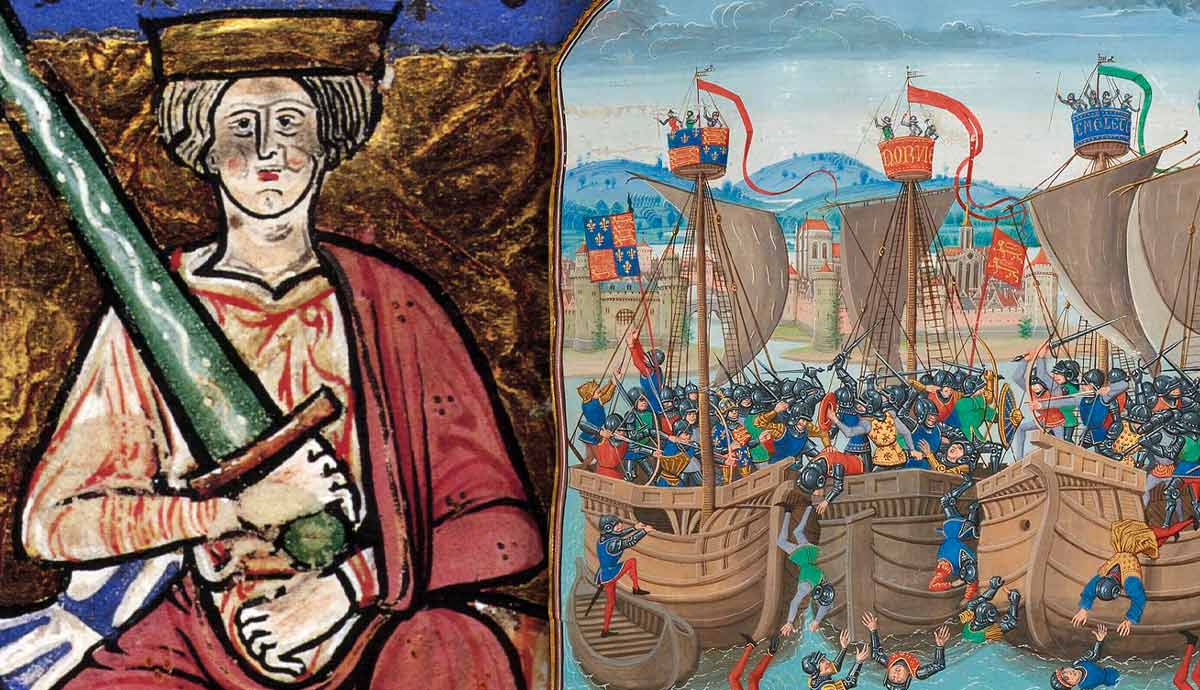
The Isle of Wight, located off the southern coast of Great Britain, has a long and rich history dating back millennia. Inhabited since Neolithic times, its strategic location in the English Channel has placed it at the center of many conflicts, including the Viking invasions of England, Anglo-French conflicts, and World War II. But in contrast, since Roman times, the island has also been a popular holiday destination for the wealthy. This is the history of the Isle of Wight.Early History of the IslandCopper Alloy Axe, found at Arreton Down, Isle of Wight, c. 1700-1500 BCE. Source: British MuseumThe Isle of Wight is located off the southern coast of Great Britain near the county of Hampshire. The earliest inhabitants of the island appear to have been paleolithic hunter-gatherers about half a million years ago, though the exact timing of their arrival is subject to some speculation. These were followed by waves of Mesolithic and Neolithic migrations over the following millennia. During the Bronze Age, the island was settled by segments of the Bell Beaker culture, an Indo-European speaking group that brought metalworking to the island. During the Iron Age, the Isle of Wight was home to the Celts, who inhabited the island until the arrival of the Romans.In the early 1st century CE, the Roman Empire under Claudius invaded and conquered a large portion of Britain, including the Isle of Wight, which was captured by the future emperor Vespasian. Though it was added to Romes ever-growing list of territories, the Isle of Wight, which the Romans called Vectis, was for the most part overlooked by the Romans. They did not place any significant towns on the island, though they may have placed a small fort at the future location of Carisbrooke Castle. However, archaeologists have found at least seven Roman villas, homes of the wealthiest members of Roman society. This would imply that the Isle of Wight was a vacation spot for the Romano-British elite. Later the Victorian aristocracy would also treat the island as a holiday destination.Bronze Dupondius of Vespasian, Roman, 72 CE. Source: Metropolitan Museum of ArtIts unknown where the name Wight comes from, though the most prominent theory is that it means place of division, since the island divides the two arms of the Solent, a strait of the English Channel that separates the Isle of Wight from the rest of Britain. The name Wiht has been used since the Anglo-Saxon era, and the Doomsday Book of 1086 refers to the island as Wit.The Germanic Invaders ArriveDisc-on-bow brooch, found near Shorwell, Isle of Wight, c. mid-6th century CE. Source: British MuseumIn 410 CE, the Roman Empire was crumbling, and the legions that once protected Britain were withdrawn. The inhabitants were told to look to their own defenses. With the might of Rome no longer a shield, Britain and the Isle of Wight were subject to waves of invasion from Germanic tribes that were migrating west. The exact timeline of events is a bit speculative, since there are few firsthand accounts, and even fewer archaeological remains. However, thanks to later writings by historians such as the Venerable Bede and the Anglo Saxon Chronicle, its possible to piece together a timeline. In 530, the island was conquered by the Saxons under the leadership of Cedric, the first king of Wessex. In 534, he turned control of the island over to his nephews Stuf and Wihtgar, who drove out the native Briton inhabitants. These two were Jutes, a Germanic tribe from what is now Denmark. Their arrival opened up the island to settlement by the Jutes.Anglo-Saxon Seax (knife), c. 10th century. Source: British MuseumThe Isle of Wight was ruled by Stufs descendants until it was taken over by the Christian kingdom of Mercia in the mid-7th century. According to Bede, in 686, the island was invaded by the king of Wessex, Caedwalla. The king of Wight, Arwald, attempted to fight off the Wessex incursion, but was defeated in battle and killed. His other relatives are captured and executed. Arwald was the last pagan ruler of Anglo-Saxon land in England, and with his death, England and the Isle of Wight were firmly Christianized.The Fury of the NorthmenViking sword, c. 10th century CE. Source: Metropolitan Museum of ArtStarting in the late 8th century, the British Isles, as well as much of Europe and other parts of the world, were subject to centuries of attack by a new set of raiders and invaders, the Vikings. Because of the naval-based nature of Norse raids, the Isle of Wight was a convenient staging ground for strikes against the rest of the British Isles. In the 9th century, the Isle of Wight was a base of operations for strikes into Hampshire and Sussex in southern England. It was also used as a stopover point and wintering location for the Vikings who were unable to make the full journey to northern France.In 897, the Vikings launched a major series of raids into England, and in particular Devon and the Isle of Wight. In response, Alfred the Great fought a naval battle and defeated the raiders, driving them off for some time. In spite of these and other successes, the Norse would continue to plague England for many more centuries. The Isle of Wight would remain largely in Saxon hands, being incorporated into the shire of Hampshire after the kingdom of Wessex was divided into shires. However, it was still used as a base of operations for Norse raiders, who would often winter there.Aethelred the Unready, 968-1016, from an illuminated manuscript of the Chronicle of Abindon, c. 1220. Source: Wikimedia CommonsThe raids of the Norse were especially bad during the reign of Aethelred the Unready. In 1002, a Norse chieftain named Swein attacked the Isle of Wight, and according to the Anglo-Saxon Chronicle:There they roved about, even as they themselves would, and nothing withstood them, nor any fleet by sea durst meet them nor land force either, went they ever so far up. Then was it in every wise a heavy time, because they never ceased from their evil doings.In 1013, Swein launched an even fiercer invasion of England and Aethelred was forced to flee to the Isle of Wight as a refuge until Sweins death. After Aethelreds death in 1022, the island was once again used by the Norse as a staging ground for raids and a place to winter.The Isle of Wight would be permanently recaptured by the Saxons in 1048, and control turned over to Earl Godwin and his son Harold, who would become the future King Harold Godwinson. With this occupation, the back-and-forth seesaw of possession of the island was finally over.The Middle AgesWilliam of Normandy on the Bayeux Tapestry. c. early 12th century CE. Source: Wikimedia CommonsIn 1066, William of Normandy launched a successful invasion of England, seizing the throne from Harold Godwinson. With England now under Norman rule, the Isle of Wight was given to William Fitz Osbern. During his lordship over the island, Osbern began construction of Carisbrooke Castle, the main defensive structure. The site may have been the location of a Roman fort, and the Saxons used the location for a fortification against Viking raids. Osbern was killed in battle in 1071, and lordship of the island and construction of the castle passed to his son Roger.In 1100, Henry I granted the lordship of the Isle of Wight to the Redvers family, who would retain control of this fief for two centuries. By a quirk in the arrangement, the people of the Isle of Wight did not owe their loyalty to the English monarch, but to their lord. This state of affairs would remain in effect until 1293, when the island was sold to Edward I, transferring it to the English Crown.In the early 1330s, tensions between England and France were at a fever pitch, eventually exploding into open conflict, known today as the Hundred Years War. As was the case when the Vikings sailed the seas in search of conquest and plunder, the Isle of Wights strategic location in the English Channel made it an important hub for raids, counter raids, and invasions. Almost as soon as the war began, the island was struck by French raiders. Later, the English King Edward III used the island as a staging ground for his invasion of France during the Crecy campaign. The remainder of the century saw the Isle of Wight continually subjected to raids by the French and their Castilian allies.The Battle of Sluys, 1340, by Jean Froissart, 15th century. Source: Wikimedia CommonsIn 1374, a Castilian incursion sacked and burned much of the island. In 1377, a combined French and Castilian invasion pillaged much of the island and besieged Carisbrooke Castle. During the siege, the French commander was struck with an arrow shot from one of the castles loopholes, throwing the besiegers into confusion. They were driven off after the defenders sallied out, relieving the castle, and departed the island after being paid a bribe. The Isle of Wight was still targeted by French raiders into the 15th century.The Modern EraDefeat of the Spanish Armada, 1588, by John Tominson, 1805. Source: British MuseumAfter the Hundred Years War, tensions continued to simmer between England and France. During the Tudor era, King Henry VIII established the Royal Navy and further fortified the Isle of Wight as a defense against possible French attacks. In spite of these preparations, the island was attacked by the French in 1545. Landing in the southern portion of the island, the invasion force was driven off by the local militia. To protect against future attacks, another fortification, Yarmouth Castle, was built in 1547. In 1588, the Spanish Armada clashed with the English navy throughout the channel, with much of the fighting occurring off the coast of the island. Despite victories, the lingering threat of invasion led to the building of further defenses in the late 16th and early 17th centuries.While most of the Isle of Wights military history was focused on external threats, internal strife also had a hand in the islands history. In 1647, during the English Civil War, English monarch Charles I was fleeing London and boarded a ship bound for the Isle of Wight. Unfortunately for him, Robert Hammond, the governor, was a Parliamentarian and captured Charles, imprisoning him in Carisbrooke Castle. Charles attempted to escape several times, but failed, and was eventually transferred back to London for trial and execution. A century later, the Isle of Wight would be a staging ground for British soldiers during the Seven Years War.Osborne House on the Isle of Wight, by Le Blond & Co., 1852-1853. Source: British MuseumFrom the late 18th to the mid-20th centuries, the Island was peaceful and was a holiday location for the wealthy and influential members of British society, drawn to the islands temperate climate. Poets, artists, and even royalty spent time there as a refuge from the cares of the outside world. Most famously, Osborne House, a mansion on the island, would be the place where Queen Victoria would pass away in 1901. The tranquility was far from permanent, however.During World War II, the Isle of Wight was the location of radar installations and radio transmitters that warned Britain of incoming Luftwaffe air raids. As a result, the island was bombed repeatedly by German aircraft. There were plans for a German invasion, though these were called off when Operation Seal Lion, the invasion of Great Britain, was canceled. After the Normandy landings in 1944, the Isle of Wight became the jumping off point for Operation Pluto, or Pipe Line Under The Ocean. It was exactly what it sounds like, an underwater oil pipeline that could transfer fuel from Britain to mainland Europe quickly and efficiently. This was the last time the Isle of Wight would be used for a direct military purpose.Other more peaceful events also happened on the Isle of Wight, such as the first phone call in the British Isles and the first radio station, though these are overshadowed by the more militant events in the islands history.
0 Commentarii
0 Distribuiri
17 Views

 English
 Arabic
 French
 Spanish
 Portuguese
 Deutsch
 Turkish
 Dutch
Dutch
 Italiano
 Russian
 Portuguese (Brazil)
 Greek
Greek