Archaeologists In Sicily Just Found An Ancient Bone Stylus Depicting Dionysus With An Erect Phallus
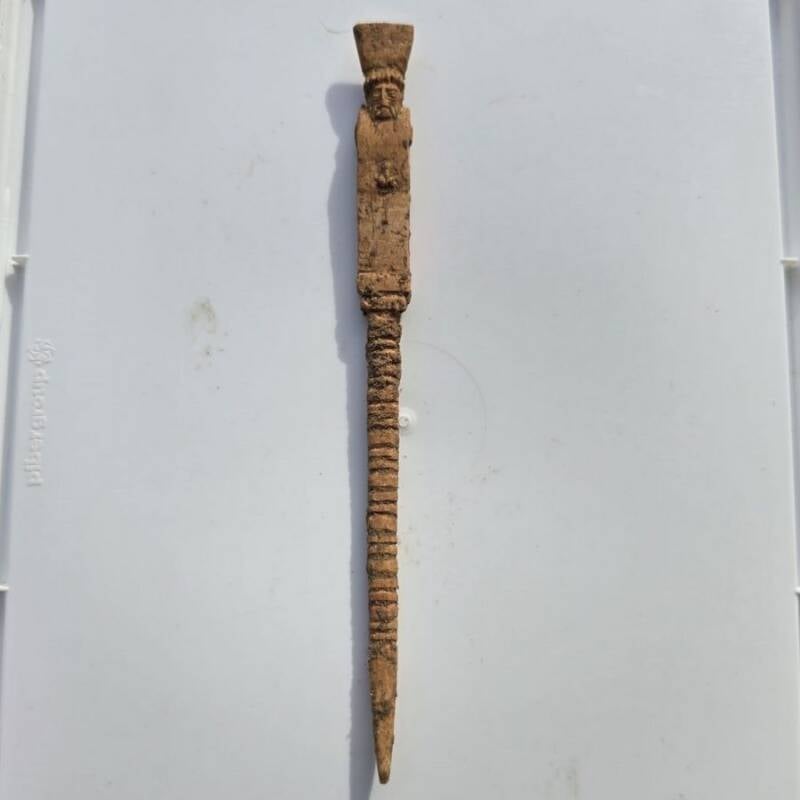
Superintendency of Caltanissetta/Government of SicilyThe stylus, featuring the god Dionysus and his erect penis, is made from bone.During preventative excavations in southern Sicily, archaeologists came across a small, unusual artifact from the fifth century B.C.E. It was an ornate, perfectly preserved stylus, decorated with both the bearded head of what appeared to be the god Dionysus and the deitys erect phallus. While the purpose of the object is up for debate, archaeologists agree that its an astounding find without parallel in the region and an exciting look at the areas ancient history.The Ancient Stylus With Dionysus And His Erect PhallusAccording to a statement from the Superintendency for Cultural and Environmental Heritage of Caltanissetta, the intricately carved stylus from the fifth century B.C.E. was found during preventive excavations in Gela, Sicily, ahead of the construction of a new cultural center.The stylus, which isin pristine condition, is 5.2 inches (13.2 centimeters) long and carved out of bone. At its tip is the head of a bearded man, believed to be Dionysus, the Greek god of wine, fertility, and more. Slightly beneath Dionysus face is another carving: a depiction of the gods erect phallus. Superintendency of Caltanissetta/Government of SicilyA close-up view of the intricate carvings on the bone stylus found in Gela.Archaeologists believe that the stylus was carved to resemble a herm, a type of sculpture in ancient Greece that was often placed at crossroads or in front of temples to ward off evil. Like the stylus, herms often depicted just a face and male genitals.That said, the usage of the stylus remains something of a question mark.The Possible Purpose Of The Stylus In Ancient GreeceIn ancient Greece, styluses were used to make marks on wet clay or wax. But this stylus is not only made of bone, and thus quite delicate, but also intricately carved, which suggests that it had an even greater purpose. While this exact purpose remains a mystery for now, experts have some ideas about how the stylus may have been used. Possibly, it was the ancient Greek equivalent of a fountain pen that is, an object whose beauty is paramount to its utility. Or maybe it was used for a ceremonial reason, possibly to mark pottery before it was given as a votive offering to a god.Indeed, excavations in the area have suggested that the site could have once been an important production hub. In addition to the stylus, archaeologists in Gela also found the remains of a sprawling Hellenistic neighborhood, including paved surfaces, as well as evidence of collapsed structures where ancient people once produced vessels and figurines. AbelDionis/Wikimedia CommonsAncient ruins in Gela, Sicily, which was once a colony of Magna Graecia (Greater Greece). Possibly, then, the Dionysus stylus was connected somehow to the protection of these workshops.But while questions remain, the stylus makes up a small but exciting part of Gelas larger ancient history. The city was first founded in the seventh century B.C.E. by Greek colonists from Rhodes and Crete, and it swiftly became one of the most powerful cities in the region. However, by the fifth century B.C.E., the citys fortunes had changed, and it was all but destroyed in 406 B.C.E. during an invasion by the Carthaginians.The Dionysus stylus, which dates back to this critical period, is a priceless artifact from Gelas history, and archaeologists are eager to share it with the wider public. This stylus truly represents a unique example in the archaeological landscape of the time, Daniela Vullo, the head of the Superintendency for Cultural and Environmental Heritage of Caltanissetta, remarked in the statement. Due to its unique characteristics, it deserves to be exhibited and made available for public enjoyment.After reading about the fifth-century B.C.E. stylus with a carving of Dionysus and his erect phallus that was found in Sicily, discover the story of the Antikythera mechanism, the curious artifact from ancient Greece that has been described as a computer. Or, go inside the ancient Greek legend of Medusa, the terrifying monster with snakes for hair who could turn victims to stone.The post Archaeologists In Sicily Just Found An Ancient Bone Stylus Depicting Dionysus With An Erect Phallus appeared first on All That's Interesting.




 English
 Arabic
 French
 Spanish
 Portuguese
 Turkish
 Dutch
Dutch
 Italiano
 Russian
 Romaian
 Portuguese (Brazil)
 Greek
Greek