


ALLTHATSINTERESTING.COM
How The Stonewall Riots Changed The Course Of The Gay Rights Movement
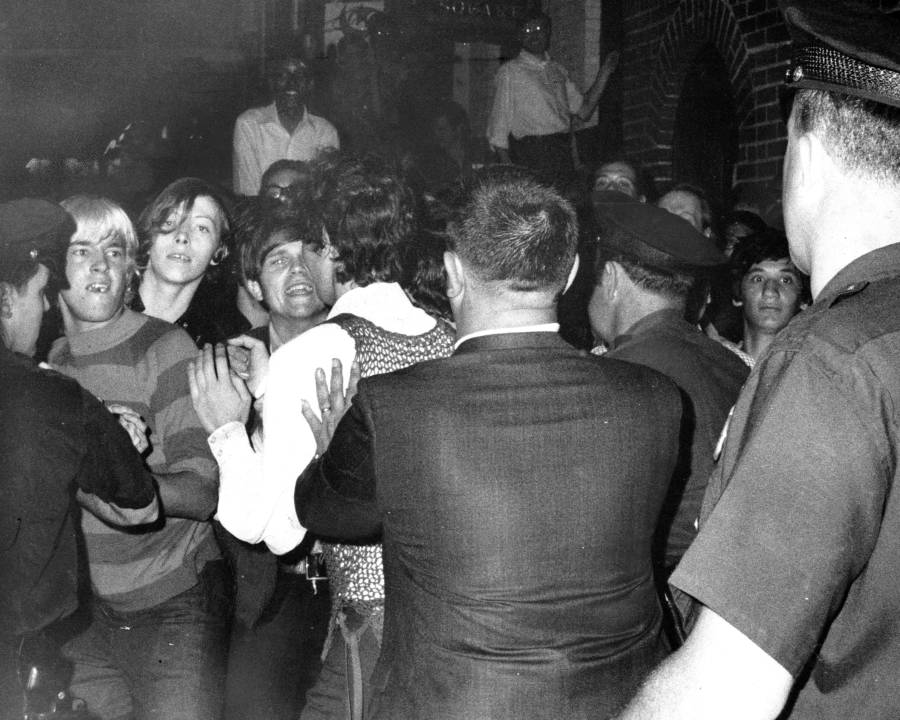
The Stonewall riots put gay rights on the map but when the first shot glass was thrown, nobody involved knew they were going to alter the course of history.Welcome To The Stonewall InnNY Daily News Archive via Getty ImagesCrowds clash with police just outside the Stonewall Inn at 53 Christopher Street during the Stonewall riots.It did not look like a place that could start a revolution.It was a dive bar but even that characterization was optimistic, since it couldnt get a liquor license. Its drinks were bootlegged and heavily watered down. The contents of no bottle ever matched its label. There were no fire exits, and there was no running water; glasses were rinsed and immediately reused.But in thatGreenwich Village tavern, there was music, there was dancing, and there was freedom. It wasone of the only places for New Yorks gay community to socialize and truly be themselves.For this, they had the Mafia to thank.In 1969, being gay was as illegal as stealing cars or embezzling money. Public displays of affection or dressing in drag could result in charges of gross indecency and lewdness, and the penalty was arrest or a meeting with a billy club.The Stonewall riots were just the beginning; the fight for equality continues today.As with all illegal activity happening in its purview, the Genovese crime family wanted in. The market, they knew, was there: at the time, New York City had the largest gay population in the United States.So the mob became the financial backer of New Yorks underground gay scene, funding the 181 Club, the Howdy Club, and The Stonewall Inn. The crime familysinvolvement allowed the fledgling gay bars to sidestep the biggest obstacle in their path: law enforcement.The state of New York was deeply committed to upholding anti-sodomy laws so committed, in fact, that it set about entrapping potential lawbreakers.Police vice squads pursued LGBTQ individuals, bought them drinks, and made offers and then arrested those who accepted.The Mafia couldnt pay off every police officer in the city. By the mid 1960s, over 100 men were being arrested per week and it was in that climate that the raid on the Stonewall Inn took place.The Raid On The StonewallWhose Streets Our StreetsThe Stonewall Inn, site of the Stonewall riots, as depicted in the 2015 movie Stonewall.In the chaotic aftermath of the night of June 27, 1969, there were two things everyone who had been at the Stonewall Inn could agree on: what happened had happened fast, and it had been entirely spontaneous.When police burst through the doors at 1:20 AM, the bartender knew something had gone wrong. He had thought the establishment was in the clear that night; though there had been rumors and a recent spate of raids notablythose on the Snake Pit and the Sewer he hadnt received a tipoff that the Stonewall would be hit.To this day, nobody knows why he didnt. Some speculate that the Stonewall was behind on its payments to dirty cops. Others suggest that the Mafia management had become more interested in blackmailing wealthy Stonewall patrons than selling liquor at a dive bar.Wikimedia CommonsThe layout of the Stonewall Inn, where the Stonewall riots began.Either way, the raid caught the Stonewall staff entirely unprepared. There was no time to hide the liquor and no chance to warn patrons. It was the clubs worst nightmare.The patrons were told to line up against the wall and be ready to produce their identification. Those whose gender didnt appear to match their drivers license would be arrested, and those without identification would be taken into another room to have their sex verified.FlickrThe sign of the Stonewall Inn, site of the 1969 Stonewall riots.It was a severe blow. The Stonewall Inn was a sanctuary for drag queens, who were not always welcomed even at other gay bars. It was also a favorite haunt of underage and homeless members of the LGBTQ community.In short, on the morning of June 28, the Stonewall was full of people who had every reason not to want to show their IDs.The Stonewall RiotsTumblrMarsha P. Johnson, credited with inciting the Stonewall riots.It started with the drag queens. Unwilling to accompany officers into the back room to have their sex checked, they stayed where there were. Other patrons refused to show their identification cards. When it was decided that everyone would be taken to the police station,Marsha Johnson, a black trans woman, proclaimed her rights by throwing a shot glass into the mirror.Outside the Stonewall, a crowd was gathering. Many of those who had managed to escape lingered, waiting for news of their friends. Other members of the gay community joined them.Rumors made their way out to the waiting onlookers: those inside, it was said, were being beaten by cops. The crowd began to perform, taunting police officers with exaggerated salutes as the first of the arrested emerged from the bar in handcuffs.Storm DeLarverie, known as the Rosa Parks of the gay community, brought tensions to a boiling point. She fought with police officers and was clubbed for her trouble. As she wasthrown into the back of a patrol wagon, she turned to the crowd and shouted, Why dont you guys do something?Two of the leaders in the Stonewall riots, Marsha P. Johnson and Storm DeLarverie.With that, the floodgates broke. New Yorks gay community could indeed do something after all, the crowd vastly outnumbered the police.They threw pennies, beer bottles, cans, and cobblestones at law enforcement officials. Tires were slashed, and as protestors fell to the ground, more surged forward to take their place. Parking meters were pulled from the pavement and used as battering rams.In the chaos, detainees began to escape and join the fight. The police retreated to the bar, which patrons immediately set on fire.The Immediate Aftermath Of The Stonewall RiotsJohannes Jordan/Wikimedia CommonsThe Stonewall Inn in 2008.By 4:00 that morning, the Stonewall Inn was in ruins and the streets were quiet. Both police and rioters had been hospitalized, and the violence, it seemed, was over.But things were only just beginning. In true Stonewall fashion, people turned out again the following night, and the night after that, taking to the streets time and time again. What had once been secret was now out, and there was no shoving it back in the closet.The Stonewall was open to greet them.Stonewall patron and protester Michael Fader explained the atmosphere, saying:We all had a collective feeling like wed had enough of this kind of shit. It wasnt anything tangible anybody said to anyone else, it was just kind of like everything over the years had come to a head on that one particular night in the one particular place, and it was not an organized demonstration Everyone in the crowd felt that we were never going to go back.We werent going to be walking meekly in the night and letting them shove us aroundits like standing your ground for the first time and in a really strong way, and thats what caught the police by surprise. There was something in the air, freedom a long time overdue, and were going to fight for it. It took different forms, but the bottom line was, we werent going to go away. And we didnt.Stonewall The MovieVultureA still from the 2015 film Stonewall. The Stonewall Inn made headlines again in 2015 when its story came to the silver screen but not in a good way.The trailers release turned initial enthusiasm to anger and dismay.Outrage from the LGBTQ community took the form of22,000 signatures and vows to boycott the film. Behind the widespread negative feedback was a common theme: casting choice.Critics saidStonewalldepicted cisgender white males as the unsung heroes of the movement. In reality, trans women of color, butch lesbians, drag queens, homeless queer people, sex workers, and gay people were the riots heart and soul.The removal of these often darker heroes from a film isnt a phenomenon specific to Stonewall; Hollywood has a long history of minority erasure in film. A study by USCs Annenberg School of Communication analyzed over 700 films from 2007 to 2014.The results make a strong case that, in general, roles for disenfranchised people in the entertainment industry havent improved over this period of time.Gary LeGault/Wikimedia CommonsMarsha P. Johnson, Joseph Ratanski, and Sylvia Rivera in the 1973 NYC Gay Pride Parade photographed by Gary LeGault.The statistics for erasure of queer characters are particularly bleak: after analyzing seven years of film and 4,610 speaking characters, there were only 19 gay characters represented andzero transgender characters. Nearly 85 percent of the gay characters appearing on the big screen were white.These statistics present a formidable problem in their own right, but especially so since queer women of color actually fronted the Stonewall riots not the fictionalized white males that the films producers decided to prioritize.Stonewall the movie is a reminder of how far we still have to go. But its heroes the real heroes have faith. Todays interviews with Stonewall rioters are generally optimistic. Things, they say, are still changing. And nobody knows change better than the people who sparked a revolution.After this look at the Stonewall riots, read up on the Zoot Suit Riots or discover the history of the hippie movement.The post How The Stonewall Riots Changed The Course Of The Gay Rights Movement appeared first on All That's Interesting.
0 Комментарии
0 Поделились
26 Просмотры

 English
 Arabic
 French
 Spanish
 Portuguese
 Deutsch
 Turkish
 Dutch
Dutch
 Italiano
 Romaian
 Portuguese (Brazil)
 Greek
Greek