


WWW.THECOLLECTOR.COM
How Alexander Hamilton Became the Father of the US Financial System
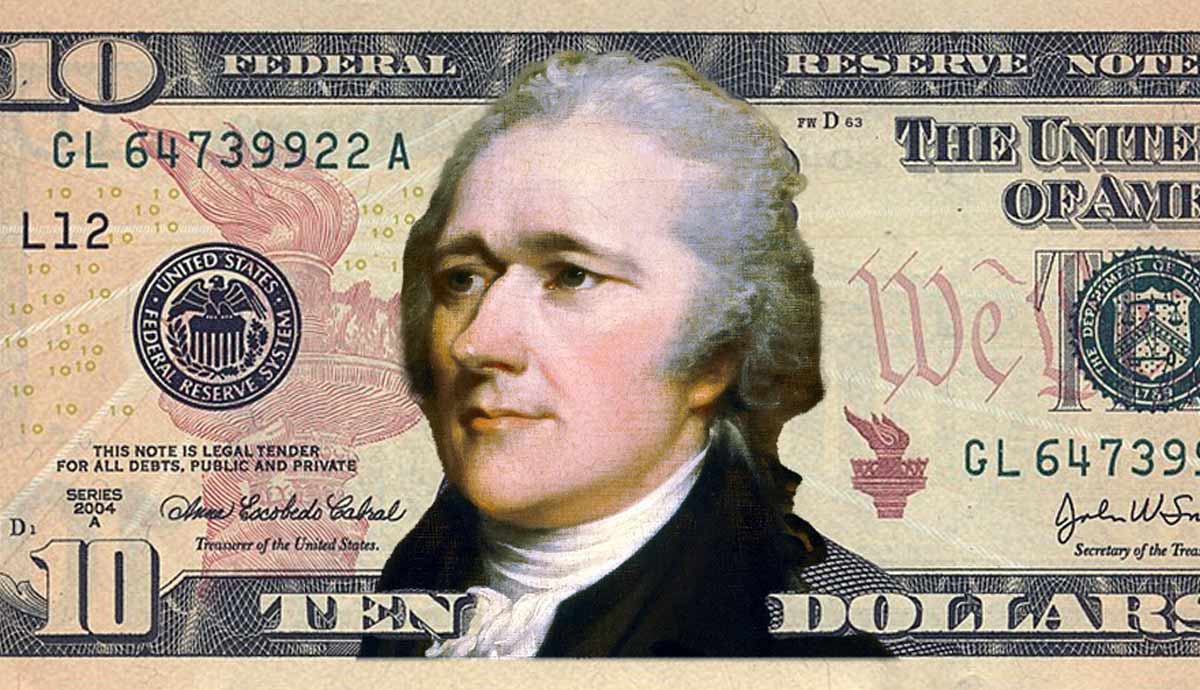
During the American Revolutionary War, the young New York lawyer Alexander Hamilton established a close working relationship with General George Washington and served as his senior aide-de-camp. His administrative abilities and financial expertise led Washington to appoint him as Secretary of the Treasury after becoming the first president of the United States. Hamilton had a grand vision for how the federal government could support the American economy. While his ideas were controversial and faced considerable opposition, his contributions helped the United States become an economic superpower.Washingtons Right-Hand ManThe First Meeting of Alexander Hamilton and George Washington. Painting by Alonzo Chappel, 1856. Source: National Heritage Museum, Lexington, Massachusetts via PBSAlexander Hamiltons working relationship with George Washington began in early 1777 when he was appointed the commander-in-chiefs aide-de-camp during the American Revolutionary War. Washington had been impressed by Hamiltons conduct as an artillery officer the previous year, and the general soon found him an indispensable asset in his efforts to lead the United States to victory over British forces.Since Washington struggled to deal with the voluminous correspondence from Congress, individual states, and subordinate officers on other fronts, the 22-year-old Hamilton quickly used his administrative skills to help the general manage the workload. Soon, he was given the authority to issue orders on Washingtons behalf. Although Hamilton begged Washington for a field command, the commander was reluctant to lose him from his staff and kept him on until March 1781. Hamilton secured his desired command in the summer of 1781 and took part in the Siege of Yorktown.During his service as Washingtons de facto chief of staff, Hamilton shared the generals frustrations regarding the Constitutional Congress limited powers and the tendency for individual states to prioritize their own narrow interests over the national cause. While the Articles of Confederation had come into force in 1781, after the war, Hamilton believed that further centralization was required and joined forces with James Madison of Virginia to call for a stronger national government.Their efforts led to the Constitutional Convention of 1787 in Philadelphia. Washington presided over the deliberations that resulted in the promulgation of a new Constitution in September 1787, which was ratified by the states the following summer.Secretary of the TreasuryWashington and his Cabinet. Print by Currier & Ives, c. 1876. Source: Library of Congress, Washington DCWashington became the first president of the United States in April 1789 and appointed Hamilton as Secretary of the Treasury in September. Other members of Washingtons cabinet included Secretary of War Henry Knox, who had been Hamiltons superior officer as artillery commander of the Continental Army, Attorney General Edmund Randolph of Virginia, and Secretary of State Thomas Jefferson. Jefferson had been serving as ambassador to France in Paris and did not take office until early 1790. The future president would become Hamiltons leading rival within the cabinet.Hamiltons immediate duties included setting up accounting systems for the federal government and creating the US Customs Service to collect the import duties that served as the main source of government revenue. While taxation was a contentious issue since it had been a major cause of the American Revolution, there was a general consensus among Americas early political leaders that the federal government had to be able to collect taxes to support its operations.Hamiltons most important task as Secretary of the Treasury was to address the issue of Americas public debt accumulated during wartime, which amounted to some $79 million. Much of this was in the form of bonds issued to war veterans in lieu of pay. Since there was little expectation that these would be redeemed, most veterans promptly sold their IOUs to financial speculators at heavy discounts to their face value. Hamiltons solution reflected his ambitions to leverage the scale of the federal government to stimulate economic development.Government CreditAlexander Hamilton represented on the US 10 dollar bill. Source: Wikimedia Commons/United States Treasury Bureau of Engraving and PrintingIn January 1790, Hamilton presented his 40,000-word First Report on Public Credit to Congress. The core of Hamiltons proposals were the concepts of redemption and assumption. Hamilton argued that the government should redeem the bonds by paying the bondholders rather than the initial recipients. Additionally, he believed that the federal government should assume the debt of the states, transferring bondholders loyalty to the national government rather than the states.Both redemption and assumption faced opposition in Congress. Hamiltons erstwhile ally, James Madison, broke with him on the issue of redemption, arguing that it would not be fair to war veterans while enriching speculators who did nothing to support the war effort. Hamilton defended his plans by emphasizing the importance of ensuring full faith in government credit so that the government could borrow and invest in the economy at low rates.While Hamiltons redemption bill was easily passed by Congress, the assumption bill was more politically contentious. Not only would this entail a significant centralization of powers for the federal governments powers to borrow and tax, but less indebted states felt it was unfair to share the burden at the federal level with more indebted states.Madison rallied opposition to defeat the assumption bill in the House. It was only after Hamilton compromised in June 1790 by agreeing to support a permanent capital on the site of Washington DC that Jefferson and Madison agreed to drop their opposition.The First Bank of the United StatesThe first Bank Building in Philadelphia. Source: National Parks ServiceIn December 1790, Hamilton presented his Second Report on the Public Credit, in which he sought to build on the foundations of his public credit system by establishing a central bank. This institution would issue a uniform national currency, loan to public and private entities to develop the economy, collect revenues, and hold government funds.While Hamilton saw the national bank as a key part of his program to stabilize the economy and stimulate investment, Jefferson and Madison argued that the proposals were unconstitutional as there were no provisions for such a bank in the Constitution.After the bill passed the House, Jefferson urged Washington to veto it on constitutional grounds. The president gave Hamilton the opportunity to respond, and the latter made a strong argument for its constitutionality since the Constitution allowed Congress to pass legislation considered necessary and proper for its functioning. Washington accepted Hamiltons arguments and chartered the Bank of the United States on February 25, 1791.The issue of a national bank has been contentious throughout American history. Hamiltons opponent, James Madison, was president in 1811 and refused to renew the 20-year charter of the First Bank of the United States. However, after the government was on the brink of bankruptcy during the War of 1812, Madison recognized that some form of national bank was required. The Second Bank of the United States, formed in 1816, was, in turn, abolished by President Andrew Jackson in 1836, and it was not until the creation of the Federal Reserve System in 1913 that the United States had a central bank again.Promoting American IndustryWall Street and Federal Hall of New York in c. 1791. Print by Cornelius Tiebout, c. 1879. Source: Library of Congress via Geographic GuideIn December 1791, Hamilton produced the Report on Manufactures, his third major policy paper as Secretary of the Treasury. Although Hamilton was in favor of close trading relations with Britain and endorsed free markets in principle, the rationale behind the report was to achieve economic independence from Britain and nurture the development of American commerce. In order to achieve these objectives, Hamilton suggested protective tariffs, subsidizing industry, and a public infrastructure program to encourage interstate trade and develop a national economy.Hamiltons proposals once again met with opposition from Jefferson and Madison as pandering to financial interests in his home state of New York, further deepening the split between Hamiltonian Federalists and Jeffersonian Republicans.In fact, Hamiltons recommendations were relatively moderate and sought to strike a balance between commercial and agrarian interests. The proposals for subsidies were particularly unpopular, and Congress never brought them to a vote. However, most of Hamiltons tariff proposals were enacted in the aftermath of the report. Tariffs would be a major factor in the sectionalization of American politics during the 19th century, with northern states preferring higher tariffs and southern states preferring lower ones.Despite its mixed reception from Congress, the Report on Manufactures has remained an influential text over the centuries in establishing how the central government could proactively support economic development. While Americans have mostly endorsed free trade, the federal government uses subsidies and infrastructure investment to stimulate the economy. The idea that protectionist policies can support industrial development in developing countries continues to be influential in development economics.Resignation From GovernmentAlexander Hamilton by John Trumbull, c. 1806. Source: National Gallery of Art, Washington DCSince the federal governments main source of revenue was customs and excise duties from international trade, Hamilton also took an interest in foreign affairs, which further contributed to his frosty relationship with Jefferson. After war broke out between France and Britain in 1793, Hamilton wanted a close trading relationship with Britain, while Jefferson sympathized with the French Revolution.In response to provocative actions by the British navy, such as intercepting American ships trading with France and forcibly enlisting American sailors into their ranks, Hamilton persuaded Washington to dispatch John Jay to negotiate a treaty to address the contentious issues and secure a favorable trading agreement.By the time Jay returned to the United States with an agreement that improved trading relations with Britain, but without any commitment to end the impressment of American sailors, Hamilton had already resigned from the Treasury at the end of January 1795. Shortly before doing so, he issued his Report on a Plan for the Further Support of Public Credit to Congress, which defended his economic program and proposed methods to prevent the indefinite accumulation of the national debt by assessing government revenues and expenditures.Hamilton further expanded on the necessity of protecting government credit by rejecting calls to tax interest payments to creditors or to sequester the property and assets of the nationals of hostile powers in wartime.An Enduring LegacyDuel between Alexander Hamilton and Aaron Burr, from the book Our Greater Country, Henry Davenport Northrop, 1901. Source: Wikimedia CommonsA few months after resigning from the Treasury, Hamilton returned to his lucrative legal practice in New York and continued to advise Washington behind the scenes, helping to draft his famous Farewell Address.In spite of his involvement in the embarrassing Maria Reynolds affair, Hamilton remained active in public life and was in effective command of the US Army during the Quasi-War with France. His intervention on behalf of his rival Thomas Jefferson in the 1800 presidential election at the expense of his New York rival Aaron Burr, together with his efforts to undermine Burrs 1804 campaign for governor of New York, contributed to the fateful Hamilton-Burr duel of July 11, 1804, which resulted in Hamiltons death the following day.Despite his death at the relatively young age of 49, Hamilton has left behind an immense legacy. While his image began to appear on the US $10 bill in 2006, public awareness of Hamilton soared after Lin-Manuel Mirandas musical Hamilton debuted on Broadway in 2015. However, Hamiltons greatest legacy is his undoubtedly public credit system, which arguably serves as the basis not only of the American economy but the global economy.Although the sustainability of US government debt has remained a contentious issue throughout American history, US Treasuries are widely considered to be the safest and most liquid assets in the world, and the US government has never defaulted on its debt. The faith in US government credit that Hamilton sought to protect remains a key factor in the American governments ability to borrow from domestic and international creditors at low rates, enabling the United States to be an economic and military superpower in the 20th and 21st centuries.
0 Kommentare
0 Geteilt
28 Ansichten

 English
 Arabic
 French
 Spanish
 Portuguese
 Turkish
 Dutch
Dutch
 Italiano
 Russian
 Romaian
 Portuguese (Brazil)
 Greek
Greek