


WWW.THECOLLECTOR.COM
Who Was Lozen? 8 Details of an Apache Warrior Womans Life
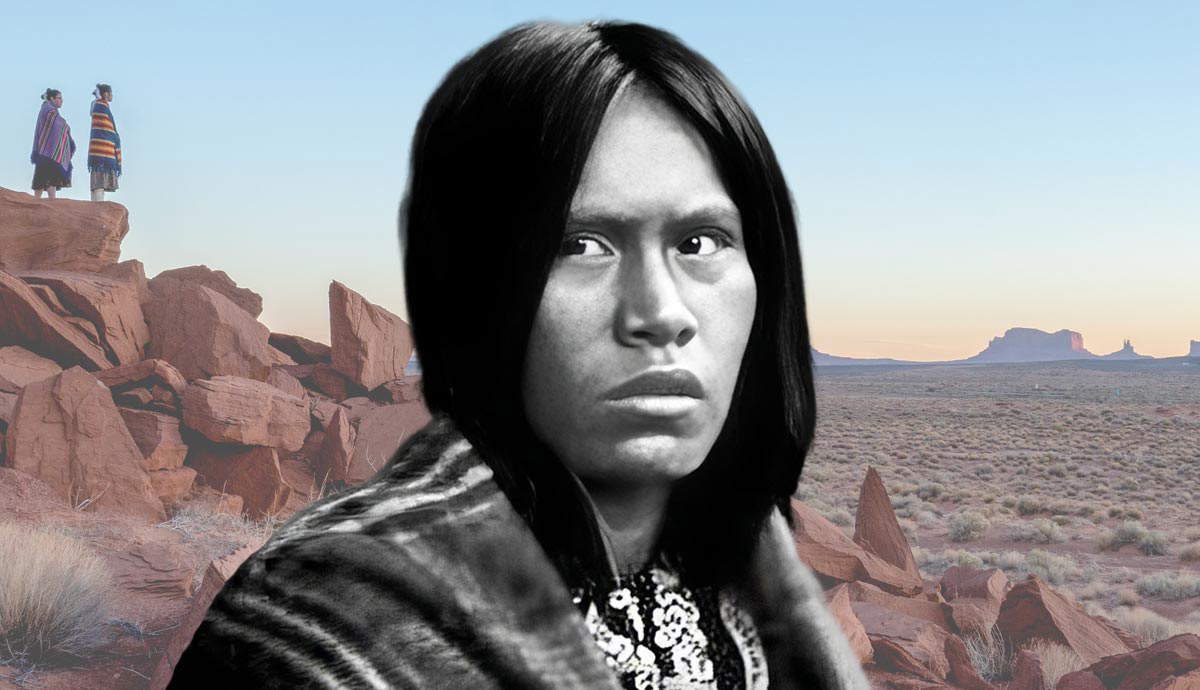
In a time when the traditional roles of men and women within the family unit were emphasized and adhered to, a young Apache woman named Lozen bucked trends to become an impressive warrior in her own right. Her skills grew as she did, and she became one of the most revered people within her tribe. Her abilities were not limited to those of a warrior but included skills with medicines, and she became a respected shaman. Despite her capabilities, the US Army would eventually come calling, dooming this incredible warrior woman.1. Lozen Was the Only Female Warrior in Her BandLozen did not desire to follow traditional female roles. The woman shown in this image is demonstrating how to use a water-carrying device. Collecting water was often a task designated to Apache women. Source: Frank A. Randall / Wikimedia CommonsLozen was born sometime in the 1840s in the Southwestern area of what is now New Mexico. She was part of the Apache tribe, specifically a branch of the Chiricahua Apache known as the Warm Springs or Ojo Caliente band. While Apache women underwent physical training from a young age, there were still strict gender roles within the tribe. For example, when enemies attacked, the role of women was to gather valuables and flee to safety with the children, while men took on the attackers. Lozen grew up learning traditionally female skills, such as sewing and preparing food but also loved the rough and tumble war games that the boys played. She was small, but she was agile and often won games that required speed and endurance.Lozens dedication to her craft meant she would never marry or have children, unlike the woman shown here. Source: Library of Congress via Wikimedia CommonsLozen was first exposed to real warfare when she was a child when her people were lured to a celebration by local Mexicans, and then ambushed. This trauma stayed with Lozen, and she channeled it into the development of her skills. When it came time for her coming-of-age ceremony, Lozen fasted and spent time on her peoples Sacred Mountain, where she received visions. When she returned home, she told her brother and tribal elders that she had been given a power that would enable her to detect the enemy. Her brother, Victorio, believed in her and, as he ascended to leadership, allowed Lozen to join the men on raids. She quickly earned respect from the men in her own right, and her professed abilities would soon bear fruit.2. She Was Her Brothers Right HandLozen grew up in a traditional Apache home such as this one photographed by Edward Curtis. This type of building is known as a wickiup. Source: Library of Congress via Wikimedia CommonsLozens older brother, Victorio, was close to 20 years her senior, but the two siblings were incredibly close. Victorio emerged as a tribal leader after the death of legendary headman Mangus Coloradas in 1863. Victorio made efforts to avoid confrontation with the increasing white population in the area, but conflict was inevitable. Victorio valued the contributions of his sister, but she often felt uncomfortable advising him in public, worried that the other warriors would find fault with her improper role as a woman in politics and war. However, she did act as her brothers advisor in private, and he had no shame in his dependence on his sisters opinions and skills. He is quoted as saying, Lozen is my right hand strong as a man, braver than most, and cunning in strategy. Lozen is a shield to her people.3. Lozen Was a Skilled ThiefLozens skill with horses was unmatched. Source: Kokakao19 / Wikimedia CommonsWhen Lozen was about seven years old, she rode a horse for the first time. The people around her noticed almost immediately that the young girl had a way with these four-legged beasts. She became one of the best riders in her band, a skill that was essential in the Apache raiding culture. Another component of the raiding culture was the ability to effectively procure resources. Lozen proved herself in this area as well, using her presence with horses to establish herself as a capable horse thief by the time she was twenty. In fact, her name, Lozen, means dextrous horse thief.4. It Was Said She Could Detect the Enemys PresenceAn image presumed to be of Lozen. Source: legendsofamerica.comLozens power, which she claimed to have attained during her coming-of-age ceremony, proved its accuracy many times over, helping her band avoid capture. To use her gift, or perform her ceremony, Lozen would say a prayer, extending her arms and turning slowly in a circular motion until her palms began to tingle. The tingling would alert her to the direction from which an enemy was approaching. Victorio and other leaders would use this information to plan their next move.5. She Saved a New MotherLozen single-handedly killed and butchered a Longhorn to feed her charges. Source: Michael Luckey / Wikimedia CommonsIn 1877, Victorio, Lozen, and their people were in the midst of a campaign to return to their homeland in Ojo Caliente, located in what would become New Mexico. The US military attempted to force them back, but the Apache band persisted. Along their travels, they raided and engaged with the army several times. Late in the campaign, Lozen left the main group, volunteering to take a new mother and her baby to the safety of the Mescalero Reservation. The three left with only a three-day food supply, a rifle, ammunition, and a knife. To replenish their provisions, along their route, Lozen killed a longhorn cow with only her knife so as not to attract attention, as the area was crawling with Mexican and American soldiers. She stole horses from the Mexican cavalry for her and the mother to speed up their journey and took the soldiers supplies, including a blanket, clothing, and ammunition. She delivered the new mother and her baby safely to their destination, then alone, made it back to her band without consequence.6. Lozen Fought Alongside GeronimoLikely the most iconic image of Geronimo, taken in 1887. Source: National Archives at College Park via Wikimedia CommonsLozen was devastated by the news that Victorio was killed in battle in 1880. This, however, did not dissuade her from raiding. Her band was now led by elderly patriarch Nana, someone who had supported Lozen throughout her life. The group of warriors raided across New Mexico and Arizona in revenge. Eventually, they joined famed Apache leader Geronimo, fighting in a series of conflicts that would become known to US history as the Apache Wars. Lozen held out as part of the last remaining free band of Apaches, finally surrendering to the US government in 1886.7. She Negotiated for PeaceA depiction of an Apache chief in California. Source: New York Public Library via Wikimedia CommonsWhen she joined Geronimos forces, Lozen was no longer the sole female warrior of the band. She befriended Dahteste, a woman who had fought alongside Geronimo. Though, unlike Lozen, Dahteste was married. Dahteste spoke fluent English, which enabled her to act as a mediator between her people and US forces.Dahteste and Lozen worked together and attempted to negotiate a peace treaty between the Apache and the United States. Unfortunately, the United States did not take these attempts seriously, and surrender was the only option left for Apache survival.8. She Died as a Prisoner of WarA group of Apache prisoners prepares to travel east by train. Lozen is believed to be third from right in the back row. Inset: Identified in the larger picture are Lozen, left, and Dahteste. Source: National Park ServiceAfter the surrender of their remaining Apache forces in 1886, Lozen and her compatriots became prisoners of war. The US government decided that they would move the remaining Apache prisoners across the country to Fort Marion, Florida. Lozens fellow warriors elected to avoid mentioning Lozens role as a warrior, hoping that it would elicit better treatment for her from their oppressors if they thought she was just an average Apache woman. This treacherous trip was made by train, and disease was rampantnot only on the journey but within the prison itself. There were just under four hundred people imprisoned at the Fort, and at one time, almost seventy cases of illness were reported as active.Lozen was later transferred to the Mount Vernon Barracks in Alabama. Little is known of Lozens imprisonment after she reached the East Coast. She died at some point during her stay in Mount Vernon, likely from tuberculosis. Lozen was buried in an unmarked grave at Mount Vernon. After Geronimos death in 1908, the government eased its restrictions on the Apache, and in 1912, survivors were allowed to move to either Indian Territory in Oklahoma or the Mescalero Apache Reservation. Today, the descendants of Lozen, Victorio, and others who fought for Apache freedom reside on the Mescalero Apache Reservation in Mescalero, New Mexico.Recommended Reading:Aleshire, Peter (2001), Warrior Woman, St. Martins Press.
0 Commentarii
0 Distribuiri
19 Views

 English
 Arabic
 French
 Spanish
 Portuguese
 Deutsch
 Turkish
 Dutch
Dutch
 Italiano
 Russian
 Portuguese (Brazil)
 Greek
Greek