


ALLTHATSINTERESTING.COM
How The Times Square Ball Drop Became One Of The Worlds Most Iconic New Years Eve Celebrations
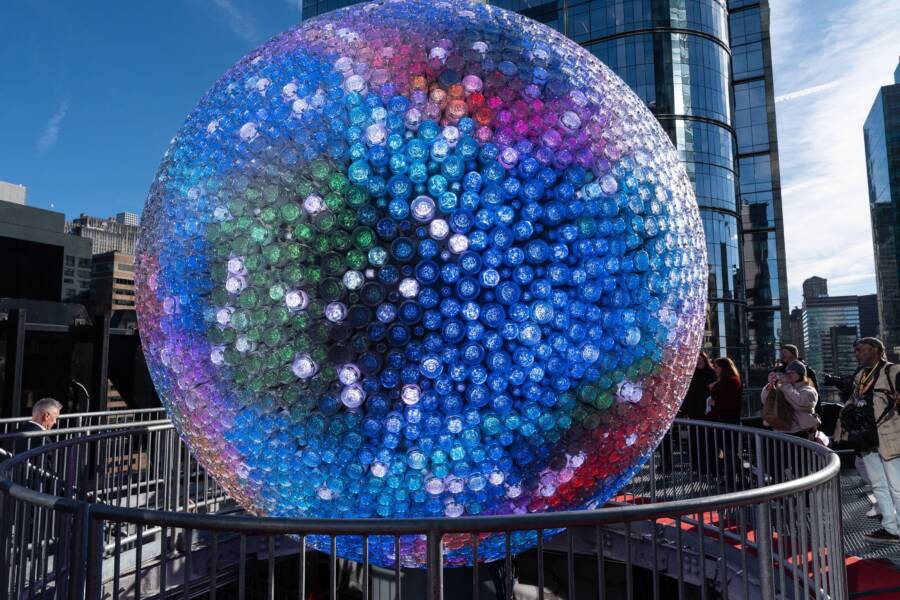
Sipa USA/Alamy Stock PhotoThe Times Square Constellation Ball, which made its debut in November 2025.Every year on New Years Eve, millions of eyes around the globe turn to a single rooftop in Midtown Manhattan, watching as a glittering sphere begins its descent down a pole atop One Times Square. The Times Square Ball Drop has become synonymous with ringing in the new year, a tradition so ingrained in American culture that it sometimes feels like it has always been around. Of course, it had to start somewhere and sometime and many people may be surprised to learn that the celebration has been around for more than a century. First emerging in 1907, the Times Square ball has a fascinating history, evolving from a relatively modest 700-pound iron sphere to a modern technological marvel that weighs 12,350 pounds. It is, in many ways, a symbol of American innovation and it all started thanks to a newspaper. How The Times Square Ball Drop BeganThe annual tradition likely wouldnt exist at all at least, not in its current form if not for a man by the name of Adolph Ochs, the owner of The New York Times at the start of the 20th century. In 1904, when the newspaper moved its headquarters to what was then called Longacre Square, the city soon renamed the area to Times Square. Public DomainAdolph Ochs, the former owner of The New York Times, and the man responsible for the Times Square Ball Drop.To celebrate Times Squares new name and to ring in the upcoming new year, Ochs threw an extravagant party in the area on New Years Eve 1904, complete with a massive fireworks display.However, by 1907, the city grew concerned about fire hazards in such a densely packed place and the possibility of debris falling down on the crowds, so fireworks were banned in the area. Ochs, not wanting to stop the party, needed a new spectacle to impress revelers who gathered there. According to historical records from the Times Square Alliance, it was The New York Times chief electrician, Walter Palmer, who suggested a time-ball.Public DomainOne Times Square during its construction in 1903.It wasnt an entirely new idea. A time-ball was actually an old maritime tradition that involved a ball dropping at a specific moment at observatories to help crews of passing ships keep track of the time. Its believed that there were 150 public time-balls installed around the world at one point.At Palmers suggestion, Ochs took what was once considered practical nautical advice and successfully repurposed it for entertainment. Palmer and a Ukrainian immigrant metalworker named Jacob Starr quickly got to work on creating the first-ever Times Square ball for New Years Eve. The first ball, made of iron and wood and adorned with 100 lightbulbs, was five feet in diameter and weighed roughly 700 pounds. It made its debut on New Years Eve 1907, when it began its descent just before midnight.The crowd watched as the Times Square Ball Drop rang in the new year. Meanwhile, restaurant and hotel workers nearby donned battery-powered top hats, decorated with the numbers 1908, which were embellished with tiny lightbulbs. The new spectacle and the festive hats created an instant sensation, and soon enough, a new global tradition was born. Every year since then, the tradition has been carried out except for just two years during World War II, 1942 and 1943, when wartime dimout restrictions prevented the ball drop from happening. The Evolution Of The Times Square BallFacebookAn old version of the Times Square ball, used in 1978.The original Times Square ball served its purpose well until the Roaring Twenties ushered in a need for an upgrade. So, in 1920, a new iteration was introduced. This time, it was made entirely of wrought iron and weighed about 400 pounds, making it a little easier to lower for the men who were assigned that task. (Back then, the ball was lowered by hand.)That iteration served Times Square for 35 years.Then, in 1955, the ball received another update. This time, an aluminum frame replaced the heavier iron, reducing the weight once more. Now weighing just 150 pounds, the new ball was comparatively modern and sleek, and though its design would change, aluminum was the standard for years. SuperStock/Alamy Stock PhotoA crowd of roughly 900,000 people, gathered in Times Square for the ball drop on New Years Eve. 1947.In the 1980s and 1990s, however, the balls design took some creative turns. The most distinct visual design was used from 1981 to 1988, when the ball was modified to resemble a Big Apple to align with the popular I Love New York marketing campaign. Red lightbulbs and a striking green stem turned the sphere into a massive glowing fruit, meant to symbolize the city fighting its way back from a tumultuous fiscal crisis. After the memorable apple design was phased out, the traditional white lightbulbs returned, and in 1995, the ball received a striking makeover for the rising computer age: an aluminum skin fitted with glitter, rhinestones, computer controls, and strobes much of which was done for the benefit of those watching the ball drop on their televisions at home.But a new millennium was on the horizon, and that meant that the ball had to evolve yet again, to keep up with the changing times. The Millennium Ball And BeyondWikimedia CommonsThe Millennium Ball used to ring in the year 2000.Despite some concerns around the dreaded Y2K, organizers knew that the celebration in Times Square needed to reflect the magnitude of the year 2000. That meant a new ball, reflective of the modern age. A completely new ball was commissioned for the millennium celebration, with a design that married tradition with the cutting-edge technology of the day. A collaboration between Waterford Crystal and Philips Lighting, the new ball measured six feet in diameter and weighed about 1,070 pounds. It featured 504 Waterford Crystal triangles, illuminated by halogen lightbulbs.As technology continued to rapidly develop throughout the early 2000s, the ball continued to evolve as well. The 100th celebration of the Times Square Ball Drop in 2007 saw another big leap, this time replacing incandescent and halogen bulbs with LED lighting technology that shined brighter and more colorfully than ever before, all while offering new energy savings. Wikimedia CommonsThe Times Square Ball, seen from above, in 2012.By 2009, the permanent Big Ball had debuted, measuring 12 feet in diameter and weighing almost six tons. It was covered in 2,688 Waterford Crystal triangles and illuminated by 32,256 Philips Luxeon LED lights, which were capable of creating a dazzling display of countless vibrant colors. Even more recently, ABC News reported that a new ball was introduced in November 2025. Dubbed the Constellation Ball, the latest version measures 12.5 feet in diameter, weighs 12,350 pounds, and features 5,280 handcrafted Waterford crystals and stunning LED lights, while also incorporating new signature sound and interactive capabilities, with an audio system that can create reactive designs based on musical input.It just goes to show that despite the traditions more modest origins, the spectacle of the event has never failed to keep up with the times. And while the changes to the balls appearance have always stood as a testament to technological advancement, its symbolic meaning has remained the same. For people around the world, the Times Square Ball Drop on New Years Eve is a symbolic gesture to acknowledge the passage of time, to celebrate survival and achievement, and to look toward a brighter future. After reading about the history behind the Times Square Ball Drop, see how Times Square has changed over the years with our photo galleries of Times Square at its lowest point and Times Square during its glory days.The post How The Times Square Ball Drop Became One Of The Worlds Most Iconic New Years Eve Celebrations appeared first on All That's Interesting.
0 Комментарии
0 Поделились
26 Просмотры

 English
 Arabic
 French
 Spanish
 Portuguese
 Deutsch
 Turkish
 Dutch
Dutch
 Italiano
 Romaian
 Portuguese (Brazil)
 Greek
Greek