


WWW.THECOLLECTOR.COM
The Progressive Era in the US: Growing Government Between 1890s-1920
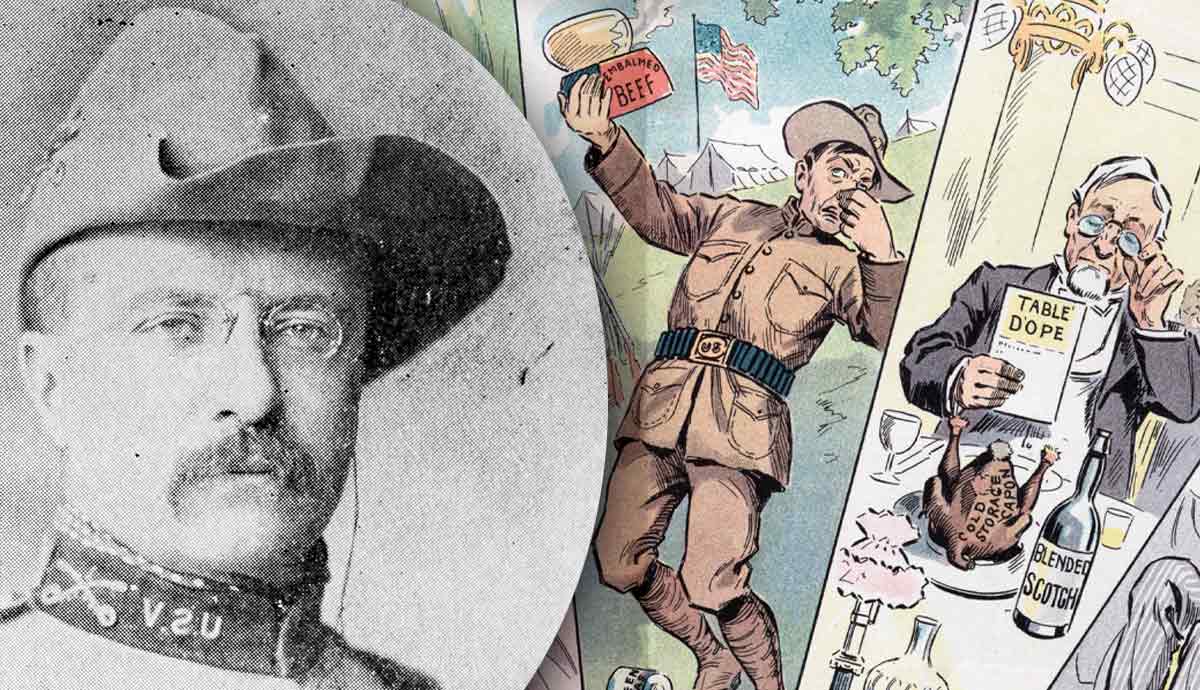
The Gilded Age saw rapid economic and infrastructure growth in the United States, but not everyone shared in the wealth. While many entrepreneurs became wealthy scions of industry, most rural farmers and urban workers struggled as mechanization and mass production led to wages falling along with prices. In the 1880s, individual reformers struggled to improve the conditions of farmers, laborers, and immigrants, but there was little government support. By the 1890s, however, muckraker journalists had successfully increased public awareness of the plight of the lower classes. The government began to get involved in helping the poor, opening the Progressive Era in the United States. For about twenty years, the government dramatically increased its support for the struggling.Setting the Stage: The Gilded Age Leads to 1890s PopulismAn 1889 political cartoon criticizing the influence of trusts (monopolies) over the US Congress. Source: The Chronicle of Higher EducationBetween the end of the American Civil War and the early 1890s, the US experienced an era of tremendous growth. Immigrants from eastern and southern Europe fueled population growth in cities in the Northeast and North, allowing for the expansion of factories, and some migrated westward. The rapid immigration, urbanization, and industrialization created the Gilded Age (1865-1890s), where some industrialists amassed tremendous fortunes and could enjoy new technologies like the telegraph, electric lights, telephones, and luxury train travel.Unfortunately, most Americans did not enjoy this massive increase in wealth. Workers struggled as mechanization and increased supply of competition led to lower wages and prices for their wares. Farmers and factory workers united politically after 1890 to create the Populist Party, also known as the Peoples Party. This new party merged with the Democratic Party, introducing urban labor concerns to a party that had, before the Civil War, been dominated by Southern agriculture interests. These populists argued that Gilded Age industrialists had far too much control over the government.Setting the Stage: Reformers and MuckrakersA photograph of famous muckraker photographer and journalist Jacob Riis, whose photographs of slums increased public demand for aid to the poor. Source: Museum of the City of New YorkThe mass influx of immigrants to Northern cities, combined with the domestic migration of rural farmers to those same cities, led to overcrowding and crime. Living conditions for most city dwellers were poor, and most immigrants and factory workers lived in urban slums that had little in the way of privacy, safety, or hygienic conditions. Those with political power often had no idea how dire conditions in urban slums and tenement houses were; their comfortable lifestyles were removed from the rigors of poverty.Individual reformers helped publicize the plight of the Gilded Age poor, including settlement house reformer Jane Addams and muckraker journalists who exposed corruption as well as the terrible conditions faced by children, women, and immigrants. Muckrakers began unveiling public corruption in the 1870s, especially regarding political machines, and expanded during the 1890s. Jacob Riis, himself an immigrant, published many photographs of urban poverty and child labor during the 1890s, leading to increased awareness of the conditions in slums and calls for government oversight and reform to aid the poor.Setting the Stage: Civil Service ReformA historical plaque in Washington DC commemorating US President James Garfield, whose assassination led to Congress passing civil service reform laws. Source: American UniversityThere was plenty of old-fashioned political corruption during the Gilded Age, especially in local governments, but the spoils system made many hiring and contracting decisions that would seem illegal today perfectly acceptable. Up through the 1870s, government jobs and contracts were often given to political allies, regardless of ethical or performance concerns. This came to a head in 1881 when new US president James Garfield refused to honor spoils system desires of longtime US senators. One unsuccessful federal job-seeker, Charles Guiteau, assassinated Garfield by shooting him on July 2, 1881, only months into the presidential term.Garfield died months later, having remained bedridden from infections caused by unsanitary medical practices at the time. Congress, despite being somewhat dominated by supporters of the spoils system, passed the Pendleton Civil Service Act in response. Some federal government jobscivil service jobsnow had to be allocated competitively based on qualifications and performance. This system slowly spread throughout the federal government and all the states, today requiring most government employees to meet specific qualifications and performance standards.1898-1901: An American Empire RisesA photograph of US Marines in China during the Boxer Rebellion, where Chinese nationalists unsuccessfully attempted to seize foreign embassies. Source: National Archives USThe rise of the Populist Party in the early 1890s, showing an increase in the power of the working classes, was met later in the decade by an expansion of government power. In 1890, the frontier in the West was considered closed, and American businesses began looking overseas for continued expansion. As businesses expanded, government and military concerns soon followed. In 1898, the eruption of the Spanish-American War gave the US government the opportunity to create an American empire by annexing Hawaii and seizing the Spanish colonies of Cuba, Puerto Rico, Guam, and the Philippines.Two years later, the US became involved in a foreign policy crisis in China. The Boxer Rebellion erupted after a few years of growing discontent with increased Western domination of Chinese politics and culture. Chinese nationalists, mostly young men who practiced martial arts (hence the term boxers), formed a movement to push Western delegations out of China. The Chinese government sided with the Boxers, and an eight-nation coalitionincluding the United Statessent troops to put down the rebellion. Thus, within a brief period, the US became one of the leading world powers and showed that its government would not hesitate to use force to secure American goals.1901-1909: Theodore Roosevelt and the Square DealA $1 coin commemorating the presidency of Theodore Roosevelt, often considered the archetypal progressive. Source: United States MintOne of the heroes of the Spanish-American War was a civil service leader from New York: Theodore Roosevelt, former New York City police commissioner. As soon as Roosevelt returned from the war, where he had been a cavalry officer, he became governor of New Yorkand then was swiftly named the re-election running mate (vice presidential nominee) for US President John McKinley. McKinley won re-election but was assassinated soon afterward, making the 42-year-old Theodore Roosevelt the youngest chief executive in US history at the time. Roosevelt became an aggressive progressive reformer, especially when it came to regulating monopolies and other big businesses.A 1906 political cartoon in Puck magazine advocating for increased government oversight of food and drugs. Source: Science History Institute Museum & LibraryAs a progressive, Teddy Roosevelt thought it was the governments role to regulate for the greater good and protection of the working classes. His Square Deal reforms focused on regulating monopolies (often called trust-busting), protecting consumers, and conserving natural resources. In 1906, Roosevelt famously signed two laws that would epitomize the Progressive Era: the Pure Food and Drug Act and the Federal Meat Inspection Act. These two laws ensured the publics access to safe and healthy food and medicine, ending decades of dangerous food and medical quackery.1909-13: William Howard Taft EraA painting of 27th US President William Howard Taft, a progressive Republican who later served as Chief Justice of the US Supreme Court. Source: National Portrait Gallery, Washington DCAfter (almost) two full terms as US president, the popular Roosevelt stepped aside in 1908 and let his Cabinet secretary, William Howard Taft, become the Republican presidential nominee. As president, Taft continued most of Roosevelts progressive reforms. However, he was somewhat more conservative than his predecessor, sparking tensions with Roosevelt loyalists. Taft was also less publicly vocal than Roosevelt, perhaps dampening his image as an aggressive reformer.Behind the scenes, however, Taft was arguably as valuable to the Progressive Era as Roosevelt. He put through invaluable legislation and oversaw more trusts busted (monopolies broken up) than did his predecessor. This included the breakups of Standard Oil and American Tobacco, both in 1911. In foreign policy, Taft put American economic might to work with Dollar Diplomacy, using financial incentives and private sector US investment to win allies abroad instead of using threats of military force. However, by 1912, many Roosevelt loyalists and staunch progressives felt that Taft was too conservative to support for re-election.1913: Year of Major Progressive ReformsA map showing the division of the United States into twelve regional Federal Reserve Banks (FRBs) after the Federal Reserve Act of 1913. Source: Federal Reserve Bank of St. LouisThe 1912 presidential election goes down in history as a warning to third-party candidates. Theodore Roosevelt ran against Taft for the Republican nomination, but the party stuck with the incumbent. Incensed, Roosevelt created his own Bull-Moose Party and ran for the presidency anyway. Republicans split their votes between the two, and a Democratic candidate, Woodrow Wilson, won the White House for the first time in decades. Fortunately for progressives, Wilson was a fellow reformer who continued the trends set by Roosevelt and Taft.Two proposed amendments to the US Constitution had begun under Taft and were awaiting ratification by enough states when Wilson took office in 1913. That same year, both came to pass: the Sixteenth Amendment created a federal income tax, which would allow easier funding for progressive reforms, and the Seventeenth Amendment established direct election of US Senators, giving more power to the people. Additionally, the Federal Reserve Act of 1913 created a central bank to provide government oversight of the banking system, which had been prone to panics and crashes that hurt workers and businesses. America was now less reliant on and beholden to the wealthy class that tended to control state legislatures and private banks.1917-18: World War I Boosts Government RoleAn image representing Americas efforts during World War I, colloquially known as The Great War before World War II. Source: PBSProgressivism continued after 1913, with Wilson signing into law the National Park Service (NPS) in 1916. The NPS was influenced by years of conservationism efforts by Theodore Roosevelt and his friend, naturalist John Muir. Also in 1916, the Keating-Owen Child Labor Act created a federal law limiting child labor for the first time. Unfortunately, the domestic splendor was quickly shattered by the ongoing war in Europe: World War I. In 1917, twin aggressions by Germany led the United States to abandon its policy of neutrality and join the Allied Powers. War was declared in April 1917, and the power of the federal government drastically increased.To help win the war against a motivated, experienced, and industrialized Germany, the US government quickly regulated most major industries. It also passed laws regulating speech and press with the Espionage Act of 1917 and the Sedition Act of 1918. Controversially, the government was no longer using its increased power to help the working classes but rather for foreign policy goals. Some, therefore, consider Americas entry into World War I to be the end of the Progressive Era, but it is important to note that a few major progressive reforms occurred after this time.1920: 2nd Year of Major Progressive ReformsAn image commemorating Tennessees ratification of the 19th Amendment to the US Constitution in 1920, giving all women the right to vote. Source: Tennessee State MuseumWhile Americas participation in World War I resulted in laws and regulations that reduced the power of individual citizens, reducing progressivism, the end of the war allowed Americans to re-focus on domestic improvements. In 1920, two more amendments to the US Constitution were ratified by the states. The Eighteenth Amendment, a longtime goal of many progressives, banned the sale of alcohol in the United States. This ultimate victory of the Temperance Movement turned America dry, which was viewed by many as positive due to the harmful effects of alcohol on peoples health and behavior.Months later, states passed the Nineteenth Amendment, which banned discrimination in voting on the basis of gender. Now, women in all states could vote in all public elections. Women had championed both the Temperance Movement and the Suffrage Movement since the early 1800s. These two amendments are often seen as crowning victories of the Progressive Era. Many women hoped that the passage of the Nineteenth Amendment would swiftly lead to more social and economic equality on the basis of gender, but this was much, much slower in coming.After 1920: Collapse of ProgressivismA museum exhibit including part of the wall against which several bootlegging mobsters were executed by rivals in 1929 during the St. Valentines Day Massacre. Source: The Mob Museum, Las VegasWhile women now had an ironclad right to vote, courtesy of the Nineteenth Amendment, the return of conservatives to power in Washington DC threatened other progressive reforms. Conservative Republicans, like new US president Warren G. Harding, wanted to cut government spending and taxes. This resulted in a flow of power back to industrialists and big businesses. As the economy grew during the decade, resulting in the Roaring Twenties, many saw government oversight and aid to the poor as less important. With everyone making money, why be concerned about poverty?One specific progressive reform that became increasingly unpopular as the 1920s continued was Prohibition. The Eighteenth Amendment had made America dry, and the novelty quickly wore off for many. Much alcohol consumption continued but went underground and was conducted illegally. This resulted in the rise of organized crime. As smuggling alcohol became more and more profitable, criminals became more and more ruthless. Finally, the public had enough and demanded an end to Prohibition. The catalyst is often considered the infamous St. Valentines Day Massacre, where gangsters under Chicago crime boss Al Capone used submachine gunswhile disguised as police officersto murder seven members of a rival gang.
0 Commentaires
0 Parts
26 Vue

 English
 Arabic
 Spanish
 Portuguese
 Deutsch
 Turkish
 Dutch
Dutch
 Italiano
 Russian
 Romaian
 Portuguese (Brazil)
 Greek
Greek