


WWW.THECOLLECTOR.COM
When Did Women Get the Right to Vote in the United States?
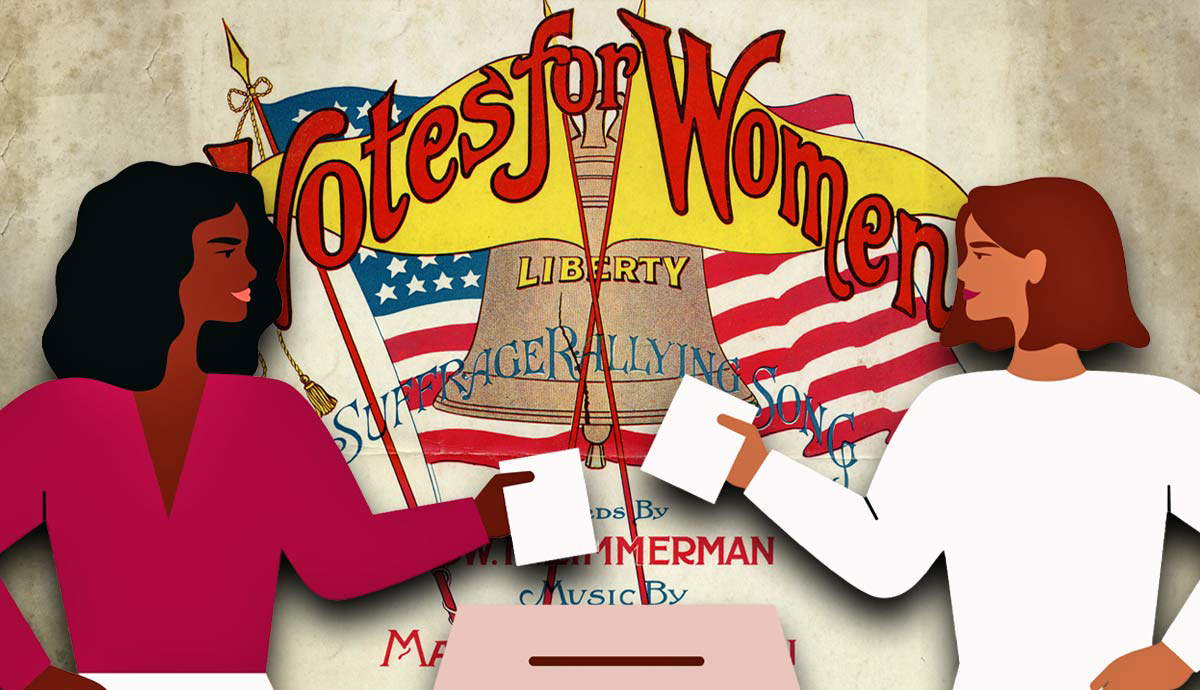
The struggle for gender equality is a story that has been unfolding for hundreds of years. From ancient times right through to the present, women have fought for recognition, representation, and freedom in patriarchal societies. Many women suffered, and many died for their attempts. Of major significance in the modern era was the struggle for womens suffragethe right to vote.When were women granted the right to vote in the United States, and what were the consequences?Women and the Right to VoteWomen and the right to vote. Source: iStockIn the United States, women were granted the right to vote on August 26, 1920, with the certification of the 19th Amendment, which stated:The right of citizens of the United States to vote shall not be denied or abridged by the United States or by any State on account of sex.This was not the beginning of a movement but rather the culmination of efforts across the country in a process that spanned many decades. In Wyoming, in 1869, for example, the territory passed a suffrage law that granted women the right to vote as well as to hold office. In 1893, Colorado became the first state to grant women suffrage by a referendum.At a federal level, there were no laws that actually forbade women to vote, but the Nineteenth Amendment entrenched womens right to vote as a legal right throughout the country. Before then, voting rights were usually decided at the state level.The petition for womens suffrage presented to the New Zealand Parliament in 1893. Source: Archives of New Zealand via Wikimedia CommonsOf course, the United States is not the only country where this struggle took place, and it was only one of many countries that engaged in movements with marches and protests to demand equality. Often cited as the first country to grant women the right to vote, New Zealand, a self-governing colony at the time, did so in 1893. Although a great victory, women were not allowed to stand for election until 1919.In 1895, South Australia gave women the right to vote and to stand for election, while in Britain, in 1894, single women were granted suffrage. It was only in 1928 that all women were given the right to vote on a level equal to that of all men in the UK.What Is the Nineteenth Amendment?Susan B. Anthony, photographed in 1890. Source: Wikimedia CommonsOften referred to as the Susan B. Anthony Amendment, after the woman who played a pivotal role in its adoption, the 19th Amendment is the guarantor of voting rights based on sex. The amendment explicitly bans any discrimination that allows for the denial of womens voting rights at the federal or state level.Established in 1780, the Constitution did not list any restrictions on gender-based voting, thus leaving the gates open for further legal development of suffrage. Ironically, before the establishment of the United States, women had voting rights in the colonies. Then, after the Revolutionary War, states denied women the right to vote at even a nominal level. As the 19th century progressed, however, so did the movement for universal suffrage, including the right for women to vote. Organizations sprang up and began campaigning vigorously for this right.The 19th Amendment, c. 1920. Source: National Archives and Records Administration via Wikimedia CommonsThe movement was interrupted by the pressing matters of the Civil War. However, as the decades progressed afterward, and into the early 20th century, womens rights movements continued, with some opting for more confrontational methods of protest. Many suffragists picketed and took part in silent vigils and hunger strikes.Central to this movement were Susan B. Anthony and Elizabeth Cady Stanton, who, in 1878, were successful in arranging an amendment to be presented to Congress. This amendment proposed giving women the right to vote. Stanton died in 1902, and Anthony died in 1906, both at the age of 86. They did not live to see the final fruition of their struggles. The 19th Amendment to the US Constitution was ratified in 1920, ushering in a new era in American politics that would signify huge shifts in the political climate as women exercised their right to vote.The legal status of womens suffrage in each state in 1919. Source: Boston Public LibraryOf note is the fact that it was the Republican Party that gave huge support to womens suffrage. In the vote to pass the 19th Amendment in the Senate, 82 percent of Republicans voted in favor of it, while only 41 percent of Democrats did so.Political Participation After 1920A rally conducted by the League of Women Voters in St. Louis, Missouri, 1920. Source: University of Missouri via Wikimedia CommonsDespite the ratification of the 19th Amendment, the struggle for womens rights in the political sphere was one that continued. The amendment did not solve the myriad issues that still persisted at the time. The generation following the First World War lived in an era of extreme apathy, and the addition of womens voting rights had little impact. Apathy was so high that many former suffragists didnt even bother voting.An article from the National Womens History Museum notes that in 1927, a survey was conducted with the results showing that only 35 to 40 percent of eligible women voters made their mark in the 1920 elections.This wasnt only due to voter apathy. There was pushback from patriarchal circles, especially in the southern states, where many men opposed the idea of women having the right to vote.In the Democratic strongholds of Georgia and Mississippi, the state leadership actively suppressed voting rights for women. Nevertheless, women in those states generally voted Democratic in the 1920 election. In the north and the west of the country, the general trend was that women voted more in favor of the Republicans, the party that had historical ties with the suffrage movement.In recent decades, the Democratic and Republican parties have undergone huge shifts in their platforms. As a result, the Democratic Party is now seen as the more socially progressive organization, while the Republicans stand for issues that are more socially conservative.How Did Womens Votes Change the Political Landscape in the United States?Women voting. Source: iStockIn the immediate wake of the 19th Amendment, it is difficult to determine how women voted. Illinois was the only state that recorded the presidential vote by sex, thus determining how women voted in 1920 and 1924 is plagued by a severe lack of data. The same survey mentioned above also noted that women tended to vote as their husbands did, in a dynamic that reflects the patriarchal mores of the time. Nevertheless, it is likely that women contributed in part to the success of the Republicans at local and state levels in 1920, as well as the success of Warren G. Harding in his bid to become president.A stamp from 1970 commemorating womens suffrage. Source: iStockPolitical party platforms are subject to major shifts, as has clearly happened before in the United States. If and when these changes occur, the effect they will have on voting trends remains a subject of speculation. It is not safe to assume the Democrats will always push a liberal agenda, nor is it safe to assume that women will always vote more liberally. Gendered values are not consistent, nor are the circumstances that affect how people vote.A study in Britain, for example, showed that women were more likely to vote Conservative (right of the political spectrum) in the years following the Second World War all the way through to 2017. Recent events, such as Brexit, have impacted the trend, but there is no guarantee that women are more likely to be liberal. Events have shaped how women vote rather than any notion of inherent feminine traits that generate a leaning toward certain political theories.Ultimately, it can be said that women are individuals and are concerned with far more than just womens issues. The way they vote is likely reflective of this. With that being said, however, identity politics do play a huge role in the United States, and appealing to women on account of their gender does increase the share of womens votes, as many women choose to focus on particular policies that directly affect them as women.This dynamic has been a hallmark of Democratic Party policies in recent years.What Percentage of Women Vote Democrat Today?Kamala Harris, the Democratic nominee for the 2024 election, signing cards in 2018. Source: Kamala Harris via Wikimedia CommonsOver the past few elections, statistics have shown that women, as a demographic, continue to shift more to the left of the political spectrum than men. As such, in recent decades, the Democratic Party has benefited more than the Republican Party from womens votes.The 2024 election mirrored recent trends in gender-based voting results that stretch back at least as far as 1992. Since Bill Clintons run in 1992, data show that women are more likely to vote Democrat than men. Exit poll Data from Edison (formerly Voter News Service 1992-2000) shows that in that year, support for the Democrat candidate amongst women was four points higher than amongst men.Since then, exit polls have consistently shown that women tend to favor Democratic candidates more than men. In the last few elections, the difference has been considerable. In 2016, Hillary Clinton won 54 percent of the womens vote compared with 41 percent for Donald Trump. That 13-point difference dropped to 12 points for Joe Biden in 2020 and 10 points for Kamala Harris in 2024. In the 2024 election, Harris garnered 53 percent of the womens vote and 43 percent of the mens vote, while Trump got 45 percent of the womens vote and 55 percent of the mens vote.A Powerful ForceVotes for Women, ca. 1915. Source: New York Heritage via Wikimedia CommonsWomen voters represent a powerful force in the world of politics. In the United States since 1980, a bigger proportion of women have turned out to vote than men in every election. Thus, women represent an incredibly important demographic in the democratic process.It has been over a hundred years since womens suffrage was granted in the United States. While women have achieved equity in being able to vote, there is still a long road ahead in achieving par with men in political representation in government. Although two women have stood as the Democratic nominee for the presidency, the United States has yet to have a Madam President.
0 Комментарии
0 Поделились
21 Просмотры

 English
 Arabic
 French
 Spanish
 Portuguese
 Deutsch
 Turkish
 Dutch
Dutch
 Italiano
 Romaian
 Portuguese (Brazil)
 Greek
Greek