


WWW.THECOLLECTOR.COM
Biography of Eliot Ness, Prohibitions Most Formidable Lawman
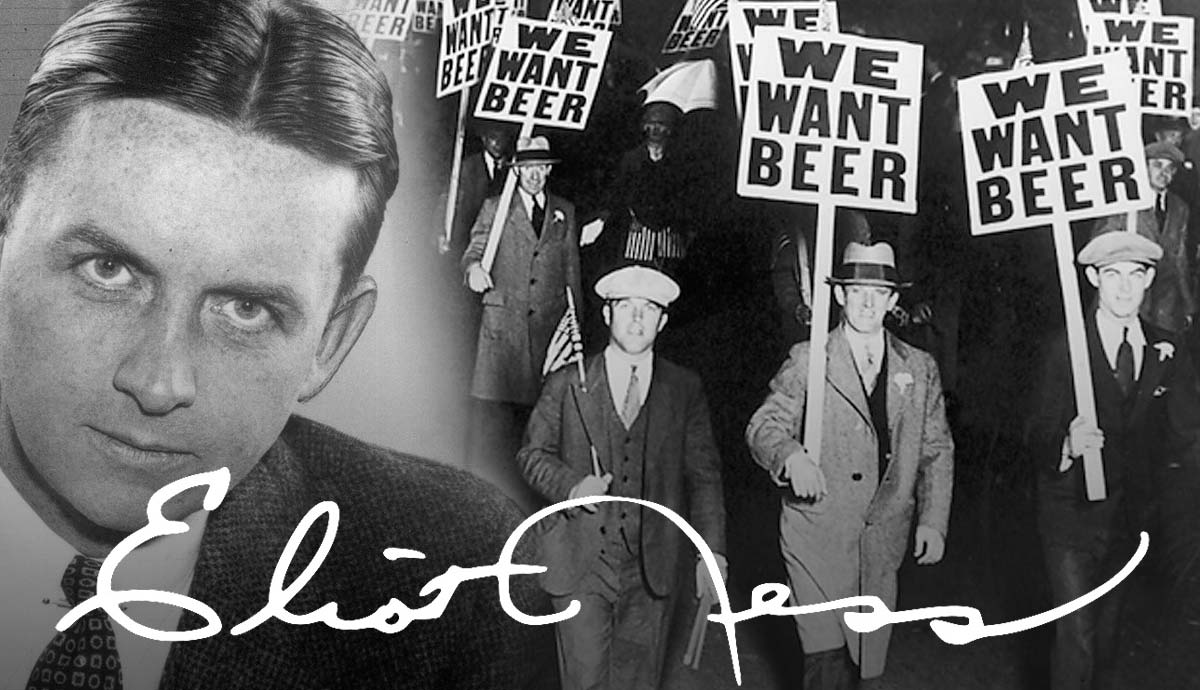
From a tough childhood in Chicago, Eliot Ness rose to become one of Americas most formidable twentieth-century lawmen. He enforced prohibition and battled mobsters but also brought innovation to public safety in one of Americas largest cities. His tenure in Cleveland resulted in dropping crime rates and advances in technology and forensics that set the tone for modern policing.A Challenging ChildhoodNess childhood home in Chicago. Source: Stephen Hogan / Wikimedia CommonsA son of Norwegian immigrants, Eliot Ness was born in Chicago in 1903. He was the youngest of five children, with three sisters and a brother, and was younger than his closest sibling by ten years. As a result of this age gap, Eliot was given lots of attention and grew up playing with his nieces and nephews instead of his siblings. Unfortunately, even a loving family such as Ness is not immune from tragedy. When Eliot was only fourteen, both of his parents passed away. Still, Ness focused on his education and took school seriously. He graduated from Fenger High School and went on to the University of Chicago. He graduated from college in 1925 in the top 10% of his class with a degree in political science, commerce, and business administration.Introduction to the LawAn anti-prohibition protest in Chicago in the 1920s. Source: Library of Congress / Wikimedia CommonsAfter college, Ness worked for a few years as an investigator for a credit company in Chicago. However, he found his work boring and returned to the University of Chicago for some postgraduate studies. In 1928, his trajectory changed when his brother-in-law, Alexander Jamie, an employee of the Prohibition Bureau, got him a job in the US Treasury Department. At the time, Prohibition was in effect. Under Prohibition, which lasted from 1920 to 1933, it was illegal to produce and consume alcohol in the United States. The ban was the product of a Constitutional Amendment (the 18th), which was repealed by the 21st Amendment. Though controversial, Prohibition was the law of the land, requiring officers to enforce it.A mugshot of Al Capone in Florida in 1930. Source: Miami Police Department / Wikimedia CommonsNess became one of those officers, eventually transferring to the Justice Department and Prohibition Bureau like his brother-in-law. Chicago was rife with illegal booze, and a particular offender was none other than the infamous Al Capone. President Herbert Hoover issued a directive to get Capone, who controlled a criminal empire that had reach throughout Chicago. Involved in offenses such as prostitution, drug trafficking, and gambling, Capone had a reputation as one of the premier bootleggers or illegal alcohol makers and distributors in the United States. Part of the reason that Capone was so successful was his ability to bribe law enforcement officers to look the other way. Eliot Ness intended to change that.Becoming UntouchableCapones inmate file from Alcatraz, 1934. Source: United States Bureau of Prisons / Wikimedia CommonsNess was assigned to create a task force to bring down Capone. He handpicked ten fellow lawmen from around the United States to complete his group, with one key attribute in mindthe men must stand firm against bribery. They did, and as a result, the group became known as the Untouchables. They went after Capone, looking for evidence of Prohibition violations, determined to stop the production of illegal alcohol. Ultimately, the team compiled over 5,000 violations, which were used in an indictment. This indictment was coupled with another, charging Capone with tax evasion, and the gangster was convicted. He would serve over seven years in the infamous Alcatraz prison and never again re-entered the criminal underworld.The Customs House building in Chicago, where Ness and his Untouchables had offices on the 7th floor. Source: Stephen Hogan / Wikimedia CommonsIn addition to taking down Capone, Ness Untouchables destroyed the success of many of Chicagos other notorious bootleggers and gang members. However, with the end of Prohibition in 1933, the Untouchables ceased to exist, with state and federal agencies re-organizing without the need for a Prohibition Bureau. Ness transferred to Cincinnati in September 1933 as a senior investigator, working with the Department of Treasury once again.Turning Ohio AroundEliot Ness in 1933. Source: Wikimedia CommonsNess worked in Cincinnati briefly but was soon promoted to assistant investigator in charge of the city office of the Alcohol Tax Unit, or ATU, division of the Treasury Department. Under his leadership, large liquor syndicates were dismantled, and public support for their work grew. As the legal liquor industry became functional again in Cincinnati, Ness realized he needed to take his talents to Cleveland. Cleveland was the countrys seventh-largest city in 1934. It was rife with crime, and corruption among politicians and public officials was rampant. The public had little faith in law enforcement, and the police department was virtually useless. Ness was transferred to Cleveland as the Special Agent in Charge of the ATU there in December 1934. His reputation for success only continued to grow as Ness, and his department of thirty-four agents busted illegal liquor operations, seized equipment, and stopped tax evaders in their tracks.Promoting Public SafetyNess signature. Source: Stephen Koschal / Wikimedia CommonsIn 1935, the mayor of Cleveland, Harold H. Burton, admiring the work Ness had done in his city, asked Eliot Ness to join his staff as Director of Public Safety. In this role, Ness would oversee the police, fire department, and building division. The youngest man to ever hold the position, 33-year-old Ness had a big job ahead of him. Almost immediately, he started re-organizing the police department, slapping five high-ranking officers with bribery charges and imprisoning them. He instituted a scientific training school for policemen and created hiring procedures to ensure that only the best candidates would become Cleveland cops. Potential police officers had to take a civil service test once they passed his training program and had to undergo a character investigation and be fingerprinted. A mandatory two-year probationary period was required.Boy Scouts in Columbus, OH, 1918. Source: Upper Arlington Archives / Wikimedia CommonsA separate police force was designed to tackle Clevelands traffic issues. These motorcycle cops devoted solely to traffic allowed other officers to focus on other offenses. Traffic deaths in Cleveland dropped to half their former rate under Ness leadership. In addition, Clevelands total crime rate dropped by 25%, while arrests and convictions increased by 20%. Ness focused on the next generation, starting a number of Boy Scout troops in the city, and juvenile crime dropped by 80% under his tenure. Ness focused on revitalizing the police and fire departments with modern equipment, including two-way radios and typewriters, to improve communication.Florence Polillo, Victim 3 of the Cleveland Torso Murderer, 1934. Source: Patrick Lyons / Wikimedia CommonsWhile Ness tenure in Cleveland was largely successful, he did have some detractors. In 1936, at request from the mayor, Ness became more involved with a serial killing case known as the Cleveland Torso Murders. Six killings had taken place in 1936 alone, then continued into the following years. In 1938, Ness and a group of thirty-five officers raided a homeless encampment, taking sixty-three men into custody and searching the various tents and shanties for clues. With no success, Ness ordered the encampment burned, gathering a great deal of public criticism.The case was never officially solved. With World War II intensifying and Mayor Burton elected to the US Senate, Ness decided it was time for a career change. He remained Clevelands Public Safety Director but started traveling extensively, working as a consultant for the Federal Social Protection Program. He left his job in Cleveland to become the National Director for the program two years later. At the conclusion of the war, he worked at Diebold Safe and Lock in Canton, Ohio, and started an import-export business with a friend. Ness passed away in 1957 from a heart attack.Personal LifeNess cenotaph at Lake View Cemetery, Cleveland. Source: Erik Drost / Wikimedia CommonsEliot Ness was married three times. His dedication to his job often got in the way of his relationships. His first wife, Edna, was married to Ness from 1929-1939. Ness remarried quickly, making vows to Cleveland socialite Evaline McAndrews 10 months after his divorce. A book artist, Evaline traveled extensively for her work at the same time Ness was traveling for his career, and they divorced in 1945. He married for the final time to a friend of Evalines, Elisabeth Anderson Seaver, in 1946. Ness never had children but enjoyed them and wanted a family of his own. He and Elisabeth adopted three-year-old Robert. Robert died from Leukemia at just age 29 in 1976, predeceasing his mother by a year. Elisabeth died from throat cancer in 1977. The three members of the Ness family had their ashes scattered by Roberts widow in 1998 in a formal funeral ceremony.Ness is Remembered as a HeroRobert Stack as Eliot Ness in the television show The Untouchables, 1960. Source: ABC TelevisionThough Ness wasnt beloved by all throughout his career, he is largely remembered as a hero of public safety in the modern era. He has been portrayed on television and in film by the likes of Robert Stack and Kevin Costner. His biography, Untouchables, published after his death, was wildly successful. He may not have been perfect, but Eliot Nesss determination and innovation left a lasting mark on US law enforcement.
0 Comentários
0 Compartilhamentos
25 Visualizações

 English
 Arabic
 French
 Spanish
 Deutsch
 Turkish
 Dutch
Dutch
 Italiano
 Russian
 Romaian
 Portuguese (Brazil)
 Greek
Greek