How Did Manichaeism Spread to China?
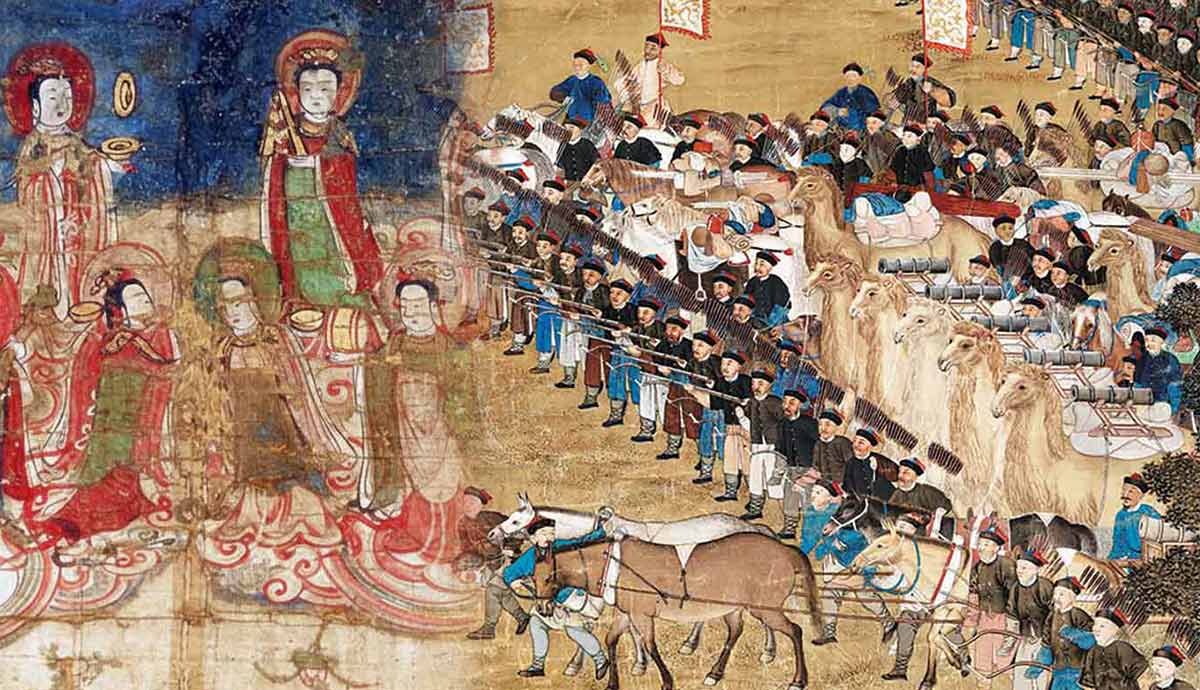
The story of Manichaeism starts with a visionary and religious leader called Mani. Born around the year 216 CE near modern-day Baghdad, in the Parsian Empire, Mani taught that the world was a battleground between Light and Darkness. He created a new religion called Manichaeism that blended Zoroastrian ideas with Christian and Buddhist teachings. While he died in prison around 277 CE after being arrested by Persian authorities, his followers refused to let his message die. Instead, they spread the faith across the globe. Within four centuries, the new faith had spread from Roman North Africa to the Chinese empire.How Manichaeism Religion Reached ChinaWu Zetian, via Encyclopedia BritannicaThe first recorded instance of the religion in China appears in historical records in 694 CE when a Manichaean Bishop bearing the title of Fuduodan, fled eastward to China after Arab armies destroyed the Sasanian dynasty in Persia. He traveled with a high-ranking cleric holding the Sogdian title of supreme teacher moak. Tang court documents confirm that the religious leader arrived at the court of Empress Wu Zetian and presented the Manichaean Scripture of Two Principles. The event marked the formal introduction of Manichaeism at the Tang dynasty court.Portrait of Emperor Xuanzong of Tang. Source: Wikimedia CommonsThe faith truly began to grow in China in 732 CE after a senior Manichaean priest from Tokharistan, modern Afghanistan, sent a formal petition to Emperor Xuanzong requesting for official authorization to practice the religion in the empire. The skeptical Emperor issued an official edict allowing foreigners to practice the religion but barred ethnic Chinese citizens from joining because he viewed it as a foreign curiosity rather than a faith for his own people. Manichaean temples soon sprang up in major metropolitan hubs like Changan and Luoyang.Sogdian Merchants Spread the ReligionSogdian wall painting found at the archaeological site of Varakhsha. Photograph via the State Hermitage MuseumIranian-speaking Sogdian merchants from the region of Samarkand are reported to have been the primary agents of the religion to China. Tang records from the era show that more than 3,000 Sogdian families lived in the capital, Changan. In gateway cities farther west such as Wuwei and Dunhuang, Sogdians made up about one third of the population.Notably, rich Sogdian traders used their wealth to build Manichaean temples in places where they settled. Also, whenever their caravans of silk and spices crossed the deserts, they took Manichaean priests with them to keep the religion alive on the road.The Impact of the Lushan RebellionAn Lushan and his troops attack Emperor by Toyoharu Utagawa, 1770. Source: ThoughtCoThe fate of Manichaeism changed dramatically in 763 CE when the Tang dynasty stood on the brink of collapse due to the devastating An Lushan Rebellion. Desperate imperial officials turned to the Uyghur Khaganate for military aid. The Uyghur cavalry saved the dynasty by helping to retake the capital of Luoyang from rebel forces.According to history records, the Uyghur ruler Bg Khagan met with Manichaean priests during the campaign and converted to the religion. He soon declared Manichaeism the state religion of his vast empire which spanned the Mongolian steppe and the Tarim Basin. This decision gave the faith political legitimacy as well as the military backing that it had never received before.Uyghur Missions and Religion in ChinaChinese troops defeat Zunghar and Uyghur forces in 1759. Painting by a team of Chinese and European artists who collaborated under the direction of Guiseppe Castlglione, aka Lang Shining (1688-1766). Source: Reed MagazineFollowing the official support, Uyghur missions started streaming into China from 763 CE onward as representatives of a powerful ally rather than just refugees. One delegation in 771 CE reportedly included over eight hundred priests. Uyghur soldiers stationed throughout northern China also built their own Manichaean houses of worship in garrison towns.Historians estimate that tens of Manichaean temples operated in the region. They apparently stretched from Shaanxi to Jiangsu by the 820s.The End of the Manichaean Golden Age in ChinaEmperor Wuzong. Source: WikipediaThe Manichaean golden age in China came to a violent end in 843 CE as Uyghur power faded. The new Tang government led by Emperor Wuzong no longer felt the need to appease foreign allies, and so it launched the Huichang Persecution. Emperor Wuzong singled out Manichaeism as a heretical teaching that confused the public, even though his primary target was the wealth of the Buddhist monasteries.The crackdown was brutal and the government ordered the destruction of every temple. Official records state that authorities publicly executed priests to force their followers to return to regular life. Archaeology confirms that all Manichaean temples in northern China were totally destroyed during this period.The faith survived the purge by keeping to the southeast provinces of Fujian and Zhejiang where refugees went underground and disguised themselves as members of vegetarian Buddhist sects to avoid detection. While it survived the subsequent Ming and Qing dynasties, persistent persecutions eventually caused the religion to go extinct. Few religions in the history of mankind have ever spread farther or faster than Manichaeism.




 English
 Arabic
 French
 Spanish
 Portuguese
 Deutsch
 Turkish
 Dutch
Dutch
 Russian
 Romaian
 Portuguese (Brazil)
 Greek
Greek