


WWW.THECOLLECTOR.COM
8 Facts About the Black Hills: The Heart of Everything That Is
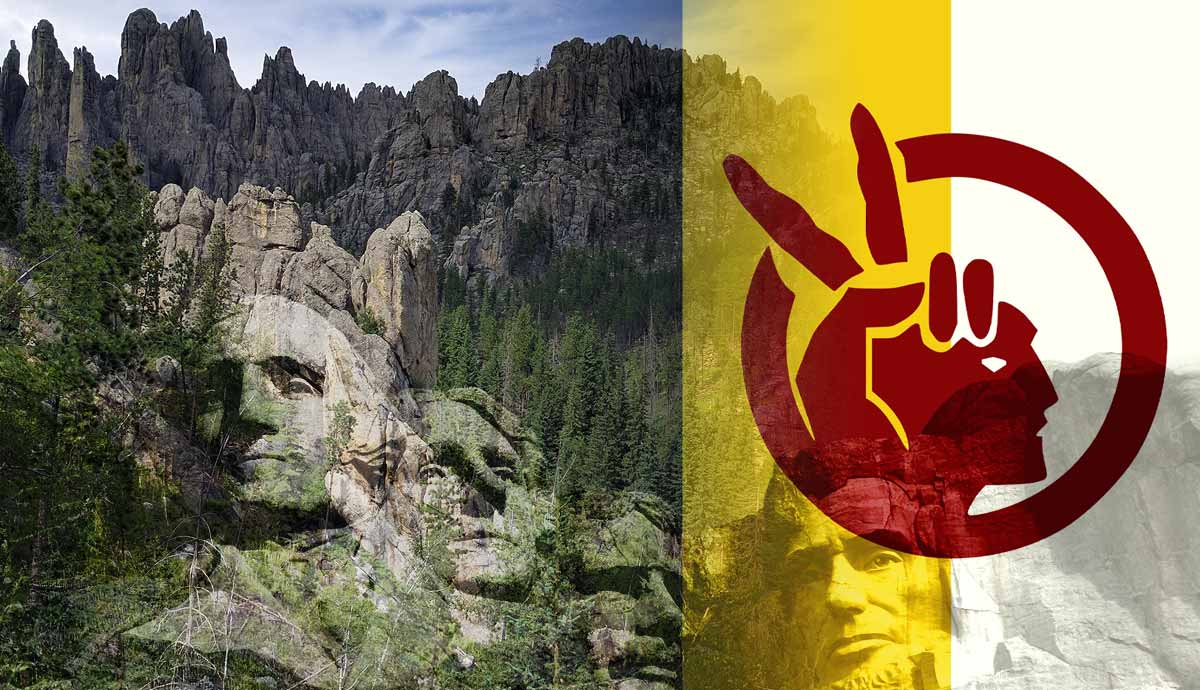
At the gates to the Western United States lies a piece of land that has been considered sacred by millions for centuries, the Black Hills. Known as the Paha Sapa or He Sapa to the Lakota, the Black Hills area, which includes many different natural landforms, holds important meaning in religious and cultural traditions. However, the usage and context of the Black Hills have been shaped and warped since the 19th century. It remains a site of contention for many to this day.Why are the Black Hills so important, and why is this discussion so relevant today?1. Where Are the Black Hills?An early-spring view of the Black Hills in March 2013. Source: Cottage Grove Dude / Wikimedia CommonsThe area known as the Black Hills encompasses lands in parts of South Dakota, spreading into Northeastern Wyoming. It is approximately 125 miles long and 65 miles wide, or over 8,000 square miles. A variety of landforms can be found in the area, including rugged cliffs, canyons, unique rock formations, caves, forests, open plains, streams, and lakes. The name comes from the pine-encrusted hills that can be seen from miles away, giving the formations a dark appearance. The third-largest cave system in the world, Jewel Cave National Monument, sits within the Black Hills, with over 200 miles of mapped passages within it. The area was designated as a National Forest in 1897 in order to combat wasteful timbering practices and devastating forest fires.2. The Meaning of the Paha SapaA view of the Black Hills from Needles Highway, 2016. Source: Runner1928 / Wikimedia CommonsThe Paha Sapa is considered sacred by numerous plains tribes, including the Lakota. This land has meanings in certain religious senses, but also in terms of enabling people to interact with nature as they complete their cultural life paths. To many Indigenous Plains cultures, the area is considered the center of the earth, referred to as the heart of everything that is. Seven sacred sites within the region are said to align with star patterns and constellations. The general belief is that the land is not there for permanent settlement but as a source of spiritual sustenance.3. The US Government Originally Tried to Prevent White SettlementAn 1868 council meets to negotiate the Fort Laramie Treaty. Source: National Archives at College Park / Wikimedia CommonsDuring the 19th century, conflict between the US government, Indigenous tribes, and settlers pursuing their place in the legacy of Manifest Destiny was widespread and on the rise. Tribes were pushed further west as settlers invaded their homelands. Some began armed resistance against both the citizenry and the military. A series of forts were built in the area of the Black Hills, establishing a military presence to protect settlers and US interests.An 1851 treaty, signed at Fort Laramie, granted 60 million acres of the Black Hills for the absolute and undisturbed use and occupancy of the Sioux [Lakota]. Still, settlers broke the treaty, traveling through the area on the Bozeman Trail heading west. Along the way, they hunted, allowed their livestock to graze and destroy resources, and left trash and detritus in their wake. After a series of conflicts often referred to as Red Clouds War in the mid-1800s, the US government wondered if it might be more beneficial to make more of an effort to restrict settler movement in the area.The original 1851 treaty. Source: Department of the Interior / Wikimedia CommonsA second treaty was signed at Fort Laramie in 1868, observed by only a handful of Lakota leaders, who may not have even understood what they were allowing. This treaty reduced the Lakota lands to twenty million acres but set firm boundaries against incursion.Forts were burned as part of the agreement, and the military presence was removed. However, in 1874, General George Custer was allowed to lead an exploratory mission into the Black Hills as he had heard rumors of gold. The presence of gold in the Black Hills was confirmed by Custers scientists, and the rush was on. The terms of the treaty were disregarded by settlers in light of the allure of such riches. The government made weak efforts to stop the mad dash of prospectors but found the attempts fruitless. They offered to buy the remaining Lakota acres but were refused. At this, any efforts to maintain the treaty were abandoned completely, and the government instead turned to seizure of the land, this time backed by the full strength of the US Army.4. Mount Rushmore Is Considered an InsultMount Rushmore is more than a national monument. Source: Dean Franklin / Wikimedia CommonsWhile the average American may see Mount Rushmore as a symbol of patriotism, a celebration of some of the great presidents from history, to the Indigenous people who consider the Black Hills sacred, this carving is nothing short of insulting. The monument was established in 1925, designed by sculptor Gutzon Borglum. The finished Mount Rushmore National Memorial covers just over 1,278 acres and is 5,725 feet above sea level. It features the visages of George Washington, Thomas Jefferson, Theodore Roosevelt, and Abraham Lincoln in stone.However, the monument is carved on what is referred to by Indigenous cultures as Thunkasila Sakpe, or the Six Grandfathers, a sacred mountain representing the supernatural deities responsible for Lakota creation: North, South, East, West, Above, and Below. These hallowed cliffs were blasted and destroyed in the pursuit of a representation of four men who were directly involved in the destruction of Indigenous culture in the United States. From an Indigenous perspective, the US government took sacred land from the tribes, then not only defaced it but celebrated colonizers that shattered their culture.5. The Crazy Horse Memorial Remains UnfinishedThe entry to the Crazy Horse Memorial Welcome Center. Source: Richie Diesterheft / Wikimedia CommonsIn 1948, sculptor Korczack Ziolkowski was commissioned to create the Crazy Horse Memorial in the Black Hills. He was invited to the project by Lakota elder Chief Henry Standing Bear. Standing Bear wished to see a monument to his ancestor, an incredibly influential warrior who was involved in some of the major Black Hills conflicts, in the place most sacred to his people.Ziolkowski made slow progress on the project, faced with numerous challenges from the composition of the rock face he was working with to funding. He died in 1982, but the project continued under the supervision of his wife and children. Despite the ongoing work, the project remains unfinished as of 2024, with no set date for completion. However, a visitors center is already open, allowing viewing of the work in progress. The finished monument will feature Crazy Horse, arm outstretched, atop a steed. Since Crazy Horse refused to be photographed in life, the likeness has been created from descriptions provided by those who knew the warrior in person. The project has faced some criticism, as others in the Indigenous community have argued that Crazy Horse, known for his humility, would have hated the idea.6. The Black Hills Are South Dakotas Main Tourist AttractionCrowds at Mount Rushmore in 2017. Source: Eekim / Wikimedia CommonsOpposite its role as a sacred element of Indigenous life, the Black Hills have been a commercial boon for the state of South Dakota. The area is the biggest tourist attraction in South Dakota, generating over 100 million dollars annually for the region. One of the main draws is Mount Rushmore, which is visited by tens of thousands yearly. The region is home to 30 campgrounds (including horse camps) for those wishing to enjoy the wild outdoors of South Dakota.7. The Black Hills Have Been Used for ProtestThe black, yellow, white, and red flag used to represent the American Indian Movement (AIM). Source: Tripodero / Wikimedia CommonsThe American Indian Movement, or AIM, is an organization that highlights and fights for Indigenous rights and recognition in the United States and was especially active in the 1970s-80s. AIM has utilized its sacred space in the Black Hills as a backdrop for certain events to bring attention to challenges faced by Indigenous people. For example, in July 1980, the International Survival Gathering was held in the Black Hills. The goal of this gathering was to protest mineral exploitation in the region and explore community survival and sustainability.8. The Supreme Court Ruled on the Black HillsOver a century later, the Supreme Court made a ruling on the 1868 Fort Laramie Treaty. Source: CC-BY-SA 3.0, Joe Ravi / Wikimedia CommonsIn 1980, the Supreme Court made a ruling on the Black Hills after a lengthy case brought against the US government by the Lakota people. The case claimed that US actions violated the 1868 Fort Laramie Treaty and that the government had illegally taken and occupied the Black Hills. The Supreme Court agreed and ordered that over 100 million dollars be paid to the Lakota nation in compensation for the theft. The Lakota have refused to accept the payment, emphasizing that the land was never for sale. Sitting untouched, the value of the funds has grown to over two billion dollars as of 2024.
0 Yorumlar
0 hisse senetleri
17 Views

 English
 Arabic
 French
 Spanish
 Portuguese
 Deutsch
 Dutch
Dutch
 Italiano
 Russian
 Romaian
 Portuguese (Brazil)
 Greek
Greek