


WWW.THECOLLECTOR.COM
8 Facts About Winter at Valley Forge
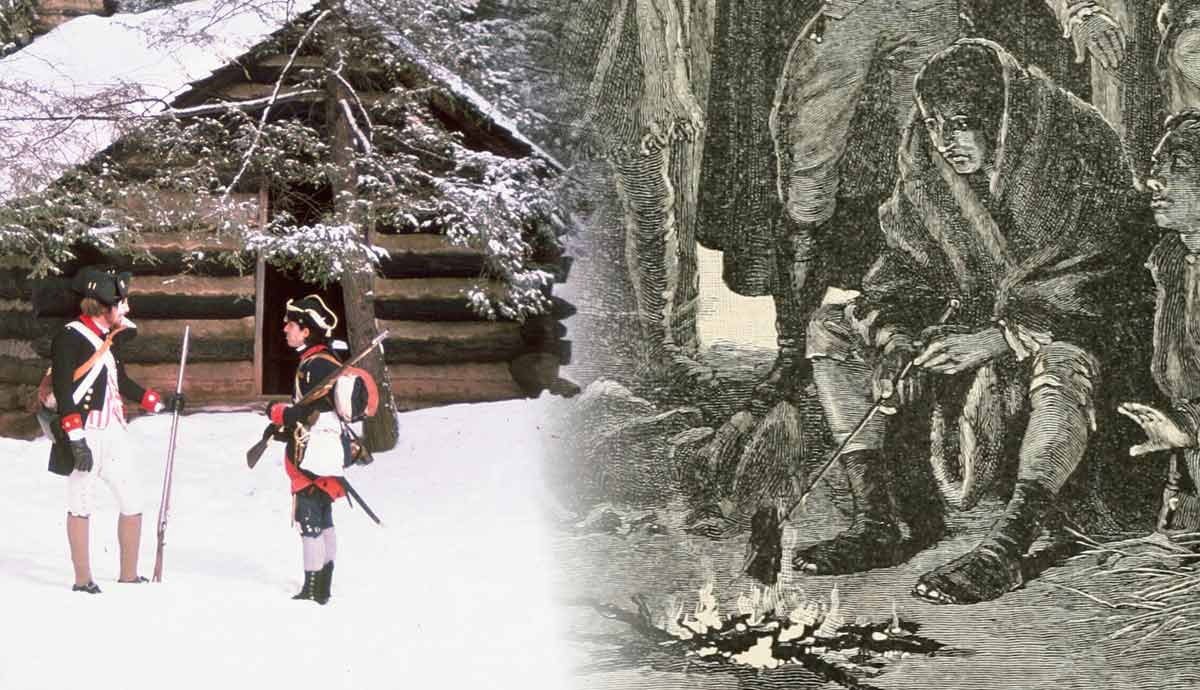
The fledgling American military was faced with numerous challenges as soldiers attempted to assemble, organize, and make a stand against the British Army in the late 18th century. The onset of winter offered some relief, as fighting generally paused during the cold season. However, the winter of 1777-78 failed to bring solace to George Washingtons Continental Army. In the confines of Valley Forge in Pennsylvania, soldiers faced a multitude of life-threatening hardships.1. Morale Was Extremely LowA more recent view of Valley Forge from an observatory tower. Source: Library Company of Philadelphia / Wikimedia CommonsIn December 1777, during the American Revolution, George Washingtons army arrived at its winter quarters in Valley Forge, Pennsylvania. They had just suffered a series of losses at Brandywine, Paoli, and Germantown. Philadelphia, the capital of the new American government, was now under British Control.The men were feeling low, and their new residence wasnt going to improve their morale. Approximately 12,000 soldiers were at Valley Forge, along with numerous women and childrenfamilies of the fighting men who had come to spend the winter with their loved ones. Huts were hastily built for protection against the winter cold, but the army was still faced with numerous obstacles to its survival. The area was only about a days march from Philadelphia but was naturally defensible due to its position on a plateau.2. The Cold Was ChallengingSnow at Valley Forge National Historical Park. Source: National Park Service Digital Archives / Wikimedia CommonsMeteorologists and scientists looking back on the climatic aspects of the Revolutionary War have been able to provide some insights into the severe winter weather that soldiers faced at Valley Forge. The winter of 1777-78 was rated as moderate, similar in nature to the two that had preceded it. The day after the troops arrived in Valley Forge on December 19, the deepest single snowfall of the winter occurred, followed by the coldest temperatures of the year, as low as six degrees Fahrenheit. The lowest temperature in January was 12 degrees, and 16 degrees in February. However, the end of March would bring another cold snap, with temperatures plummeting to eight degrees Fahrenheit. While these were not the coldest temperatures in the Americas that winter, the soldiers in Valley Forge were not adequately equipped to face such frosty conditions.The weather also fluctuated, with periods of severe cold accentuated by brief thaws. These weather shifts resulted in melting snow turning to mud, exacerbating the difficulty of daily life and military drills. Despite this and its tendency to be associated with challenging winter weather, the time spent at Valley Forge was not the most severe winter faced by Washingtons soldiers. Two years later, the winter of 1779-1780, spent at New Jerseys Jockey Hollow, resulted in the coldest winters and deepest snows of the 18th century. Still, due to better sanitation, conditions, and more adequate supplies, the casualties of the winter stay were much lower than those at Valley Forge.3. The Soldiers Lacked Basic NecessitiesWashington visiting soldiers in one of the Valley Forge huts. Source: New York Public Library / Wikimedia CommonsCompounding the issues at Valley Forge was the fact that the soldiers were poorly prepared for winter. Fresh off the Philadelphia campaign, the men were weary and low on supplies. As the winter wore on, the Continental Congress was slow to release funds for restocking the army, and the situation only grew worse. By February, the threat of starvation loomed large in the minds of many soldiers.While some men had their full uniform, clothing shortages were rampant. At one point, almost 3,000 men were listed as unfit for duty due to a lack of clothing. About a third of the men didnt have proper footwear, and stories told of bloody footprints being left in the snow as their bare feet suffered. There were not enough blankets for everyone, and straw was procured and packed in the huts to hold warmth.4. More Than 2,000 DiedA European variolation device made from ivory and wood, used in the 18th century. Source: Wellcome Images / Wikimedia CommonsOver 2,000 people died at Valley Forge, but not necessarily from the lack of basic supplies. Sanitation was incredibly poor at the camp, and disease was rampant. Typhus, smallpox, and influenza ravaged the camp, accounting for most of the deaths.The sanitation issues were recognized, and Washington issued orders for measures to be implemented. Rules for cleanliness were put in place, and inoculations (variolation) for smallpox were mandated for the Continental Army years before the smallpox vaccine was created. During variolation, smallpox material was scratched into the skin or inhaled in small amounts to create an immune response, similar to the way in which vaccines work today. Baron von Steuben arrived in camp and wrote the Regulations for the Order and Discipline of the Troops of the United States. While this manual included many aspects of a soldiers duties, from care of weapons to drill routines, it also included instructions on health and sanitation as part of a soldiers individual responsibility. In addition, it broadened this responsibility by adding sanitary orders to line officers, making health and sanitation a common goal.5. Mutiny Was ThreatenedWashington praying at Valley Forge, 1866 engraving by John C. McRae. Source: Wikimedia CommonsDespite the camaraderie that eventually developed among the men at Valley Forge and Washingtons reputation as an excellent commander, there were whispers of mutiny on at least two occasions. The first came just three days after encampment, as the soldiers realized the lack of resources they were facing. These whispers of danger were subdued until February. The men didnt receive meat rations for several days, and when they finally did, they were much smaller than usual. This resulted in a group from the 12th Massachusetts going to their officers and threatening to quit. As a result, rumors of mutiny began to swirl around camp. George Washingtons leadership is often credited as the key defense in locating and preventing these mutinies from escalating, the harsh conditions of camp notwithstanding.6. The Continental Army Underwent a TransformationBaron von Steuben at Valley Forge (unknown author). Source: National Archives at College Park / Wikimedia CommonsIn February, Baron Friedrich Wilhelm von Steuben, a veteran of the Prussian Army, arrived at Valley Forge. He was appointed Inspector General and began whipping the camp into shape. In addition to his important contributions in the area of sanitation and health, Von Steuben developed a system of drill for the men.At the time, it was considered ungentlemanly for officers to drill their men. Von Steuben challenged and changed this perspective by getting directly involved with the men on a daily basis, instructing them from the ground. Though his grasp of English was limited, Von Steuben managed to get his point across with the aid of his secretary, who provided translations from French, the universal military language of the time. Daily practices improved the skill and marksmanship of the Continental Army and would provide a template for the future of military training in the United States.7. Animals Were at Valley ForgeHorses were an important part of life in the Revolutionary War Era. A Valley Forge reenactor with his horse, 2019. Source: Valley Forge National Historical Park / Wikimedia CommonsHumans werent the only ones who called Valley Forge home during the winter of 1777-78. Of course, horses were part of the camp, providing the main mode of transportation during that era. Livestock, when they could be found, provided much-needed sustenance in the form of fresh meat. Cows and pigs provided most of this nourishment to the men at camp, though small quantities of fish were eaten as well. Pets werent unheard of in camp, either. Most notably, General von Steuben arrived from Europe accompanied by his dog, an Italian Greyhound, Azor, who would lodge at Valley Forge with him.8. Lafayette Earned His Reputation at Valley ForgeWashington and Lafayette pictured at Valley Forge in a 1907 painting by John Ward Dunsmore. Source: Wikimedia CommonsThe Marquis de Lafayette was a French nobleman who became intrigued by the Americans desire for liberty. He traveled to the United States to support the fight, and was commissioned into Washingtons army. The young general arrived at Valley Forge with the army in December and suffered the long winter alongside the soldiers. Rather than retiring to more comfortable accommodations as many officers did, Lafayette endured the same hardships as his men. He made every effort to ensure his mens comfort, including spending his own funds to purchase supplies and clothing. Because of his selfless leadership and respect for the common soldier, he earned the nickname of The Soldiers Friend.His relationship with George Washington, whom he saw as a father figure, was further developed at this time, as Lafayette served as one of the Generals aides-de-camp. During his time at Valley Forge and beyond, Lafayette would become instrumental in securing Frances timely support of funding, supplies, and troops during the American Revolution.
0 Kommentare
0 Geteilt
15 Ansichten

 English
 Arabic
 French
 Spanish
 Portuguese
 Turkish
 Dutch
Dutch
 Italiano
 Russian
 Romaian
 Portuguese (Brazil)
 Greek
Greek