


WWW.THECOLLECTOR.COM
Colony of Sagallo: How a Self-Styled Cossack Tried to Conquer Africa
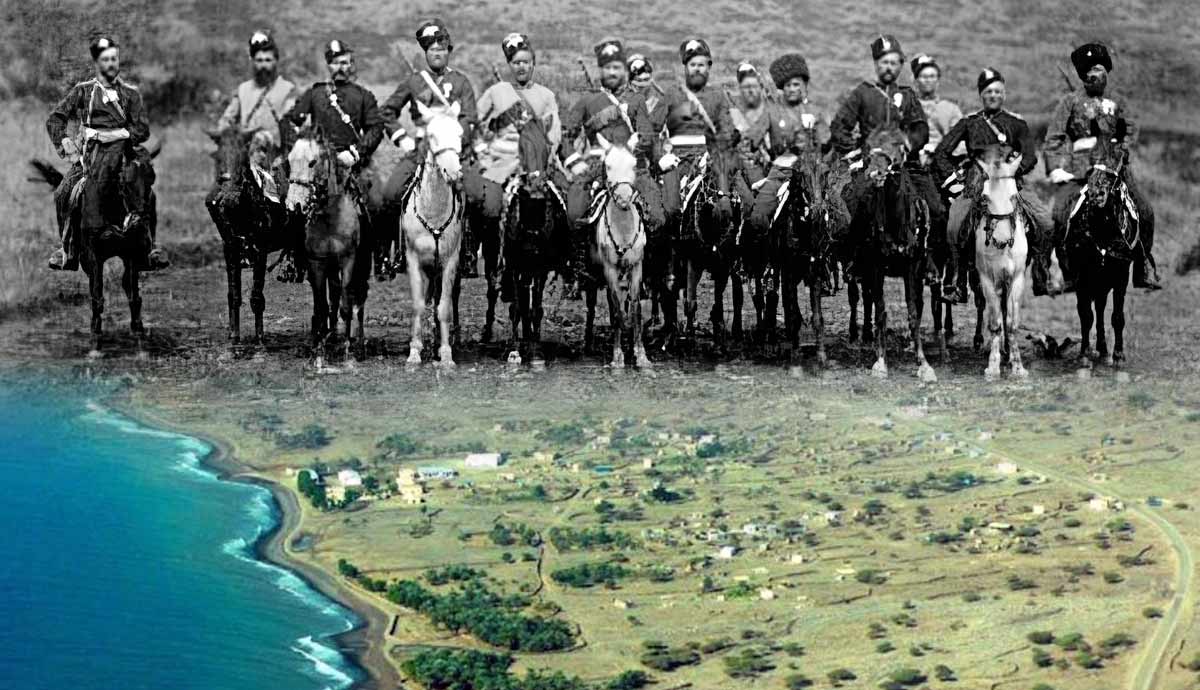
It is commonly believed that Russia did not participate in the Scramble for Africa. But in 1889, the Russian Empire, or its colorful emissary, a self-styled Free Cossack named Nikolai Ashinov, laid claim to the colony of Sagallo in modern-day Djibouti. A band of Cossacks sailed for the Horn of Africa and planted the Russian flag over an abandoned Egyptian fort. There was just one problem: France had already signed a treaty for the area known as French Somalia. What happened next threatened to shake Russo-Franco relations to the core.A Cossack AdventurerNikolai Ivanovich Ashinov, 1891. Source: Wikimedia CommonsToday, Sagallo is a thriving port city in East Africa, known today for its colorful textiles, Afro-French cuisine, and spectacular scenery. But in 1887, it was a windswept stretch of sand, inhabited by Somali, Danakil, and Ethiopian minority groups, and controlled by the French crown. That year, a stocky figure with a tousled red beard and wearing a Terek Cossack uniform barged into the Russian court with an adventurous claim. According to Nikolai Ivanovich Ashinov, he and a ragtag band of Free Cossacks would outfit a ship (at the states expense), set sail for the Gold Coast, and open the continent to Russian colonization.During the 19th century, Russia confined its colonialist ambitions to neighboring regions such as the Balkans, Caucasus, and Central Asia. The Russian colonial presence in the Americas, which once reached northern California, came to an end in 1867 when Tsar Alexander II sold Alaska to the US government for $7.2 million. When the European powers launched the Scramble for Africa in 1884, the Russian state wanted a slice of the pie. Driven by nationalism and an eternal hunt for warm water ports, the Russian Empire saw an African colony as an appealing prospect.Fresh from a recent trip to Ethiopia, unknowingly funded by the British, Ashinov seemed to have marvelous credentials. Unbeknownst to his friends at court, they were not ones that the real Don, Kuban, Terek, or Siberian Cossack hosts would recognize.Alexander III in Danish Royal Life-Guards Uniform by Valentin Serov, 1899. Source: Wikimedia CommonsSeveral years earlier, Ashinov made a deal with the British to smuggle Cossack troops and weapons into Afghanistan on the heels of the Second Afghan War. Britain wanted to ensure that Russia stayed out of Afghanistan. Instead of completing the deal, Ashinov absconded to Ethiopia with the money. There, he cultivated relationships with key leaders such as Chieftain Ras Alula, claiming to be a representative of Tsar Alexander III.By 1886, Ashinov was back in Russia and making headlines. He proposed Russia gain a foothold on the African continent by sending troops to conquer Abyssinia and seize the Red Sea coast near Tadjoura Bay. Best of all, Russia would not need to raise an army since Ashinov would lead a private venture. To fund his plan, Ashinov gained supporters among important Slavophiles, commercial tycoons, and political leaders. He painted Ethiopia as a place ripe for Russian influence.This bold proposal caused excitement among the highest echelons of power. Statesmen such as Konstantin Pobedonostsev, the Chief Procurator of the Holy Synod and an influential advisor to the tsar, and Minister of the Navy Ivan Shestakov, saw this as an opportunity to spread Orthodoxy, establish coal stations along the Red Sea coast, and gain a new colony at low risk and low cost. Ashinov also gained the ear of Nikolai Baranov, governor of Nizhny Novgorod, who seized the idea as an opportunity to exploit rich natural resources. Baranov proposed establishing a Russian-African company with Ashinov as director, entitled to a 50% share of the profits.Hamoudi Mosque in Djibouti. Source: Library of CongressAshinovs plan made it to the tsar. From the start, Alexander III and Foreign Minister Nikolai K. Giers were suspicious about the plan. They had concerns about how this venture might impact Russias relationship with its European allies. Despite his reservations, the tsar apparently agreed. Investors pitched in. The scheme took off.There was just one problem: Ashinov was a conman. He wasnt even a Cossack. Born into a merchant family in Tsaritsyn (later Stalingrad and now Volgograd) in 1856, Nikolai Ivanovich Ashinov led a colorful life. His career started during the Russo-Turkish War, where he met Terek Cossack units and became enamored with the Cossack way of life.An amateur linguist and adventurer, Ashinov reinvented himself as a Free Cossack. During his travels to Constantinople, Ashinov met two Circassian Muslims who told him about ancient Christianity practiced in Abyssinia. This news sparked Ashinovs first voyage to Ethiopia. Despite a poor education, Ashinov possessed charisma, energy, and an ability to convince people to follow his schemes. His newest plan to spread Russian Orthodoxy throughout the African world would enable Russia to oversee crucial shipping lanes that carried Indias wealth to Britain.Despite the tsars grudging approval, Ashinovs ragtag crew, culled from the Odessa ports, would face unforeseen obstacles in its attempt to seize a slice of Africa for the Russian Empire.New MoscowView of St. Basils Cathedral, Moscow, 1890-1900. Source: Library of CongressRussian colonialism and expansionism, partly driven by its rivalry with the Ottoman Empire, and the rise of the anti-Western Slavophile movement played a role in Ashinovs escapade. Despite political concerns from the Foreign Ministry, the initiative went ahead under the guise of a religious mission to Ethiopia.Ashinov leveraged his relationships in Russian society to gain support for his mission. Depending on who he met, he set out his mission to create a New Moscow as religious, commercial, or strategic, hoping to gain support from different quarters. His charm and persuasion paid off. Despite his doubters, Ashinov swayed several important figures. In the end, Russian Admiral Ivan Shestakov sent the gunboat Mandjur to support the expedition. But Ashinov encountered a setback when the admiral died suddenly in December 1888.While Ashinov had lost his gunboat, he gained another supporter. The participation of popular Archimandrite Father Pasi, an Orenburg Cossack with military expertise in Central Asia, turned the plan from a geopolitical scramble into a credible religious venture.The Scramble for AfricaDivision of the African continent by the European powers, 1912. Source: Ourworldindata.org via Stanford UniversityDuring the late 19th century, the European powers raced to outdo each other in aggressive African colonization. This competition for natural resources such as minerals, rubber, and agricultural produce, as well as strategic advantage, led to European division and domination of the continent.The Scramble for Africa officially began with the 1884 Berlin Conference, where the European powers officially portioned Africa, a move that disregarded contemporary African rulers, nations, and boundaries. The main actors on this stage included Britain, Germany, France, Italy, Spain, Belgium, and Portugal. By 1914, most of Africa, except for Ethiopia and Liberia, would fall under European control.During this scramble, Russia remained in the background, concerned with expanding into India and Central Asia. At the same time, they sought reliable warm water ports to enable them to access the Pacific Ocean from the Black Sea. During the 18th century, Russia attempted to access the Indian Ocean by turning Madagascar into a Russian protectorate. This plan never succeeded. By the 19th century, Russias struggle with the British Empire to dominate Central Asia left it behind in the division of Africa. When the Suez Canal opened in 1869, some Russian leaders saw this as a chance to control the mouth of the Red Sea.Ashinovs scheme would reveal Russias real but peripheral role in the European empires attempts to civilize non-white nations and colonize a slice of the African continent.Bound for AfricaAerial view of the Gulf of Tadjoura, Djibouti, located at the mouth of the Gulf of Aden. Source: Radio Free Europe and UK Parliament House of Lords LibraryBacked by the unofficial support of the Tsar, Ashinov and 150 Cossacks, monks, women, and children boarded the ship Kornilov and set sail from Odessa in December 1888. Only two real Terek Cossacks joined the expedition. The rest of the passengers, gathered from the Odessa docks, consisted of expelled officers, drunkards, petty crooks, and reckless adventurers. Ashinov promised the volunteers an alluring prospect: a generous salary paid in gold, rich land, and free passage. A large crowd waved them off.The Russian warship Lazarev guarded the ships passage from Alexandria to Port Said. There, Ashinov paid 36,000 francs to hire an Austrian ship, the Amphitride, to take the expedition to its destination. They traveled on three successive ships and took a circuitous route to avoid detection. Near the Suez Canal, the Russians managed to slip past a patrolling French sloop.By January 6, 1889, the Amphitride arrived in the Gulf of Tadjoura.Instead of setting out for nearby Ethiopia as planned, Ashinov dropped anchor and unloaded the ship. He decided to gain a foothold for Russia by creating an outpost in the abandoned Egyptian fort of Sagallo. He named the area New Moscow or the village of Moskovskaya. Ashinov claimed this territory ran fifty miles along the coast and a hundred miles inland.Indigenous encampment in Djibouti. Source: Library of CongressOnce ashore, Ashinov abandoned any idea of a religious mission to Ethiopia. A Russian naval representative, Lieutenant A. K. Ivanovskii, negotiated with Anfani, a local sultan, to receive Russian protectorate status for the colony. Ashinov later claimed the sultan sold him the land.On January 4, the volunteers and their families settled in. They came prepared. They brought thousands of seedlings, including 15,000 cuttings from prime Crimean grape varieties. Before long, they planted garden plots with cherries, lemon, orange, and olive trees, cucumbers, watermelons, and tomatoes. Nearby, they discovered other resources such as iron ore, salt, coal, and a hot sulfur spring.On January 28, Ashinov raised the Russian flag over Fort Sagallo. Next, the colonists erected a mobile canvas church dedicated to St. Nicholas, the patron saint of sailors, complete with its own religious flag, the tricolor Russian white, blue, and red overlaid with a yellow Saltire cross.Illegal OccupationRussian Cossacks in Abyssinia, 1889. Source: Radio Free EuropeAshinovs plan to secure and develop the Bay of Tadjoura for the Russian Empire had succeeded so far. He even had assurances from a local sultan that the entire New Moscow area belonged entirely to the Russians. Ashinovs gunboat diplomacy had seemingly paid off.There was only one problem.Sagallo officially belonged to the French. This small coastal village is now part of Djibouti. In 1889, it represented a French protectorate on the French Somali coast. More importantly, it also belonged to the Danakil people.Things quickly began to deteriorate. The average temperature in Djibouti hovered at a relentless 84 degrees, overheating the northern colonists as they worked to develop farms and build shelter for their families.The colonists discipline soon dissolved since they lacked military authority and structure. Some of the Cossacks started raiding the local Danakil people. Ashinov had to shell out cash to his volunteers to keep them from raiding passing caravans. Not all the volunteers participated in these depredations. Those who came to start a new life despised the growing chaos and lack of leadership. Some disillusioned settlers deserted to the nearby town of Obock, where they complained about the brutality, corruption, and disorder reigning at the fort. Captured by the Danakil, they ended up in French hands and revealed the disaster unfolding in New Moscow.Danakil warriors, photographed by douard Joseph Bidault de Glatign, 1888. Source: Bibliothque nationale de FranceThe Russian occupation of Sagallo took the French by surprise. Fueled by rumors in the Italian press about Russian pirates delivering arms to indigenous peoples on the Somali coast, the French had to make a decision. They could let the situation continue and exploit the Russian occupation to disrupt Britains domination of the Suez Canal, or they could crack down on the intruders.A brief propaganda war ensued. The French argued that the Russians could not occupy the area without French permission, while Ashinov tried to convince the Danakil that France was but a minor power. Things escalated when the French representative, Commandant Lagarde, sent an emissary to the fort with a demand to turn over any extra weapons, take down the Russian flag, and raise the French flag.Bolstered by personal and national pride, Ashinov refused to cooperate.Shelling of SagalloSagallo: Landscape with Bay by Johann Martin Bernatz, 1841-1843. Source: British Library via Art UKOn February 5, a French squadron with a cruiser and three gunboats appeared in the Bay of Tadjoura opposite Fort Sagallo. An officer delivered an ultimatum demanding the ataman lower the Russian flag. Ashinov refused.We are Russian subjects, he declared, and we consider it humiliating to lower the flag in front of anyone.Pointing to a spot near the fort, Ashinov continued, If you want to hoist your flag so much, you can hang it there; we will not touch you.Receiving Ashinovs answer to their ultimatum, the French returned to their ships. Ashinov ordered a ceremonial meal of lamb and wine prepared, and then lay down to sleep. Apparently, Ashinov failed to realize that a country friendly to Russia might attack. He also neglected to realize that warships had aligned themselves in battle formation facing the fort. He even mistook a warning cannonball fired from a French ship for a salute.February 5, 1889, dawned. It was a warm day, though a cooling breeze blew into Sagallo from the sea. At 3 p.m., the French opened fire on the fort with a rapid-fire Hotchkiss cannon. In a panic, Ashinov ordered his Cossacks to form a defense chain on the beach. His men ignored the suicidal command. Most of them scattered into the nearby trees or took refuge behind the fort.During the fierce, 15-minute barrage of artillery fire, the fort collapsed in a heap of rubble. Six people taking shelter in the fort were killed: pregnant Maria Martynova and her six-year-old son, Roman; Darya Marchenko; four-year-old Matryona and two-year-old Stepan, the children of Cossack volunteer Pyotr Rubtsov; and a Cossack named Mikhail Shevchenko. The shelling wounded 22 others.Terek Cossack and his wife, photograph by G. Kviton, 1895; Terek Cossack officer and wife, late 19th century. Source: Interesting Life / Intelife.ru and LiveJournalThe shells wreaked havoc on the forts civilian settlers and destroyed their newly planted crops. In desperation, the ataman had a Cossack named Ivanov raise his undershirt as a white flag over the fort. The fight was over before it had barely begun. As Father Pasi negotiated with the French, with Ashinovs wife serving as an interpreter, the French arrested Ashinov and his fellow settlers. The monk protested the shelling of the fort, but the French offered little sympathy, believing the Russians had passed up several chances to surrender peacefully.After confiscating their weapons, the French dropped the survivors off at Port Said, turning them over to a Russian warship which arrived to take the shaken settlers home. The four monks headed to Ethiopia to complete their religious mission. Within a month, French troops occupied the abandoned fort and reclaimed the area.A Sad and Stupid ComedyCoat of Arms of the Russian Empire, 1883; Flag of the Third French Republic. Source: Wikimedia CommonsThe attempt to establish a Russian colony at Tadjoura Bay almost triggered a diplomatic incident.When local French authorities discovered the trespassers on Somali soil, they dared not act without higher authority. When Paris alerted St. Petersburg, Alexander III publicly distanced himself from the adventure. We must certainly remove this cattle Ashinov from here as soon as possible, he announced. He only compromises us, and we will be ashamed of his activities.Following the Foreign Ministers advice, the emperor disavowed all support for Ashinov, labeling the situation a sad and stupid comedy. Wary of negative news, Alexander III did everything to repair relations with France. In fact, the Russian government gave France carte blanche to evict the settlers from their territory.Satisfied that Russia did not support Ashinovs expedition, the French ordered Admiral Orly, who commanded the Red Sea Squadron, to set sail for Tadjoura. Russia decided to send the gunboat Manchuria to remove Ashinov themselves. In response, the French ordered Orly to stand down until the Russian ship arrived. Unfortunately, poor communication resulted in these orders arriving too late to stop the shelling of the fort.Ashinovs expedition made international headlines. Source: Wikimedia CommonsBack home, Ashinov disappeared into a three-year exile in the Volga region. During his internal exile, Ashinov tried to flee to Paris and London. He returned at the tsars order in 1891. Following his escape attempt, Ashinov had to spend ten years on his wifes estate in Chertigov in northern Ukraine.While Ashinovs attempt to create a New Moscow in Africa failed, the Russian Minister of War undertook his own plan to cultivate Ethiopian ties. This time, Lieutenant Vasilii Fedorovich Mashkov, a trusted officer, carried out the mission to the court of Menelik II in October 1889.Despite the Ashinov incident, friendly relations between Russia and France challenged British naval supremacy near the Horn of Africa. In 1891, Mashkovs second trip turned into a military advisory operation that funneled arms to Menelik. Russian armaments helped Ethiopia modernize, fueled its anti-colonialist independence movement, and helped the Ethiopian army defeat the Italians at the Battle of Adwa in 1896.The Russians later supplied artillery to the Ethiopians that helped them win the Battle of Adwa against Italy in 1896. Source: Wikimedia CommonsFreebooting Cossack Nikolai Ashinovs plan to seize a foothold for Mother Russia on the African coast turned into a tragic misadventure. Despite causing embarrassment at home, the failed colonial experiment did not damage Frances reputation. Instead, Frances decision to act against the colonists solidified its reputation. In the aftermath, Russia and France signed an alliance in 1894 and joined forces to counteract British and Italian influence in the area.While this did not end Russian attempts to become a power player in the Horn of Africa, losing a potential base in the Red Sea had disastrous consequences during the Russo-Japanese War. In 1905, Japans destruction of Russias Pacific Squadron at Port Arthur drove Russia to send its outdated Baltic Sea Fleet to attack Admiral Tg Heihachirs British-built battleships. After the Russians accidentally fired on English trawlers in the North Sea, mistaking the fishing boats for Japanese torpedo boats, Britain refused to give Russia access to the Suez Canal. This forced Russian warships to make an 18,000-mile trip around the Cape of Good Hope. On arrival, the Japanese destroyed the exhausted Russian fleet at the Battle of Tsushima.While Ashinov predicted Russias strategic need for a Red Sea base, the failure of his short-lived colony contributed to the decline of the empires naval strength. Today, it remains uncertain the extent to which the Russian government supported Ashinovs mission in private. In the end, they denied any support for the plan after the diplomatic incident threatened their relations with France.
0 Commentaires
0 Parts
21 Vue

 English
 Arabic
 Spanish
 Portuguese
 Deutsch
 Turkish
 Dutch
Dutch
 Italiano
 Russian
 Romaian
 Portuguese (Brazil)
 Greek
Greek