


WWW.THECOLLECTOR.COM
7 Historic Cities to Visit in the Country of Georgia
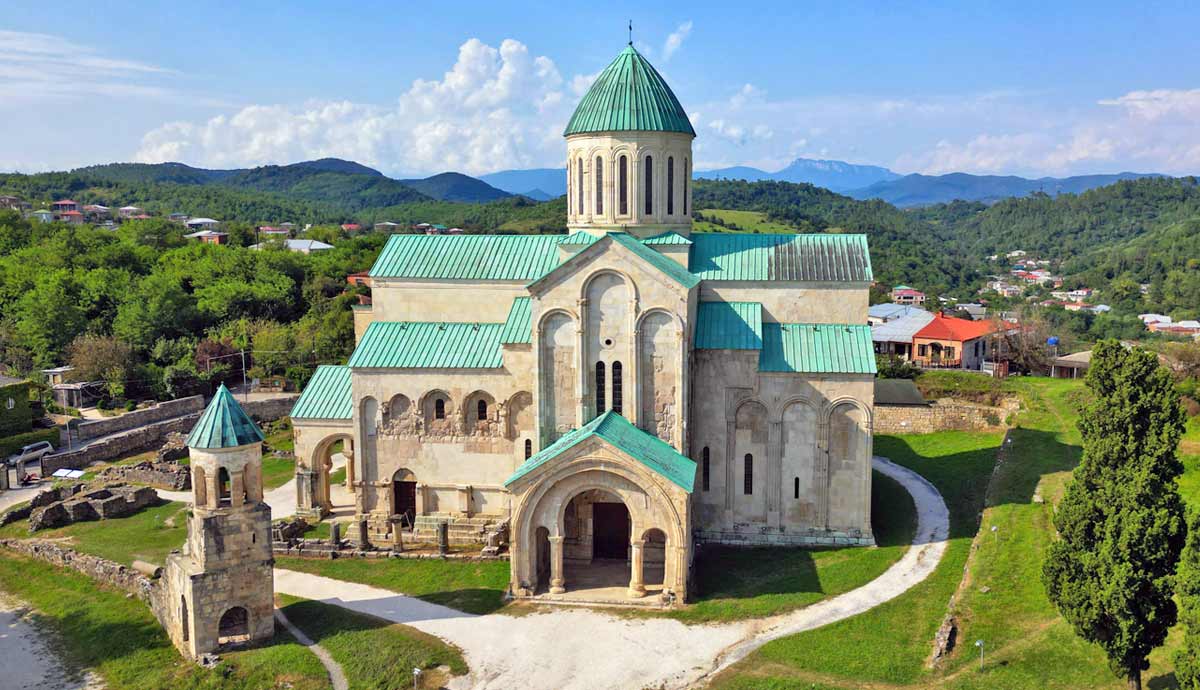
The country of Georgia is perhaps best known as the birthplace of Soviet dictator Joseph Stalin. While Stalin is associated with his hometown of Gori, Georgia has much more to offer. The capital, Tbilisi, is a cosmopolitan city with Persian, Turkish, and Russian influences, while nearby Mtskheta is known for churches and monasteries. Stepantsminda is famous for mountain views, Telavi for wine and architecture, and Kutaisi combines ancient origins and medieval grandeur. Batumi on the Black Sea Coast is a unique destination reminiscent of Las Vegas and Dubai.1. TbilisiThe Kura (Mtkvari) River in Tbilisi, photograph by Jimmy Chen, 2025. Source: Jimmy ChenAccording to tradition, Tbilisi was founded on the Kura or Mtkvari River by King Vakhtang Gorgosali during the 5th century CE. The city owes its name, which means warm place in Old Georgian, to the natural sulfur springs in the area. Tbilisis hot springs encouraged the development of the baths in the Abanotubani district, attracting visitors seeking cures for their ailments over the centuries. Visitors to the historic Chreli Abano baths can book private rooms favored by the likes of Alexander Pushkin and Alexandre Dumas.While Tbilisi became the capital of Georgia in the 6th century, its strategic location made it an enticing target for neighboring empires. Over the centuries, the city came under Persian, Arab, and Turkish control. Tbilisis importance as a political and commercial center also made it a cosmopolitan city. Tbilisi became the capital of an independent Georgian state once again in 1122, following Georgias victory over the Seljuk Turks at the Battle of Didgori in 1121. Tbilisi flourished during Georgias Golden Age in the 12th century and was the capital of King Tamar the Great at the turn of the 13th century.Georgias Golden Age came to an abrupt end in the 1220s with the arrival of the Mongols. Tbilisi largely remained under foreign domination until the second half of the 18th century, when the eastern half of Georgia regained independence during the reigns of Teimuraz II and Erekle II.The 1783 Treaty of Georgievsk, which made Georgia a Russian protectorate, did not prevent the Qajar sultanate of Iran from sacking the city in 1795. The event precipitated the Russian annexation of Georgia in 1801. Apart from a brief period of independence after World War I, Tbilisi and Georgia remained under Russian or Soviet control until 1991.The Holy Trinity Cathedral in Tbilisi, photograph by Jimmy Chen, 2025. Source: Jimmy ChenAside from the aforementioned sulfur baths, the imposing Narikala Fortress and the nearby Mother of Georgia Statue are major landmarks of Tbilisi. The citys past as an important trading center along the Silk Road is reflected in an old caravanserai near Sion Cathedral. The redeveloped caravanserai is home to several shops, the Tbilisi City Museum, and the Tbilisi Wine Museum, where visitors can enjoy a glass of wine while learning about the oldest winemaking culture in the world.The National Museum of Georgia, the Georgian Museum of Fine Arts, and the National Gallery of Georgia are all located on Rustaveli Avenue. Constructed in the 19th century by the Russian authorities, Rustaveli Avenue is the citys main thoroughfare. It also houses the Viceroys Palace and the Parliament Building, which were the site of anti-government protests in 2024-2025. The National Gallery and the Art Museum of Georgia, located near Liberty Square, exhibit artworks by Niko Pirosmani, Georgias most famous artist, Niko Pirosmani.Across the river from the Narikala Fortress, an imposing equestrian statue of Tbilisis founder, King Vakhtang Gorgasali, stands near the historic Metekhi Church. Further to the north, the 87-meter-tall Holy Trinity or Sameba Cathedral is one of the largest Orthodox churches in the world. The cathedral was built between 1995 and 2004 to commemorate the 2,000th anniversary of Christs birth. The raised platform at the ground level offers an excellent view of Mtatsminda, Tbilisis holy mountain featuring an iconic TV Tower and Ferris Wheel.2. MtskhetaSvetitskhoveli Cathedral, Mtskheta, photograph by Jimmy Chen, 2025. Source: Jimmy ChenLocated about 10 miles northwest of Tbilisi on the confluence of the Mtkvari and Aragvi rivers, Mtskheta was the capital of the ancient kingdom of Georgia (known as the Kingdom of Iberia) from around the 3rd century BCE until the 6th century CE. The citys ancient citadel was located on the southern bank of the Mtkvari River at a site known as Armazi.Mtskheta is known for several churches and monasteries, the earliest of which were founded in the years following the Christianization of Iberia in 337 CE. The magnificent Svetitskhoveli Cathedral stands on the site of the first Christian church in Georgia. A second larger church was built on the site by Vakhtang Gorgasali in the 5th century. The current structure dates from the 11th century and was the largest church in Georgia until the Holy Trinity Cathedral in Tbilisi was constructed.Famous Georgian kings, including Vakhtang Gorgasali and Erekle II, were buried at Svetitskhoveli, as were many other members of the Bagrationi dynasty, which ruled Georgia (in part or in whole) from the 9th century to the 18th century. The area around the cathedral includes a row of souvenir stalls, several cafes and restaurants, and a wine shop of the Winery Khareba, one of the largest wineries in Georgia.Samtavros Convent, Mtskheta, photograph by Jimmy Chen, 2025. Source: Jimmy ChenOther well-known religious sanctuaries in and around Mtskheta include Samtavros Convent, founded in the 4th century CE by King Miriam III, the first Christian king of Georgia. Miriam III and his wife, Queen Nana, were buried in the monastery grounds. The convent is located on the road to the Shio-Mgvime Monastery, an important monastic site founded in the 6th century CE by the eponymous St. Shio, one of the Thirteen Assyrian Fathers who are known for the development of monasticism in Georgia.Located on a rocky mountaintop on the eastern bank of the Aragvi and Mtkvari rivers, the Jvari Monastery or Monastery of the Cross dates from the 6th century CE and has remained largely unchanged over the centuries. The monastery owes its name to a cross erected by St. Nino, the female saint credited with bringing Christianity to Georgia, on the site of a former pagan temple. While the interior of the main church is rather plain, Jvari Monastery is known for its panoramic views of the city of Mtskheta and the Aragvi and Mtkvari rivers below.3. StepantsmindaGergeti Trinity Church and Mount Kazbek, Stepantsminda, photograph by Jimmy Chen, 2025. Source: Jimmy ChenThe town of Stepantsminda, which continues to be known colloquially by its former name of Kazbegi, is located on the Terek River near the Russian border. Best known for the 14th-century Gergeti Trinity Church that overlooks the town, Stepantsminda is surrounded by tall peaks of the Caucasus range, including Mt. Kazbek (5,054m) and Mt. Shani (4,451m). During the summer months, the town is a popular base for hikers and mountaineers.Stepantsminda (literally Saint Stephen) is named after a Georgian Orthodox monk who founded a hermitage on the site. The name Kazbegi, adopted in 1925 during Soviet rule, was the surname of a Russian officer who controlled the town at the turn of the 19th century. One of his descendants was the Georgian writer Alexander Kazbegi, who is commemorated by a statue in the city. The protagonist of Kazbegis 1883 novel The Patricide, a Caucasian bandit named Koba, was a major inspiration to the young Ioseb Jughashvili (Joseph Stalin), who used the name Koba as a revolutionary pseudonym.Stepantsminda is located on the Georgian Military Highway, which was built at the turn of the 19th century to facilitate the movement of Russian troops during the protracted Russo-Circassian War. The Russo-Georgian border is located at the Dariali Gorge, around 10 kilometers north of Stepantsminda. Visitors to the nearby Dariali Monastery, founded in 2010, may also have an opportunity to visit the monasterys wine cellar.Treaty of Georgievsk Monument, photograph by Jimmy Chen, 2025. Source: Jimmy ChenThe Georgian Military Highway, which connects Tbilisi to the Russian town of Vladikavkaz, is one of the most scenic roads in the whole of Georgia and carries a substantial amount of freight traffic between the two countries. Key points of interest on the route include the Ananuri Fortress and the nearby Zhinvali Reservoir, the town of Pasanauri (famous for its khinkali dumplings), and the ski resort of Gudauri.A few miles north of Gudauri near the Jvari Pass is the so-called Russo-Georgian Friendship Monument, erected in 1983 to commemorate the 200th anniversary of the Treaty of Georgievsk between Georgia and the Russian Empire. The interior of the circular monument consists of a colorful tiled mural depicting scenes from Russian and Georgian history. The monument is also known for breathtaking views of the surrounding mountains and is also a popular site for paragliding.4. TelaviPalace of King Erekle II, Telavi, photograph by Jimmy Chen, 2025. Source: Jimmy ChenThe city of Telavi is the administrative center of Kakheti, Georgias premier wine region. Although less of a tourist destination than Sighnaghi, Telavi is of greater historical and political significance. The town was an important political center from the 8th to the 13th centuries CE, and the nearby Ikalto Academy was one of the most prestigious centers of learning during Georgias Golden Age.Telavis fortunes declined in the 15th century after the Kingdom of Georgia was divided into the three kingdoms of Kakheti (in the east), Kartli (in the center), and Imereti (in the west). In the early 16th century, the kings of Kakheti moved their capital to a more defensible site at Gremi. Telavis fortunes were revived following the construction of the Batonistsikhe fortress complex by King Archil of Kakheti in the 1660s.One of the only surviving royal residences in the entire country of Georgia, the fortress at Telavi is closely associated with King Erekle II, who reigned as king of Kakheti in 1750-1762 and a unified Kartli-Kakheti in 1762-1798. A skillful politician, Erekle gained effective autonomy from Persian rule and reformed his kingdom along European (Russian) lines. While Erekle is celebrated as one of Georgias greatest kings, his decision to sign the Treaty of Georgievsk with Russia in 1783 contributed to the kingdoms annexation to Russia shortly after his death in 1801.Monument to King Erekle II, Telavi, photograph by Jimmy Chen, 2025. Source: Jimmy ChenErekles Palace and the recently refurbished Telavi History Museum within the walls of the Batonistiskhe Fortress are the main attractions of the city. Other sites include a 900-year-old plane tree a short walk from the fortress, the produce market at the Telavi Bazaar, and St. Mariams Orthodox Church. Telavi is known for architecture from different periods of Georgian history, and the picturesque Cholokashvili Street in the Old Town is distinguished by attractive balconies that overhang the road.Owing to its location in the heart of Kakheti, Telavi is an excellent base from which to explore Georgias wine region. Inside the city, visitors can sample wines at Dakishvilis Wine and Chocolate bar or book a gourmet cheese tasting at Odlisi, a romantic bar and restaurant on Cholokashvili Street run by an entrepreneurial mother-daughter team serving cheese made by their husband/father.Telavi is a short drive from the Tsinandali Estate, which once belonged to Alexander Chavchavadze. A 19th-century Russian-born Georgian aristocrat, Chavchavadze was a distinguished poet and an accomplished military officer who served in the 1812 campaign against Napoleon. The historic house is home to a museum and a winery founded by Chavchavadze, which continues to produce some of Georgias best-known wines. Another popular wine destination is the Kvareli Wine Cave, operated by Winery Khareba. The cave offers wine tastings and tours of its 7.7km tunnel complex.5. GoriJoseph Stalin Statue near the Stalin Museum, Gori, photograph by Jimmy Chen, 2025. Source: Jimmy ChenThe city of Gori, located 50 miles west of Tbilisi, is best known as the birthplace of Joseph Stalin. The house where the notorious Soviet dictator was born in 1878 is preserved in Stalin Park, and the nearby Stalin Museum was founded in 1957, a few years after his death in 1953.The museum, which retains many of its Soviet-era attributes, provides a detailed overview of Stalins life and career, from his education at a Georgian Orthodox seminary to his revolutionary activities as a young man and his rise to power to become the leader of the Soviet Union following the death of Vladimir Lenin in 1924. Stalin continues to be regarded as a local hero in his hometown, and the museum does not dedicate much space to the atrocities and purges committed by his regime.A short distance from the border with the breakaway region of South Ossetia, Gori was briefly occupied by Russian forces during the Russo-Georgian War of August 2008, which resulted in the de facto independence of the regions of Abkhazia and South Ossetia.Gori Fortress, photograph by Jimmy Chen, 2025. Source: Jimmy ChenWhile the Stalin Museum is by far the most popular destination for foreign tourists, Gori is also known for its distinctive hilltop fortress, dating to the 7th century CE. This fortress offers a panoramic view of the surrounding countryside. Other key landmarks include the Cathedral of Saint Mary and the State Historical Ethnographic Museum.Gori is a short distance from the ancient cave town of Uplistsikhe, a unique site rivaled only by Vardzia in the south of the country. The site served as the principal political center for the Georgian kingdom of Kartli between the 8th and 10th centuries CE and was the location of King Tamars first coronation in 1178. The site was abandoned following Mongol raids in the 14th century.Another historic site near Gori is the Ateni Sioni Church, built on a hillside in the Ateni gorge. This 7th-century church resembles Jvari Monastery in Mtskheta and is best known for its 11th-century frescoes, which are among the best-preserved examples of Georgian church art.6. KutaisiBagrati Cathedral in the Snow, Kutaisi, photograph by Jimmy Chen, 2025. Source: Jimmy ChenThe city of Kutaisi in western Georgia is one of the oldest cities in the country. Archaeological evidence indicates that the city served as the capital of the ancient Kingdom of Colchis during the 6th century BCE. In Greek mythology, Colchis is best known as the destination of Jason and the Argonauts in their quest for the Golden Fleece. Gold artifacts unearthed from Kutaisi and the important religious site of Vani may offer some archaeological evidence for the legendary tale. Kutaisis ancient past is commemorated by the Colchis Fountain in the city center.After three centuries of Arab rule, much of Georgia was reunited by King Bagrat III at the beginning of the 11th century. Since the city of Tbilisi remained in Muslim hands, Kutaisi served as the capital of the Kingdom of Georgia between 1008 and 1122. The Bagrati Cathedral on the northern bank of the Rioni River was founded by Bagrat III in the early 11th century.Kutaisi flourished during the reign of King David IV the Builder, who founded the nearby Gelati Monastery in 1106. One of four UNESCO World Heritage Sites in Georgia, Gelati served as the royal mausoleum of the Bagrationi dynasty between the 12th and 15th centuries. Both David the Builder and his great-granddaughter Tamar the Great were buried at Gelati.In 2012, President Mikheil Saakashvili moved the Georgian Parliament to a purpose-built modernist structure in Kutaisi on the site of a former Soviet war memorial. This experiment was unpopular and short-lived, and the Parliament returned to Tbilisi in January 2019.7. BatumiPalm Trees in a snowy Batumi, photograph by Jimmy Chen, 2025. Source: Jimmy ChenLocated on the Black Sea coast in the Autonomous Republic of Adjara, Batumi is Georgias second-most populous city. Known as Bathys (from Bathys limen or deep harbor) in antiquity, the city was the site of a Greek colony in Colchis. The Roman fortress of Gonio-Apsaros, located 10 miles south of the city, is believed to be the burial site of Saint Matthias, one of the Twelve Apostles.Batumi was part of various Georgian kingdoms until 1703 when it became part of the Ottoman Empire. It served as a provincial port on the Ottoman frontier until it was annexed by the Russian Empire in 1878. At the turn of the 20th century, Batumi became the main Russian port for the export of oil from the Baku oil fields.After 70 years of Soviet rule between 1921 and 1991, the politician Aslan Abashidze turned Adjara into his personal fiefdom. Abashidze fell from power in 2004, and Georgian government forces took control of Adjara. Batumi has experienced rapid development since 2010, with high-rise apartments and hotels towering over the 19th-century Old Town.Nicknamed the Las Vegas of Georgia, Batumis economy is highly dependent on gambling and tourism. Major attractions include the Adjara State Museum, Europe Square, and the Statue of Ali and Nino (named after the protagonists of a 1937 romance novel by the writer Kurban Said about a Muslim Azeri boy and a Christian Georgian girl). The Batumi Boulevard, which extends for seven kilometers along the coast, is a popular destination for tourists and locals alike.Batumi is unique among Georgian cities in having a subtropical climate. The author just happened to visit the city during a once-in-a-decade snowstorm in late February 2025 that caused his rental car to be stuck in the snow for two days.
0 Yorumlar
0 hisse senetleri
18 Views

 English
 Arabic
 French
 Spanish
 Portuguese
 Deutsch
 Dutch
Dutch
 Italiano
 Russian
 Romaian
 Portuguese (Brazil)
 Greek
Greek