


WWW.THECOLLECTOR.COM
How Did WWII Soldiers Celebrate Christmas?
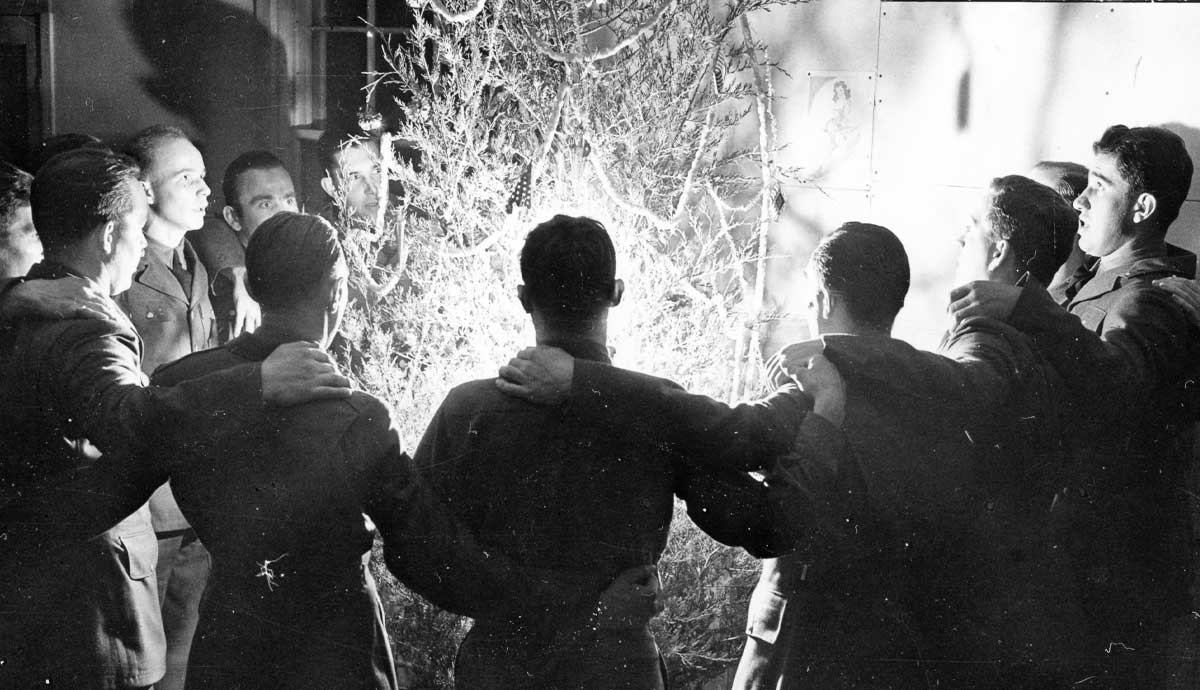
The holiday season during World War II often coincided with some of the most costly, brutal, and decisive military engagements of the entire war. While the Soviet Union did not officially partake in Christmas celebrations, most Western Allied governments confronted logistical nightmares to transport Christmas traditions from home to all battle fronts. Boosting morale across freezing European forests and sweltering jungles in the Pacific, most Allied soldiers were able to wake up on Christmas morning to decorated bunkers, religious services, dances, a full turkey dinner, and gifts from home.Allied Military Campaigns Over ChristmasChristmas messages painted on warplanes stationed on the USS Enterprise CV-6 during attacks on the Marshall and Gilbert Islands, 1943. Source: US National ArchivesThe first Christmases of the war brought defeat and retreat for the Allied forces. Across all fronts, the Axis powers maintained military control. For instance, on December 25, 1941, the British lost the Battle for Hong Kong (known as Black Christmas), losing the city to Japanese forces at the cost of 2,278 British lives, with 10,947 taken as prisoners of war.Nearby, American and Philippine Commonwealth forces were experiencing severe losses during the Battle of the Philippines that began in December 1941, ultimately losing control of the islands by May 1942. At the same time in the European Theater, the Soviet Red Army lost over 2,000 soldiers during the Christmas Battle in 1941, defeated by the Italian Expeditionary Corps near Petropavlivka (present-day Ukraine).Christmas, 1941, Company B, 10th Regiment in Quartermaster Replacement Center, Camp Lee, Virginia. Source: US National ArchivesFrom 1942 onwards, the Allies secured victory but sustained heavy casualties during Christmas military engagements. Over the holidays in 1942, 65,000 Allied soldiers fought and later secured their first offensive victory in the Pacific Theater at the Battle of Guadalcanal (August 7, 1942February 9, 1943). Despite losing over 7,100 soldiers to horrific fighting, disease, and starvation, Allied soldiers still attempted to celebrate Christmas. Chaplains held masses on burned battlefields, the navy worked overtime delivering apple pies, and palm trees were decorated as Christmas trees.Photograph of Staff Sergeant John F. OBrien while he stands in his trench decorated with a small Christmas tree during the Battle of the Bulge in Monschau, Germany, 1944. Source: US National ArchivesAnother famous battle coinciding with Christmas was the Battle of the Bulge (December 16, 1944January 25, 1945), the largest counterattack ordered by Adolf Hitler on the Western Front. Over one million soldiers fought across 75 miles of forest and towns in France, Luxembourg, and Belgium during one of the coldest winters on record. Frozen in foxholes with limited rations and suffering from hypothermia, over 80,000 Allied troops perished before securing an Allied victory, with the most intense fighting occurring during the Siege of Bastogne from December 20-27, 1944.Despite the unimaginable conditions and cold, Allied soldiers did all that they could to celebrate Christmas, decorating their foxholes with small trees and celebrating mass with local communities in the ruins of bombed churches.Christmas Decorations on the FrontlinesChristmas Eve on Guadalcanal, soldiers decorated palm trees with cotton balls and made garlands from cards from home, 1944. Source: US National ArchivesAll members of the Allied military forces, from mail carriers to medical staff, attempted to create a sense of holiday cheer on the frontlines.Nurses repurposed tin from plasma cans, foil, and ration containers to make garlands and ornaments. Scrap metal, discarded shrapnel, and wire were strung together or repainted as stars, snowflakes, or tree stands. Stretched cotton balls created winter scenes inside mess halls, while extra cardboard and cigarette boxes were cut into snowflakes. In the Pacific Theater, palm trees and other tropical bushes were decorated as Christmas trees with garlands of scrap metal.Soldiers involved in active combat also tried to decorate their foxholes and defensive positions for the holidays. Many cut down small trees nearby, using them as cover and Christmas trees, decorated with letters and postcards from home. Looting was also common for soldiers on the hunt for holiday decorations.Lieutenant Colonel James H. Polk recorded in a letter to his wife how eager his men were to create some Christmas spirit in Germany, 1944. He recalled, There are many Christmastrees in the river-town billets and even in the gun positions, all decorated in great style. The Germanornaments are the same as ours, and we looted a lot of them.Christmas Celebrations on the FrontlinesMarines attending a Christmas Eve Mass on an island in the South Pacific before the invasion of Cape Gloucester, December 1943. Source: Source: US National ArchivesHow soldiers celebrated the holidays was limited to what military engagement was occurring at the time. Plans for Christmas dinners, masses, and concerts were scrapped last minute amid surprise counteroffensive attacks, ongoing sieges, and drawn-out battles. Either way, any attempt at Christmas revelry lightened wartime realities. Military leadership and soldiers organized concerts, Christmas pageants, plays, choral singing, sporting events, and games. Rowdy boxing, baseball, football, and soccer matches paired with card games provided good-natured fun for the day. Paired with bottomless cases of beer and schnaps, the war-hardened soldiers did all that they could to distract themselves from the frontlines.A central yet reverent part of holiday traditions on the front involved Christmas masses hosted by a military chaplain. Christmas services often began with midnight mass but were also hosted throughout the day, allowing soldiers on different rotations to have access to religious services and blessings. Chaplains did the best they could to celebrate mass on the windy decks of aircraft carriers, bombed Italian churches, or on scorched heaps of palm trees.Regardless of the brevity or location, Christmas religious services were largely attended and filled with reverence and nostalgia, giving soldiers the opportunity to pray for their futures, miss their families, and mourn their fellow soldiers who did not make it to see another Christmas.Christmas DinnerSgt. Edward F. Good feeds his friend and fellow soldier, Pfc. Llyod Deming, 1944. Source: US National ArchivesAllied militaries also tried to provide a hearty meal full of rare rations to simulate a traditional Christmas dinner. Thousands of pounds of turkey and beer were delivered to frontlines worldwide, ensuring that all soldiers could have a few hours of peace and a warm, full belly. Military cooks woke up in the early morning to prepare heaps of potatoes, turkey, and cake. Units agreed to rotate patrols so everyone had a chance to have their turkey and pie. Every summer, the Red Cross shipped thousands of packages to provide extra tinned meats, candies, and chocolate in time for the holidays.However, for those stationed in remote locations or under intense fighting, only fresh fruit, like oranges, and beer were delivered to celebrate Christmas. While military units had no control over surprise attacks or delayed mail services, they could ensure that their members had something special to eat on Christmas for the day to feel more special.Soldiers often hunted and foraged to further add to their holiday meals. Some hunted wild birds, others foraged for local fruits, vegetables, and nuts. Many recalled how sprawling tables of food on Christmas were one of the greatest respites from the realities of war, homesickness they faced while spending Christmas far from home.Christmas Celebrations With LocalsSanta Claus, British Royal Air Force Pilot Fred Fazan, handed out presents to children in Volkel, Netherlands, 1944. Source: Imperial War MuseumsLocal communities were often included in Allied military celebrations. Soldiers volunteered to dress as Santa, handing out presents provided by the Red Cross to local children, especially orphans. In the Pacific, Santas traditional thick robes and cap were replaced by shorts and a military helmet to battle the sweltering heat.Some units saved their rations and money to host extravagant Christmas parties for nearby children and orphans who experienced the violence of occupation. For example, members of the British Royal Air Force No. 122nd Wing Formation used their rations and money to throw a Christmas party full of games, sweets, baked goods, and a visit with Santa for the children of Volkel, Holland.Civilians from the Majuro Village, Atoll, in the Marshall Islands, exchanging Christmas presents with Captain Harold B. Grow, 1944. Source: US National ArchivesNearby bases and barracks became community halls, hosting civilians for dances, concerts, dinners, and gift exchanges. Christmas traditions common to Allied service personnel were integrated with customs local to their stationed area, often blending music, languages, and food. Chaplains partnered with local clergymen and spiritual leaders to host joint ecumenical masses for soldiers and nearby residents.Civilians who celebrated Christian traditions, most common in the European Theater, invited soldiers into their homes to prepare and decorate for the holidays. This exchange between families and soldiers filled the absence that often weighed down Christmas merriment. Civilians were able to fill the missing presence of their husbands and sons sent off to war with soldiers who were desperate for a sense of normalcy with family while fighting far away from theirs. Together, these families and Allied troops decorated trees, wrapped presents, cooked special dishes, and hung stockings.Christmas PresentsChristmas Overseas Gift and Christmas package instructions commissioned by the United States Army and Navy Postal Services, 1945. Source: University of North Texas LibrariesA key Christmas feature on frontlines involved the logistical headache of sorting thousands of holiday packages sent by the families to reach their loved ones serving overseas by December 25. For American soldiers, the US Army and Navy Postal Services flooded the media with posters with strict instructions and restrictions on what to mail and by when.Members of the US Air Force opening Christmas packages sent by loved ones from home, 1942. Source: US National ArchivesWell-known journalists, like Margaret Bourke-White, wrote columns in popular magazines advising readers what to send their soldiers for the holidays and how best to decorate their packages. Bourke-White recommended sending less spam and instead shipping candies and cakes that had a long shelf-life, like fruit cake and peanut brittle. Small items that could distract from wartime realities were also encouraged, like pictures from home, fiction books, and magazines.Members of the Womens Army Corps 6888th Central Postal Directory Battalion sorting millions of backlogged mail packages with local French civilians, 1945. Source: US National ArchivesHowever, severe mail backlogs remained an issue for American military postal units throughout the war. Thousands of Christmas packages rotted for years in aircraft hangars, filled with cookies and fruitcakes sent from home.In 1945, the US military dispatched the Womens Army Corps (WAC) 6888th Postal Battalion to sort through this backlog and deliver Christmas packages to soldiers in the European Theater. The only all black female unit stationed overseas during the war, they exceeded all expectations and in three months sorted, repaired, and redacted 17.5 million packages and letters.Despite often facing discrimination under the US militarys strict segregation policies, their tireless work covering three eight-hour shifts a day led many soldiers to receive their Christmas packages that year.Christmas for Segregated UnitsChristmas Dance at a Service Club for black servicemen and women segregated from and by the US military, 1943. Source: US National ArchivesDespite the festivities and joy that accompanied Allied military Christmas celebrations, the US government maintained its strict segregation policies overseas and during the holiday season. In addition to segregated units, facilities, and even Red Cross blood banks, Christmas dinners, dances, and celebrations had to be conducted in separate spaces. While the military still provided turkey, cake, and decorations, non-white units were often given less funding and resources to supply their companies, let alone celebrate the holidays.In rare cases, the realities of war forced moments of integration during Christmas. For example, during the Battle of the Bulge, the first all-black tank unit, the 761st US Army Tank Battalion, fought alongside white soldiers on the ground.Christmas Cheer From HomeBing Crosby performing at a USO concert for over 4,000 soldiers in England, 1944. Source: US National ArchivesAn additional Christmas staple for Allied soldiers involved special holiday performances organized or pre-recorded by Allied governments with the biggest names in Hollywood, music, dance, and comedy.Organized by the United Service Organizations (USO), massive holiday specials were choreographed and played worldwide for Allied soldiers. Celebrities, most famously Bob Hope, braved the harsh conditions on the front and hosted Christmas concerts. Hope would continue organizing in-person Christmas events, radio shows, and television specials for soldiers until the 1990s. For those stationed in areas that were too dangerous or remote to host celebrity guests, performers pre-recorded Christmas concerts with the Armed Forces Radio Services and played them on Christmas Eve. The first Christmas tape sent to the frontlines in 1942 opened with Bob Hope, followed by Bing Crosby, the Andrews Sisters, and Dinah Shore.One of the most beloved singers adored by Allied troops during the holidays was Bing Crosby. 17 days after the attack on Pearl Harbor, Crosby first broadcast the now-famous song, White Christmas (1941). Two additional records by Crosby, Ill Be Home for Christmas (1943) and Have Yourself a Merry Little Christmas (1944), became cherished favorites for soldiers overseas, reflecting their quiet nostalgia missing the holidays at home.Crosby often toured overseas in December, performing these hits on bases, ships, and fields for thousands of Allied troops. He recounted that one of these performances was one of the hardest moments of his career. While performing White Christmas in France in 1944 to a crowd of 15,000 servicemen, he remembered struggling not to break down seeing the young soldiers silently cry while listening.Christmas for Allied Prisoners of WarBritish prisoners of war celebrating Christmas at the OLFAG IV-C Prisoner of War Camp in Colditz Castle, Germany, 1939-1945. Source: Imperial War MuseumsHundreds of thousands of Allied soldiers spent Christmas as prisoners of war (POWs) in German and Japanese camps. Each summer, the Red Cross mailed thousands of packages to Japanese and German camp officials, hoping to provide extra rations, small gifts, decorations, and games for the captured Allied soldiers. Depending on the temperament of their guards, Allied troops still attempted to celebrate Christmas in their own ways, combining their small rations and recycling any scraps they could to make decorations and Christmas trees.Despite the unimaginable conditions in POW camps in the Pacific, Allied POWs were given a small respite on Christmas of 1942 at the Cabanatuan POW camp in the Philippines. Averaging 44 deaths a day due to the intolerable conditions, the soldiers celebrated a Christmas miracle on December 15, 1942, when camp officials allowed Red Cross packages to be delivered and distributed to the soldiers.Some soldiers recalled their sheer excitement receiving basic food provisions, hygiene products, and tobacco, which motivated some to decorate their barracks with repurposed cigarette boxes and organize Christmas carol singing. A few camp commanders even participated, watching their performances, and afterwards giving the soldiers rice wine.Noting the immediate boost in morale and work production, Japanese leadership provided the Allied troops with fresh fruit, potato cakes, and duck to prepare a Christmas meal. Yet, days after Christmas, the brutal conditions returned and continued until the camps liberation on January 30, 1945.Secret maps hidden under playing cards snuck to OLFAG IV-C POWs at Colditz Camp through Red Cross Christmas packages. Source: Wikimedia CommonsChristmas was also celebrated by Allied soldiers held in German POW camps. One of the largest documented Christmas parties organized by Allied POWs occurred in 1944 at the Stalag Luft III Prison Camp in Colditz Castle, Germany.That year, camp guards allowed prisoners to use the castle facilities to stage Christmas concerts, pageants, and masses. Some guards even participated, providing their barracks with small Christmas trees and scrap tin to make snowflake garlands. Canned turkey and fruit cake sent by the Red Cross were combined with their rations to make a joint French, American, and British Christmas dinner. Spam, potage julienne, and sausage rolls savored with hot chocolate and treacle tart allowed the soldiers to celebrate a warm meal during one of the coldest Christmases of the war.One of the best gifts the Allied POWs received during these festivities at Colditz Castle was playing cards included in the Red Cross packages. Secretly engineered by the US Playing Card Company and commissioned by British and American intelligence services, these cards contained secret maps of Germany to aid in prisoner escapes. Once soaked in water, the face card peeled back, showing different sections of Germany to help Allied POWs find the nearest safe zones. By the time the camp was liberated in April 1945, 32 Allied POWs had successfully escaped the prison.Christmas TrucesBrigadier General Anthony McAuliffe and his staff gathered inside the Heintz Barracks for Christmas dinner during the siege of Bastogne, 1944. Source: Wikimedia CommonsTruces over the holidays were less common in World War II than during the First World War. One of the rare truces recorded occurred during the Battle of the Bulge. Fritz Vicken, a then 12-year-old German child who was hiding in a cottage with his mother, was shocked to find three American soldiers knocking on their door on Christmas Eve.One critically injured, Fritzs mother agreed to give the Americans shelter, quickly cooking the Christmas dinner she was saving for the return of Fritzs father. Instead, four exhausted German soldiers knocked on the door shortly after, also looking for shelter until the morning. Fritz recalled his mother saying: You can also have a fine, warm meal and eat til the pot is empty. But, we have three other guests, whom you may not consider friends. This is Christmas Eve, and there will be no shooting here. (Fritz Vicken, Truce in the Forest, Readers Digest, January 1973).All sides agreed to turn in their weapons and instead circled around the table, sharing the meal paired with wine and bread, one of the Germans had found. Fritz remembered how young, exhausted, and homesick each soldier looked, the oldest not being over 23. They all agreed to save some food and wine for the injured American, unable to sit and join them for Christmas dinner. The silent truce remained until the morning, when the Americans and Germans shook hands, grabbed their weapons, and headed back to their camps.
0 Commentarii
0 Distribuiri
19 Views

 English
 Arabic
 French
 Spanish
 Portuguese
 Deutsch
 Turkish
 Dutch
Dutch
 Italiano
 Russian
 Portuguese (Brazil)
 Greek
Greek