


WWW.THECOLLECTOR.COM
How Henry VII Won the Battle of Bosworth and Ascended the English Throne
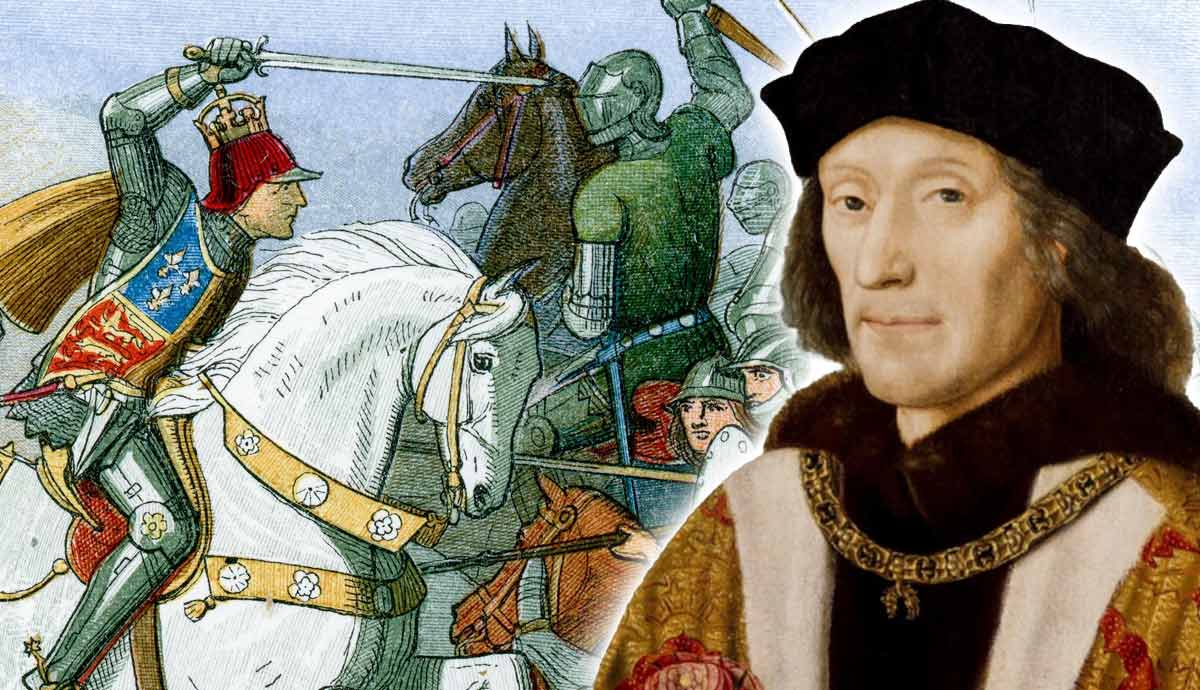
After years of conflict between the Houses of Lancaster and York over control of the English throne during the Wars of the Roses, Henry Tudors army destroyed King Richard IIIs forces in central England. This defeat marked the end of the Plantagenet Dynasty and the rise of Henry VII and the Tudors.The Wars of the RosesThe Battle of Towton, 1461 by Richard Caton Woodville, 1922. Source: Wikimedia CommonsThe Hundred Years War in the 14th and 15th centuries not only devastated the French countryside, it also led to serious political turmoil in England itself. The House of Plantagenet had sacrificed an enormous amount of resources trying to hold on to conquests in France. Inevitably, this led to internal struggles throughout the kingdom and a breakdown in social order.In 1422, the nine-month-old Henry VI succeeded his father, Henry V, to become king of England. One of the greatest warrior kings in English history, Henry V had conquered large areas of France and had even secured his sons right to succeed King Charles VI on the French throne. Henry VI was crowned king of France at Notre Dame in 1431, though his claim was challenged by Charles VII, the son of the late French king.To solidify his claims to the French throne, Henry married Margaret of Anjou in 1445. However, he cared little for the responsibilities as a sovereign, leaving the governance of his realm to a coterie of subordinates that feuded with each other constantly. He also faced revolts from lower-level nobles who hoped for a more dynamic royal government.By the 1450s, King Edward IIIs great-grandson, Richard of York, was residing in Ireland. He decided to return to England and force Henry to sack some of his closest advisors, especially his cousin Edmund Beaufort, Duke of Somerset. After Henry suffered a mental breakdown in 1453, Richard was appointed Protector of England. When Henry recovered in 1455, he forced Richard to leave London. Richard raised an army and marched on St. Albans to fight Henrys loyalists, killing Somerset, capturing Henry, and starting the Wars of the Roses.Richard and HenryPortrait of Richard III of England, late 16th century. Source: National Portrait Gallery, LondonAlthough Richard of York was killed at the Battle of Wakefield in December 1460, his son Edward, Earl of March, defeated a Lancastrian army at Towton and was soon proclaimed King Edward IV. In 1470, Edwards erstwhile ally, the Duke of Warwick, restored Henry VI to the throne, but the Yorkist victory at the Battle of Barnet and the Battle of Shrewsbury enabled Edward to retake the throne after a few months. Henry VI later died in the Tower of London in suspicious circumstances.Edward died unexpectedly in 1483 and was succeeded by his eldest son, the 11-year-old Edward V. Edward IVs brother Richard, Duke of Gloucester served as Lord Protector and governed the kingdom on behalf of his young nephew.Cast as an infamous villain by Shakespeare, in 1485 Richard declared his nephews illegitimate and made himself King Richard III. He imprisoned Edward and his younger brother Richard of York in the Tower of London ostensibly for their own protection. They were never seen, leading to speculation that he had them murdered. After the Duke of Buckingham revolted, he quelled the rebellion with brute force and had him executed. His next challenge came from a new Lancastrian claimant to the throne: Henry Tudor.Henry was the son of Edmund Tudor, 1st Earl of Richmond, and Lady Margaret Beaufort. His mother was a great-granddaughter of John of Gaunt, the fourth son of King Edward III and founder of the Lancastrian branch of the House of Plantagenet. His father was the half-brother of Henry VI. With the backing of the French crown, he landed in Wales with 2,000 men in August 1485 and marched inland. As Richard gathered his forces to stop him, the stage was set for the climactic battle of the Wars of the Roses.The Opposing ArmiesBattle of Bosworth by Abraham Cooper, c. 1825. Source: Dallas Museum of ArtUpon arrival in Wales, Henry began recruiting men to join his cause. The 2,000 Frenchmen with him gave his army a formidable corps of trained combatants. Some Welsh and English noble families such as the Herberts and the Vaughans agreed to join him and raised additional forces against the Yorkists. The most prominent defector from Richard was the Welsh prince Sir Rhys ap Thomas, who agreed to join Henry in exchange for lieutenancy of Wales. By the time he reached Bosworth Field just inside the English border, he had between 5,000-8,000 men under arms with him.As the incumbent monarch, Richard had the advantage of drawing upon larger numbers of men. The Duke of Norfolk and the Earl of Northumberland, both experienced military commanders, joined him when he marched towards the Anglo-Welsh border. He was also counting on the support of Lord Thomas Stanley and his brother Sir William Stanley to bring reinforcements. By the time he arrayed his forces on the high ground near Bosworth, he had 10,000-12,000 men under his command, recruited mainly from northern and central England.Both armies had contingents of infantry, cavalry, and artillery with them when they arrived at Bosworth Field. While the precise location of the battlefield has been debated, it is acknowledged that Henrys forces approached the high ground held by the Yorkists from the southeast. Richard hoped to repel Henrys forces and then counterattack, destroying the enemy. However, once the battle began, his plan fell apart and doomed his forces.The Fighting StartsMap of both armys dispositions before the battle. Source: British BattlesEven though Henrys forces were outnumbered by a better-equipped enemy occupying the high ground, they did have an advantage. Richards forces were divided into several different divisions led by subordinate commanders. On his left, the Stanley brothers had forces arrayed to attack Henrys men in the flank. Richard personally commanded his forces on the high ground. Northumberland had another contingent to the northeast near the town of Sutton Cheney. In theory, all of Richards forces were to unify and overwhelm Henrys army.The Stanleys were reluctant, however, to help Richard. He had forced them to join him by detaining one of Lord Stanleys sons. Privately, they were in contact with Henry and promised to help him at the decisive moment. When Henrys forces started to advance towards Richards positions on the hill, the Stanleys took no action to reinforce Richard. The early exchanges were intense but inconclusive. After both sides exchanged artillery fire and barrages of arrows, Henrys forces marched uphill towards Richards vanguard. The Duke of Norfolk was killed in hand-to-hand fighting. Richard hoped to get his reinforcements before launching an attack downhill on Henrys men.The Stanleys were not the only treacherous faction plaguing Richards plan. The Earl of Northumberland may have pledged loyalty to Richard when they first marched towards Wales, but now he had second thoughts. He ignored repeated orders to reinforce Richards forces and decided to remain in place. His aim was similar to the Stanleys: wait until the battle was over and support the victor.The Tudor VictoryKing Richard III at Bosworth Field. Engraving by Edmund Evans, 1864. Source: Wikimedia CommonsAs the fighting intensified, Richard launched a frontal assault on Henrys forces with the aim of overwhelming them. Along with a small contingent of mounted knights and personal bodyguards, he rode around the melee on the hilltop and charged directly towards Henrys retinue. He hoped to eliminate his rival and encircle the enemy force. As he charged forward, Henrys bodyguards prepared to defend themselves from the attackers.The Frenchmen and Welshmen fighting alongside Henry fought hard to keep the Yorkists away from Henrys forces. They managed to repel the assault just long enough for reinforcements to arrive. Watching from the flanks, the Stanleys noticed that Richard had separated himself from the main force of his army. They decided to ride to Henrys aid at the head of their columns. This meant that Richard was isolated from most of his troops with a small detachment of cavalry and was now under attack from three separate sides.Richard began riding back towards his men as his cavalry and many of his close companions were cut down around him. The combination of the Stanleys men reinforcing Henry completely shattered his plan of annihilating Henrys forces. His horse was killed and as he ran through the marshlands, he was killed by one of Henrys men. At this point, Richards forces on the hilltop disintegrated and fled from the area, including Northumberlands forces which had not experienced any fighting. Henry now had the opportunity to march on London and claim the crown for himself.A New DynastyPainting of King Henry VII by an unknown Dutch artist, 1505. Source: National Portrait Gallery, LondonBosworth was not a particularly bloody battle. Henry is believed to have lost no more than 200 men, while Richards losses were much higher. By killing Richard and defeating his army on the open field, Henry avoided having to besiege London or any major population center.Henry did not wait to claim the throne. According to a popular account, Lord Stanley found Richards crown in a ditch and placed it on top of Henrys head. After his victory, Henry dismissed much of his army and marched towards London with a small contingent of advisors and bodyguards. On October 30, 1485, he was formally crowned King Henry VII at Westminster Abbey.In order to unite the country and bring an end to the Wars of the Roses, Henry married Edward IVs daughter Elizabeth of York in 1486. Nonetheless, he faced rebellions by several individuals who claimed to be the missing Princes in the Tower. Many Yorkists were still upset about the outcome of the Battle of Bosworth and much of northern England was reluctant to recognize Henrys rule. However, Henrys prudent administration would lay solid foundations for the Tudor dynasty.
0 Commentarii
0 Distribuiri
23 Views

 English
 Arabic
 French
 Spanish
 Portuguese
 Deutsch
 Turkish
 Dutch
Dutch
 Italiano
 Russian
 Portuguese (Brazil)
 Greek
Greek