


WWW.THECOLLECTOR.COM
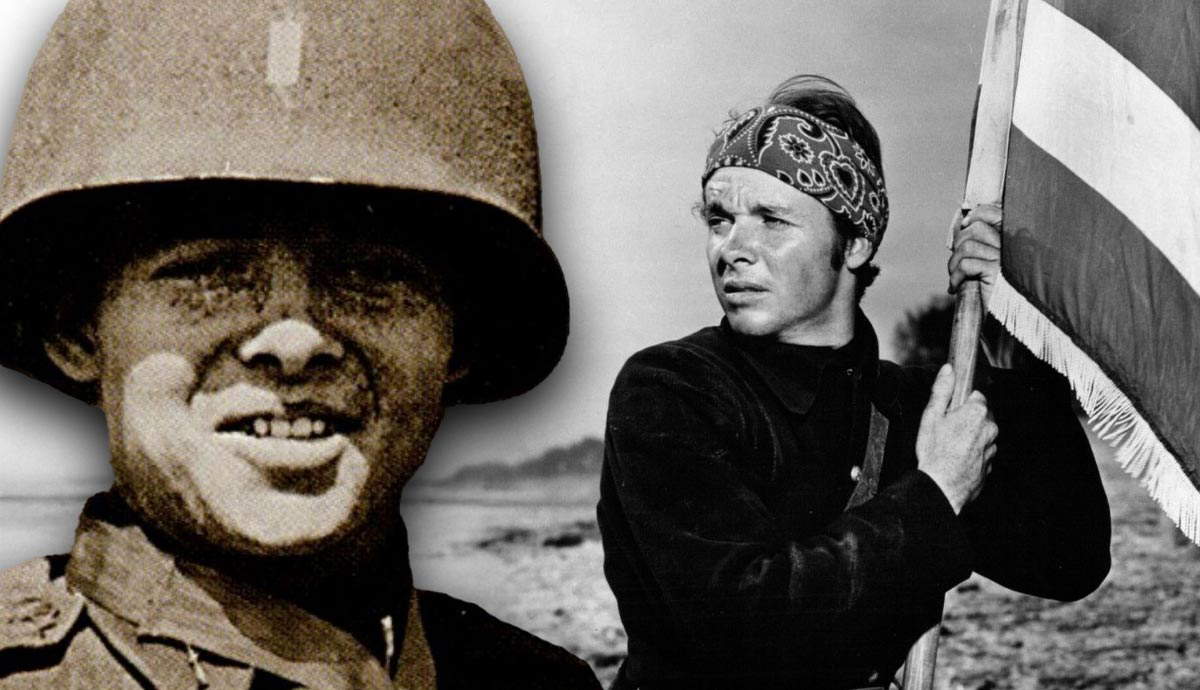
Who Was Audie Murphy? The History of the US Most Decorated Soldier
Every soldier, marine, sailor, and airman who served in World War II deserves honor and respect for participating in the worlds most significant modern conflict. One American, however, emerged as a stellar combat leader with more decorations than any other person in the history of the American armed forces. His name is Audie Murphy, and aside from his remarkable wartime accomplishments, the larger-than-life figure also became a famous Hollywood actor, renowned autobiographer, and advocate for veterans suffering from post-traumatic stress disorder. His amazing story stems from humble beginnings in Texas.Early LifeUSS Arizona on fire following the Pearl Harbor attacks, 1941. Source: Library of CongressAudie Murphy was forged by hardship before his courageous exploits during World War II. Born in Kingston, Texas, in 1925, Murphy was one of twelve children. Left largely to their own devices under an absent sharecropper father, Murphy provided for the family by hunting small animals around the neighborhood. Murphys mother passed away one year after his father abandoned the family in 1940, leaving the teenager to navigate an uncertain future. Destined to make something of himself, the future Army legend attempted to enlist with various branches of the military after the attack on Pearl Harbor, however, he was routinely dismissed to his young age and thin build at just 100 pounds. Eventually, with supporting testimony from his sister claiming that he was 18, Murphy falsified his birth certificate and enlisted in the Army as soon as he turned 17 years old in 1942.World War II ServiceAudie Murphys field jacket, 1985. Source: National Museum of American History, Smithsonian InstitutionMurphys short stature did not prohibit him from being as a remarkable soldier, and he quickly attained the rank of corporal after impressing his superior officers. After completing basic training, Murphy deployed to the North African Front and later, southern Italy. In 1944, Murphy witnessed the killing of a close comrade by a German soldier who pretended to surrender. Enraged, Murphy stormed the German position, captured their machine guns, which he used to neutralize his remaining foes. For his actions during Operation Dragoon in southern France, Murphy was awarded the Distinguished Service Cross, one of many military accolades that contribute to Murphys legacy.Soon after his revenge-fueled assault against the Germans, Murphy stood against the enemy in a series of actions that would earn him a Congressional Medal of Honor. Promoted to an officer and now a company commander in the Third Infantry Division in France, his unit was pinned down by enemy fire and waves of advancing troops. Fearful for his men, Murphy ordered the company to fall back into better protected positions in the wooded area behind his command post. Rather than withdraw with his men, Murphy remained in the frontline and called in artillery fire to disrupt the advancing Germans. As six enemy tanks approached his position, Murphy single-handedly operated a .50 caliber machine gun atop a burning Allied tank, fending off dozens of enemy infantrymen.Audie Murphys Medal of Honor citation, 1985. Source: Smithsonian InstitutionAlone, Murphy dodged incoming fire from three directions. His bravery, however, turned the tide of the action. After being deprived of infantry support, the German tanks slowed their assault. When German tanks closed within ten yards of Murphy, he ran out of ammunition and returned to the woods near his men, where he was hit by an enemy bullet. His heroic stand lasted an hour, and Murphy killed and wounded approximately 50 German soldiers on his own. Upon returning to his men, Murphy organized counter-fire, directed artillery barrages, and refused medical assistance until the Germans finally withdrew. By saving his company from inevitable destruction and enabling them to hold their ground, Murphys Medal of Honor-winning actions consolidated his legacy as the United States most decorated soldier of the war.Hollywood Film StarAudie Murphy in the role of Henry Fleming in the 1951 film Red Badge of Courage. Source: MGM/Wikimedia CommonsAfter returning home to America, Murphy enjoyed a heros welcome and was honored by banquets and news programs across the country. LIFE magazine flattered the physically small but larger-than-life figure by placing him on the cover of their July 16, 1945, issue. Inspired by this photograph, a Hollywood actor persuaded Murphy to try his hand at acting. Despite his courageous and bold reputation, the former battlefield commander initially experienced little success. Instead, Murphy focused on writing his autobiography, entitled To Hell and Back. The memoir soon became a national hit, and in 1955, Murphy was cast to play himself in a film adaptation of the book. The movie was also a major success and remained Universals top-grossing production until the shark thriller Jaws became a fan favorite almost two decades later.Despite early setbacks, Murphys post-war career soon flourished after publishing his autobiography. The actor went on to star in nearly 45 Hollywood feature films, mostly Westerns, in addition to a leading role in an NBC television show in the early 1960s. Success in film allowed Murphy and his wife to experience luxuries that he was not afforded in childhood or in the military. Aside from acting, Murphy healed from the traumas of war through creative hobbies including writing songs, reading poetry, and horse breeding. These distractions and newfound wealth, however, were not enough to circumvent the mental challenges of returning from World War II.Continued Military ServiceKorean War Memorial in Washington DC, 1980-2006. Source: Library of CongressOne month after the Korean War began, Murphy joined the 36th Infantry Division of the Texas National Guard. His superiors, however, rightfully understood that Murphy had seen enough combat. As such, the World War II hero was not sent to Korea, and was instead given responsibility for training new recruits. During his time supporting the Korean War effort, Murphy married Pamela Archer, a Texan airline stewardess. Together, the couple had two sons, Terry and James, leaving the war hero with many other cares in life besides his return to military service.The National Guard used his image and story for recruitment purposes before transferring Murphy to an inactive status one year later in 1951. Despite returning to active duty in 1955 and being promoted to Major in 1956, Murphy soon left active-duty service for good, remaining in inactive roles with the National Guard and Army Reserves until 1969. His journey from lower enlisted to field-grade officer is one rarely emulated, a testament to Murphys character and devotion to duty. This journey came at a price, as Murphy found himself sleepless, addicted to gambling, and depressed.Overcoming Post Traumatic Stress DisorderSoldier recovering from shell shock during World War I, 1918. Source: Library of CongressUnsurprisingly after experiencing years of harrowing combat, Murphy struggled with symptoms of post-traumatic stress disorder, then called battle fatigue. The rising acting star was dependent on sleeping pills to make it through restless nights amid failed gambling ventures. Realizing his addiction, Murphy locked himself in a motel room to combat the withdrawal symptoms. While this strategy paid off, Murphys bravery to openly talk about his mental difficulties opened the door for everyday veterans to confront their struggles as well, illustrating a mental fortitude to match his physical courage.DeathAudie Murphys gravestone at Arlington National Cemetery, 1980-2006. Source: Library of CongressDespite surviving debilitating physical and mental injuries and almost certain death during World War II, Murphys astounding life ended abruptly in 1971 at just 46 years old. The decorated veteran and movie star boarded a private plane in Georgia bound for Virginia which encountered severe weather conditions on the way. The pilot acknowledged the hazardous conditions in the air and called to request an unexpected landing at a local airport in Roanoke. With poor visibility, the plane crashed into a mountain before it could land, killing all passengers on board. The crash site, now a dedicated part of the Appalachian Trail, memorializes Murphy for hikers to reflect on his many sacrifices as they hike the popular East Coast route. Murphy is buried in Arlington National Cemetery alongside his brothers and sisters in arms, and his gravesite continues to see plenty of visitors looking to pay tribute to the legend.LegacyAudie Murphy commemorative stamp, 2000. Source: National Postal Museum, Smithsonian InstitutionToday, Murphy stands as one of the most decorated soldiers in American history and the most recognized soldier of World War II. With 33 military medals including the Medal of Honor, a Distinguished Service Cross, multiple Silver Stars, and three Purple Hearts, Murphys heroics in combat are irrefutable. Despite his small stature, Murphys fame as the countrys most decorated World War II soldier added credibility to his advocacy for mental health. By opening the door for transparent communication as one of the bravest men in American history, Murphy paved the way for thousands of modern veterans to discuss their experiences with post-traumatic stress disorder. Accordingly, the Audie L. Murphy Memorial Veterans Affairs Hospital in San Antonio, Texas was named in his honor.The United States Army carries on his legacy through the Sergeant Audie Murphy Club, a respected organization for deserving non-commissioned officers who compete for the right to belong among military excellence. By demonstrating wise leadership, unparalleled care for soldiers, physical prowess, and a narrowed focus on effective training, non-commissioned officers who are deemed worthy by a board of their superiors are awarded a medallion with Murphys image on the front. This tradition remains after nearly 40 years of existence and continues to honor Murphys legacy for experienced soldiers who strive to emulate his exploits.Despite his premature death, Audie Murphy continues to live on, and his life of courage on and off the battlefield continues to be an inspiration to thousands of Americans.
0 Comentários
0 Compartilhamentos
21 Visualizações

 English
 Arabic
 French
 Spanish
 Deutsch
 Turkish
 Dutch
Dutch
 Italiano
 Russian
 Romaian
 Portuguese (Brazil)
 Greek
Greek