


WWW.THECOLLECTOR.COM
How John Quincy Adams Presidency Shaped the Future of America
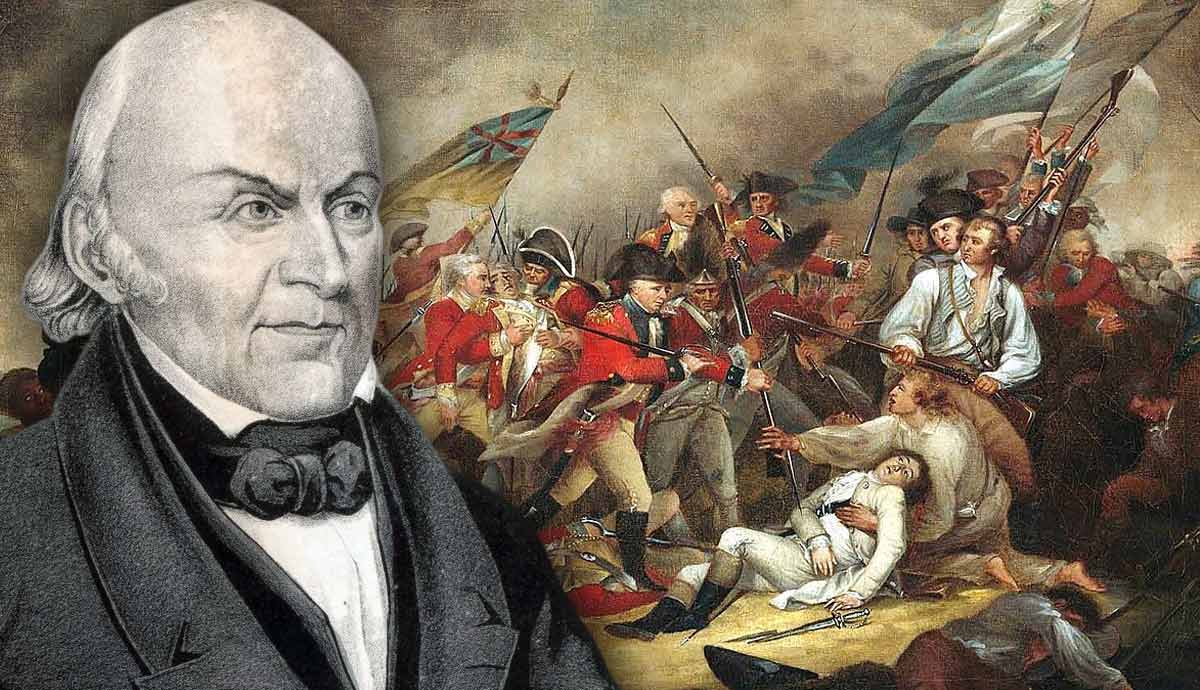
While his father, John Adams, often takes the spotlight when one examines early American history, John Quincy Adams was no slouch. The son of the second president had a long and storied political career that didnt end after he served as the sixth president of the United States. From diplomat to senator to the White House and the House of Representatives, John Quincy Adams built a reputation for himself that was not only separate from that of his father but even stood independently from party lines and the status quo.Who Was John Q?John Quincy Adams mother, Abigail, engraved by Christian Schussele, likely around 1856. Source: Wikimedia CommonsBorn in Braintree, Massachusetts, to John and Abigail Adams, John Quincy Adams was not the eldest child but the eldest son of his family. With that role came expectations, and Adams seemed to have no qualms about achieving those goals. He had an older sister, Abigail Nabby, and two younger brothers, Charles (three years younger) and Thomas (five years younger).Adams was born on July 11, 1767. His parents doted on their four children (they had two additional children who died in infancy) and ensured that they had access to the best educational opportunities. His father, the future second president of the United States, was involved in political activism since before Adams was born, and was often absent for long periods.Witness to RevolutionA scene from the Battle of Bunker Hill by artist John Trumbull. John Quincy Adams observed the battle as a boy. Source: Museum of Fine Arts Boston via Wikimedia CommonsThough John Quincy was just a boy when the American Revolution got into full swing, it was very impactful on his young life. He worried about his fathers safety, as the senior Adams was heavily involved in leading the Continental Congress and was a signer of the Declaration of Independence, both treasonous activities in the eye of the law at the time. John Quincy later recalled feeling responsible for his mother and siblings while his father traveled during the war. British soldiers were a common sight in their hometown, and he and his mother watched the Battle of Bunker Hill from a nearby ridge. The war was a reality for the young Adams, and it shaped his upbringing.John Adams in his official presidential portrait by John Trumbull. Source: White House via Wikimedia CommonsWhen he was 10 years old, Adams life took an exciting turn when his father was appointed as special envoy to Europe. When Adams senior left the country for Europe in 1778, he took his son with him. Over the next seven years, John Quincy Adams spent time in various European countries, including England, Sweden, Russia, France, and the Netherlands. He briefly served as a translator on a Russian trip with diplomat Francis Dana and worked as his fathers personal secretary during peace negotiations in Paris to end the Revolutionary War. In addition to traveling and meeting important figures from the world over, Adams attended schools in Europe and became fluent in French, Dutch, and German. He studied fencing, music, and art alongside Benjamin Franklins grandsons at the Passy Academy and Paris. He then attended Harvard on his return, where he completed his education. After passing the Massachusetts Bar in 1790, Adams began his career as a lawyer.John Quincy Adams as secretary of state. Source: US Department of State via Wikimedia CommonsFollowing in his fathers footsteps, Adams began a series of diplomatic posts, including positions in Prussia, Russia, and Great Britain. He joined the Massachusetts state senate in 1802 before becoming a US senator the following year. President James Monroe brought him into his cabinet to serve as Secretary of State, where he would influence the creation of the Monroe Doctrine.In 1824, Adams decided to seek the presidency. The race quickly became a controversial one, involving four candidates: Adams, Henry Clay, Andrew Jackson, and William H. Crawford. None of the candidates received a majority in the traditional election. Therefore, the election was sent to the House of Representatives for a decision. Rather than continue his campaign, Clay decided to encourage his supporters to vote for Adams instead. The House decided that Adams would be the sixth president of the United States, and he ascended to the role in February 1825.Mr PresidentLouisa Catherine Johnson Adams in 1821. Source: Library of Congress via Wikimedia CommonsNot long after John Quincy Adams was elected, he made Henry Clay his secretary of state. Political enemies immediately began to shout about corruption, claiming that the move was part of a deal the two had made during the election to ensure Adams got the top job. No corruption was ever proven, but the appointment ensured that Adams presidency was off to a controversial start. The fact that he was the first president to be the son of a former president did little to protect Adams from personal and political attacks. His enemies saw him as a stuffy politician, referring to him as your excellency and criticizing him for having a foreign-born wife. In fact, his wife, Louisa Catherine Johnson Adams, whom he wed in 1797, had an American father, though she was born in London. Until Melania Trump in 2017, she was the only First Lady born outside of the United States. The pair had four children by the time Adams became president.Getting to WorkJohn Quincy Adams, president. Source: Library of Congress via Wikimedia CommonsAdams refused to let controversy dictate his presidency. Instead, he focused on making positive progress for the country in a number of areas. One of his chief areas of focus was infrastructure throughout the United States. The Erie Canal was completed during his presidency, linking the Atlantic markets with the Northwest United States. He supported the use of federal funds for roads and canals across the United States and ceremonially broke ground for the Chesapeake & Ohio (C&O) Canal in 1828. To further his economic goals, in 1827, Adams closed all US ports to Britain and its colonies. Ongoing disagreements with England over tariffs and duties contributed to the declaration and led to the cultivation of exclusive trading relationships with other countries.A lithograph featuring John Quincy Adams in his role as the sixth US president. Source: Library of Congress via Wikimedia CommonsIn addition to linking the states in terms of transportation and commerce, Adams focused on the arts and sciences. Several scientific expeditions took place under his watch, and he established a national observatory. A number of Americas founding fathers, including George Washington and Benjamin Rush, had touted the idea of a national university. Adams made one last attempt at creating such an institution, only to find himself blocked by Congress, some members of which believed the measure to be unconstitutional.John Quincy Adams by an unknown artist. Source: National Archives and Records Administration via Wikimedia CommonsThough Adams was intent on improving Americas culture, he also recognized the importance of the military to the fledgling country. Standardizing the US military was a chief concern of his administration, and he worked to integrate the federal army and state militias. In 1826, the Adams administration created military training manuals in an effort to improve organization, education, and efficiency among US forces. Though Adams would not see war during his presidency, he was left to deal with the consequences of the War of 1812. In 1826, he attended mediation with the British in order to finalize financial obligations that were left unresolved by the Treaty of Ghent that ended the war. Russian Czar Nicholas I mediated the proceedings, which resulted in a completed settlement.The End of a PresidentDepiction of a ball held by the president and Mrs Adams for Andrew Jackson in honor of the 10th anniversary of the Battle of New Orleans in 1825. Source: First Ladies.org via Wikimedia CommonsAndrew Jacksons supporters, still bitter at their champions loss in the previous election, came after John Quincy Adams with renewed fervor in the 1828 election, propelling Jackson to victory. After his loss, Adams planned to return home to Massachusetts and enjoy retirement on his farm. However, those plans were changed when he was elected to the House of Representatives in 1830. He served in the House until his death, focusing on civil liberties as one of his pet causes. John Quincy Adams had a stroke on the House floor in 1848 and perished two days later.The Death of John Quincy Adams. Source: US Capitol via Wikimedia CommonsA man of worldly experience, John Quincy Adams brought a unique perspective to the United States presidency. With the influence of his fathers presidency coupled with a driven mindset, Adams was well-equipped to handle the tasks ahead. Moving through accusations with nary a concern, Adams attempted to toss aside politics to achieve his goals.John Quincy Adams may not be remembered today as frequently as his father, but his role in propelling the United States forward in spite of internal strife is worth recollection.
0 Comentários
0 Compartilhamentos
13 Visualizações

 English
 Arabic
 French
 Spanish
 Portuguese
 Deutsch
 Turkish
 Dutch
Dutch
 Italiano
 Russian
 Romaian
 Greek
Greek