


WWW.THECOLLECTOR.COM
The Role of Artillery in the American Revolutionary War
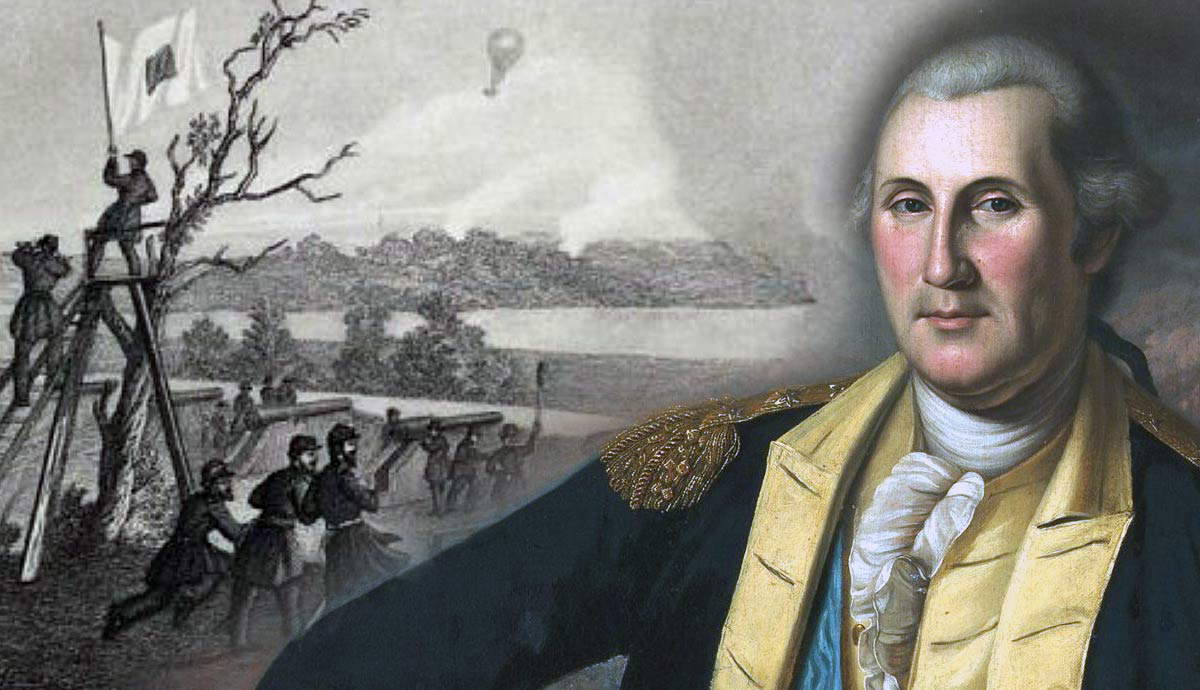
The American Revolution provided a means for disgruntled American colonials not just to express their grievances to British rulers, but to fight for a free country founded on the principles of life, liberty, and the pursuit of happiness. To achieve this objective, however, the Continental Army needed to turn a ragtag fighting force into a professional military organization capable of countering the leading global power. Through hardship, sacrifice, and strategy, George Washington led the Thirteen Colonies towards this unlikely outcome by leaning on his armys most useful asset: artillery.Early StrugglesBattle at Bunkers Hill, John Trumbull, 1843-1852. Source: Smithsonian InstitutionAs an army composed of minutemen and informal militia groups, the Continental Army had limited artillery and ammunition. After the shot heard round the world announced the outbreak of hostilities between the colonies and the British at Lexington and Concord in April 1775, the Americans achieved early success by preventing the British authorities from destroying their supplies of guns and powder.At the Battle of Bunker Hill shortly afterwards, William Prescott commanded the Continental forces and established a battery at Breeds Hill targeting the British in Boston. Despite a strong initial defense which inflicted heavy casualties on the enemy, the Continentals eventually ran out of ammunition and were compelled to withdraw. Artillery would play the decisive role in forcing the British to withdraw from Boston in March 1776 after Colonel Henry Knox brought an artillery train 300 miles from Fort Ticonderoga to Washingtons besieging army. After Washington deployed the guns at Dorchester Heights within range of British warships in Boston Harbor, the British were compelled to withdraw.Less than a year later, George Washingtons forces employed artillery at Fort Stirling and Fort Putnam prior to the Battle of Brooklyn. Strategically, the Continental Army sought to control the East River from nearby waterways. Despite an advantageous position, the Patriots were outnumbered and suffered heavy losses. Similar outcomes at the Battle of White Plains and neutralized American gun crews at the Battle of Fort Washington led the commander to reconsider his artillery tactics.Gaining MomentumWashington crosses the Delaware River before the Battle of Trenton, 1861. Source: Library of CongressTo turn the tide of the war, George Washington came up with a bold plan: by sneaking across the icy Delaware River on Christmas night in 1776, the Continental Army could catch a Hessian outpost at Trenton by surprise. Understanding the power of artillery, Washington chose Henry Knox to lead a detachment of artillerymen who ferried their cannons across the river. Although the rivers current proved formidable for the heavy assets and their arrival was delayed, this setback did not stop Knox from devastating the 18-gun Hessian position. This operation, spearheaded by artillery and wise strategy, proved vital in securing victory after a string of defeats.Supported by the Captain of the New York Provincial Company of Artillery, Alexander Hamilton, as his personal aide-de-camp, Washington built on the momentum following the Battle of Trenton by skilfully employing artillery at the Battle of Princeton just seven days later. Led by Captain Joseph Moulder, the Continental Armys gunners peppered the British with short-range grapeshot and canister fire from seasoned gun crews.Although these actions allowed Washington to penetrate British defensive lines, the British quickly regained the strategic initiative in nearby states. Months after these successes, the British captured Fort Ticonderoga, Philadelphia, and Fort Mifflin. As the brutal winter of 1777 welcomed a new year, Washingtons battered, tired, hungry, and ill-equipped army at Valley Forge needed additional support before it was too late. Soon, the French joined forces with the colonists, bringing much needed logistical support and artillery assets.An Important AllyMajor General Marquis Lafayette, 1782. Source: Library of CongressRecognizing the value of allies, Washington lobbied for French involvement in the conflict against the British. As Britains rival for global hegemony in the 18th century, France sympathized with Washingtons cause and provided political and economic support since 1776, which proved crucial in supplying the Continental Army with cannon and ammunition. In a 1777 letter to General William Heath, Washington wrote: I was this morning favored with yours containing the pleasing accounts of the late arrivals at Portsmouth and Boston. That of the French ships of war, with artillery and other military stores, is most valuable.Following a vital American victory at the Battle of Saratoga in late 1777, France formally entered into an alliance with the nascent United States in 1778. This partnership brought about an increased supply of French guns, munitions, and resources from across the Atlantic needed to stem the tide of British victories. Aside from physical resources, the French alliance delivered military expertise via artillery training and strategic planning.One of General Washingtons most trusted personal advisors was the Marquis de Lafayette, a young French aristocrat who played a significant role in the training of the Continental Armys troops. Lafayettes dedication proved vital in American victories following the harsh winter at Valley Forge. During the Battle of Monmouth, Washingtons troops were outnumbered two to one. Fearful of defeat, the Continental Army began to retreat, but Washington and Lafayette organized a counterattack. Noticing that General Nathanial Greenes troops were pinned down by British General Cornwallis, the pair shifted artillery support to Greenes division and forced the British to withdraw to New York City during the night.The Siege at YorktownView of Union artillery station at the Siege of Yorktown, 1862. Source: Smithsonian InstitutionNo other battle of the American Revolution witnessed bombardments to the same extent as the Siege of Yorktown. As the decisive battle of the war, the Battle of Yorktown was a three-week blockade of the coastal town at the tip of a peninsula where American and French forces isolated the British until General Cornwallis surrendered. The unique shape of the Yorktown peninsula allowed the allies to quickly cut British supply channels and potential lines of retreat.The bombardment began on October 9, 1781, and General Knox coordinated fire against weakened British defensive positions by delivering more than 15,000 rounds from 73 field cannons, siege guns, and mortars. At sea, French naval vessels fired munitions including bar and chain shots, which neutralized the rigs and sails of British ships. On land, the Continental artillery was able to inch closer towards the British strongpoints each day of the attack by constructing extensive siege networks and trenches for artillery batteries.The British, despite facing constant bombardment and inferior positioning, did not surrender without a fight. British artillery units attempted to coordinate counter-battery fire aimed at French and American gun crews, but the attacks proved futile when contested by a numerically superior enemy. Of the dozens of artillery assets, 350 British soldiers temporarily disabled six colonial cannons by spiking them, driving a metal rod through the weapons vents. The bombardment was so relentless that the only break in fire enjoyed by the British resulted from adverse weather conditions.After the WarGeneral George Washington by Charles Willson Peale, c. 1779-1781. Source: Metropolitan Museum of Art, New YorkThe role of artillery in the United States was forever changed by its decisive impact during the American Revolution. Post-war reorganization mandated a standing military including dedicated artillery through the formal creation of the United States Army in 1784, which would prove vital during the War of 1812. Less than two decades after the Armys official inception, the country opened the United States Military Academy at West Point, where some of the nations best artillery training took place.Positions of great stature awaited many of the wars leading artillery officers. General Knox managed the transition of the Continental Army from a wartime to peacetime force, and in 1785, the artillery leader was named the United States Secretary of War by the Continental Congress. After the adoption of the US Constitution in 1789, Knox served in George Washingtons administration as Secretary of War until 1794.Alexander Hamilton, on the other hand, fulfilled several crucial roles as an American founding father. The former artilleryman served as a delegate to both the Congress of the Confederation and the Constitutional Convention, co-authored the Federalist Papers, and served as the nations first Secretary of the Treasury. Lafayette, Washingtons most trusted advisor on artillery issues despite not being an artillery officer by trade, returned to his home country and became a prominent figure during the early stages of the French Revolution.Legacy of Revolutionary War ArtilleryNational Portrait Gallery painting of Alexander Hamilton by Jacques Riech, 1903. Source: Smithsonian InstitutionWhile most of the artillery-related tactics, technology, and procedures employed by the Continental Army and its allies in the Revolutionary War have long been obsolete, the general strategic use of artillery during the conflict remains relevant in American warfare. Clashes such as the Battle of Bunker Hill and the Siege of Yorktown, for example, underline the importance of strategic positioning. Difficulties in transporting artillery over challenging terrain, as illustrated by General Knoxs plight during the Battle of Trenton, highlight the significance of modern self-propelled assets that offer increased flexibility compared to its forebears. The variety of modern projectile, propellent, and fuse combinations expand upon the use of artillery projectiles at Princeton and Yorktown which show how various munitions can be employed in different tactical scenarios.From a personnel perspective, the expertise of artillery leaders during the war demonstrates how a detail-oriented view of the battlefield gives artillerymen and women a unique perspective on political and military challenges. The United States owes immense gratitude to its founding artillery leaders who not only led a nascent nation in overthrowing British colonial rule, but also played an important role in setting up the countrys political institutions. Certainly, the experience of the US artillery during the American Revolutionary War justifies the reputation of artillery as the King of Battle.
0 Comentários
0 Compartilhamentos
17 Visualizações

 English
 Arabic
 French
 Spanish
 Portuguese
 Deutsch
 Turkish
 Dutch
Dutch
 Italiano
 Russian
 Romaian
 Greek
Greek